IPC-T-50F_.pdf.pdf - 第31页
F Ratio 93.0552 The ratio of one variance value to another . Face Bonding 74.0469 Attaching a die to a base material with its circuitry facing the base material. Factorial Experiment 94.0470 An experimental design that e…
Etchant 54.0450
A solution used to remove the unwanted portion of mate-
rial from a printed board by a chemical reaction.
Etchback 54.1389
The controlled removal by a chemical process, to a specific
depth, of nonmetallic materials from the sidewalls of holes
in order to remove resin smear and to expose additional
internal conductor surfaces.
Etched Printed Boards 60.0451
A board having a conductive pattern that was formed by
the chemical removal of unwanted portions of a conductive
foil.
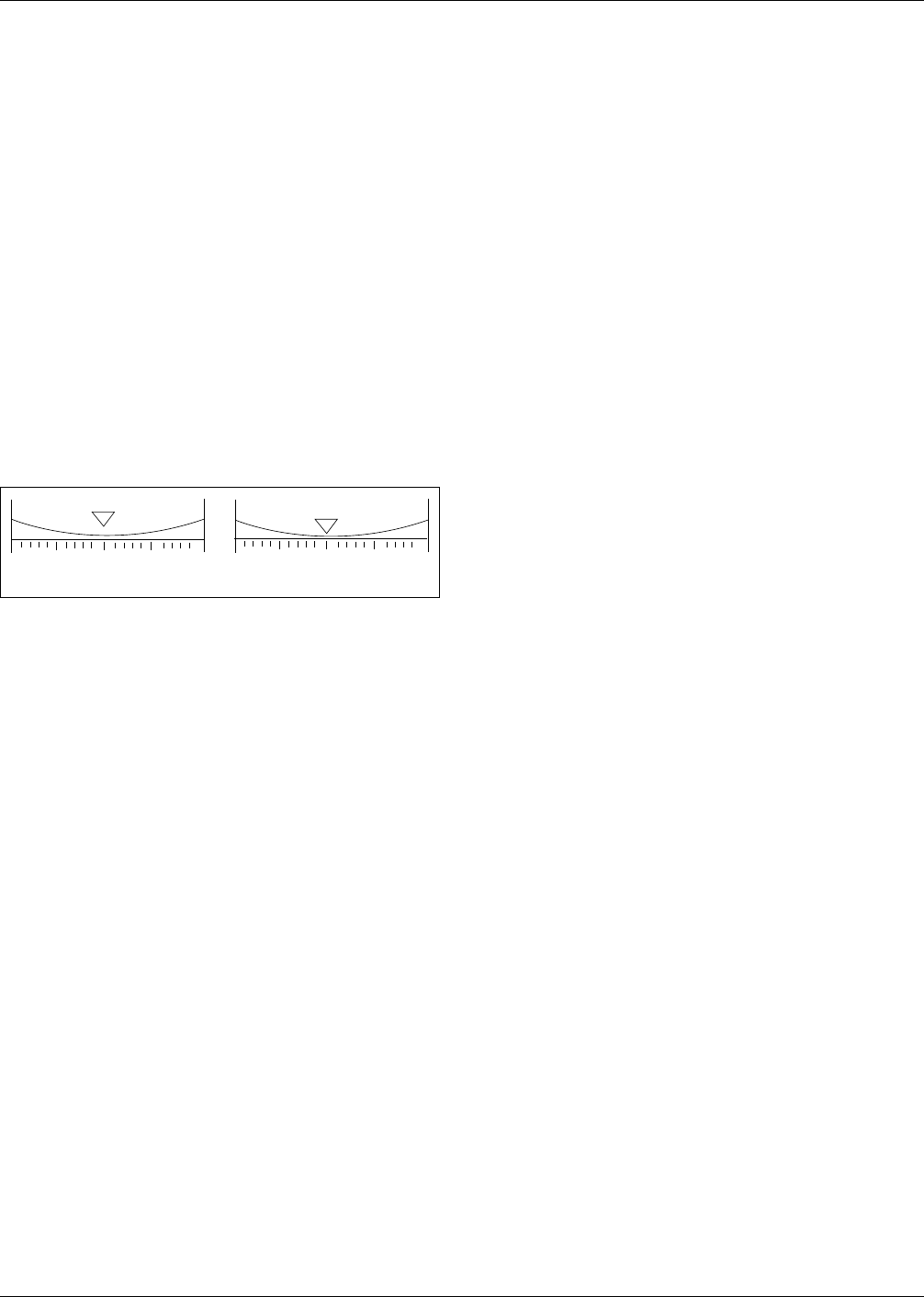
Etching 54.0453
The chemical, or chemical and electrolytic, removal of
unwanted portions of conductive or resistive material. (See
Figure E-1.)
Etching Indicator 54.1390
A wedge-shaped or other specified pattern that is affixed to
a conductive foil in order to indicate the quality of etching.
Ethanol 76.1744
A solvent used in cleaning electrical assemblies (Ethylalco-
hol).
Eutectic (n.) 75.1391
An alloy having the composition indicated by the eutectic
point on an equilibrium diagram or an alloy structure of
intermixed solid constituents formed by a eutectic reaction.
Eutectic (v.) 75.1392
An isothermal reversible reaction in which on cooling a
liquid solution is converted into two or more intimately-
mixed solids, with the number of solids formed being the
same as the number of components in the system.
Eutectic Die Attach 74.0454
The mounting of a semiconductor die to a base material
with a perform of a eutectic metal alloy that is brought to
its eutectic melting temperature.
Eutrophication 76.0455
The enrichment of either fresh or salt water by a chemical
element or compound.
Excess Solder Connection 75.1393
A solder connection that is characterized by the complete
obscuring of the surfaces of the connected metals and/or by
the presence of solder beyond the connection area.
Exchange Reaction 76.1317
A chemical reaction in which atoms of the same element in
two different molecules, or in two different positions in the
same molecule, transfer places.
Excising 73.0457
The cutting of the unterminated (outer) leads of an inner-
lead bonded die in order to separate it from the carrier tape
subsequent to further assembly processing.
Excitation Current 21.0458
The root-mean-square (RMS) current flowing in a selected
winding when the rated voltage and frequency is applied.
Exclusion Area 92.0459
A predetermined region where inspection is excluded.
Exfoliation 76.0460
Scaling from of a surface in flakes or layers as a result of
corrosion.
Experimental Error 93.0461
A variation that is due to a measurement error, a chance
occurence, and other factors.
External Layer 22.0462
A conductive pattern on the surface of a printed board.
Extraction, Liquid-Liquid 76.0463
see ‘‘Solvent Extraction.’’
Extraction Tool 77.0464
A device used for removing a contact from a connector
body or insert, a component from a socket, or a printed
board from its enclosure.
Extraneous Metal 91.0465
Unwanted metal, usually copper, that remains on a base
material after chemical processing.
Eyelet 37.0466
A short metallic tube, the ends of which can be formed
outward in order to fasten it within a hole in material such
as a printed board.
F
F (Fisher) Test 94.0468
A test that attempts to determine if two populations have
the same variance.
IPC-I-001030
Figure E–1 Etching indicator
OVERETCH
ACCEPTABLE
IPC-T-50F June 1996
26

F Ratio 93.0552
The ratio of one variance value to another.
Face Bonding 74.0469
Attaching a die to a base material with its circuitry facing
the base material.
Factorial Experiment 94.0470
An experimental design that evaluates every possible com-
bination of events.
False Alarm 92.0471
An anomaly identified by an inspection system that is not
a critical defect.
False Alarm Rate 92.0472
The ratio of the number of acceptable items detected to the
total number inspected, expressed as a percentage.
Far-End Crosstalk 21.0473
see ‘‘Forward Crosstalk.’’
Fatigue Life 96.0474
The number of cycles of stress that can be sustained prior
to failure for a stated test condition.
Fatigue Limit 96.0475
The maximum stress below which a material can presum-
ably endure an infinite number of stress cycles.
Fatigue Strength 96.1394
The maximum strength that can be sustained for a specific
number of cycles without failure, with the stress being
completely reversed within each cycle unless otherwise
stated.
Fatigue-Strength Reduction Factor (Kf) 96.1395
The ratio of the fatigue strength of a member or specimen
with no stress concentration to the fatigue strength with
stress concentration.
Fatty Acid 76.0476
A carboxylic acid derived from, or contained in, an animal
or vegetable fat or oil.
Fatty Ester 76.0477
A fatty acid with the active hydrogen replaced by the alkyl
group of a monohydric alcohol.
Fault 90.0478
Any condition that causes a device or circuit to fail to
operate in a proper manner.
Fault Dictionary 90.0479
A list of elements in which each element consists of a fault
signature that can be used to detect a fault.
Fault Isolation 92.0480
The identification process used to determine the location of
a fault to within a small number of replaceable compo-
nents.
Fault Localization 91.0481
The identification process used to determine the location of
a fault to within a general area of a circuit.
Fault Masking 92.0482
A condition that occurs when one fault conceals the exist-
ence of another.
Fault Modes 92.0483
The various ways faults may occur.
Fault Resolution 92.0484
A measure of the capability of a test process to perform
failure isolation.
Fault Signature 92.0485
The characteristic, unique erroneous response produced by
a specific fault.
Fault Simulation 92.1396
A process that allows for the prediction or observation of a
system’s behaviour in the presence of a specific fault with
actually having that fault occur.
FCC System 37.0486
A complete flat-conductor cabling system that is suitable
for installation under carpet squares. (See ‘‘Flat Cable.’’)
Feather Length 44.0487
The distance from the last warp end of a fabric to the end
of the pick.
Feature 22.0488
The general term that is applied to a physical portion of a
part, such as a surface, hole or slot.
Feature Window 74.0491
An opening in the insulation material of a carrier tape that
allows for the creation and bonding of separated leads.
Feature-Based Modeling 21.0489
A computer-based modeling method that is based on the
use of part features instead of geometric entities.
Feature-Location Record 25.0490
A type of record that defines lines, points, and annotations.
Fiber Exposure 91.0492
The exposure of reinforcing fibers that are within
machined, abraded, or chemical-attacked areas of a base
material. (See also ‘‘Weave Exposure.’’)
June 1996 IPC-T-50F
27

Fiducial Mark 22.0493
A printed board artwork feature (or features) that is created
in the same process as the conductive pattern and that pro-
vides a common measurable point for component mounting
with respect to a land pattern or land patterns.
Field Trimming 77.0494
The adjusting of the value of a resistor in order to modify
a circuit output voltage or current.
Filiform Corrosion 76.0495
Corrosion that develops under organic coatings on metals
in the form of randomly distributed fine hairlines that are
usually curved, wavy, or coiled.
Fill 44.0496
Yarns that are woven in a crosswise direction of a fabric.
Filler 44.0497
A substance that is added to a material to improve its solid-
ity, bulk, or other properties.
Fillet, Adhesive 75.0498
The portion of an adhesive that fills the corner, or the angle
formed, where two adherends are joined.
Fillet, Solder 75.0499
see ‘‘Solder Fillet.’’
Film 45.0500
Single or multiple layers of material used to form hybrid
circuit elements, interconnections, and crossovers. (See
also ‘‘Thin Film’’ and ‘‘Thick Film.’’)
Film Conductor 45.0501
A conductor formed in place on a base material by depos-
iting a conductive material using screening, plating or
evaporating techniques.
Film Network 53.0502
An electrical network composed of thin-film and/or thick-
film components on a base material.
Final Seal 76.1397
The manufacturing process that completes the enclosure of
a microcircuit so that further internal processing cannot be
performed without removing a lid or otherwise disassem-
bling the package.
Fine Leak 95.0504
A leak in a sealed package that is less than 0.00001 cubic
centimeters per second at one atmosphere of differential air
pressure.
Fine-Pitch Technology (FPT) 80.0503
A surface-mount assembly technology with component ter-
minations on less than 0.625-mm (0.025-inch) centers.
Fingers 22.0505
see ‘‘Edge-Board Contacts.’’
Finished Fabric 44.0506
A fabric that has been treated in order to aid its compatibil-
ity with resins.
Finite-Element Analysis (FEA) 21.1398
A computer-based analysis method that subdivides geomet-
ric entities into smaller elements and links a series of equa-
tions to each element so that they can then be analyzed
simultaneously.
Finite-Element Modeling (FEM) 21.0507
The use of a model to represent a problem that can be
evaluated by finite-element analysis.
Fire (v.) 56.0508
To heat a circuit so that its thick-film components are trans-
formed into their final form.
Firing Sensitivity 56.0509
The percentage change of film component characteristics
caused by a change in peak firing temperature, expressed as
percent per degree centigrade.
First Article 91.0511
A part or assembly that has been manufactured prior to the
start of a production run for the purpose of ascertaining
whether or not the manufacturing processes used to fabri-
cate it are capable of making items that will meet all appli-
cable end-product requirements.
First Bond 74.0512
The initial termination in a sequence of bonds made to
form a conductive path. (See also ‘‘Second Bond.’’)
First Radius 74.0513
The radius of the front edge of a bonding-tool foot.
First Search 74.0514
The moment at which the final adjustment is made in the
location of the bonding area under the bonding tool prior
to making the first bond.
First-Pass Yield 91.0510
The statistical average of the number of finished units in a
group that pass all tests without any rework, expressed in
percent.
Fish Eye 44.0516
A small area of a fabric that resists resin wetting that can
be caused by the resin system, fabric and treating.
Fishbone Diagram 91.0515
see ‘‘Cause-and-Effect Diagram.’’
IPC-T-50F June 1996
28