YG300_Ope_E.pdf - 第36页
1-8 1 Part names and functions 3 . 3 N o z z l e s t a t i o n ( o p t i o n ) T h e n o z z l e s t a t i o n a c c o m m o d a t e s v a r i o u s n o z z l e s f o r a u t o m a t i c c h a n g e . T h e Y G 3 0 0 w i…
1-7
1
Part names and functions
3.2 Nozzle types
To ensure stable component pickup, the correct nozzle that matches the component must be used. The
following sections explain typical nozzles which can be attached to each head.
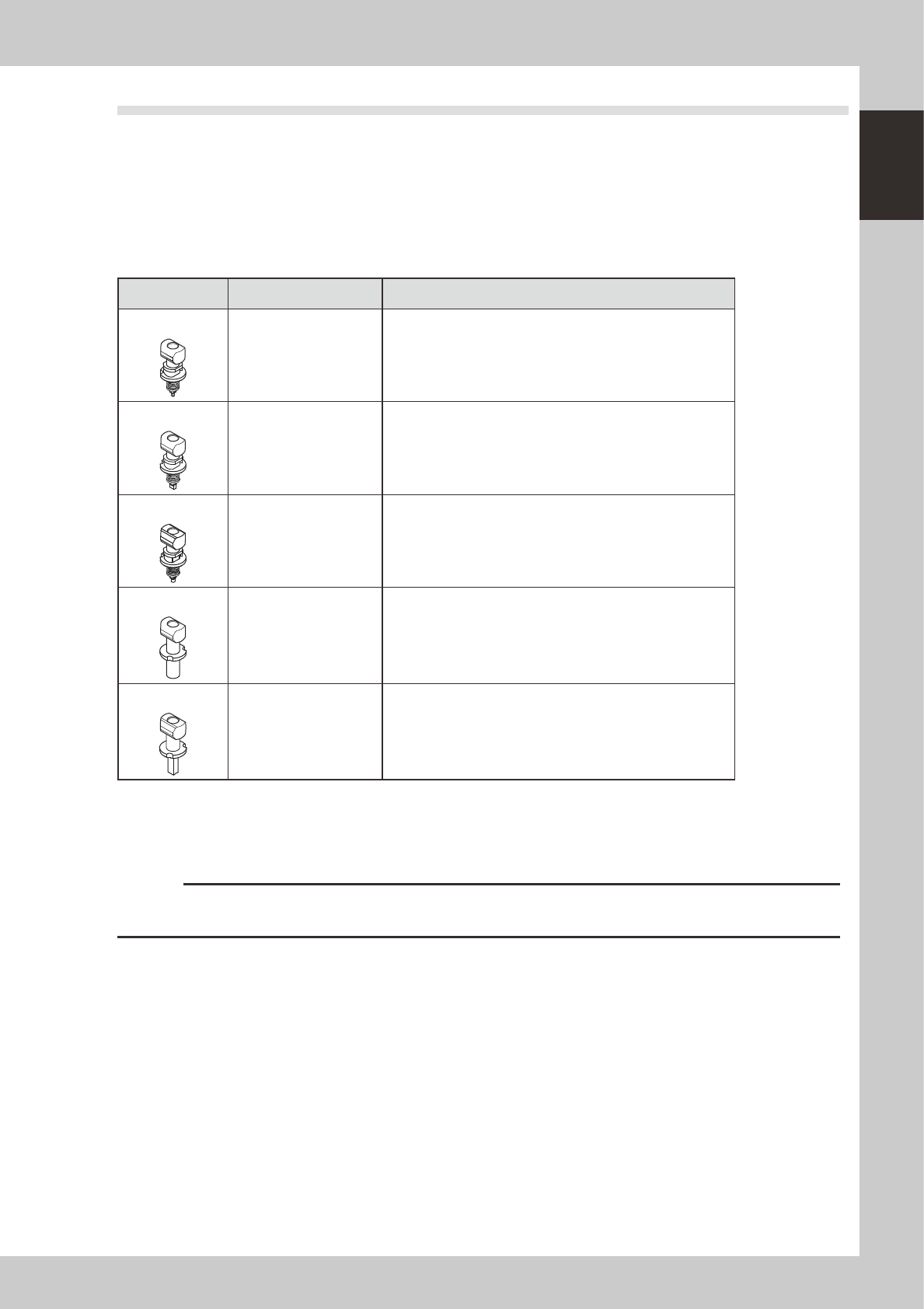
3.2.1 Nozzles for the eight-in-line head assemblies
On the eight-in-line multi-head assembly, five types of standard nozzles can be chosen and attached to each
head.
n
eight in-line multi-head type nozzle
Nozzle Type Head No. Typical Components
Type 301A
1 to 8 0603 to 1005 size chip components, mini-mold transistors, etc.
Type 302A
1 to8 1608 to 3216 size chip components, mini-mold transistors, etc.
Type 309A
1 to8 1608 to 3216 size chip components, mini-mold transistors, etc.
Type 303A
1 to8
4532 to 7343 size components, 10 mm SOP,
5×5mm to 14×14mm QFP, etc.
Type 306A
1 to8 Cylindrical chip (MELF) only
* Type 302A and Type 309A nozzles cannot be selected at the same time.
Type A nozzles
Type A nozzles (301A, 302(309)A, 303A, 306A) can be attached to all heads of the eight-in-line head assembly.
c
CAUTION
The above nozzles are specifically designed for use with the YG300 surface mounters. Do not use them for other
machines. Also, do not use the other machines' nozzles for this machine.
1-8
1
Part names and functions
3.3 Nozzle station (option)
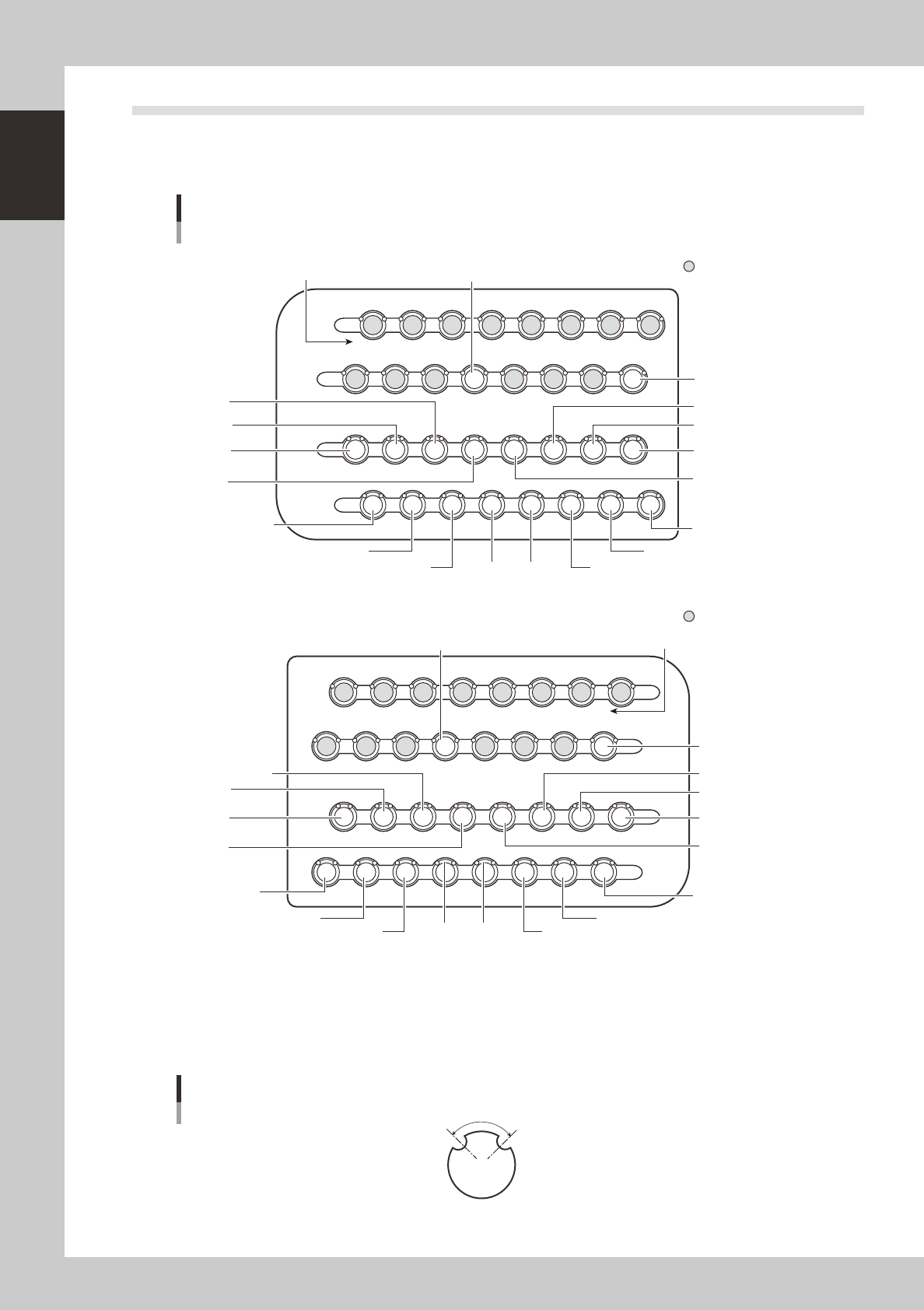
The nozzle station accommodates various nozzles for automatic change.
The YG300 with an optional nozzle station enables automatic nozzle change on all heads.
The drawings below show the nozzle station No. and the allotted head No. and mating nozzle type.
Nozzle station
13141516
1720
2526272829303132
21222324 1819
9101112
5678 1234
Custom nozzle pockets
Station No.
HEAD1
TYPE 303A
HEAD5
TYPE 303A
HEAD2
TYPE 302A,309A
HEAD3
TYPE 302A,309A
HEAD4
TYPE 302A,309A
HEAD6
TYPE 302A,309A
HEAD7
TYPE 302A,309A
HEAD8
TYPE 302A,309A
HEAD5
TYPE 302A,309A
HEAD1
TYPE 302A,309A
HEAD2
TYPE 301A
HEAD3
TYPE 301A
HEAD4
TYPE 301A
HEAD5
TYPE 301A
HEAD6
TYPE 301A
HEAD7
TYPE 301A
HEAD8
TYPE 301A
HEAD1
TYPE 301A
N Tables A and D
13141516
1720
2526272829303132
21222324 1819
9101112
5678 1234
Custom nozzle pockets
Station No.
HEAD1
TYPE 303A
HEAD5
TYPE 303A
HEAD2
TYPE 302A,309A
HEAD3
TYPE 302A,309A
HEAD4
TYPE 302A,309A
HEAD6
TYPE 302A,309A
HEAD7
TYPE 302A,309A
HEAD8
TYPE 302A,309A
HEAD5
TYPE 302A,309A
HEAD1
TYPE 302A,309A
HEAD2
TYPE 301A
HEAD3
TYPE 301A
HEAD4
TYPE 301A
HEAD5
TYPE 301A
HEAD6
TYPE 301A
HEAD7
TYPE 301A
HEAD8
TYPE 301A
HEAD1
TYPE 301A
N Tables B and C
23107-M3-00
n
Nozzle notch angle
The nozzles for the YG300 have notches as shown below for identifying their position in the station. The
q
(theta) angle
here is called the notch angle. The notch angles on Type 301A and Type 302A(309A) nozzles are respectively 90 and 60
degrees. The notches on the special nozzles 303A and 306A are 120 degrees.
Nozzle notch angle
Q
23108-M3-00
1-9
1
Part names and functions
4. Component supply section
Components or parts are supplied from tape feeders installed on a feeder plate or from an external tray
changer or tray stacker. Under each feeder plate in the feeder setup section, power supply connectors and
air connectors are provided for driving optional units.
4.1 Supplying components from feeder plates
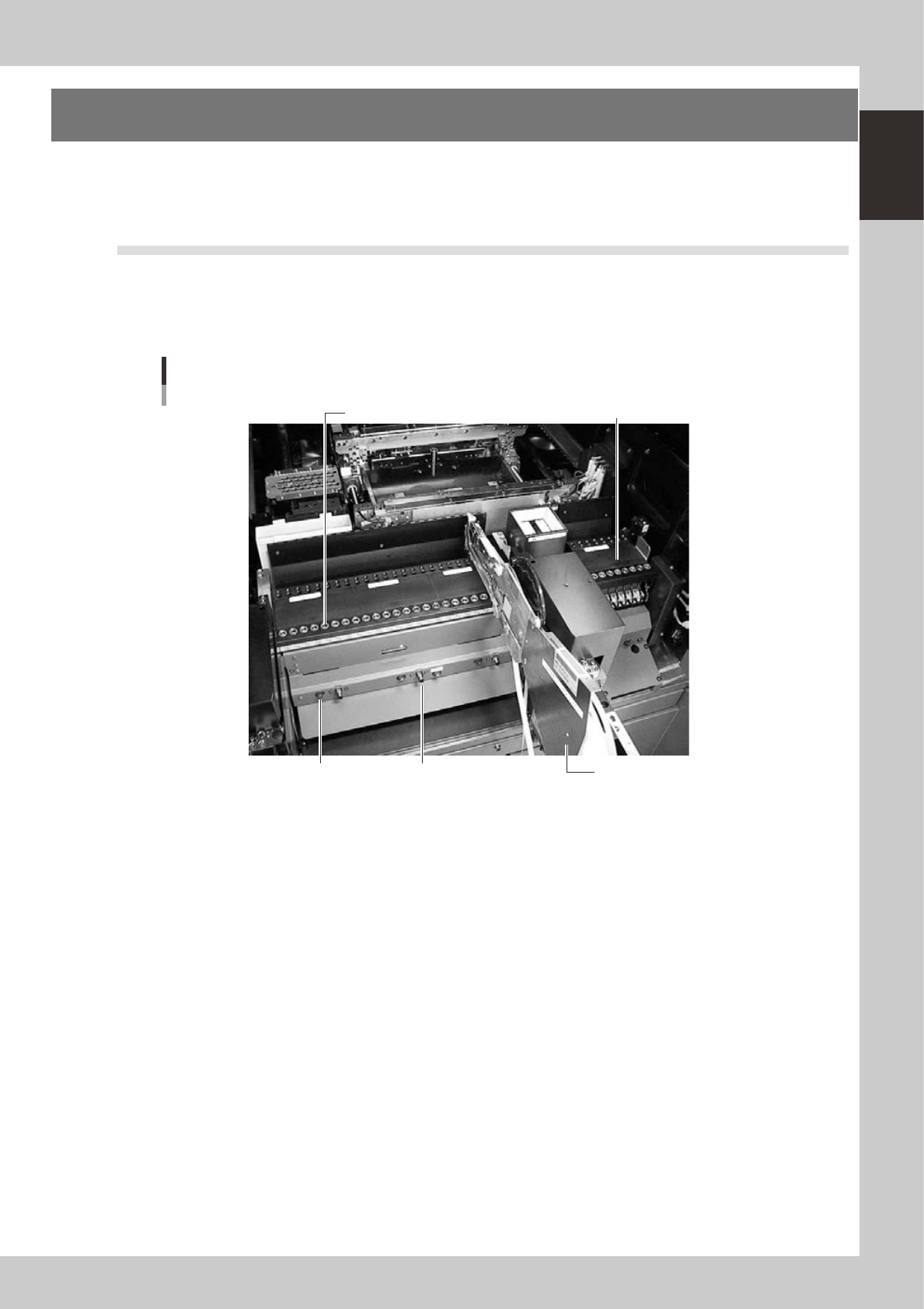
4.1.1 Fixed feeder plates
Tape feeders, bulk feeders and stick feeders are installed on the feeder plates, and operate by air supplied from
the mounter.
Feeder drive air outlet
Tape feeder (option)
Feeder plate
Power supply connector
Air connector
Feeder plate
23109-M3-00
Power supply connector
When using optional units such as stick feeders, plug the power cord into this connector.
Air connector
When using optional units such as stick feeders and air gun, connect the air tube (O.D. 4mm) to this air connector. Air is
supplied from the mounter to the connected unit. The feeder plate layout and set numbers differ depending on the
machine specifications. Typical feeder plate layouts are shown below. Some feeders cannot be reached by a head
depending on the head assembly configuration and X-axis movement range. The tables below show feeder set numbers
that can be accessed by each head.