2500_Users_Manual.pdf - 第138页
Operation 4-24 ProMa ster 25 00 U ser Ma nual Selecting a Task To select a Task from the list presented on the screen, press T AB to move the cursor to the Task /Kit list box. Use t he ↑ + ↓ to highlig ht a specific Task…
Operation
ProMaster 2500 User Manual 4-23
Running a Task
Start TaskLink at the DOS prompt in the directory where TaskLink is
installed. Type:
tl
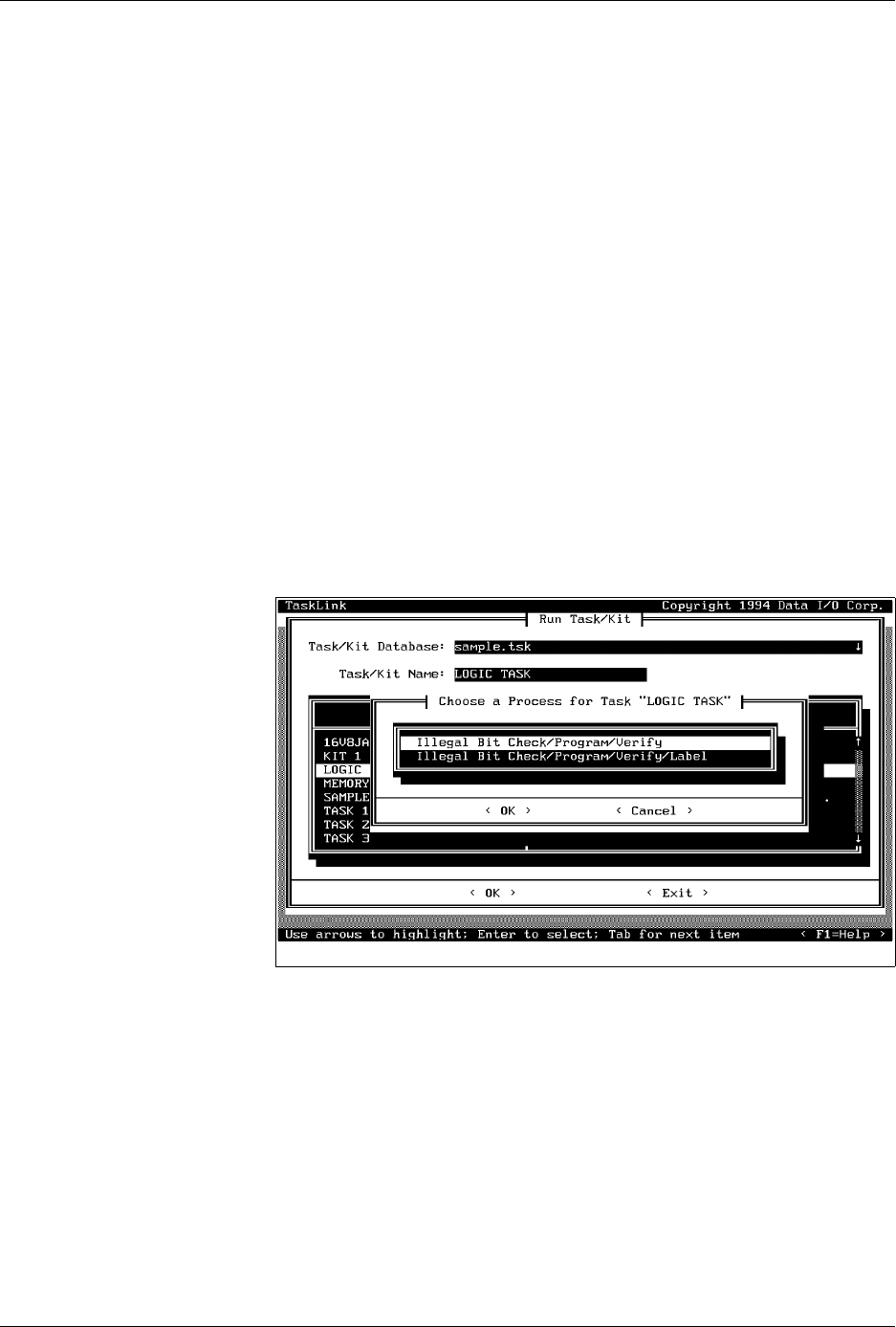
After a few seconds, the Run Task/Kit list box appears (similar to the one
shown in Figure 4-2). A Kit is a special collection of Tasks, which will be
explained later in this chapter. For now, ignore all references to Kits.
The Tasks and Kits available in the current Task/Kit database file (shown
in the
Task/Kit Database
entry field) are listed in the
Task/Kit
list box.
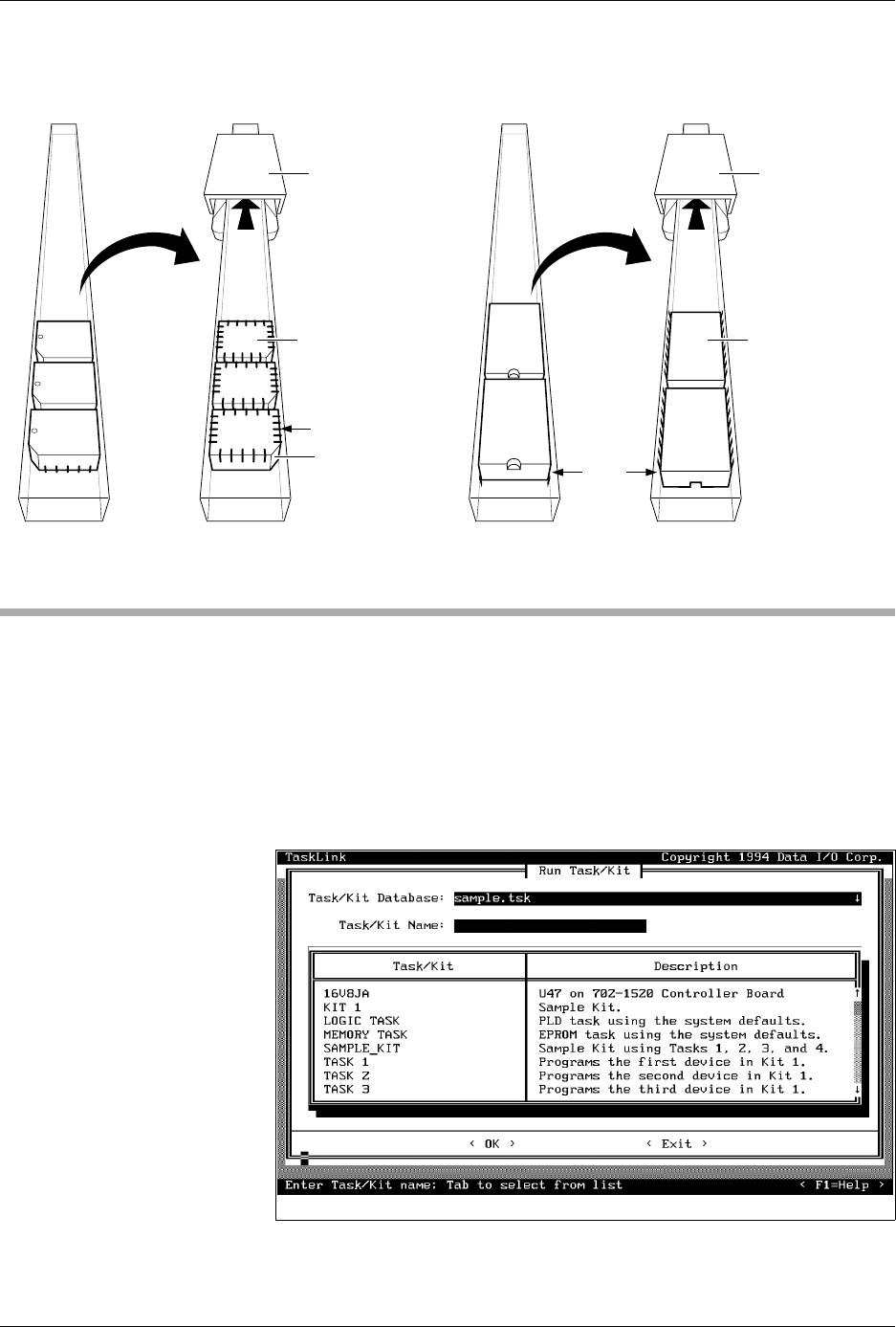
Figure 4-17
Installing Devices in the Tube Holder
Figure 4-18
Main Operator Screen in TaskLink
1854-3
NOTCHED
CORNER
INPUT TUBE
HOLDER
INPUT TUBE
HOLDER
TUBE INSERTED
WITH DEVICE
CONTACTS
FACING UP
TUBE INSERTED
WITH DEVICE
CONTACTS
FACING UP
SQUARE
PLCC
DEVICES
DIP/SOIC
DEVICES
PIN 1
PIN 1
Operation
4-24 ProMaster 2500 User Manual
Selecting a Task
To select a Task from the list presented on the screen, press
T
AB
to move
the cursor to the
Task/Kit
list box. Use the
↑
+
↓
to highlight a specific
Task name. Press
↵
to start that Task.
Selecting a Database
File
If the Task you are looking for is not displayed, it may be located in a
different Task database file. To select a different Task/Kit database file,
highlight the
Task/Kit Database
entry line and press
F2
.
Select the path and filename of the Task/Kit database file you want in the
Filename
entry field, or select it from the
Dirs/Drives
and
Files
list boxes.
Press
↵
, or select
<OK>
to accept the new database filename.
Now select the Task you want to run from the list as described above.
Select Process
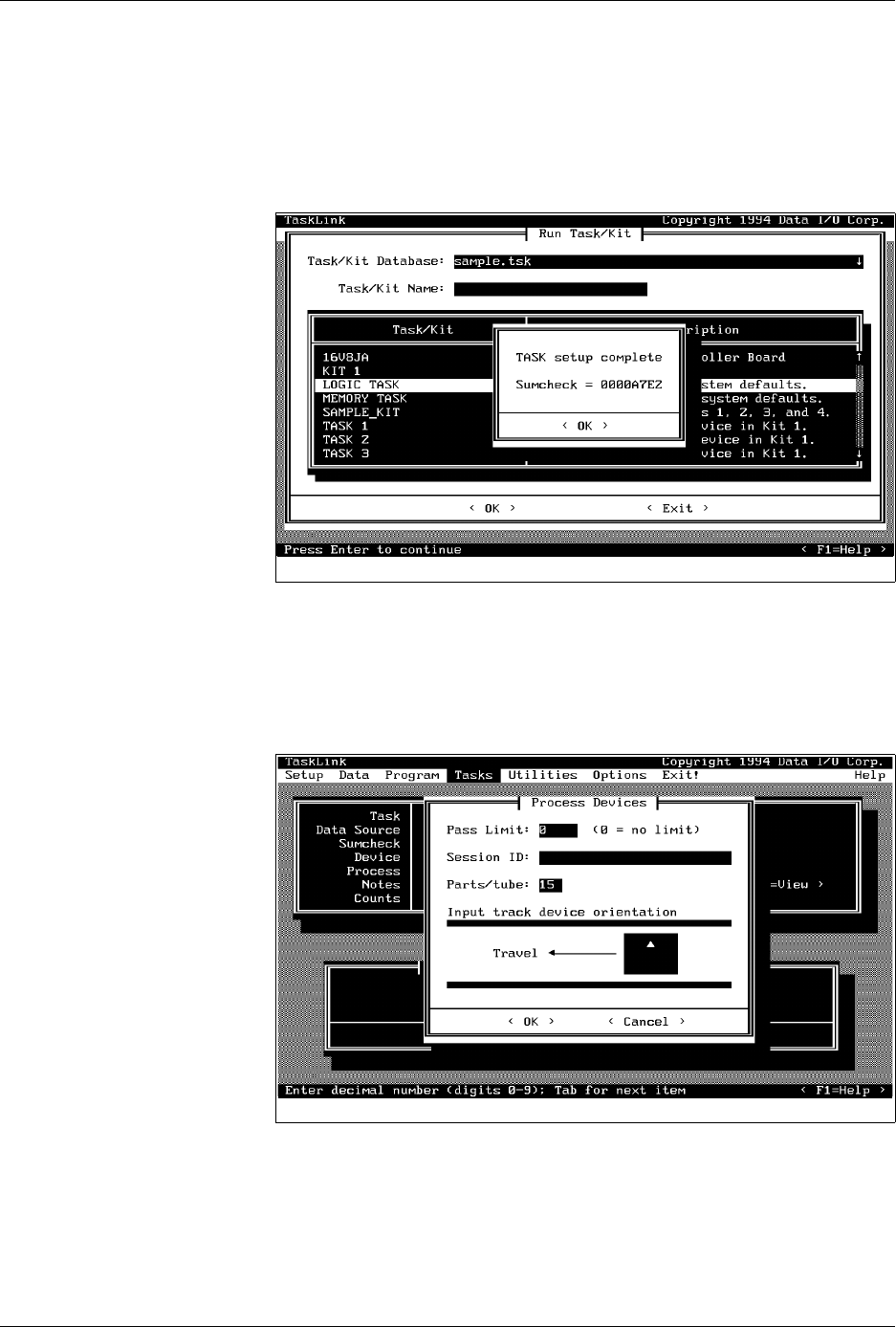
A list of processes may appear depending on how the Task was written.
A process is a list of operations that will be performed on the devices in
the Task. If a list of processes appears, you must make a choice similar to
the one in Figure 4-19. Check the instructions you have been given to help
you decide which process to select. In this example, the only difference
between these two processes is that one does not call for labeling the
device.
Select the desired process and press
↵
.
Other Prompts
Other prompts, such as those described below, may appear depending on
the types of devices listed in the Task. Then the action status box appears
showing what percentage of the data has been loaded.
Selecting a Device
A Task-specific device list may appear asking you to select from several
device IC manufacturers. Check the tubes of devices you will be running
and select the appropriate manufacturer and device type from the screen.
Use the
↑
and
↓
keys to move the screen cursor between devices. Press
↵
to select the device and continue running the Task.
Figure 4-19
Choosing a Process From Those
Presented on the Screen
Operation
ProMaster 2500 User Manual 4-25
Sumcheck Status Box
Depending on how the administrator configured the Task, this box may
appear if you download your device programming data from a file or
load a master device. The recorded sumcheck may be displayed
(depending on how the Task was written) so you can confirm the number
with your paper documentation. Press
↵
to continue or
E
SC
to abort the
Task if there is an error.
Process Devices Dialog Box
Once TaskLink has loaded data in RAM to program the devices, the
Process Devices dialog box may appear. The
Pass Limit
field enables you
to enter the number of devices that you are going to program using this
Task. When you enter any number (other than zero), TaskLink will count
the number of devices you programmed successfully and stop when the
number you entered in the Pass Limit field has been reached.
Count the number of parts in a full tube and enter this in the
Parts/tube
field. The 2500 counts the number of devices entering the output tube and
prompts you to insert an empty tube when that number is reached.
Figure 4-20
Checking the Sumcheck
Figure 4-21
Setting Pass Limit and Parts Per
Tube