2500_Users_Manual.pdf - 第351页
Trans lation Fo rmats ProM aster 25 00 User Manua l D-2 1 RCA Cosmac For mat, C ode 70 Data in this form at begin with a sta rt record consisting of the start character (!M or ?M), an address f ield, and a s pace. See Fi…

Translation Formats
D-20 ProMaster 2500 User Manual
Although each data byte has an address, most are implied. Data bytes are
addressed sequentially unless an explicit address is included in the data
stream. This address is preceded by a $ and an A, must contain 2 to 8 hex
or 3 to 11 octal characters, and must be followed by a comma, except for
the ASCII-Hex (Comma) format, which uses a period. The programmer
skips to the new address to store the next data byte; succeeding bytes are
again stored sequentially.
Each format has an end code, which terminates input operations.
However, if a new start code follows within 16 characters of an end code,
input will continue uninterrupted. If no characters come within 2
seconds, input operation is terminated.
After receiving the final end code following an input operation, the
programmer calculates a sumcheck of all incoming data. Optionally, a
sumcheck can also be entered in the input data stream. The programmer
compares this sumcheck with its own calculated sumcheck. If they
match, the programmer will display the sumcheck; if not, a sumcheck
error will be displayed.
Note: The sumcheck field consists of either 2-4 hex or 3-6 octal characters,
sandwiched between the $ and comma characters. The sumcheck
immediately follows an end code. The sumcheck is optional in the input
mode but is always included in the output mode. The most significant
digit of the sumcheck may be 0 or 1 when expressing 16 bits as 6 octal
characters.
The programmer divides the output data into 8-line blocks. Data
transmission is begun with the start code, a nonprintable STX character,
or optionally, SOH.* Data blocks follow, each one prefaced by an address
for the first data byte in the block. The end of transmission is signaled by
the end code, a nonprintable ETX character. Directly following the end
code is a sumcheck of the transferred data.
* ASCII-Octal SMS and ASCII-Hex SMS use SOM (CTRL-R) as a start code and EOM
(CTRL-T) as an end code.
Translation Formats
ProMaster 2500 User Manual D-21
RCA Cosmac Format, Code 70
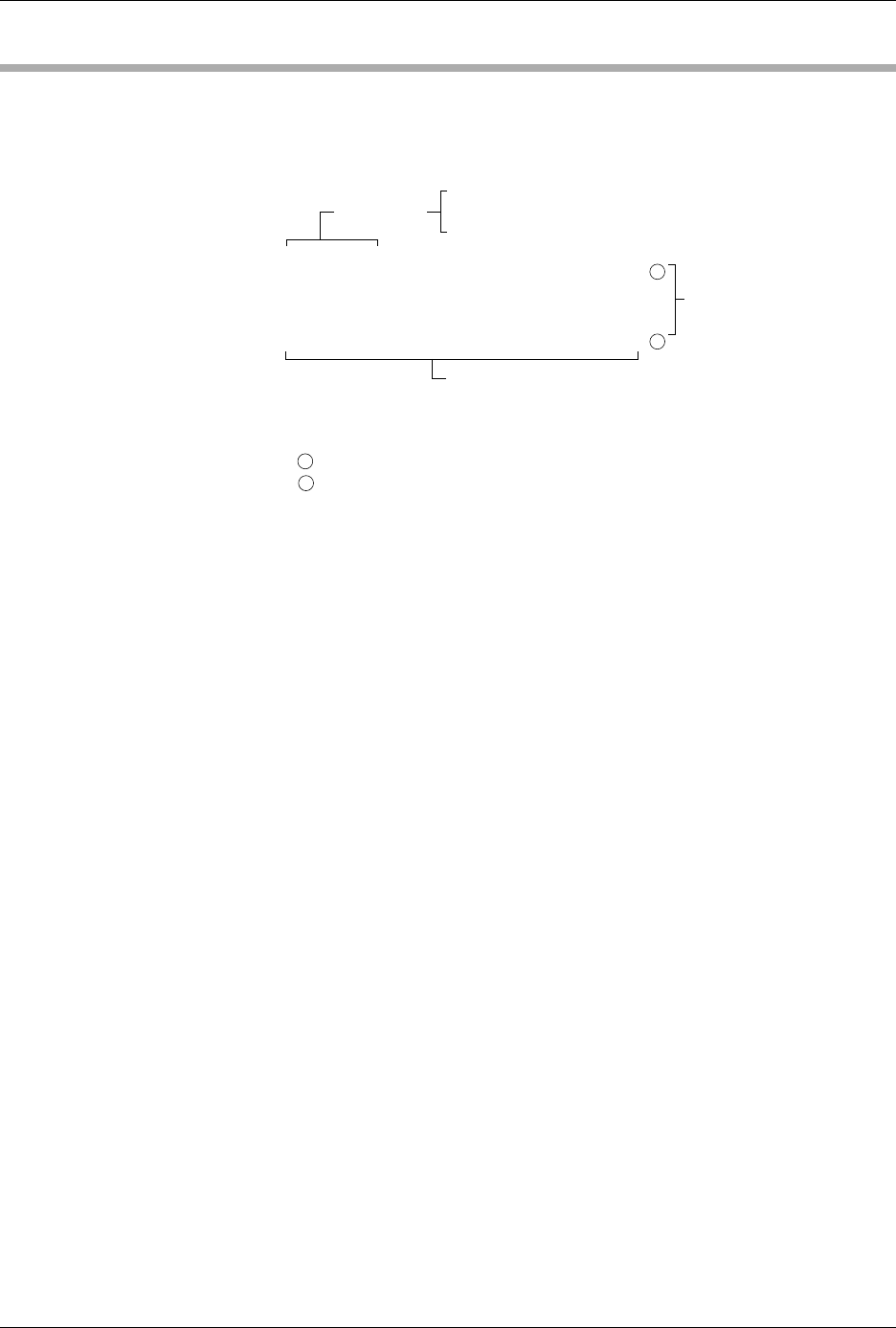
Data in this format begin with a start record consisting of the start
character (!M or ?M), an address field, and a space. See Figure D-7.
The start character ?M is sent to the programmer by a development
system, followed by the starting address and a data stream which
conforms to the data input format described in the ASCII-Hex and Octal
figure. Transmission stops when the specified number of bytes has been
transmitted.
Address specification is required for only the first data byte in the
transfer. An address must have 1 to 4 hex characters and must be
followed by a space. The programmer records the next hexadecimal
character after the space as the start of the first data byte. (A carriage
return must follow the space if the start code ?M is used.) Succeeding
bytes are recorded sequentially.
Each data record is followed by a comma if the next record is not
preceded by an address, or by a semicolon if it starts with an address.
Records consist of data bytes expressed as 2 hexadecimal characters and
followed by either a comma or semicolon, and a carriage return. The
programmer ignores any characters received between a comma or
semicolon and a carriage return.
The carriage return character is significant to this format because it can
signal either the continuation or the end of data flow; if the carriage
return is preceded by a comma or semicolon, more data must follow; the
absence of a comma or semicolon before the carriage return indicates the
end of transmission.
Output data records are followed by either a comma or a semicolon and a
carriage return. The start-of-file records are expressed exactly as for
input.
Figure D-7
An Example of RCA Cosmac
Format
!M0000 ,
FFFFFFFFFFFFFFFFFFFFFFFFFFFFFFFF,
FFFFFFFFFFFFFFFFFFFFFFFFFFFFFFFF,
FFFFFFFFFFFFFFFFFFFFFFFFFFFFFFFF,
FFFFFFFFFFFFFFFFFFFFFFFFFFFFFFFF,
FFFFFFFFFFFFFFFFFFFFFFFFFFFFFFFF
Start Record
!M or ?M = Start Characters
0000 = Address
End-of-File Record
1
2
Data Records
FF =
, =
; =
2 Hex Characters = (1 Byte)
Bytes per record is variable
End of Record Character
End of Record Character
if followed by expressed
address
LEGEND
Nonprinting line feed, carriage return, and nulls
Nonprinting carriage return
1
2
0079-2
Translation Formats
D-22 ProMaster 2500 User Manual
Fairchild Fairbug, Code 80
In the Fairbug format, input and output requirements are identical; both
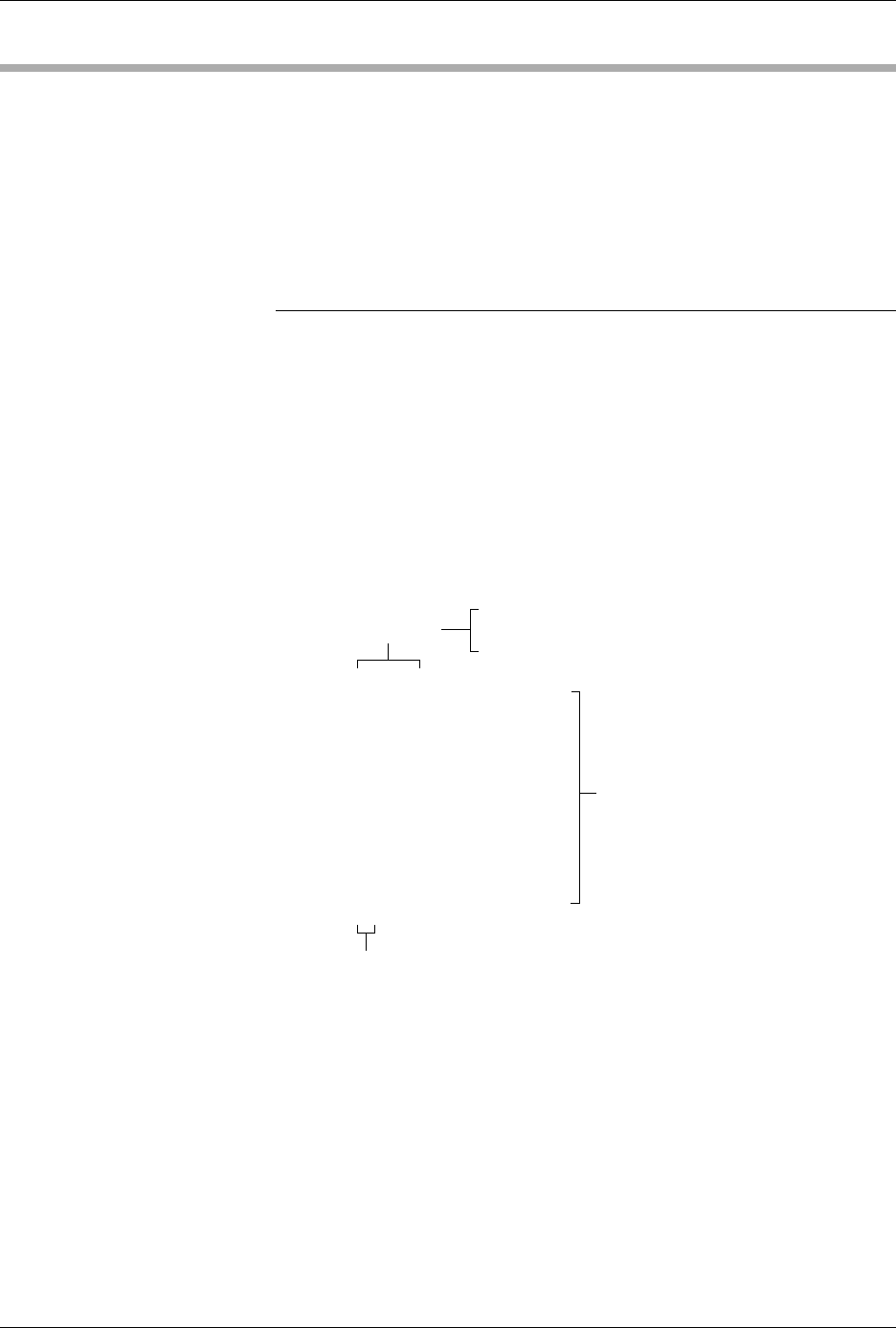
have 8-byte records and identical control characters. Figure D-8 shows a
Fairbug data file. A file begins with a 5-character prefix and ends with a
1-character suffix. The start-of-file character is an S, followed by the
address of the first data byte. Each data byte is represented by 2
hexadecimal characters. The programmer will ignore all characters
received prior to the first S.
Note: Address specification is optional in this format; a record with no address
directly follows the previous record.
Each data record begins with an X and always contains 8 data bytes. A
1-digit hexadecimal checksum follows the data in each data record. The
checksum represents, in hexadecimal notation, the sum of the binary
equivalents of the 16 digits in the record; the half carry from the fourth bit
is ignored.
The programmer ignores any character (except for address characters and
the asterisk character, which terminates the data transfer) between a
checksum and the start character of the next data record. This space can
be used for comments.
The last record consists of an asterisk only, which indicates the end
of file.
Figure D-8
An Example of Fairchild Fairbug
S0000
XFFFFFFFFFFFFFFFFC
XFFFFFFFFFFFFFFFFC
XFFFFFFFFFFFFFFFFC
XFFFFFFFFFFFFFFFFC
XFFFFFFFFFFFFFFFFC
XFFFFFFFFFFFFFFFFC
XFFFFFFFFFFFFFFFFC
XFFFFFFFFFFFFFFFFC
XFFFFFFFFFFFFFFFFC
XFFFFFFFFFFFFFFFFC
*
Start Record
S = Start Character
0000 = Address Field
End-of-File Record
Data Records
X =
FF =
C =
Data Record Start Character
2 Hex Characters (1 Byte)
Checksum. 1-digit summation
of data in record
0080-2