Printer 710_810 v8 Transportation.pdf - 第111页
TRANS PORTATION FOREIGN MACHINE INTERFA CE Chapter Issue 7 Oct 06 Technical Reference Manual 34.111 FMI Pod The FMI Pod is only used where both the upline and downline is using SMEMA, Fuji or Pa nasonic inte rfaces. For …
TRANSPORTATION
FOREIGN MACHINE INTERFACE
34.110 Technical Reference Manual Chapter Issue 7 Oct 06
FOREIGN MACHINE INTERFACE
Introduction The Foreign Machine Interface (FMI) is an electrical means of communication
between the DEK machine and an adjacent machine, using electrical signals.
The signals are transferred using opto-couplers and/or relay contacts which
keep the machines electrically isolated.
The adjacent machine can be upline or downline of this machine in a left-to-right
or right-to-left board transfer arrangement, or it can be at one side of this
machine in a left-to-left or right-to-right arrangement.
The machine can interface with many different types of adjacent machinery
which can be of any proprietary manufacture. The adjacent machine utilizes a
set of timing and control signals (protocols) for communication with other
machines. As there are many different protocols, DEK supplies a custom
designed FMI to suit the protocol for each type of adjacent machine.
The FMI hardware comprises:
• An FMI Pod and connecting cable for SMEMA, Fuji and Panasonic only.
• A Multi-Interface Unit (MIU) for all other interfaces.
• An FMI loom which connects the FMI port, on the machine controller, to
the MIU or FMI Pod.
• Two interface cables, one cable for each adjacent machine.
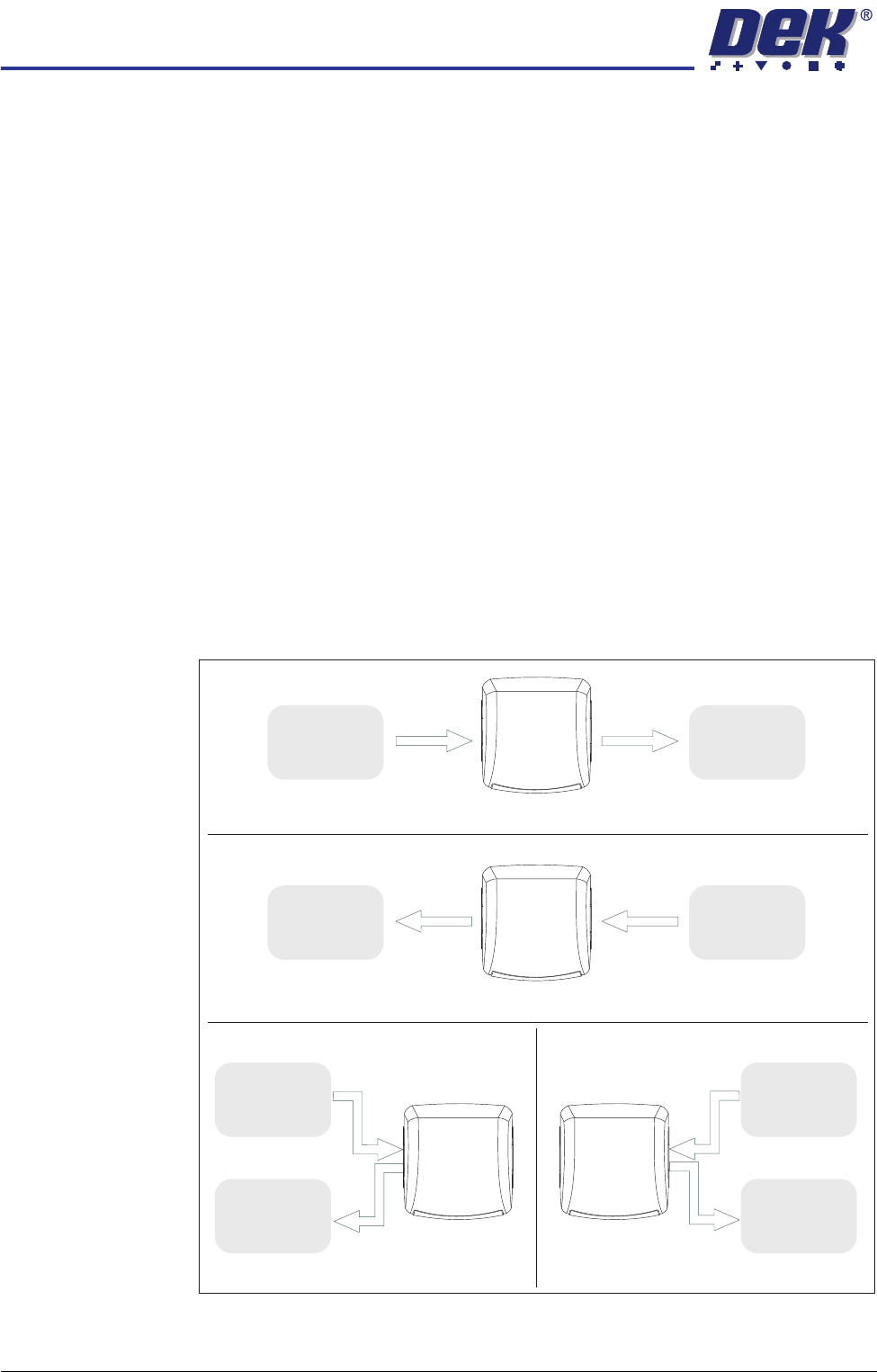
Figure 34-27 Machine Arrangements for Board Transfers
Left to Right Board Transfers
Right to Left Board Transfers
Upline
Downline
Adjacent
Machine
Adjacent
Machine
UplineDownline
Adjacent
Machine
Adjacent
Machine
Left to Left Board Transfers Right to Right Board Transfers
Upline
Adjacent
Machine
Downline
Adjacent
Machine
Upline
Adjacent
Machine
Downline
Adjacent
Machine
DEK
Machine
DEK
Machine
DEK
Machine
DEK
Machine
TRANSPORTATION
FOREIGN MACHINE INTERFACE
Chapter Issue 7 Oct 06 Technical Reference Manual 34.111
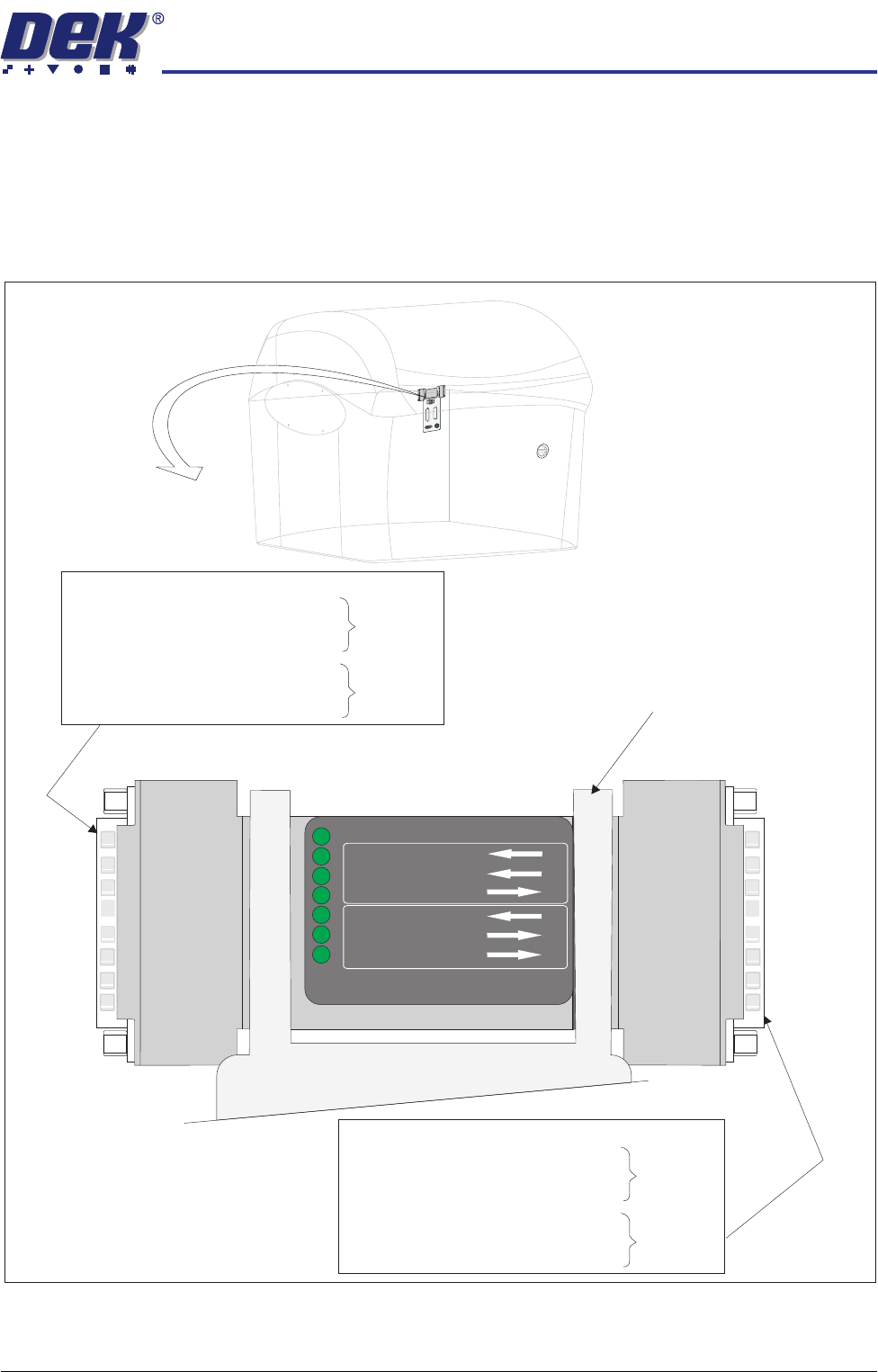
FMI Pod The FMI Pod is only used where both the upline and downline is using SMEMA,
Fuji or Panasonic interfaces. For all other interfaces refer to the MIU interface
later in this chapter.
The DEK FMI Pod, located on the external services panel at the rear of the
machine, is a communications interface that allows DEK Printing Machines to
communicate with upline and downline board handlers.
03 Board Available (Input)
10 Board Pass (Input)
01 Dek M/C Available (Output)
16 Downline M/C Available (Input)
19 Board Available (Output)
24 Board Pass (Output)
Upline
Downline
M28SK02
External Service Panel
POWER ON
PART No. 160740
M/C AVAILABLE
BOARD AVAILABLE
BOARD PASS
DOWNLINE
BOARD AVAILABLE
BOARD PASS
M/C AVAILABLE
UPLINE
18 Board Available (Input)
05 Board Pass (Input)
15 Dek M/C Available (Output)
09 Downline M/C Available (Input)
06 Board Available (Output)
13 Board Pass (Output)
Upline
Downline
M28PL01
FMI POD

TRANSPORTATION
FOREIGN MACHINE INTERFACE
34.112 Technical Reference Manual Chapter Issue 7 Oct 06
Multi-Interface Unit The DEK Multi-Interface Unit (MIU) is a communications interface that allows
DEK Printing Machines to communicate with upline and downline board han-
dlers.
It simplifies the set up of the communications link between machines of different
manufacture by providing preprogrammed and programmable connections to
suit the interface protocol types commonly found within the board processing
industry.
The onboard, switch selectable, interface types are detailed later in this section.
Up to 16 interfaces can be specified for upline and downline handlers. The
upline machine can be of a different interface type to the downline machine.
Power supplies of +24V and +12V power the communications devices of the
upline and downline machines. Input signals to the MIU are opto-isolated.
Relay or open collector output driver signals are available for the MIU outputs.
A patching area routes patching link connections direct from upline to downline
as specified by any given protocol requirement.
The RS232 link is used for carrying out self tests on the MIU only and has no
function on the machine.