80S-2080F480F5.pdf - 第251页
SIPLACE 80S-20/F4/F5 User M anual 5 Vision Func tions 05/99 Issue from Software Vers ion SR.405.xx 5.2 PCB Vision S ystem Line en gineer 5 - 19 5.2.5 Criteria for Cre ating Fiducials Basic ally th e same c riteri a apply…
5 Vision Functions SIPLACE 80S-20/F4/F5 User Manual
5.2 PCB Vision System 05/99 Issue from Software Version SR.405.xx
5 - 18 Line engineer
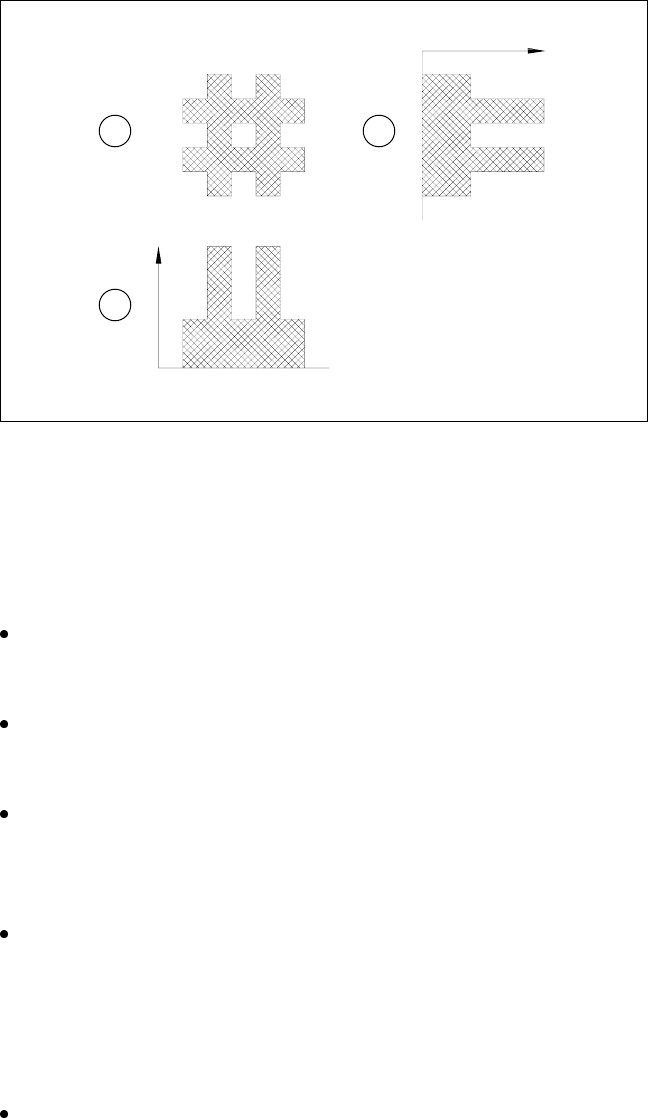
Fig. 5.2.2 Row and column profile of a double cross
- Key to Fig. 5.2.2
1 Fiducial
2 Sum of the gray scale values in one column: column profile
3 Sum of the gray scale values in one row: row profile
The position of the fiducial is precisely determined from the horizontal and vertical profiles. After teaching
the fiducial structure parameters obtained are saved to the line computer.
The saved pattern is now tested. The gantry moves the PCB camera over the board to all 4 corners of the
search area (worst case). During this test the vision system must re-identify the fiducial four times.
Finally the coordinates of each individual fiducial (at least two) are manually added to the NU file or trans-
ferred from the CAD file to the NU file. In this way the coordinates and fiducial structure parameters for the
board which is to be inserted are defined as a pattern in the system.
During the placement process the fiducial will then be determined once again using the 2-D and 1-D image
processing methods described above. The template window is moved moxel by moxel over the search
area searching for the best possible agreement of the gray scale values of the reference and board search
fiducials (correlation procedure). Maximum correlation is attained when the reference and search fiducials
agree.
Once the fiducial has been found, the 1-D pattern search process starts its very precise determination of
the shape and coordinates of the fiducial. The precise shape and coordinates of the fiducial are now deter-
mined in each case by applying the correlation procedure to the column and row profiles (see Fig. 5.2.2).
From the coordinates obtained in this way the location, skew and shear of the board are determined.
Reject fiducials (= ink dots) are also detected and evaluated using the methods described above.
1 2
3

SIPLACE 80S-20/F4/F5 User Manual 5 Vision Functions
05/99 Issue from Software Version SR.405.xx 5.2 PCB Vision System
Line engineer 5 - 19
5.2.5 Criteria for Creating Fiducials
Basically the same criteria apply to both fiducials and reject fiducials (ink dots): uniqueness of fiducial shapes
and readily detectable structures which stand out from their surroundings.
l Use existing structures as fiducials
Instead of fiducials you can also use uniquely identifiable structures within the layout. It should, however,
be remembered that the solder stop lacquer is frequently accompanied by a loss in contrast.
l Location of the fiducials
Position the fiducial where there are as few structures as possible and where the fiducial will stand out well
from its surroundings. Measuring outwards from the center of the fiducial, there should be a clearance on
each side at least equal to the fiducial size plus 1 mm.
l Type of fiducials
There are 2 types of fiducials:
– Positive fiducials
The fiducial extends beyond of the base material of the board.
– Negative fiducials
The fiducial is etched into the base material of the board.
l Fiducial shape
Always choose a well-structured, distinct shape as fiducial shape:
Recommended fiducial shapes:
Rectangle, square or circle
Properties
– Low informational content (fiducials can easily be confused with test dots).
NOTE
Make sure that there are no similar structures in the fiducial search area.
– Low space requirements in the layout
– Very robust with respect to different tinning procedures (e.g. hot-tinning).
Recommended fiducial dimensions
– for square and rectangles: Side length 1.2 mm - 2.2 mm
– for the circle: Diameter 1.2 mm - 2.2 mm
Double cross and single cross
Properties of the double cross
– Higher informational content
– More space required in the layout
– Sensitivity with respect to high tin-coatings (bare copper is preferable)
– If a fiducial quality is permitted which is too low you will run the risk of four incorrect positions being
recognized.
5 Vision Functions SIPLACE 80S-20/F4/F5 User Manual
5.2 PCB Vision System 05/99 Issue from Software Version SR.405.xx
5 - 20 Line engineer
Properties of the simple cross
– The informational content is somewhat lower than with the double cross
– Less space required in the layout than with the double cross.
– Less sensitive to high tin-coatings than with the double cross.
Dimensions of the fiducials:
Simple and double crosses
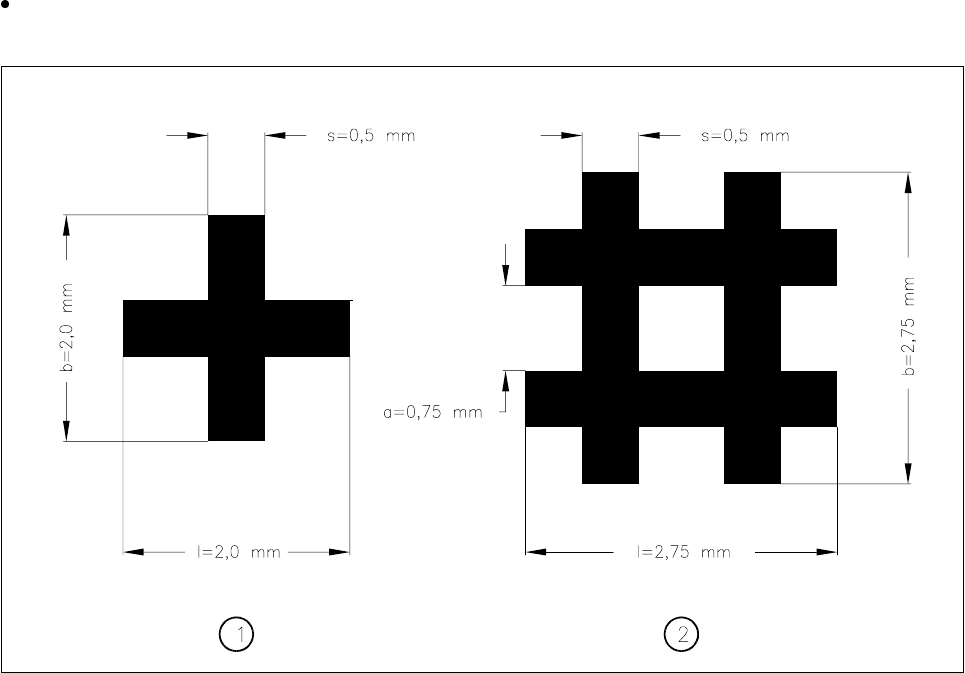
Fig. 5.2.3 Simple and double crosses with ideal dimensions
- Key to Fig. 5.2.3
1 Simple cross 2 Double cross
The minimum dimensions for a fiducial in length (l) and width (b) depend on the line thickness (s) and on the
structure of the fiducial.
– Length (l) and width (b)
For the good recognizability of a fiducial, the length and the width should be at least 0.9 mm with the sim-
ple cross and 1.8 mm with the double cross. The ideal dimensions for the simple cross are 2.0 mm and for
the double cross 2.75 mm. Under normal circumstances length and width will be equal.
– Line thickness (s)
The line thickness may vary according to standard structure widths and in addition will also depend on the
type of fiducial. However, you should ensure that the line is at least 0.3 mm thick. The ideal line thickness
for both fiducial types is 0.5 mm.
– Line spacing (a)
Line spacing also depends on the type of fiducial. Under no circumstances should line spacing fall below
0.5 mm. With the double cross the ideal spacing will be 0.75 mm.