Portal-Operation-Manual-REV-I.pdf - 第90页
PVA Portal Manual Revision I / Janua ry 2022 Page 90 of 106 8. Perform the Sta rtup Procedur e . Refer to S ection 10.1 for mor e information. If a door is op en while t he D oor Bypass switch is in the OFF positi on, or…
PVA Portal Manual
Revision I / January 2022
Page 89 of 106
Faulty Recovery
15.1 Recovering From Emergency Stop and Other
Machine Errors
If the Emergency Stop button is engaged or the machine encounters a system error,
perform the following procedure to return the machine back to normal operation.
Note: If the Emergency Stop was engaged because of system failure, DO NOT
disengage the Emergency Stop button. Shut the system down and have qualified
personnel repair the machine. Do not operate the workcell again until the cause of
the failure has been repaired.
1. Open the front doors and remove all parts/PCBs from the work area.
2. Close the doors and disengage the “Emergency Stop” button if it was not engaged
because of a system failure.
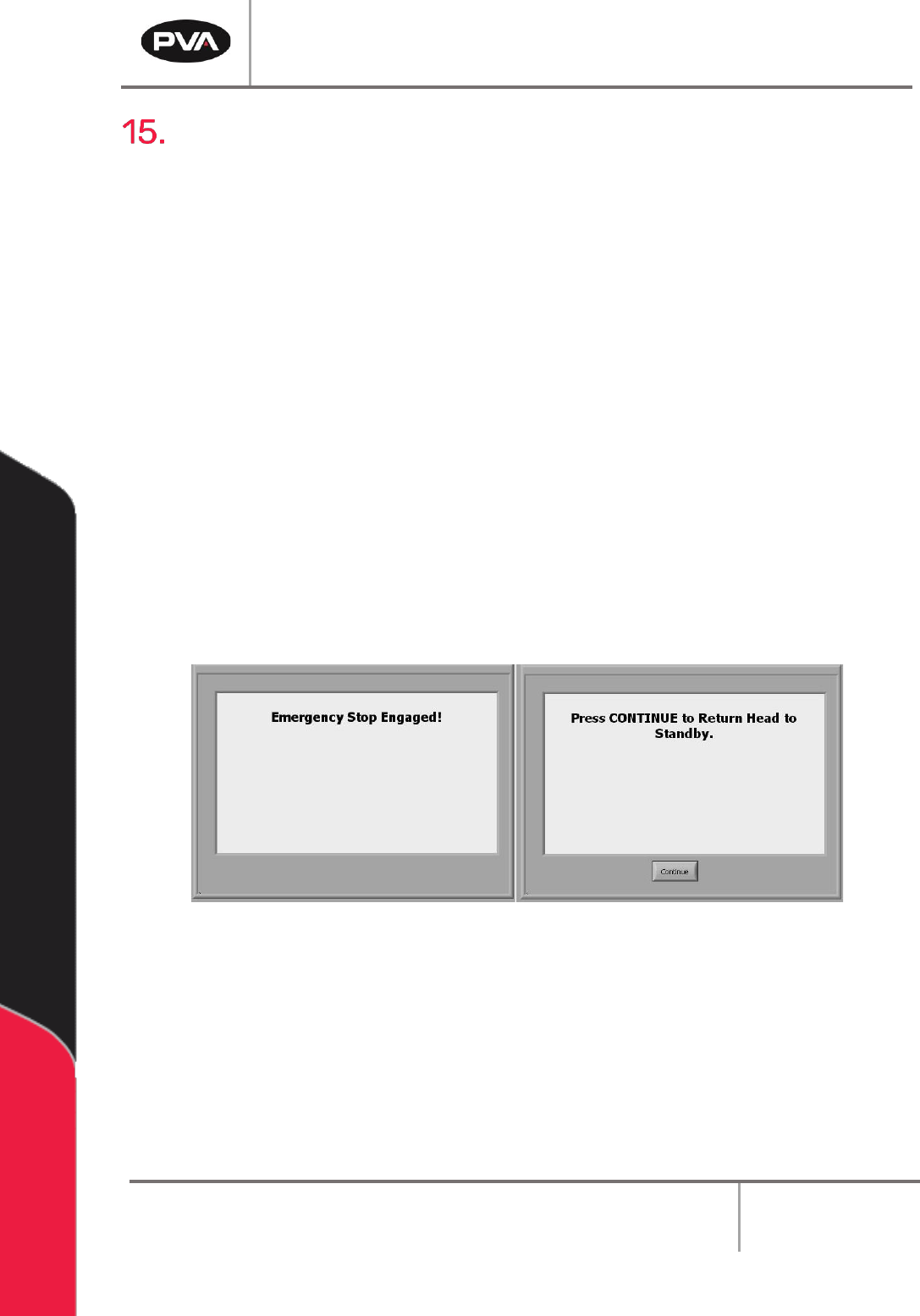
3. Press the “Continue” button to return the head to the Standby Position. The
screen will return to the Cycle Stop mode.
Note: All functions are stopped until the “Emergency Stop” button is disengaged.
Figure 114: Emergency Stop Screens
4. Correct the fault that caused the operator to engage the “Emergency Stop” button.
5. Open the access door.
6. Remove all parts from the work area. Find any parts that can still be used and put
them in the input queue.
7. Close the access door.
PVA Portal Manual
Revision I / January 2022
Page 90 of 106
8. Perform the Startup Procedure. Refer to Section 10.1 for more information.
If a door is open while the Door Bypass switch is in the OFF position, or the workcell is in
any machine state besides the Manual or Calibration modes, it will cause a door error.
Recovery from a door error is similar to the recovery from an Emergency Stop.
Other workcell errors can occur, such as:
• Low air pressure
• Low material flow
• Insufficient exhaust air flow
These errors must first be corrected, and then the Startup Procedure can be performed
to continue. Refer to the section that relates to the error. Refer to Section 10.1 for more
information on the Startup Procedure.
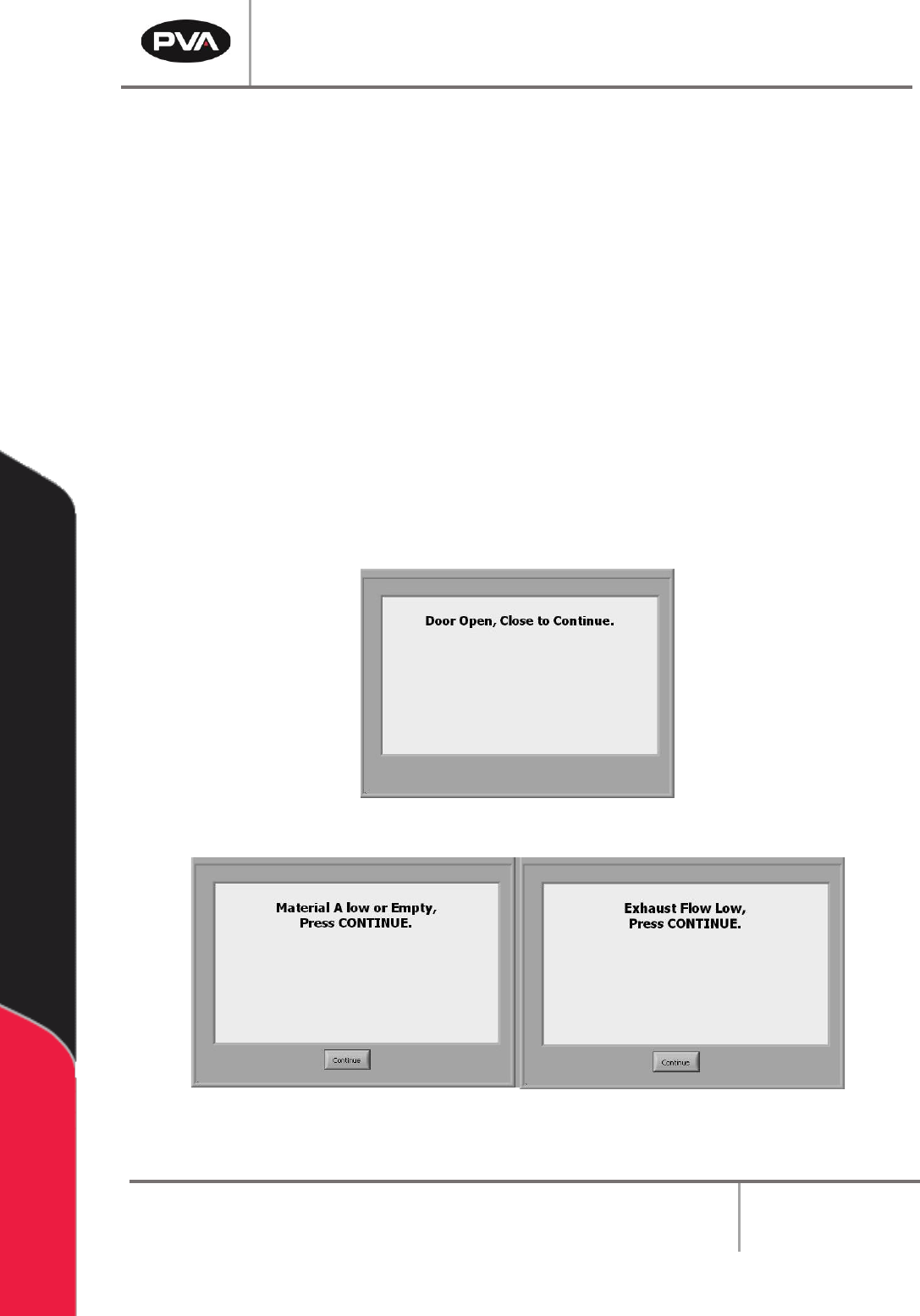
Below are examples of the other possible error screens:
Figure 115: Door Open Error
Figure 116: Low Material Level and Low Exhaust Flow
PVA Portal Manual
Revision I / January 2022
Page 91 of 106
15.2 Low Material Level
There are three common ways to monitor the material level:
• Scales are the most common and flexible option to monitor the material level. They
have two settings: one for a low material level and one for an empty level. When the
low material level is reached, the operator will be shown a message, but the workcell
will continue to operate. When the empty level is reached, the workcell will stop
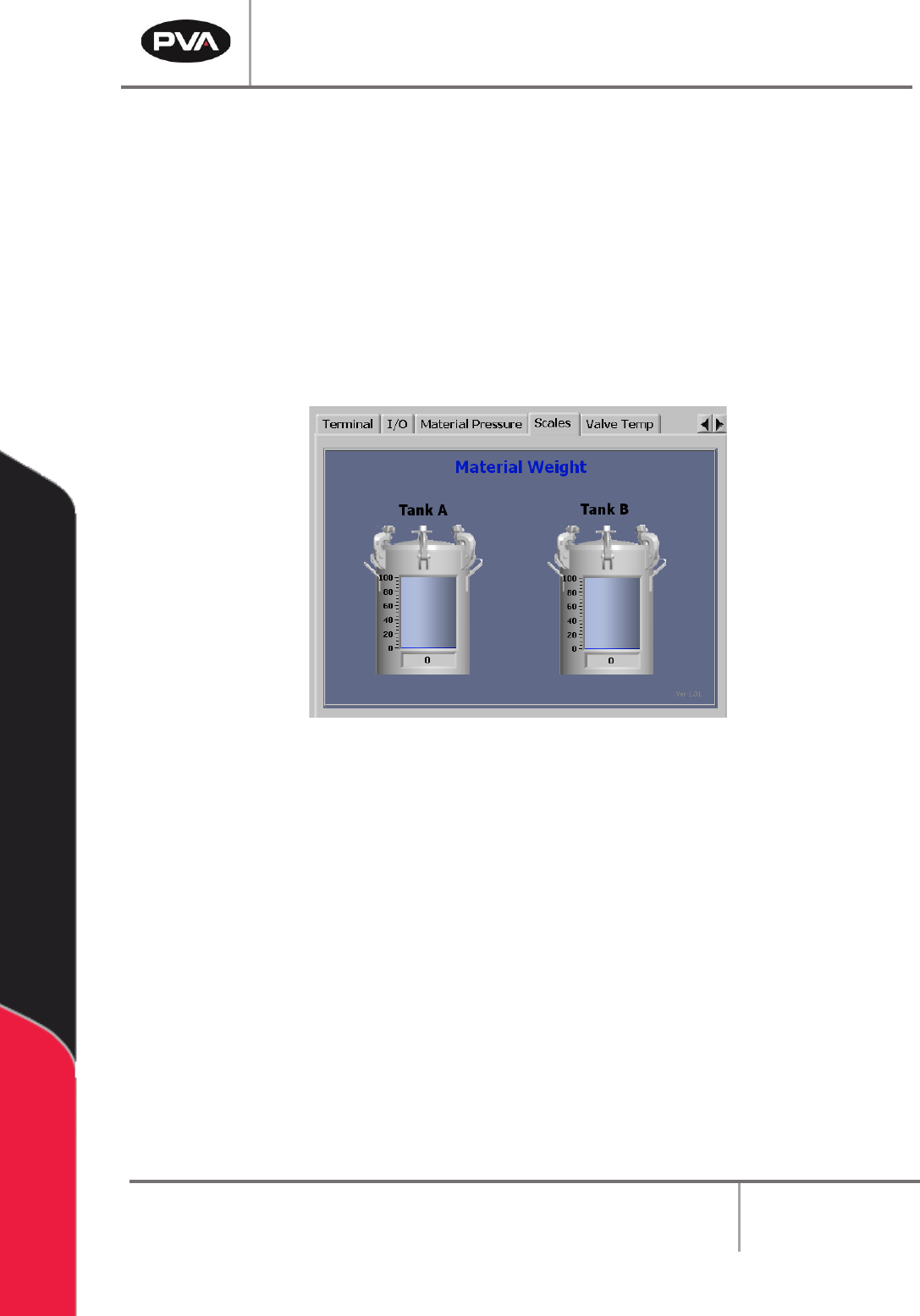
operating. To view the amount of a material in a tank, select the Scales tab on the
right side of the Portal screen. This option can be viewed in any mode. Refer to
Section 9.6 for more information on Scales.
Figure 117: Material Level in Scales Tab
• Floats are an additional way to monitor the material level. However, this option will
only notify the operator when the material is low.
• Proximity Sensors are used for cartridges or syringes. The proximity sensor is
activated when the ram moves to the low material position.
The workcell only measures the material level(s) when in Auto Cycle or Manual “One Shot
Wet” mode. If there is a material level error, the machine can operate in all modes, except
for Auto Cycle or Manual “One Shot Wet” mode, until the material level is raised above the
low level.
Note: A low material level will not stop a cycle. The cycle will complete the path
program and then stop machine operation.