MD600 Series Compact AC Drive Hardware Guide-EN-B06.PDF - 第119页
Option ‑ 118 ‑ Note When the braking power is fed back from the motor to the U/V/W cable, and then fed back from the U/V/W cable to the DC bus of the drive, the braking power will be derated by the motor efficiency and t…
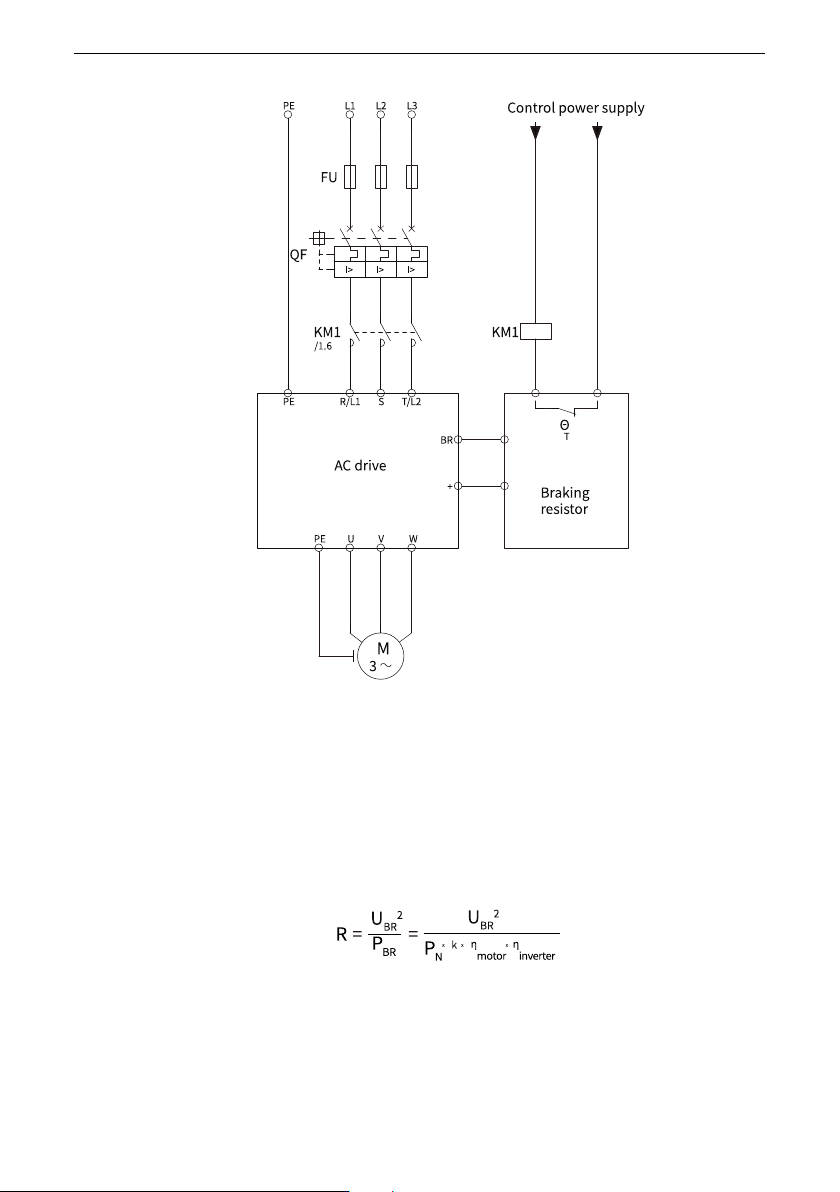
Option
‑117‑
Selecting the resistance of the braking resistor
The built-in braking unit of the drive processes the regenerative energy generated by the
motor during deceleration. When the DC bus voltage exceeds the limit set by the
software, the braking unit automatically turns on and connects the braking resistor to the
DC bus. The braking resistor consumes the regenerative energy to keep the bus voltage
within the safe range. The braking resistor is disconnected until the bus voltage drops
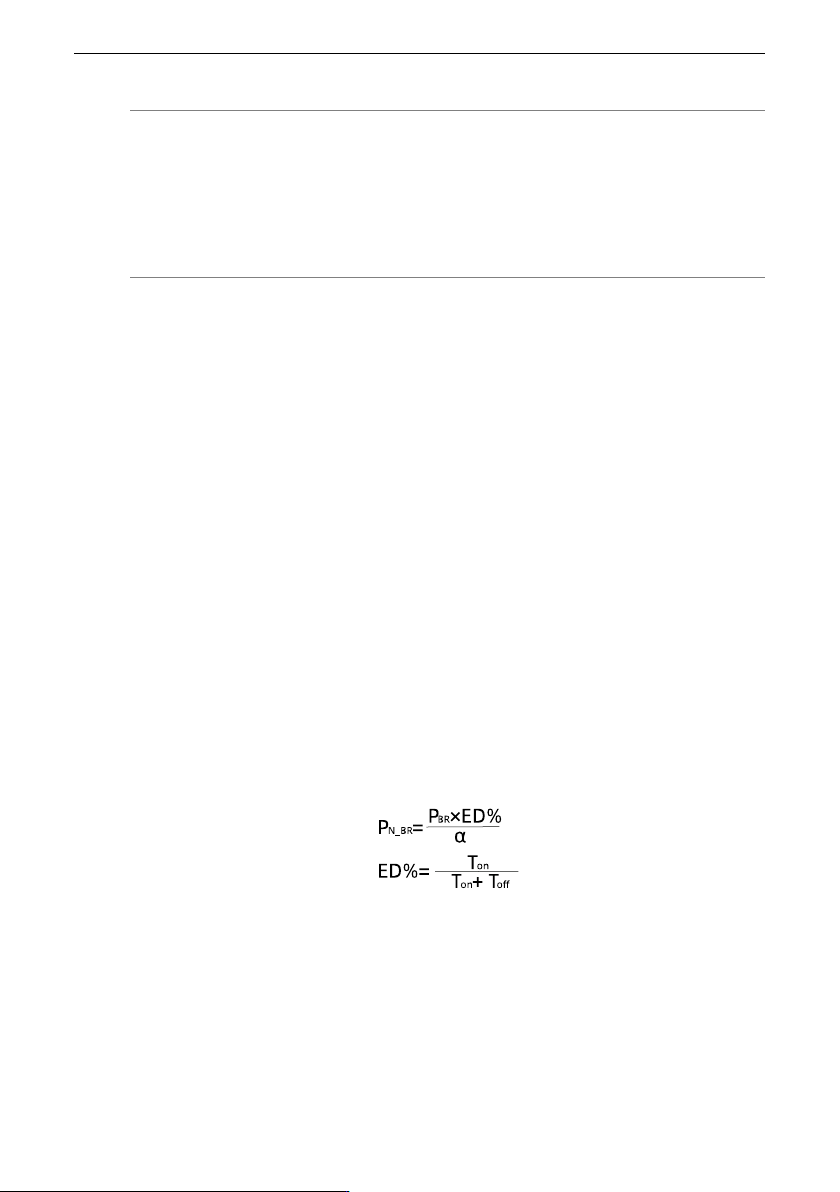
below a certain range. The resistance of the braking resistor is calculated based on the
following formula.
Option
‑118‑
Note
When the braking power is fed back from the motor to the U/V/W cable, and then fed
back from the U/V/W cable to the DC bus of the drive, the braking power will be derated
by the motor efficiency and the drive efficiency, respectively. Therefore, the braking
power actually consumed by the braking resistor will be lower. The conversion coefficient
is roughly estimated to be from 0.8 to 0.9.
R: Resistance of the braking resistor
U
BR
: Braking start voltage of the AC drive. The default braking start voltage of three-
phase 380 V to 480 V models and single-phase 200 V to 240 V models are 760 V and 370
V, respectively, which can be changed via parameters.
P
BR
: Braking power that needs to be consumed by the braking resistor on the DC bus of
the drive
P
n
: Rated power of the drive
k: Multiple of the braking torque to the rated torque, which is set to 1.25 generally The k
value can be adjusted as needed.
ƞ
motor
: Motor efficiency, which is generally set to 0.85 set based on the actual motor
efficiency. It can also be estimated based on the efficiency of the four-pole motor energy
efficiency class IE3 specified in the IEC 60034-30-2 standard.
ƞ
inverter
: Between 0.9 to 0.98 generally
Selecting the power of the braking resistor
In theory, the power of the braking resistor is the same as the average power
consumption of the braking resistor on the bus. However, given that the braking resistor
is naturally ventilated in the power distribution cabinet, power derating must be applied.
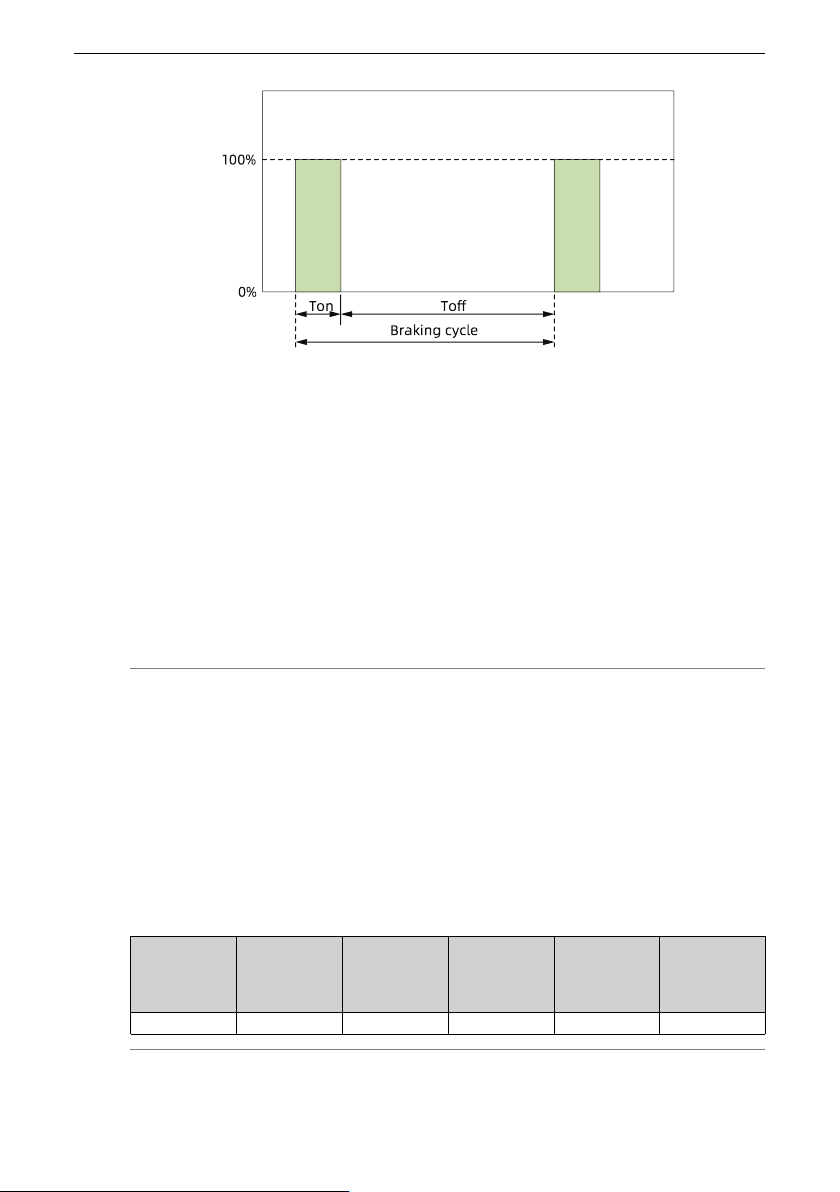
Assume that the derating coefficient is α. You can select the rated power of the braking
resistor according to the following formula:
Option
‑119‑
P
N_BR
: Rated power of the braking resistor
α: Power derating value of the braking resistor, which is 50% generally. Depending on
the motor type and the actual cooling conditions of the resistor, a higher derating value
is required if the temperature of the resistor rises. Otherwise, a fire caused by
overheating of the resistor may occur. Select the power according to the actual
application conditions.
ED%: Braking duty cycle
T
on
: Indicates the time during which the braking resistor is turned on within one braking
cycle.
T
off
: Indicates the time during which the braking resistor is turned off within one braking
cycle.
Note
1. Braking resistor temperature rise: It is affected by various factors, such as the braking
on time T
on
, braking duty cycle ED%, actual heat dissipation conditions, and braking
resistor type (such as aluminum‑housed resistors, corrugated resistors, and braking
resistor cabinets with different designed thermal time constants). If the resistor
temperature rise is excessive, a higher power derating is required; otherwise, the risk
of fire can be incurred due to overtemperature of the braking resistor. Therefore, select
the braking resistor with a proper power class according to actual conditions.
2. Braking duty cycle (ED%): It must be determined based on the actual braking
conditions. Typical ED% values for common applications are listed in the following
table.
Common
applica-
tions
Elevator Winding/
Unwinding
Centrifuge Occasional
braking
load
General
application
ED% 20% to 30% 20% to 30% 50% to 60% 5.0% 10%