SIPLACE Vision Customer_en.pdf - 第28页
User Interface Setting the Illumination Station Interface for Teaching Component Shapes S tudent Guide SIPLACE V ision (Customer) User Interface Edition 12/2008 EN 28 4.7 Setting the Illumination In general, the standard…
User Interface
Station Interface for Teaching Component Shapes Checking and Correcting the Geometry.
Student Guide SIPLACE Vision (Customer)
Edition 12/2008 EN User Interface
27
4.6 Checking and Correcting the Geometry.
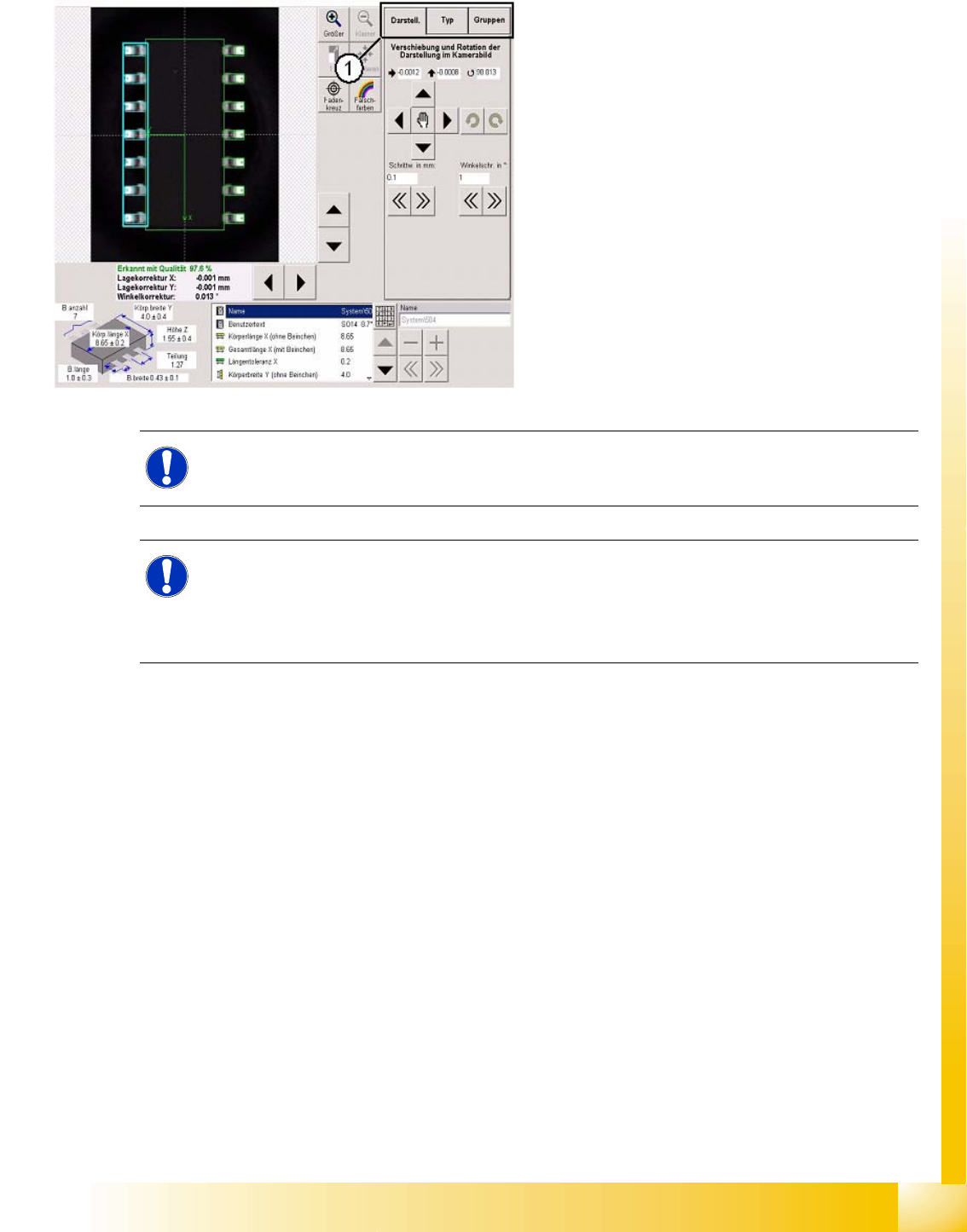
1. The following settings can be defined in the
three tabs provided:
– Use the menu View to set the green,
programmed CS outline on top of the
camera image.
– Use the Type tab to reassign the SIPLACE
Vision CS type.
Make sure that the programming
corresponds to the newly selected CS
type, otherwise the system will overwrite
your CS data with standard settings!
– Use the menu Groups to reprogram the
lead group and the lead itself.
NOTE:
The above diagram shows an angle of 90 degrees.
NOTE: Changes affect the optical recognition in ICOS camera systems
If a common CS description has been selected for this component in SIPLACE Pro, the settings
will also influence the optical recognition by the ICOS camera systems.
X You may need to select Requires separate group description in SIPLACE Pro. After this,
reteach the component shape.
User Interface
Setting the Illumination Station Interface for Teaching Component Shapes
Student Guide SIPLACE Vision (Customer)
User Interface Edition 12/2008 EN
28
4.7 Setting the Illumination
In general, the standard illumination values guarantee reliable and stabile recognition of the various
component properties for that component type.
However, in some cases, you may need to adjust the illumination at the station.
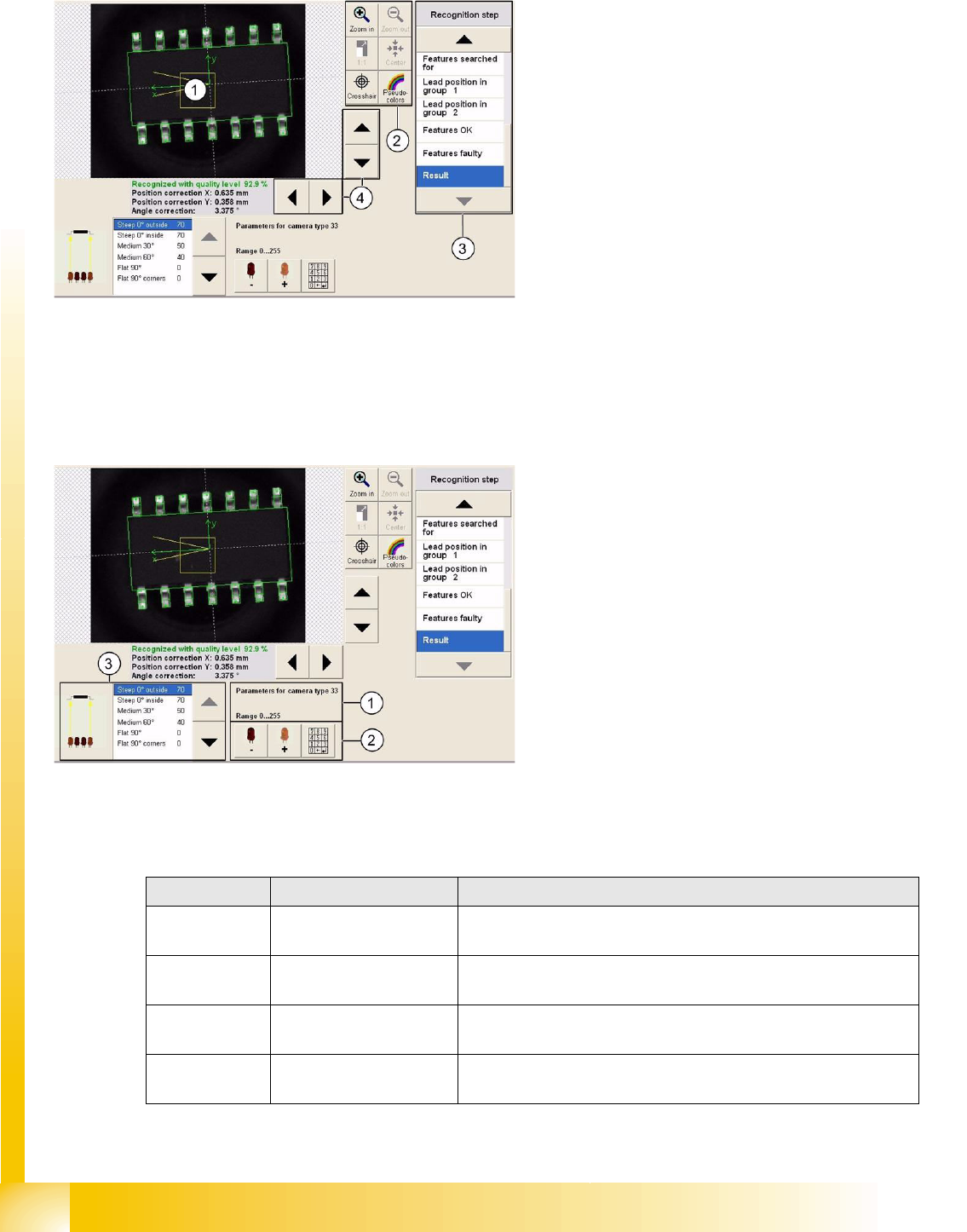
1. The illumination setting is visible in the camera
image. Each component type definition sets
the optimum standard illumination type for that
particular component shape. Where special
component shapes or surfaces are used, the
illumination can be individually adjusted. The
changes made can be reset to factory settings
or to the last value stored whenever required.
2. The image editing functions (zoom, pseudo-
colors) can also be altered during illumination
adjustment.
3. This shows the list of recognition step details.
The illumination can be adjusted
independently of the selection made here.
4. To optimally set a critical section of the camera
image, use the arrow keys in the zoom
function to navigate within the image.
1. This shows the camera type currently used.
(33 TWIN IC camera)
2. To alter the values for the selected level,
simply use the relevant LED icon or enable the
touchscreen number field and enter the
required value.
3. This shows a list of all illumination parameters
for the current camera. The currently selected
parameter is highlighted.
Lead shape Typical CO Example of standard illumination values for TWIN
Wraparound Chip / Melf / Moulded Steep inside 60, steep outside 60, middle 30° 40, middle 60° 25,
flat 0, flat corners 0.
Gullwing SOxx / QFP / SOT /
DPACK / Socket / ECV
Steep inside 75, steep outside 75, middle 30° 30, middle 60° 0,
flat 0, flat corners 0.
J-Lead PLCC / SOJ Steep inside 90, steep outside 90, middle 40° 30, middle 60° 30,
flat 40, flat corners 40.
Balls BGA Steep inside 0, steep outside 0, middle 30° 0, middle 60° 0,
flat 110, flat corners 130.
User Interface
Station Interface for Teaching Component Shapes Setting the Illumination
Student Guide SIPLACE Vision (Customer)
Edition 12/2008 EN User Interface
29
When using ceramic carriers with gold contacts, switch off steep illumination levelshere and test with
the intensity of a flat 90° (possibly also with 60°) illumination level. The gold lead will be shown darker
than the white carrier so also enable the setting Feature is dark for wraparounds!
Socket shapes may contain two different leads, over one another. In this case, we recommend
setting low intensity for the flat illumination level and a higher intensity for the steep illumination level.
When using a light-colored component shape with leads, reducing the flat illumination applied will
make the body of the component appear darker. Shining leads only need low steep illumination to
make them clearly visible, see gradient profile.
Note: The illumination may overmodulate if large parts of the CS properties become white in the pseudo-
colors view. Make sure you avoid this overmodulation!.
Columns CCGA Steep inside 60, steep outside 60, middle 30° 0, middle 60° 0,
flat 0, flat corners 0.
Blob Nonstandard Steep inside 75, steep outside 75, middle 30° 30, middle 60° 0,
flat 0, flat corners 0.
Corners Shields
Nonstandard
Steep inside 30, steep outside 30, middle 30° 75, middle 60° 60,
flat 0, flat corners 0.
Centering pins Nonstandard / socket /
connector
No optical recognition of this feature
Lead shape Typical CO Example of standard illumination values for TWIN
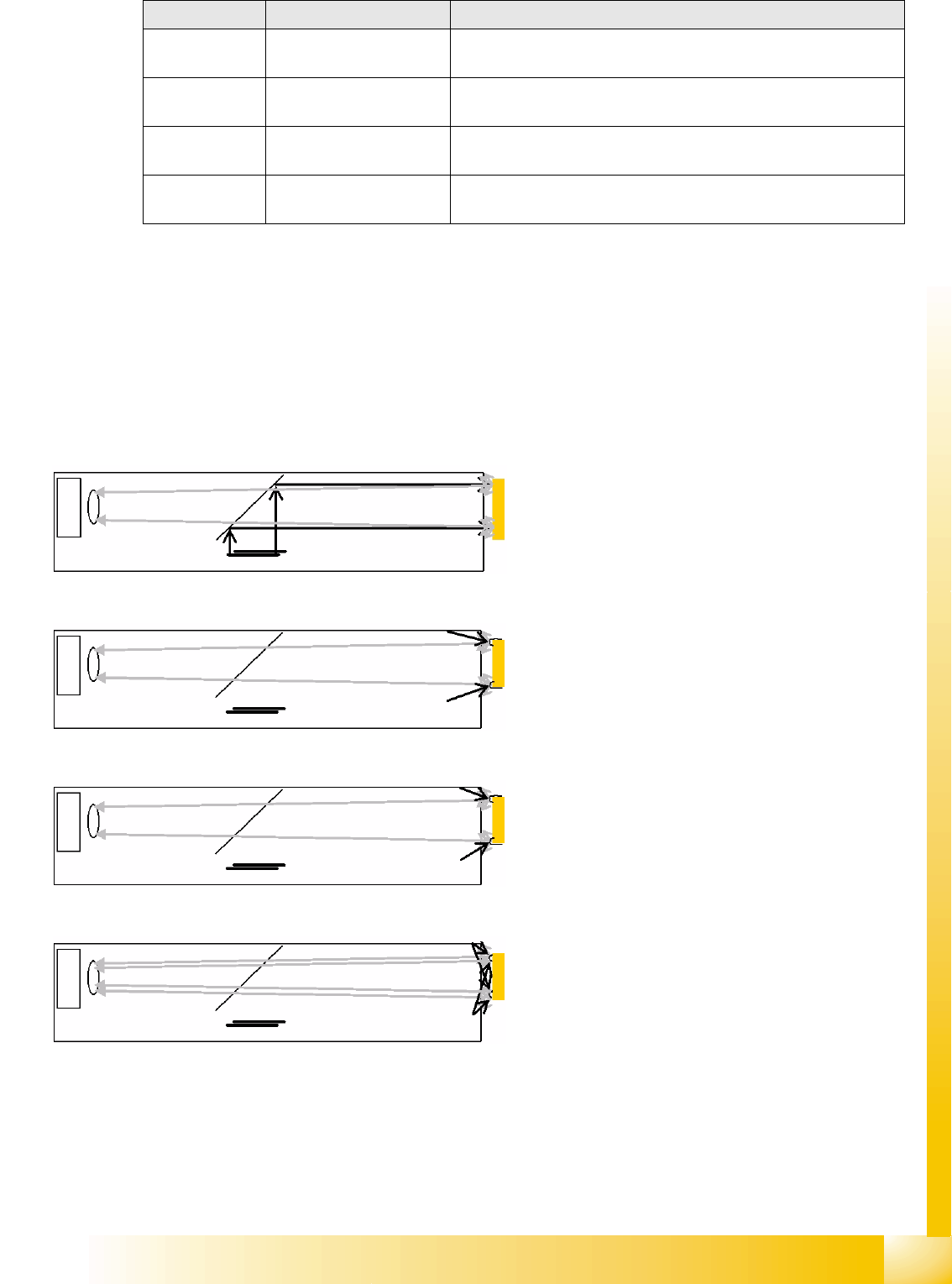
The steep illumination level is primarily used for
displaying mirrored surfaces. This is ideal for
measuring shapes such as BareDies.
The middle illumination level 30° is used for
displaying curved leads. This is ideal for
measuring shapes such as PLCCs.
The middle illumination level 60° is used for
displaying curved and hemispherical leads. This is
ideal for measuring shapes such as BGAs.
The flat illumination level 90° is used for displaying
curved and hemispherical leads. This is ideal for
measuring shapes such as BGAs and
semicircular, curved leads.