SIPLACE Vision Customer_en.pdf - 第60页
Component Shapes Specific Component Shapes Optical Rec ogn ition and Evaluation of Unleaded COs S tudent Guide SIPLACE V ision (Customer) Component Shapes Edition 12/2008 EN 60 Results diagram: Coarse position recognitio…
Component Shapes
Optical Recognition and Evaluation of Unleaded COs Specific Component Shapes
Student Guide SIPLACE Vision (Customer)
Edition 12/2008 EN Component Shapes
59
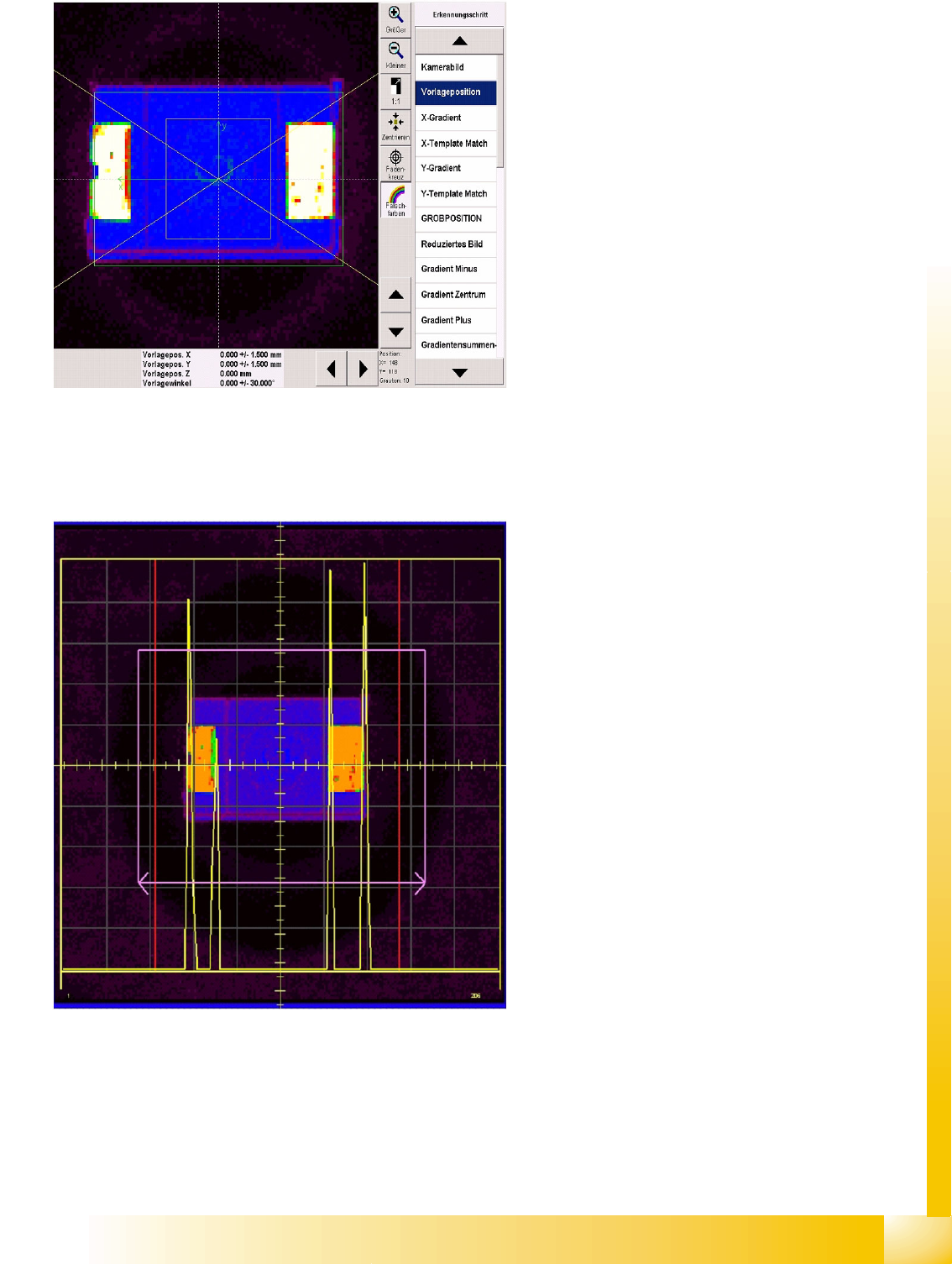
Diagram presentation
positionPresentation Position
The green arrows show the CS coordinate
system (positive direction in each case).
The yellow square shows the tolerance field
in which the CO center must be positioned.
This can be programmed at Pick-up tolerance.
The green rectangle maps the programmed
overall CO size.
A slanted yellow cross (V pointing to the left)
shows the permitted CO angle tolerance for
the optical centering function.
The CO positions have not yet been
determined, which is why the presentation
position values are 0.000. The position
tolerance (+/- 1.500) shows the SIPLACE Pro
setting. This describes the tolerance which the
CO may have, without error messages being
issued or rejection occurring.
Results diagram X gradient recognition
stepX Gradient
The yellow square shows the Region of Interest
(ROI) derived from the CS size/tolerance and the
pickup tolerance.
The purple rectangle shows the maximum CO
size.
The purple arrows point in the direction of
measurement: parallel to the camera's X
coordinate axis.
Yellow gradient signal curve:
The large outer signal peaks, to the left and
right, show where the lead and body begin,
The smaller signal peaks show the brightness
of the lead ends against a background of the
dark component body.
The red horizontal lines shows the limits which
the gradients must be within. Inside these limits,
the gradient signal is compared with the
programmed size template.
Component Shapes
Specific Component Shapes Optical Recognition and Evaluation of Unleaded COs
Student Guide SIPLACE Vision (Customer)
Component Shapes Edition 12/2008 EN
60
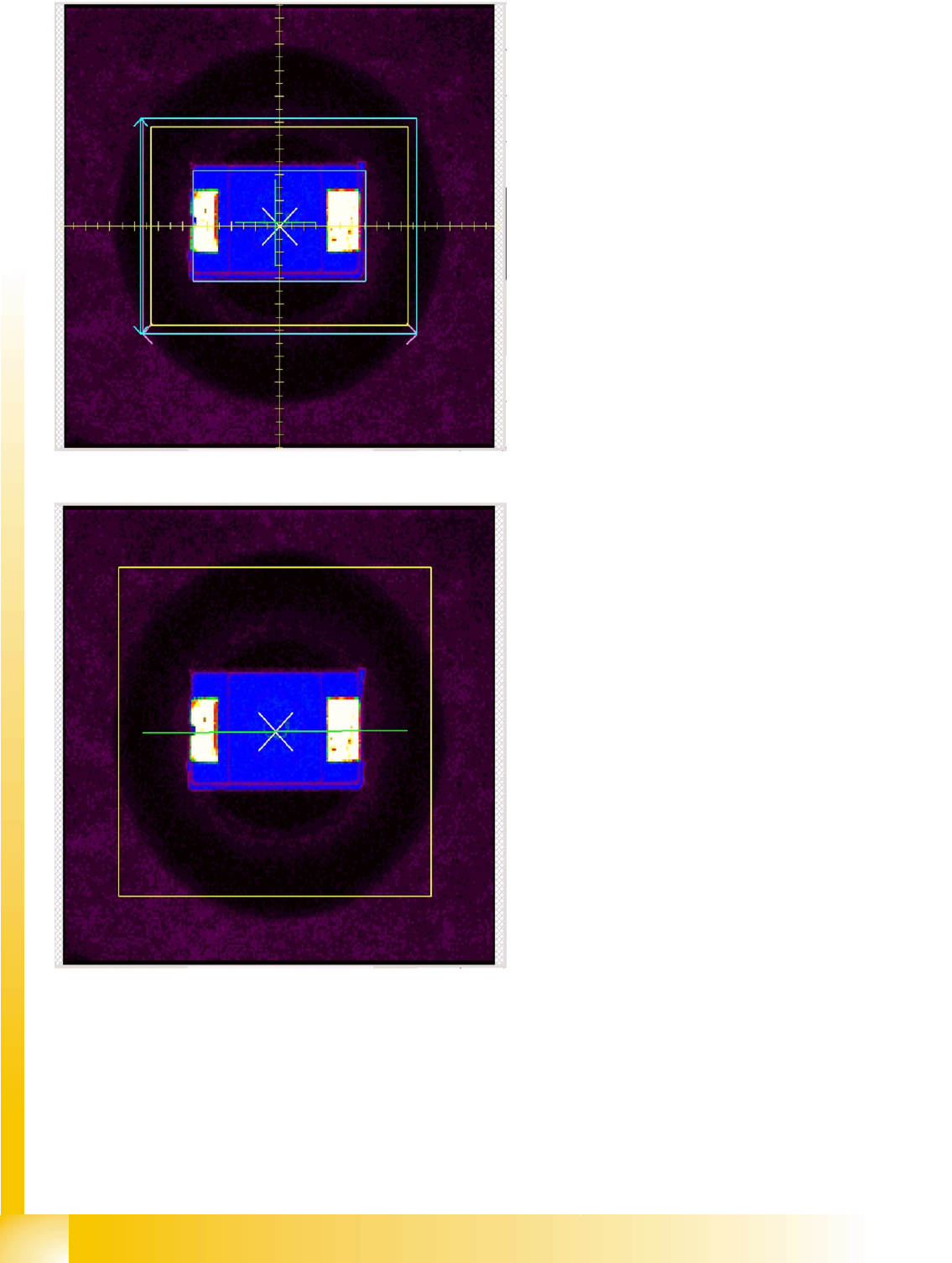
Results diagram: Coarse position
recognition step
The yellow rectangle shows the search field
for CO features.
The light blue rectangle shows the
measurement window for the Y gradient
measurement.
The small, light blue rectangle shows the
CO size in the determined CO coarse position.
The green cross shows the segment center
(around which the CO would be rotated, when
required).
The white 45° cross shows the determined
CO coarse position.
This CO coarse position is used as the basis
for alignment of the measurement window in
the next measurement step Coarse angle.
Results diagram: Coarse angle
recognition step
The yellow rectangle shows the Region of
Interest (ROI).
After determining the coarse position
(previous measurement step), the system now
determines the angle of the component.
The result is shown as a green line. The
coarse position and coarse angle then form
the basis for alignment of the fine position
measurement window.
Component Shapes
Optical Recognition and Evaluation of Unleaded COs Specific Component Shapes
Student Guide SIPLACE Vision (Customer)
Edition 12/2008 EN Component Shapes
61
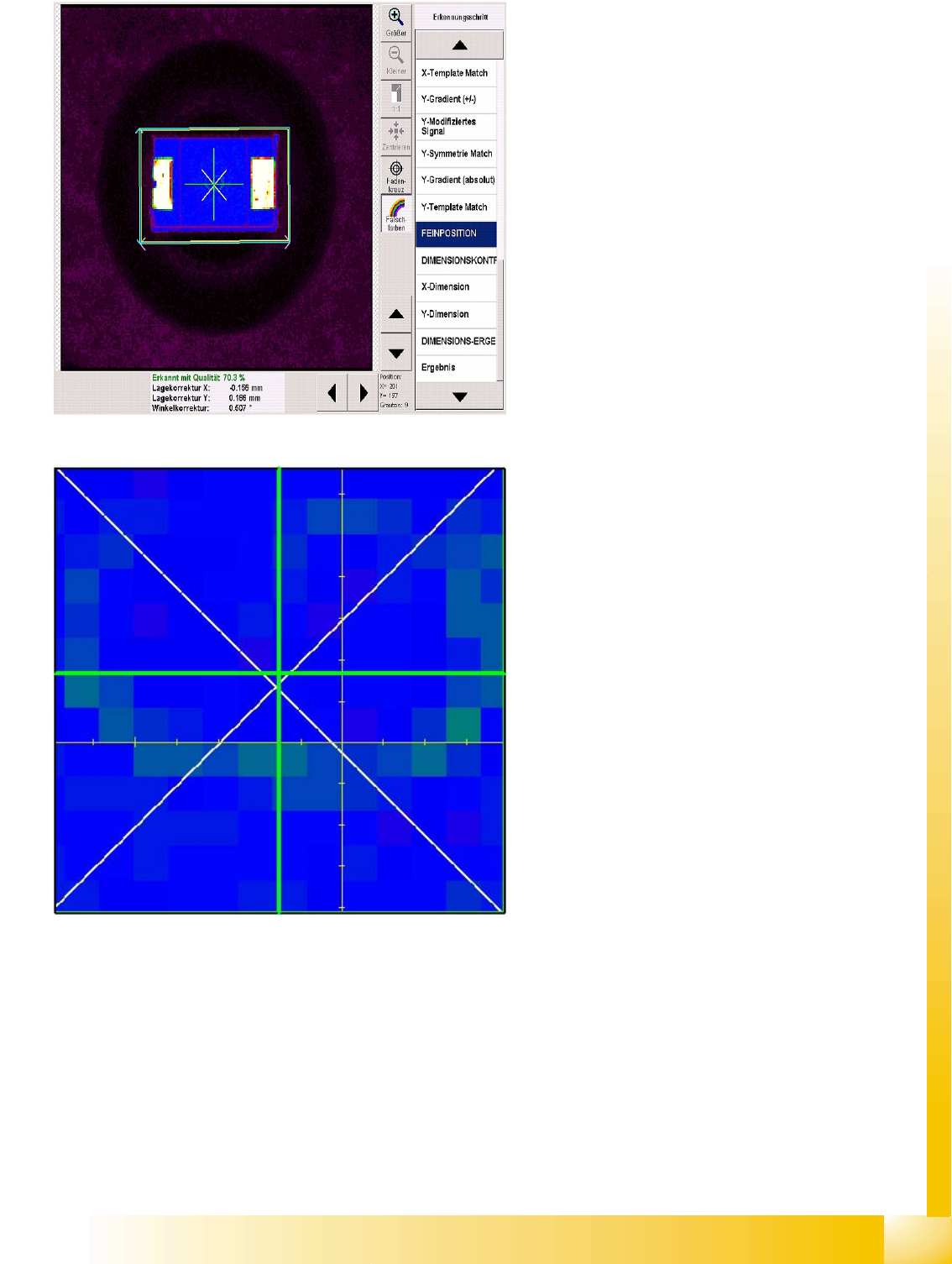
Results diagram: Fine position
recognition step
Determination of the fine position is performed in
several steps. These include calculating the fine
angle and determining various gradients.
Purple frame: X gradient measurement window,
identical with the light-blue Y gradient
measurement window.
Since the coarse position has already been
determined, these windows are smaller.
The green cross shows the segment center.
The white cross shows the determined CO fine
position in the CO fine angle.
The crosshairs shown indicate the center of the
CO camera.
You can zoom in on and out of this diagram
section.