SIPLACE Vision Customer_en.pdf - 第68页
Component Shapes Specific Component Shapes Leaded Component Shapes S tudent Guide SIPLACE V ision (Customer) Component Shapes Edition 12/2008 EN 68 Lead description Special features SOTs of type DPACK are clas sified s…
Component Shapes
Leaded Component Shapes Specific Component Shapes
Student Guide SIPLACE Vision (Customer)
Edition 12/2008 EN Component Shapes
67
5.3.7.2 SOD/SOT Component Shape (Small Outline Diode / Small Outline Transistor)
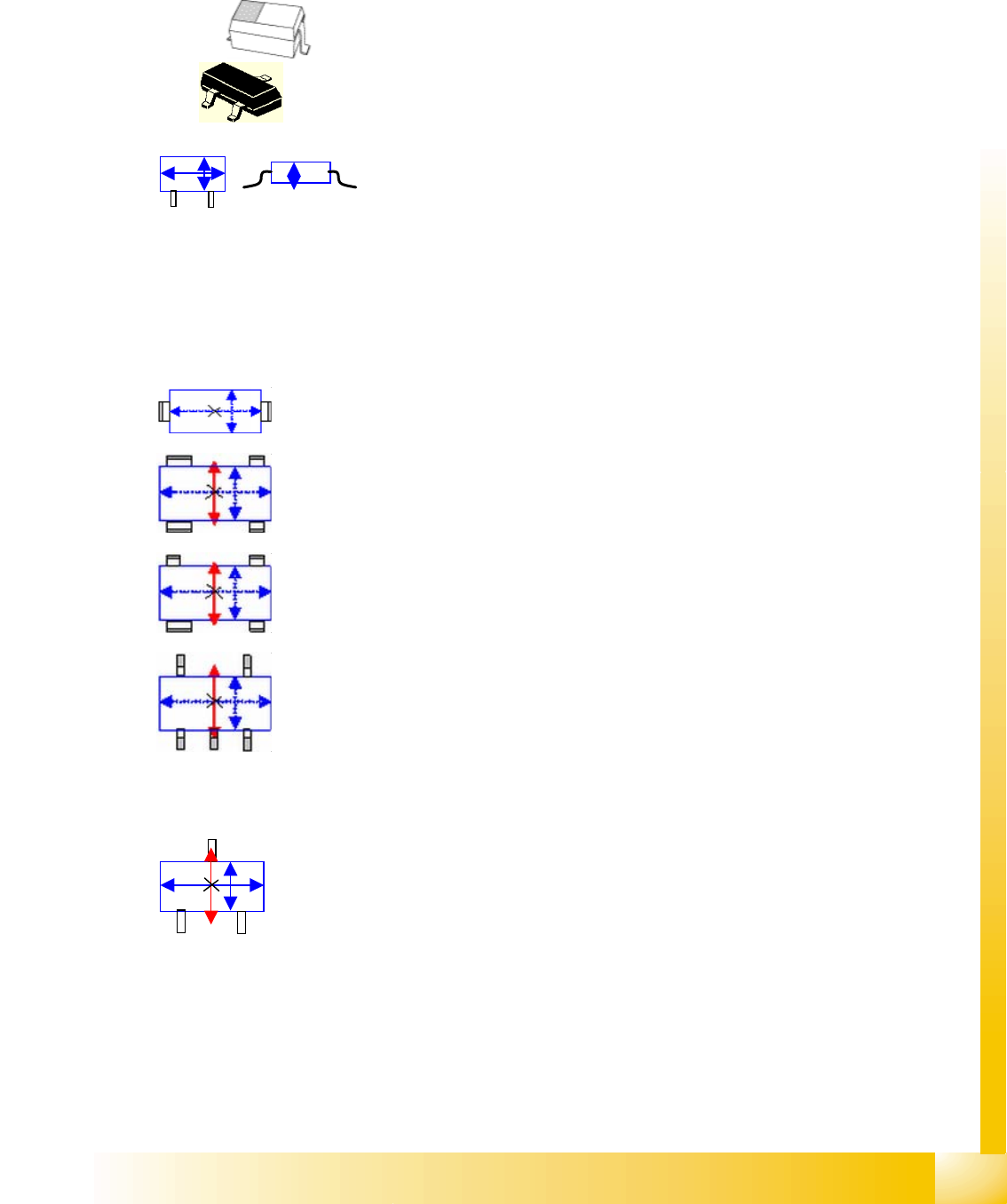
SOT types can be seen as a combination of unusually shaped but frequently used standard component
shapes.
JEDEC description
JEDEC description
(see TO 236)
There are two different JEDEC standards for SOT 23, which
results in various different dimension values for this shape.
Body description: rectangular.
The Z height of the body determines the measurable height
in the CO sensors.
The X/Y body dimensions determine the field of vision, the
Region of Interest.
This also determines the starting edge of the Gullwing
leads.
Further component shapes for the SOT class:
SOD 123 (323) (also as SOXX)
Attention when combining with ICOS (for ICOS CHIP or BGA).
SOD 123 (323)
SOD 143 (343)
SOT 25 (also as SOXX)
This component shape has two (or more) lead groups on
the component.
The component is recognized by its pins, on the basis of
which the body center and angle can be determined.
When the SOT leads all have the same length, the group
offset along the Y axis must also be identical.
The group offset along the X axis is 0 for both groups.
The group offset along the X axis is identical for SOD
component shapes, while the group offset along the Y axis
is 0.
SOD
SO
T
Component Shapes
Specific Component Shapes Leaded Component Shapes
Student Guide SIPLACE Vision (Customer)
Component Shapes Edition 12/2008 EN
68
Lead description
Special features
SOTs of type DPACK are classified separately as DPACK.
Inspection mode is set as a default for these leads and can not be disabled.
This is one of the advantages compared to Nonstandard classification.
From SR/MC 603 SW, the "Orientation" can be set to 4 if the asymmetrical component needs to be
unexpectedly picked up in different angles at the machine.
COPLANARITY measurement is possible provided the option is installed and there are at least three
leads (in two rows) on the body. This is the minimum number for coplanarity. However, it makes little
sense to use the coplanarity option with this minimum, since three leads (ILD 2200) / 5 (IVP 3D)
always form one level.
Face Down recognition is NOT possible for this component type.
SW extension: FaceDown recognition can be programmed and used from SC 702.01 SW
(SIPLACE Vision 4.1) (see: New Siplace Vision Functions 702).
Joint datasets with ICOS data possible!
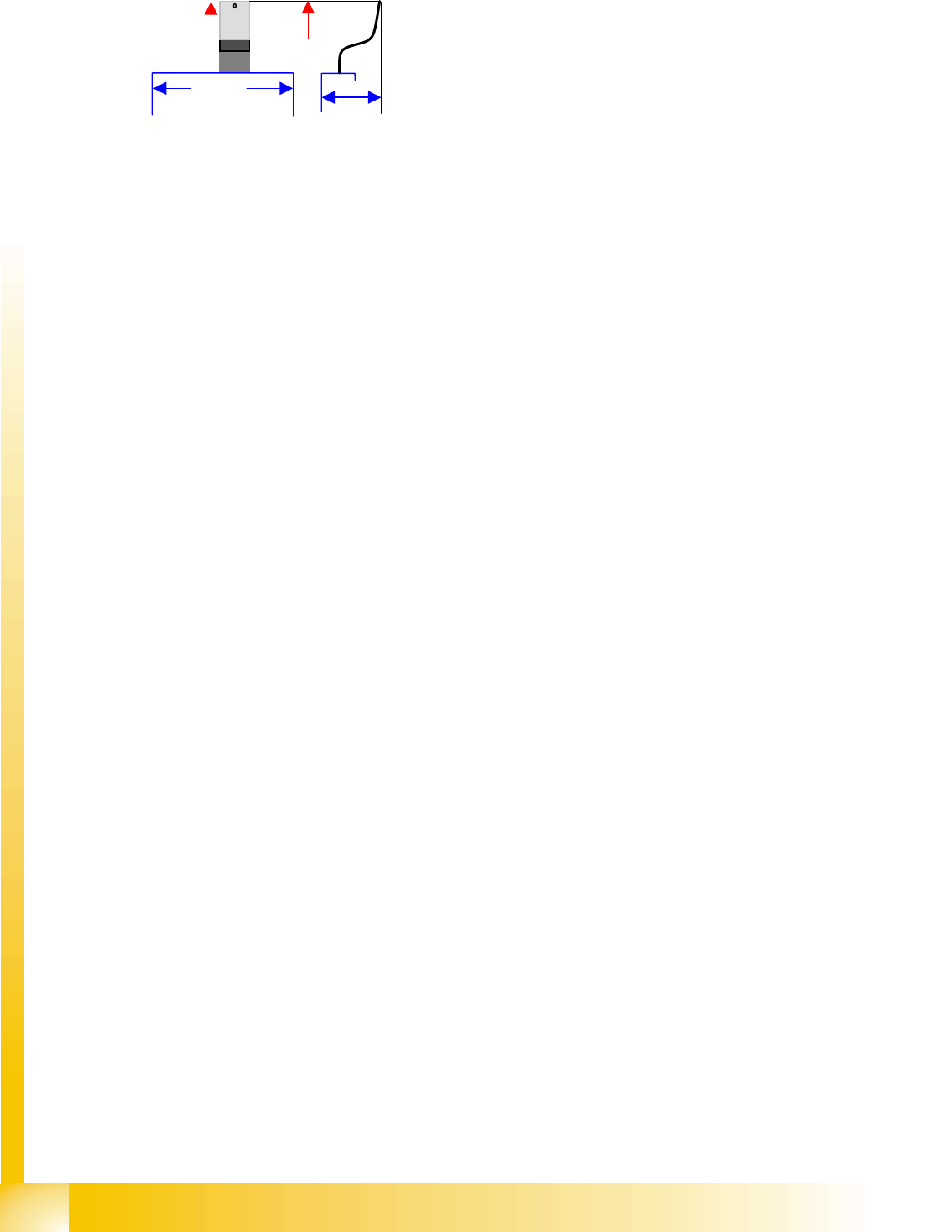
These component shapes have so-called Gullwing leads
i.e. leads with level contact surfaces.
The leads in the two groups may differ!
These leads are as wide as the solder resist contact
surface, on the board connection surface.
The lead length is significantly longer (about double) as the
contact length.
The leads are outside the body surface. Notches may not
be programmed.
B
L
A
L
B
B
A
B
Körper
B
Körper
H
Component Shapes
Leaded Component Shapes Specific Component Shapes
Student Guide SIPLACE Vision (Customer)
Edition 12/2008 EN Component Shapes
69
5.3.7.3 DPACK Component Shape
JEDEC description
JEDEC description
(see TO 243)
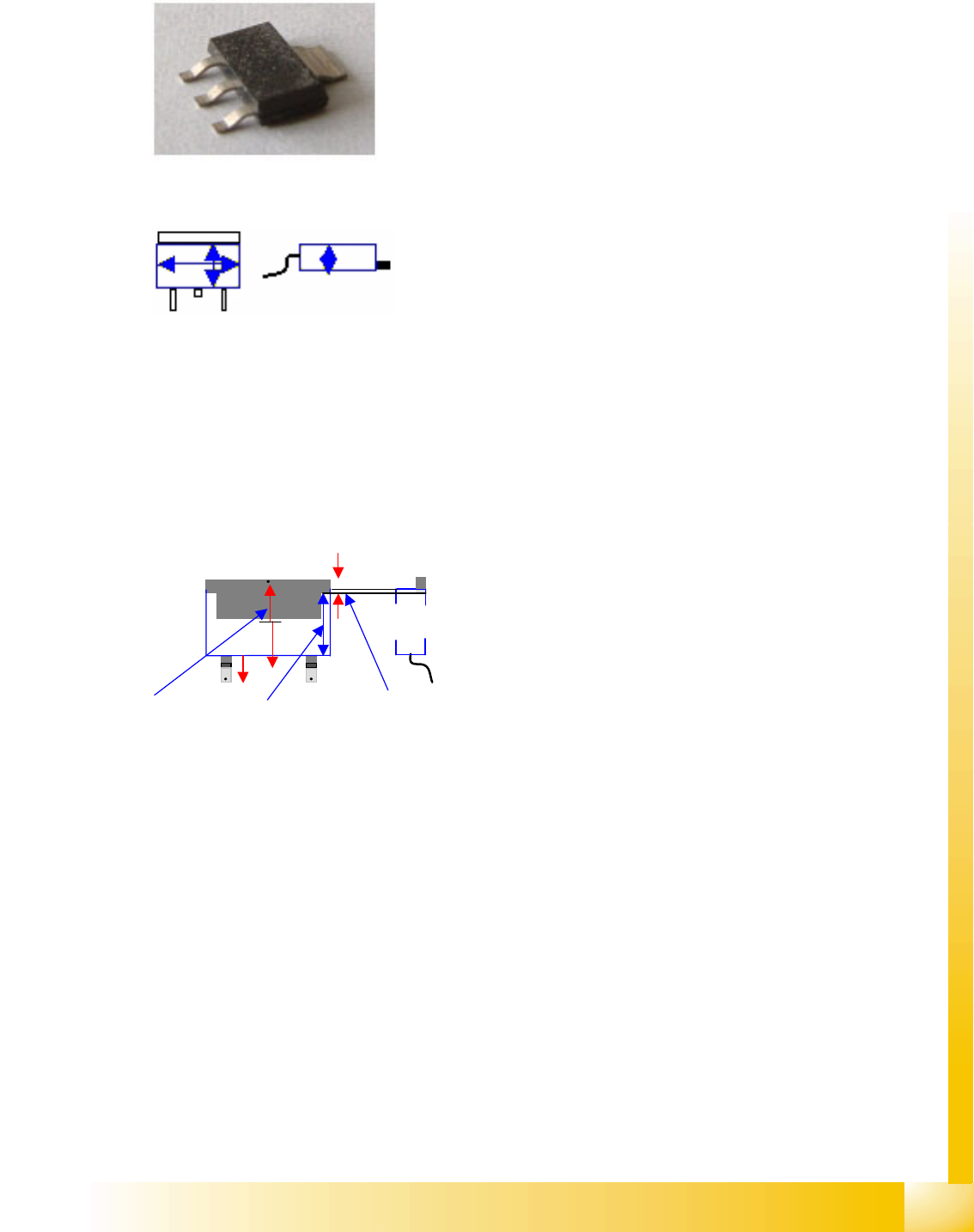
Body description: rectangular.
The Z height of the body determines the measurable height
in the CO sensors.
The X/Y body dimensions determine the field of vision, the
Region of Interest.
This also determines the starting edge of the Gullwing
leads.
This component shape has two (or more) lead groups on
two body sides.
The single lead group (usually heat sink (tab)) must be
described as well. Make sure you do not omit it, otherwise
angle measurement will be problematic. In this group, the
component shape is a Gullwing type (see diagram). This
defines the lead end and the arrangement of evaluation
points.
The contact length and lead length need to be programmed
differently for Gullwings.
The offset values along the Y axis differ due to the different
lead lengths in the opposite groups!
They need to be calculated as follows:
Y-Offset1= body length/2 + lead length1/2
Y-Offset2= body length/2 + lead length 2/2
(Ll1, Ll2)