OM-1743-005w.pdf - 第86页
6.4 Splicing Operation CAUTION • The cutter blade in the tape cutting jig is very sharp, take the greatest care not to get injured. Also, take care not to catch your nger in the spring section. • When the tape is to be …
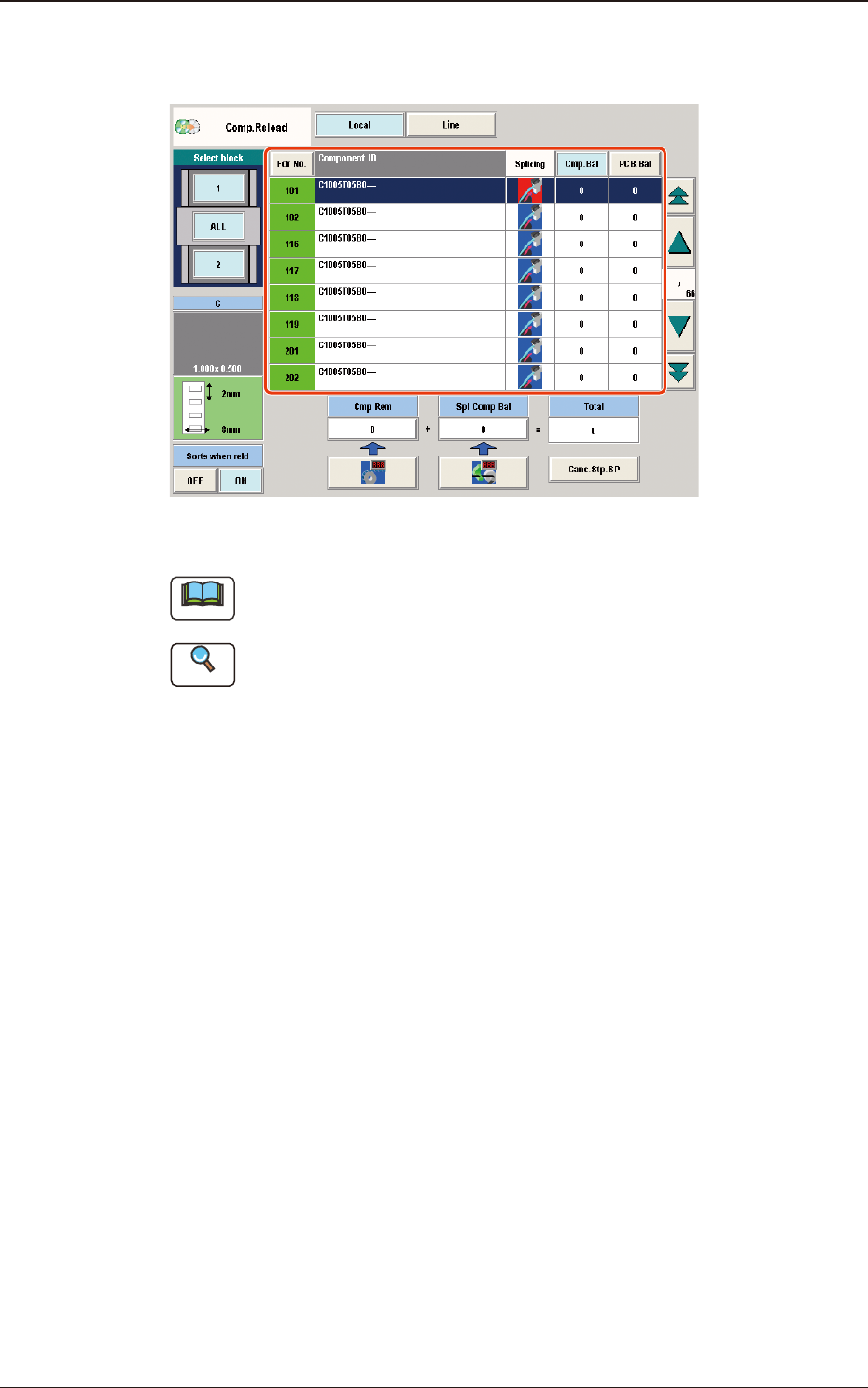
(2) Press the [Comp. Reld.] button in the AUTO. OPN. submenu window.
(The "Comp. Reload" window will appear.)
Fig. F5 Example of "Comp. Reload" Window
Note
The displayed contents will differ depending on selection of the options.
Reference
Refer to SIGMA-F8 main machine instruction manual, "Volume 2, Chapter 1, 3.
Comp. Reload" for details.
(3) Conrm the tape feeder where the splicing operation is required.
(3.1) Press each block button in the "Select block" section or the [ALL]
button.
(The feeder data items will be displayed in the Feeder List.)
(3.2) Press the appropriate Fdr. No. and conrm the contents in the [4]
Component type.
1209-001
6.3 Indication of "Alarm for Splicing" on the Machine Information Window
OM-1743
6-5
6.4 Splicing Operation
CAUTION
•
The cutter blade in the tape cutting jig is very sharp, take
the greatest care not to get injured.
Also, take care not to catch your nger in the spring
section.
•
When the tape is to be cut off by using the tape cutting
jig, set the tape on the pilot pins and hold it securely with
your thumb and the forenger; then cut off the tape slowly
and carefully so as not to cut your nger.
•
When the tape cutting jig is not to be used, lock it with the
lock lever while the cutter blade is closed, and keep it in a
specied place.
•
If, because of a chip on the cutter blade in the tape cutting jig,
the tape cannot be cut easily, unusually strong force is required
to cut off the tape, which may cause personal injury.
In such a case, purchase a new tape cutting jig.
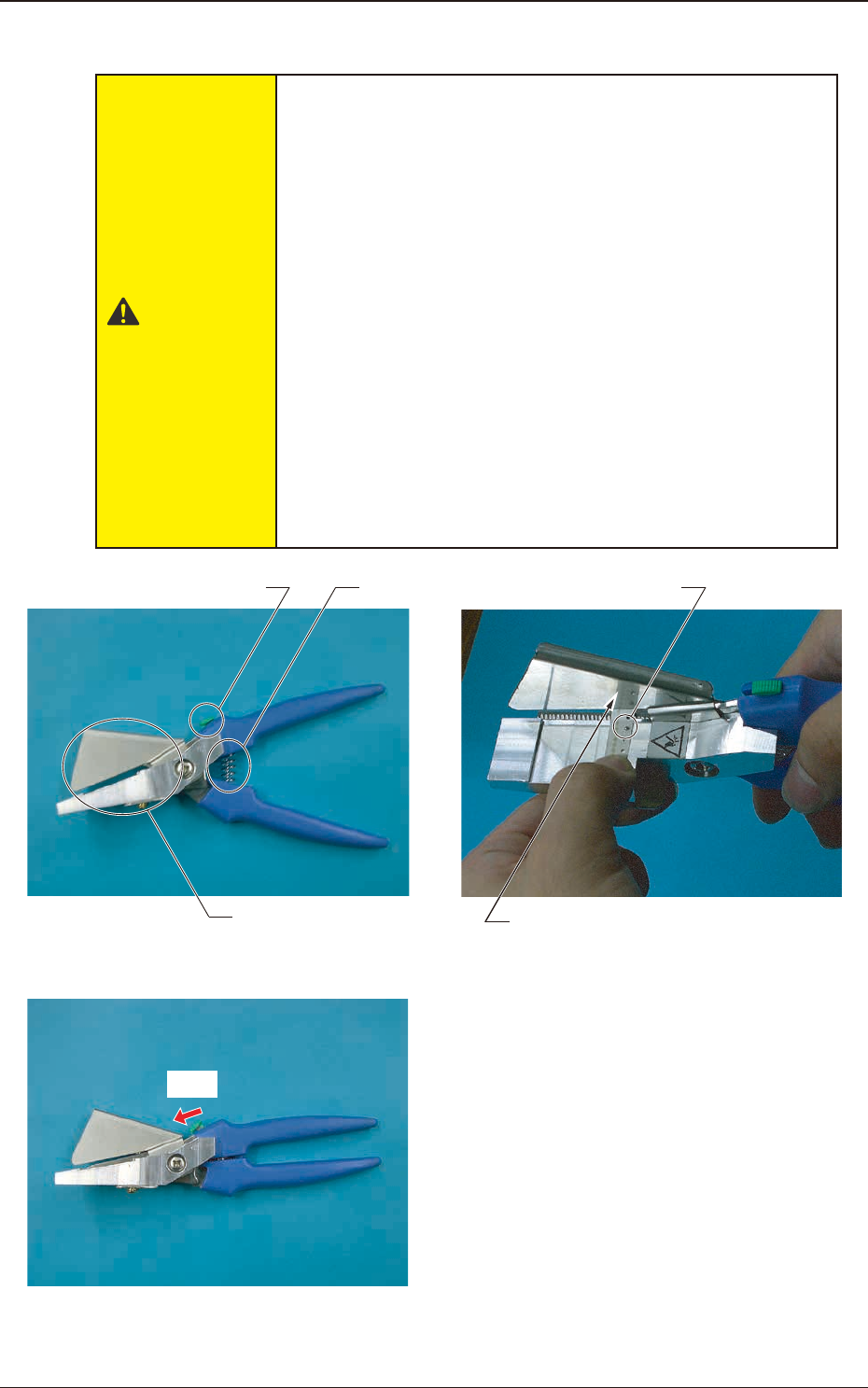
Fig. F6 Cutter Blades are Opened. Fig. F7 Cutting the Tape
Pilot Pins
Mirror Surface
Lock Lever Spring Section
Cutter Blade
Lock
Fig. F8 Cutter Blades are Closed.
1209-001
6.4 Splicing Operation
OM-1743
6-6
Notice
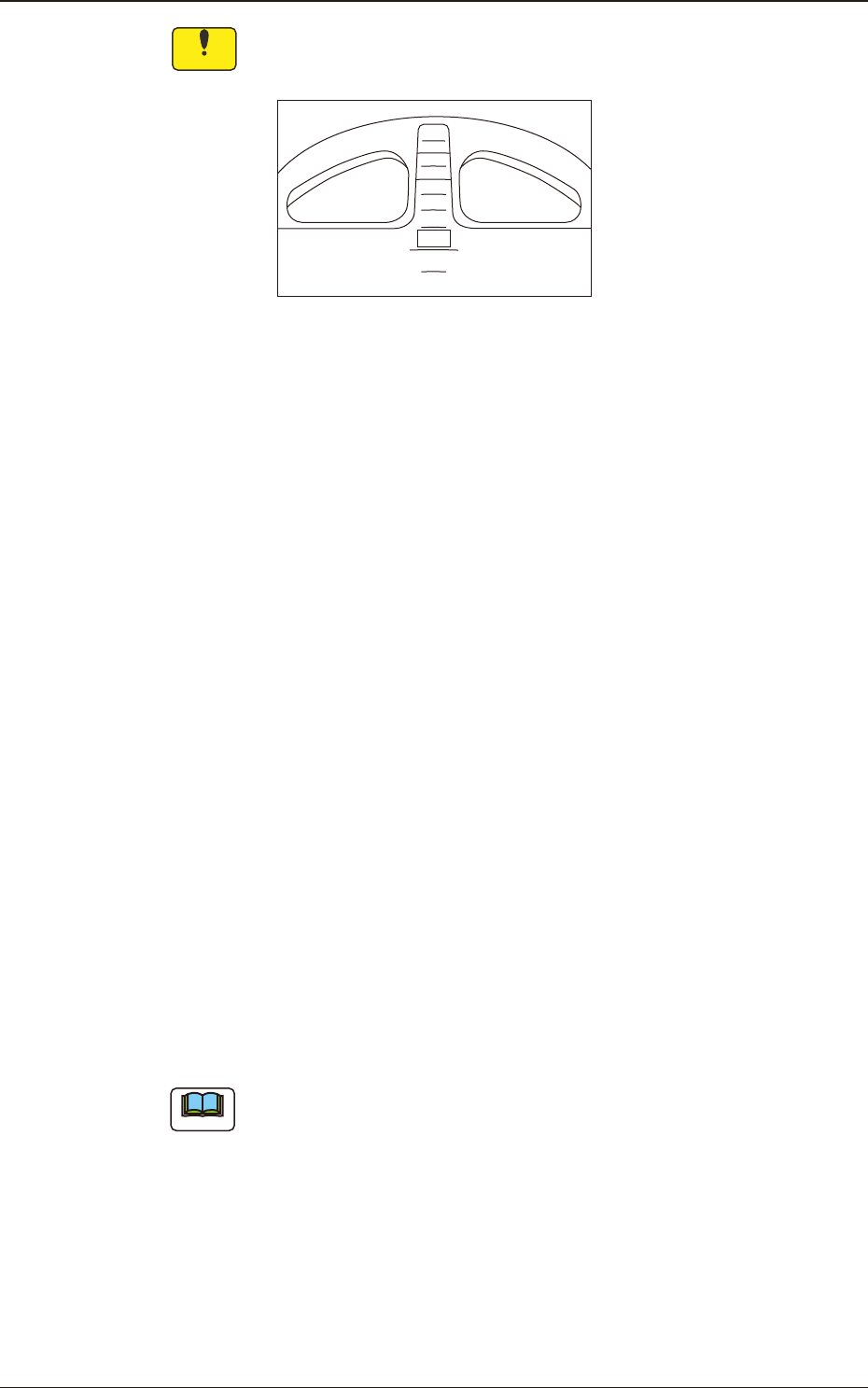
(a) When splicing, do so when the remaining tape level reaches less
than the "0.2" position marked on the side surface of the reel.
0.8
0.6
0.4
0.2
Fig. F9
(b) Before using the tape cutting jig, make sure that there is no dust or
debris on the cutter blades.
If there is any debris or dust on the cutter blades, remove it by
blowing air or with a cotton swab.
If there is any debris or dust on the cutter blades, such debris or dust
may attach to the tape and the adhesive force of the splicing tape
may be reduced.
(c) Do not use old splicing tape.
The adhesive force might be reduced.
(d) When you have touched the adhesive side of the splicing tape or the
splicing tape is re-used after it has been peeled off, do not use that
tape. Splice it with a new tape.
(e) When the splicing tape is to be peeled off from the peeling paper, do
so after the tape cut processing.
(f) Always fold the splicing tape along the perforations.
Doing otherwise may cause the splicing tape to swell out from the
tape edge and so lead to tape feeding error of the tape feeder.
(g) Do not use the tape cutting jig except for the splicing operation.
Do not use the tape cutting jig to cut any chip component.
Doing otherwise may cause a chip on a blade or deformation of the
pilot pin, which would result in inaccuracy of tape splicing caused by
a tape cutting error and so cause tape feed error in the tape feeder.
(h) After splicing, take out the cover tape from the cover tape storage
section in the tape feeder.
Note
For the tape where the releasing treatment has been done on the cover tape
surface, the adhesive force might be weak and the tape be peeled off easily.
1209-001
6.4 Splicing Operation
OM-1743
6-7