1.011.1_VPC使用手册.pdf - 第11页
10/144 Type 3 Pareto Defect distribution The Pareto diagram indicates the frequency distribution of the classified analysis results. There are different possibilities for scaling the X- and Y-axes. Type 4 Timeline (PCB) …
9/144
1.2 Diagram Types
Currently, there are 8 different diagram types that are fully explained step by
step later. Here is a short overview for orientation.
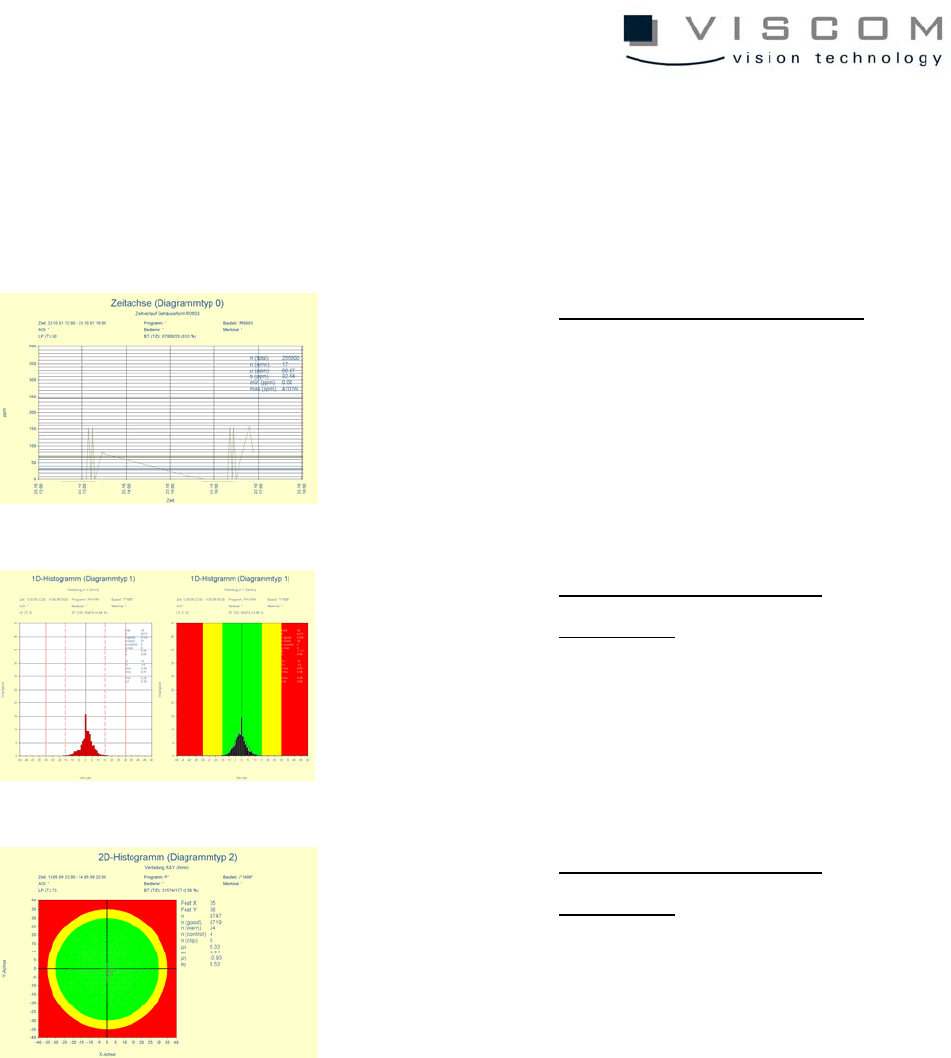
Type 0
Timeline
Feature evaluation over time
Diagram type 0 displays
feature values over time.
Type 1
1D Histogram
One-dimensional feature
distribution
Diagram type 1 shows a one-
dimensional diagram of the
frequency distribution of the
individual feature values.
Type 2
2D Histogram
Two-dimensional feature
distribution
In diagram type 2, X and Y
displacement features are
displayed in a two-
dimensional diagram.
10/144
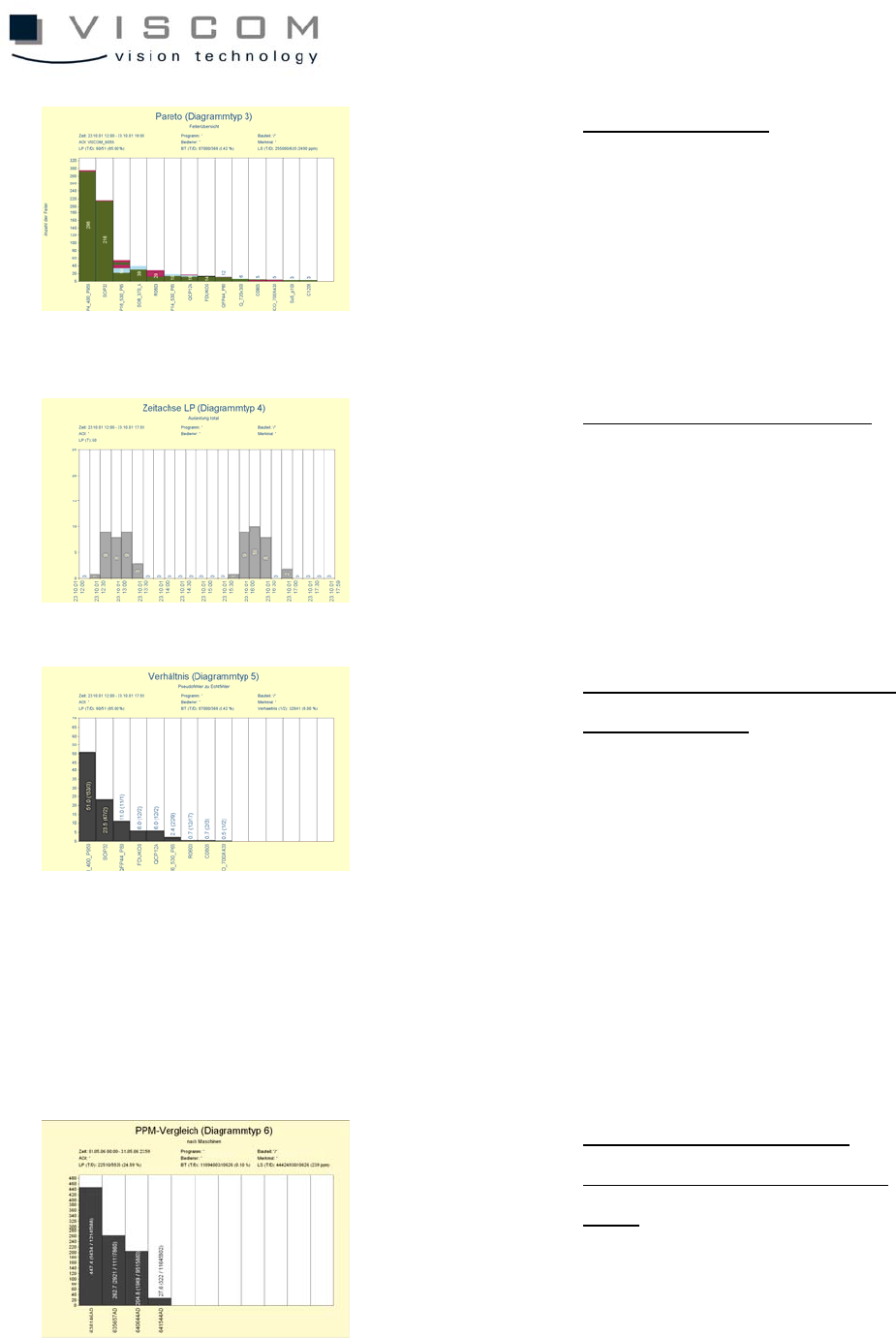
Type 3
Pareto
Defect distribution
The Pareto diagram indicates
the frequency distribution of
the classified analysis results.
There are different
possibilities for scaling the X-
and Y-axes.
Type 4
Timeline (PCB)
Defect distribution over time
Diagram type 4 allows the
presentation of PCB-related
feature values over a timeline.
Type 5
Ratio
Ratio between pseudo defects
and real defects
Type 5 is a diagram that
shows the proportion of defect
features to one another. The
evaluation can be based on
the component ID or body
type and supports the Pareto
diagram (type 3) during
effective program
optimization.
Type 6
PPM
Comparison
Individual PPM rates from
single machines or inspection
plans
Type 6 calculates the PPM
rates for the individual bars
using the actual number of
failed inspected solder joints
11/144
on a specific machine or
inspection plan, unlike Type 3,
which uses the basic set of
the total inspected solder
joints.
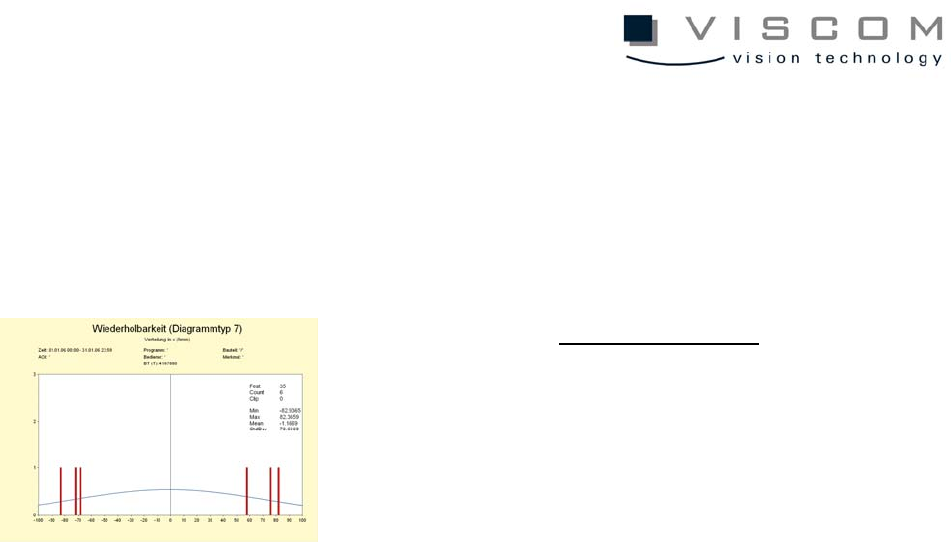
Type 7
Repeatability
Normal distribution
Type 7 displays the normal
distribution of the feature
values as standard deviation
or average value.