00197042-04_SM_X-Serie-S_Customer_EN.pdf - 第207页
7 Conveyor 7.2 Loosening the Conveyor Side Clamps Service Manual SIPLACE X-Serie S 06/2019 207 7.1.4 Width Adjustment Fig.265: Overview width adjustment 1. Adjustment units (3x) 2. Toothed belt of width adjustment 3. Dr…
7 Conveyor
7.1 Conveyor X Series S
206 Service Manual SIPLACE X-Serie S 06/2019
7.1 Conveyor X Series S
X series S placement machines are either fitted with the single or dual conveyor, depending on the
configuration.
7.1.1 Overview of conveyor sides and lanes
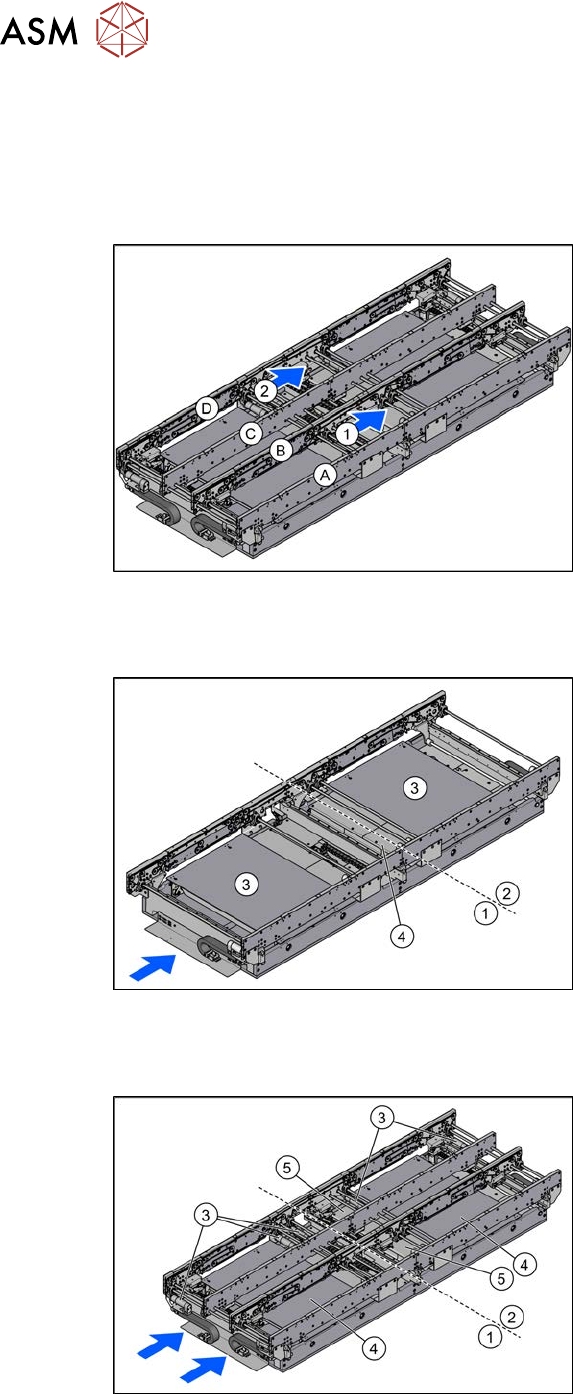
Fig.262: Overview of conveyor sides and lanes
1, 2 = Conveyor lane 1 and 2
A to D = conveyor side A to D
The single conveyor only has sides A and B.
7.1.2 Single Conveyor
Fig.263: Overview of single conveyor
The single conveyor has one lane. In the
standard version, the fixed conveyor side
wall is on the right.
1. Placement area 1
2. Placement area 2
3. Lifting tables (2x)
4. Conveyor control TSP420 (2x under
the cover)
7.1.3 Dual Conveyor
Fig.264: Overview of dual conveyor
The dual conveyor has two conveyor lanes.
In the standard version, the fixed conveyor
side of each conveyor lane is on the right-
hand side.
1. Placement area 1
2. Placement area 2
3. Conveyor drive (5x per conveyor lane)
4. Lifting tables (4x)
5. Conveyor control TSP420 (4x, under
the covers)
7 Conveyor
7.2 Loosening the Conveyor Side Clamps
Service Manual SIPLACE X-Serie S 06/2019 207
7.1.4 Width Adjustment
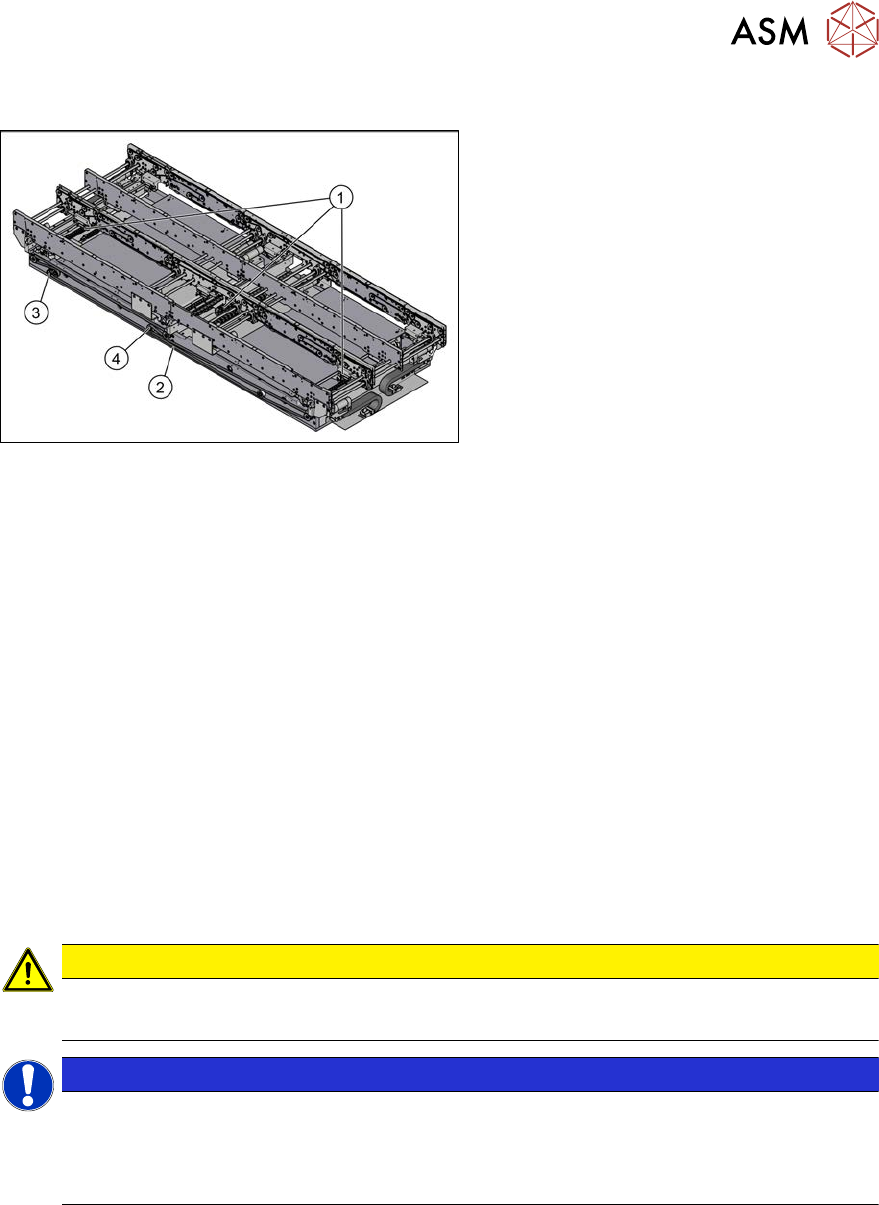
Fig.265: Overview width adjustment
1. Adjustment units (3x)
2. Toothed belt of width adjustment
3. Drive unit of width adjustment
4. Movable idler pulley
Function description
The width is adjusted by means of a motor as programmed.
For dual conveyor systems, differing widths can be set for the two conveyor lanes. The width ad-
justment uses a motor with its own measuring system, meaning that the new PCB width can be set
independently of other machine components (e.g. the Y gantry)
. In the case of the single conveyor, the recirculating ball screws are connected directly with the
movable conveyor side. Conversion from a fixed side right to a fixed side left is not possible.
The PCB width is adjusted using the width adjustment units. These are moved synchronously back
and forth by the drive motor, with the help of recirculating ball screws and a toothed belt.
The side clamp is released by moving out fixing pins. At the same time, the side is fixed to the ad-
justment units. After reaching the new PCB width, the fixing pins move back in. The side wall is
then clamped again.
7.2 Loosening the Conveyor Side Clamps
Many tasks performed on the conveyor require that the conveyor sides are moved when the
machine is switched off. For this purpose, you can loosen the clamp of the conveyor side walls.
CAUTION
Lifting table
► The lifting table must always be lowered when the conveyor sides are moved.
NOTICE
Single conveyor
There are no clamps on a single conveyor.
► You can move the flexible side here by carefully pulling on the width adjustment
toothed belt.
7 Conveyor
7.2 Loosening the Conveyor Side Clamps
208 Service Manual SIPLACE X-Serie S 06/2019
CAUTION
Moving the conveyor sides
The conveyor sides are highly sensitive and should therefore if possible be moved without
releasing the brakes.
Irreparable damage could otherwise be caused to the conveyor sides.
For this reason, try the following options in the order listed:
► We recommend that you use the software to help you move the conveyor sides.
► If this is not possible, the conveyor sides of the dual conveyors can also be moved by
manually docking in the adjustment units (direct switching of valves for the width ad-
justment). Make sure that the cylinders engage in all clamping units of a particular
conveyor side. The conveyor sides can then be moved by carefully pulling the toothed
belt of the width adjustment unit.
► If this is not possible either, the brakes of the dual conveyors can manually be re-
leased using a pin. Take special care not to distort the conveyor sides.
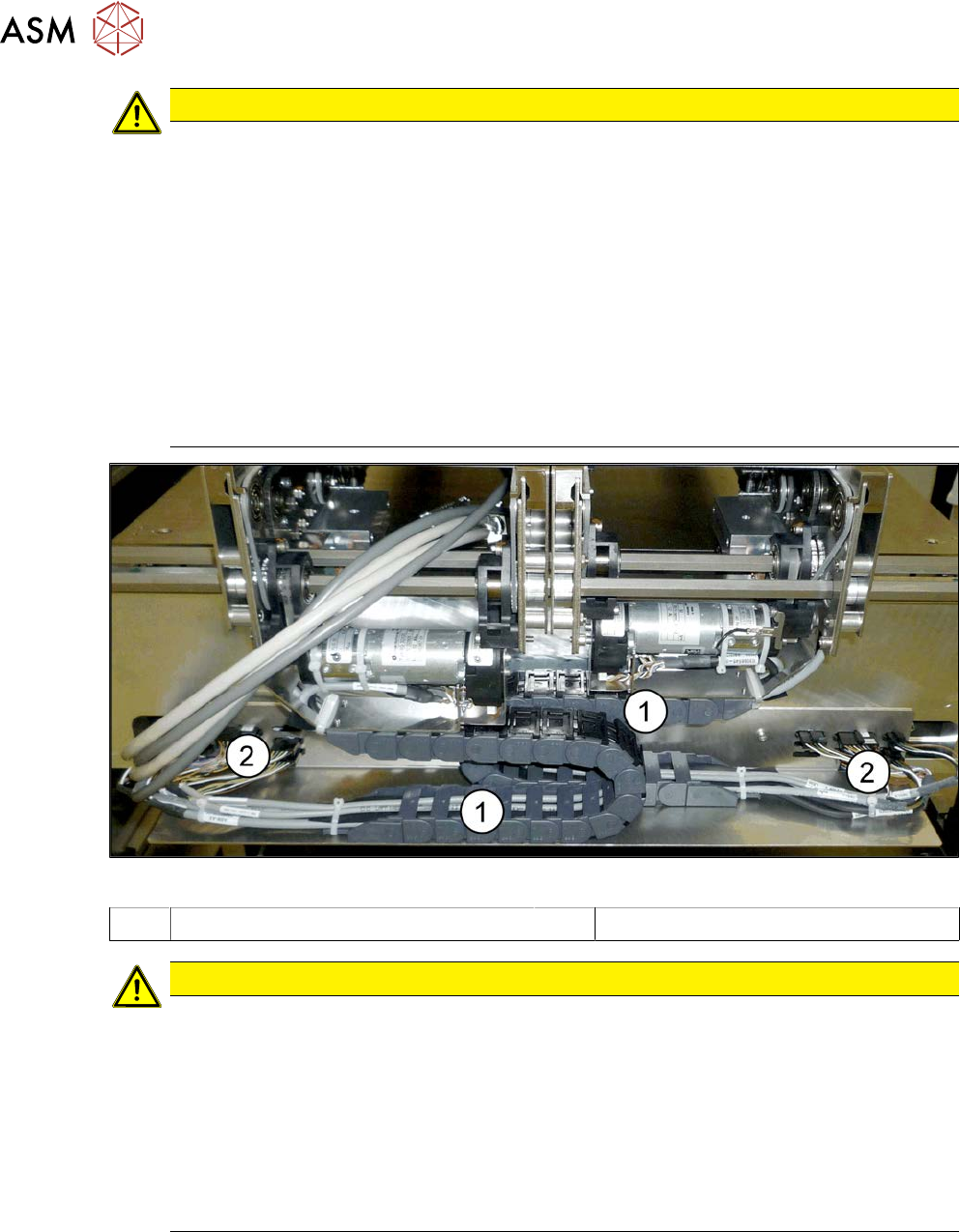
Fig.266: Trailing cable and interface connector
1 Trailing cable 2 Interface connector
CAUTION
Outer conveyor sides can only be moved to center
If the outer conveyor sides are manually moved, the trailing cable could collide with the interface
connectors underneath the conveyor sides. To avoid this, observe the following points:
► The conveyor sides A, B and C may only be moved as far as the "stopper right side D"
on the outermost left edge of the lifting table plate of conveyor lane 1.
► The conveyor sides D, C and B may only be moved as far as the "stopper left side A"
on the outermost right edge of the lifting table plate of conveyor lane 2.
ð If the conveyor sides are moved using the software, this will automatically be taken
into account.