c900773.R02_EN.pdf - 第73页
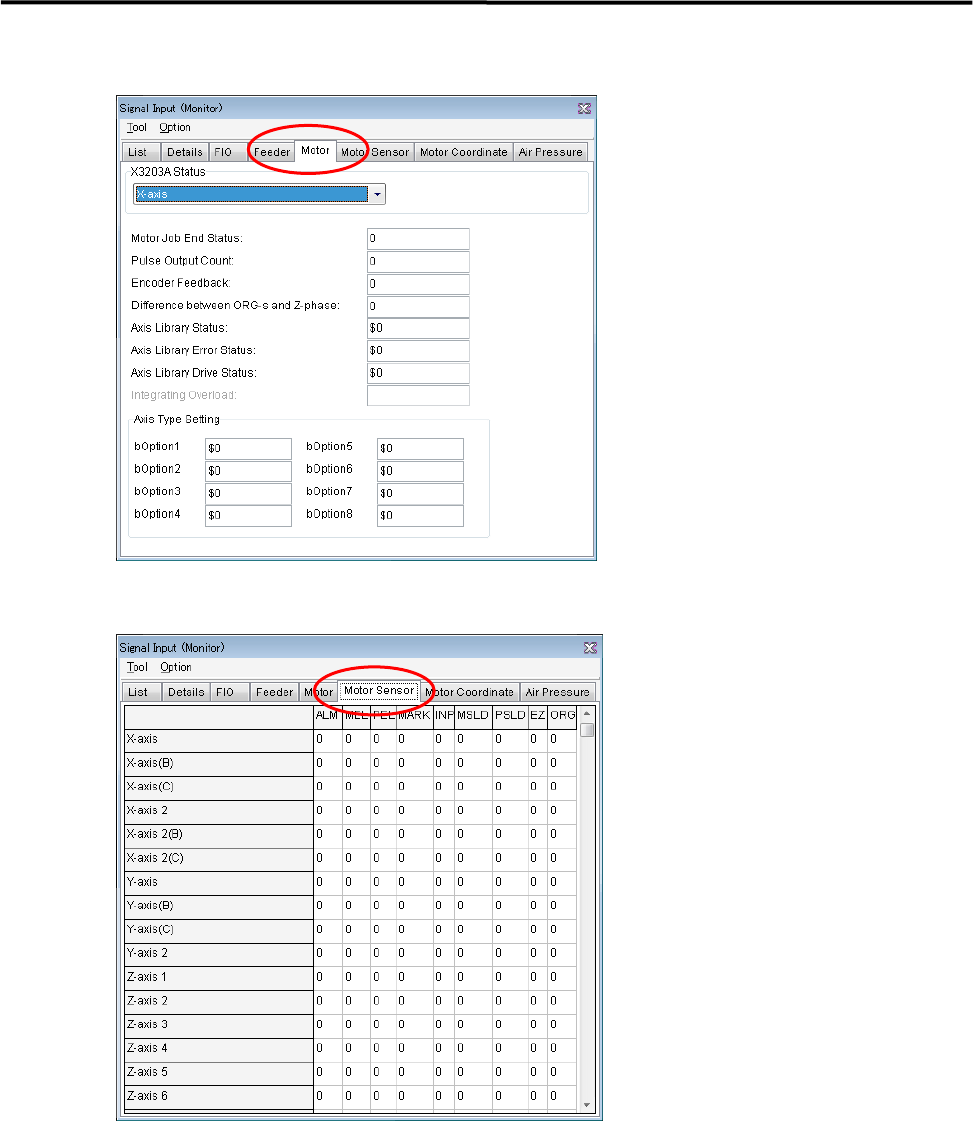
4 Electrical Section 4-3 ■ Motor tab ■ Motor Sensor tab Window: ALM: Alarm MEL: M inus End Limi ted PEL: Plus End Limite d MARK: Mark INP: In Position MSLD: Minus Sl ow Down PSLD: Plus Slow Down EZ: 0 Phase ORG: Origin
4 Electrical Section
4-2
Signal I/O
Signal I/O is the abbreviation of Signal Input/Output. The signal input refers to the input signal via the
sensors. The signal output refers to the command transmitted to the actuators.
Signal Output (Control) window serves as controls to move actuators for checking their movements. In
response to their movements, Signal Input (Monitor) window shows On/Off of motors and actuators.
Signal Input Monitor
Current status of each sensor can be observed on the signal input monitor. “1” indicates that a sensor is ON,
and “0” indicates OFF. When a sensor detects an action on a switch, motor, and actuator, the signal input
monitor displays it as a change of current status of these mechanical units. Wire disconnection or sensor
failure can also be checked by observing the signal input monitor.
Menu: Manual>Signal I/O>Signal Input (Monitor)
Signal Input (List) ・・・Not Use
Signal Input (Details)・・・Not Use
FIO ・・・・・・・・・・ Not Use
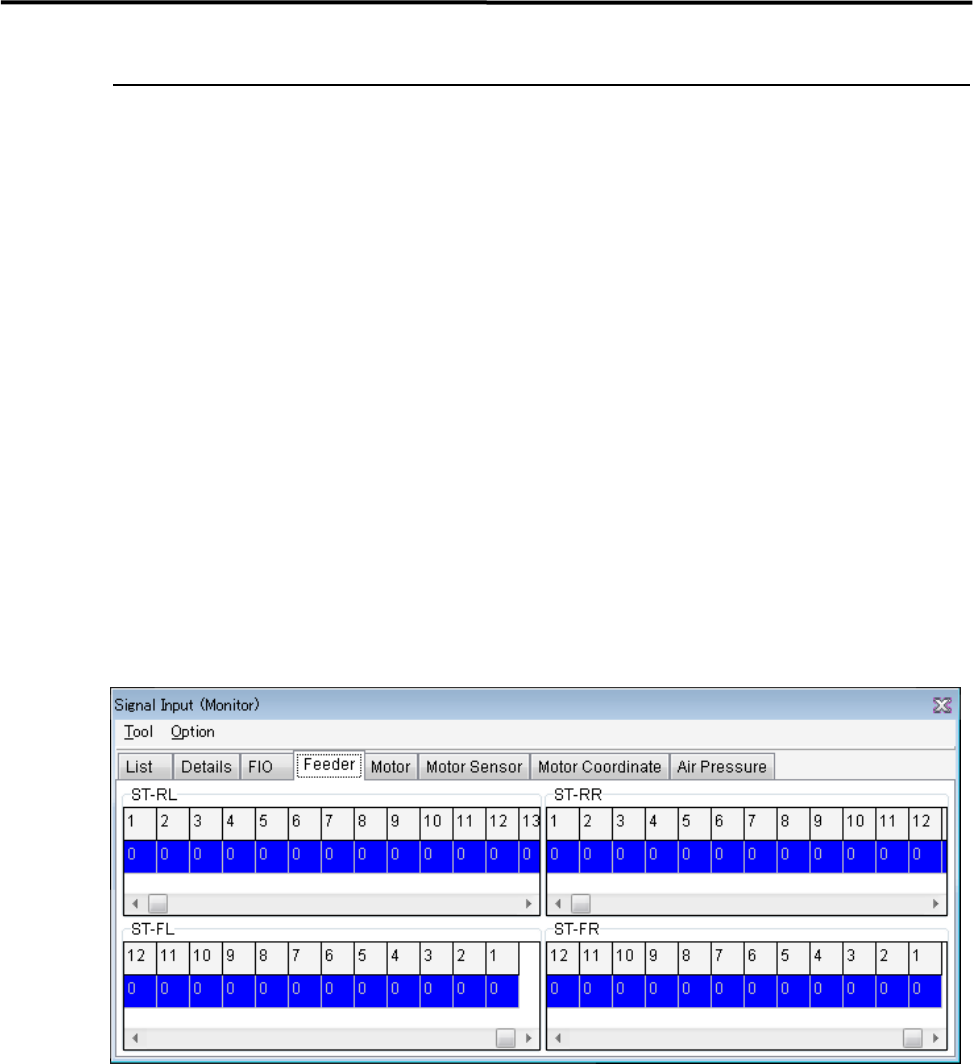
■ “Feeder” tab
“1” indicates that the feeder has been set.
“0” indicates that the feeder has not been set yet.
Upper row represents signal input monitor for front feeder banks.
Lower row represents signal input monitor for rear feeder banks.
4 Electrical Section
4-3
■ Motor tab
■ Motor Sensor tab
Window:
ALM: Alarm
MEL: Minus End Limited
PEL: Plus End Limited
MARK: Mark
INP: In Position
MSLD: Minus Slow Down
PSLD: Plus Slow Down
EZ: 0 Phase
ORG: Origin
4 Electrical Section
4-4
Signal Output Control
The status of each actuator (ON and OFF) can be changed through Signal Output Control. “1” indicates
that the actuator is ON, and “0” indicates OFF. Once “0” on the window is clicked, it changes “1”. Once
“1” is clicked, it changes to “0”. When “0” changes to “1” or “1” changes to “0”, the corresponding
actuator turns ON and OFF simultaneously. When trouble occurs, operating Signal Output Control can be
used for troubleshooting and to check to see whether an actuator functions normally or malfunctions.
Besides this, an actuator runs by operating Signal Output Control and sensor detects it, the outcome (ON
and OFF) is displayed on Signal Input Monitor.
The combination of an address and bit number (0-7) represents a signal. The name of each signal is shown
in the “Details” tab.
Turning on/off signal output in the Signal Output (Control) window allows an actuator to move. When
executing this operation, do not stick head, hands, or any other parts of the body inside the mounter. It may
result in serious injury. Also make sure non-operators are in a safe distance from the mounter.
Before performing signal output on/off operation, make sure no foreign obstacles are left in the mounter or
the tray feeder. Otherwise, costly machine damage may occur.
Menu: Manual>Signal I/O>Signal Output(Control)
■Digital Output (List) ・・・Not Use
■Digital Output (Details)・・・Not Use
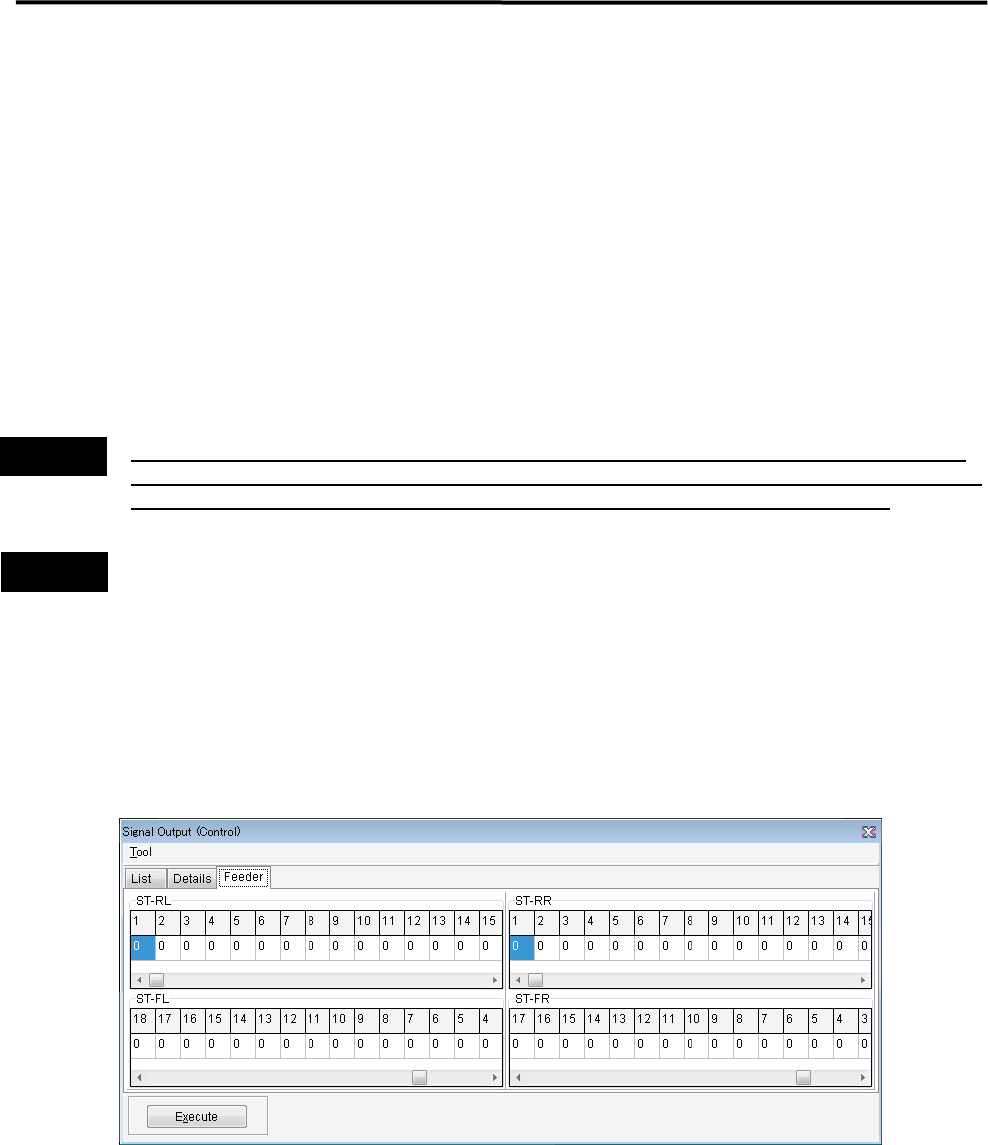
■ Feeder
It is possible to operate feeders set on the front and rear feeder banks.
Action:
① Slide the scroll bar to the left or right to display the desired feeder number.
② Click “0” of the desired feeder number. “0”changes to “1”.
③ Clicking the <Execute> button allows the feeder to feed a component.
Warning
Caution