MIL-STD-202H.pdf - 第28页
MI L - S TD - 202 - 10 4 M E TH O D 1 0 4 I MME R S I O N 1. SCOPE 1. 1 P urpose . T his test i s per f or m ed t o d et er m i n e t h e ef f ec t i v enes s of t he s eal of c om pon e nt par ts. The im mersion of the …
MIL-STD-202-104
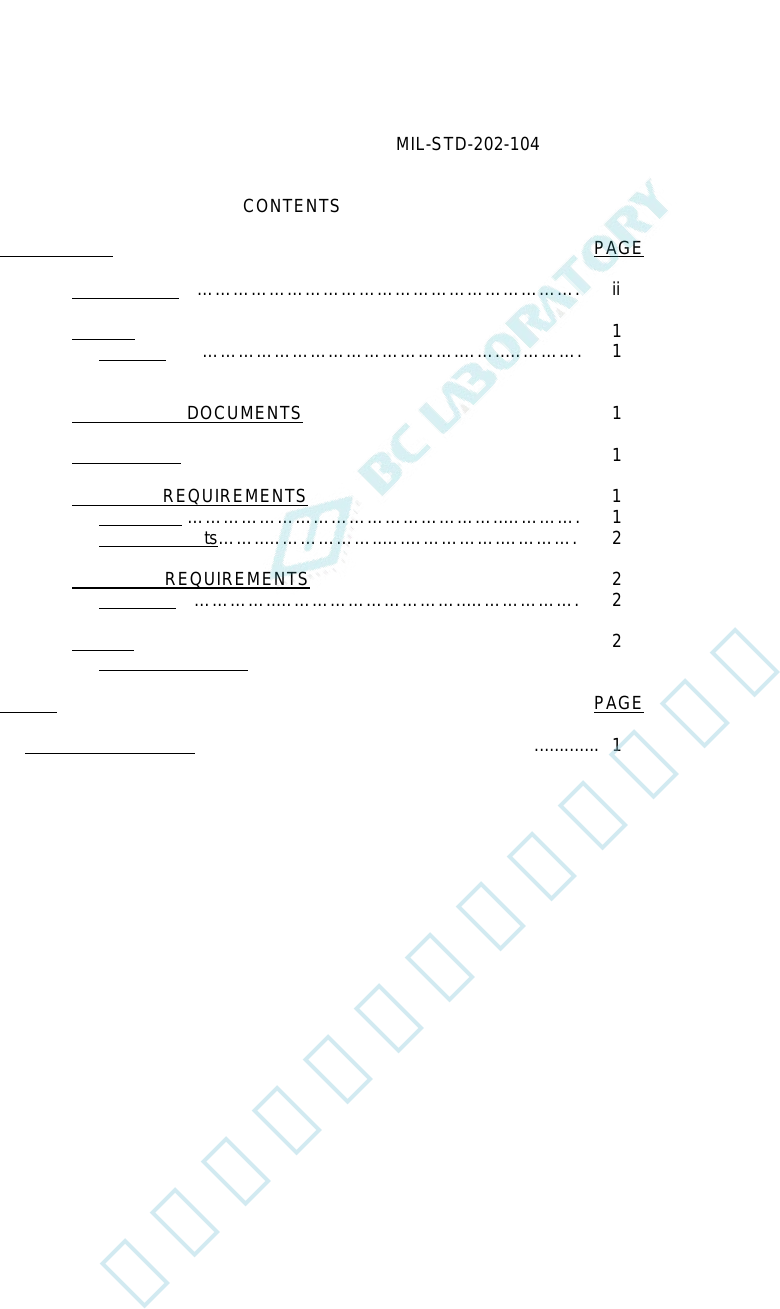
CONTENTS
PARAGRAPH PAGE
FOREWORD…………………………………………………………. ii
1. SCOPE 1
1.1 Purpose………………………………………….……..…………. 1
2. APPLICABLE DOCUMENTS 1
3. DEFINTIONS 1
4. GENERAL REQUIREMENTS 1
4.1 Procedure ……………………………………………..…………. 1
4.2. Measurements……..………………..….…………….…………. 2
5. DETAILED REQUIREMENTS 2
5.1 Summary……………..…………………………..………………. 2
6. NOTES 2
6.1 Supersession data………………………………………………. 2
TABLE PAGE
1. Immersion conditions………………………………………………................ 1
iii
北测(上海)电子科技有限公司
联系方式:xuyj@beice-sh.com 13917165676
MIL-STD-202-104
METHOD 104
IMMERSION
1. SCOPE
1.1 Purpose. This test is performed to determine the effectiveness of the seal of component parts. The immersion
of the part under evaluation into liquid at widely different temperatures subjects it to thermal and mechanical stresses
which will readily detect a defective terminal assembly, or a partially closed seam or molded enclosure. Defects of
these types can result from faulty construction or from mechanical damage such as might be produced during
physical or environmental tests. The immersion test is generally performed immediately following such tests because
it will tend to aggravate any incipient defects in seals, seams, and bushings which might otherwise escape notice.
This test is essentially a laboratory test condition, and the procedure is intended only as a measurement of the
effectiveness of the seal following this test. The choice of fresh or salt water as a test liquid is dependent on the
nature of the component part under test. When electrical measurements are made after immersion cycling to obtain
evidence of leakage through seals, the use of a salt solution instead of fresh water will facilitate detection of moisture
penetration. This test provides a simple and ready means of detection of the migration of liquids. Effects noted can
include lowered insulation resistance, corrosion of internal parts, and appearance of salt crystals. The test described
is not intended as a thermal shock or corrosion test, although it may incidentally reveal inadequacies in these
respects.
2. APPLICABLE DOCUMENTS
This section not applicable to this standard.
3. DEFINTIONS
This section not applicable to this standard.
4. GENERAL REQUIREMENTS
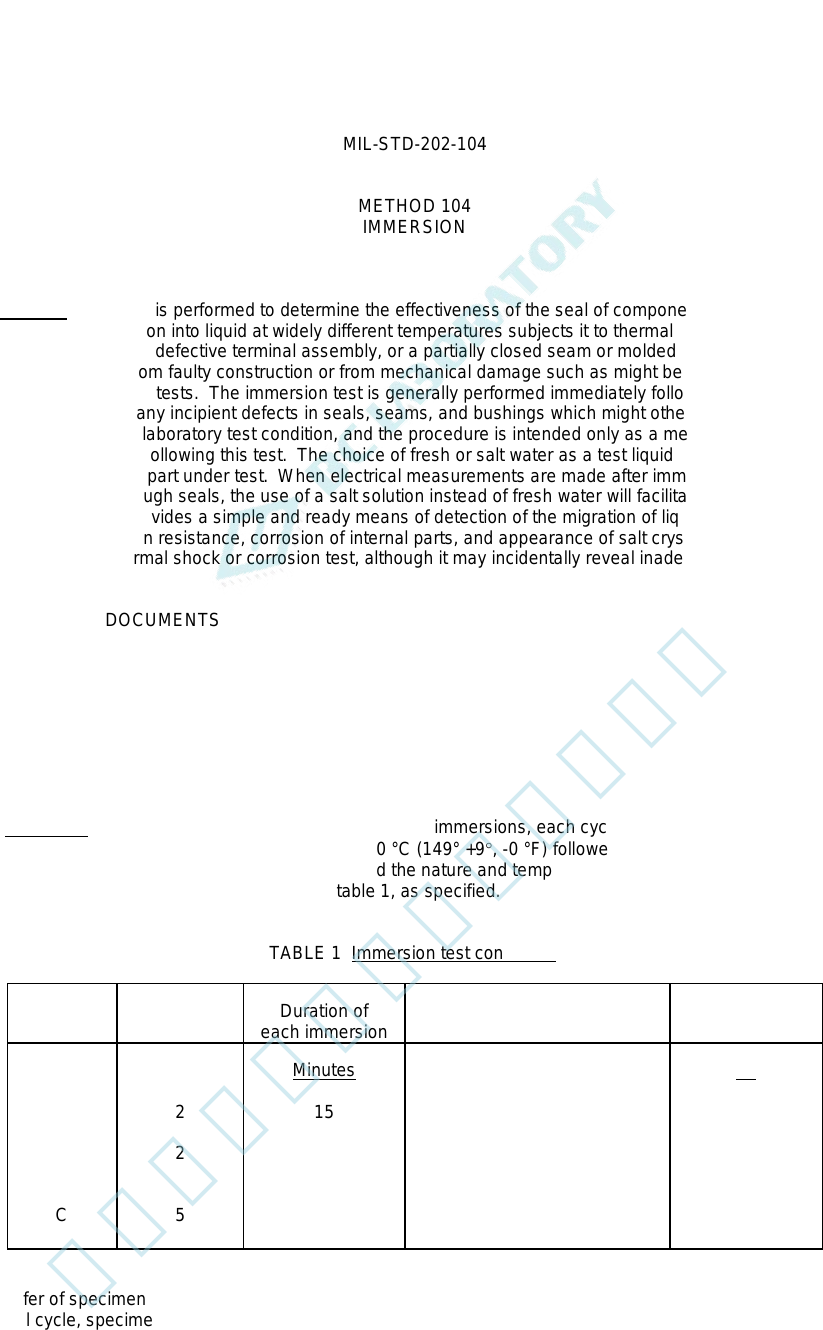
4.1. Procedure. This test consists of successive cycles of immersions, each cycle consisting of immersion in a hot
bath of fresh (tap) water at a temperature of 65° +5°, -0 °C (149° +9°, -0 °F) followed by immersion in a cold bath.
The number of cycles, duration of each immersion, and the nature and temperature of the cold bath shall be as
indicated in the applicable test condition listed in table 1, as specified.
TABLE 1 Immersion test conditions.
Test
condition
Number of
cycles
Duration of
each immersion
Immersion bath
(cold)
Temperature
of cold bath
A
B
C
2
2
5
Minutes
15
15
60
Fresh (tap) water
Saturated solution of
sodium chloride and water
Saturated solution of
sodium chloride and water
°C
25 (+10,-5)
25 (+10,-5)
0 ±3
The transfer of specimens from one bath to another shall be accomplished as rapidly as practicable. After completion
of the final cycle, specimens shall be thoroughly and quickly washed and all surfaces wiped or air-blasted clean and
dry.
1
北测(上海)电子科技有限公司
联系方式:xuyj@beice-sh.com 13917165676
MIL-STD-202-104
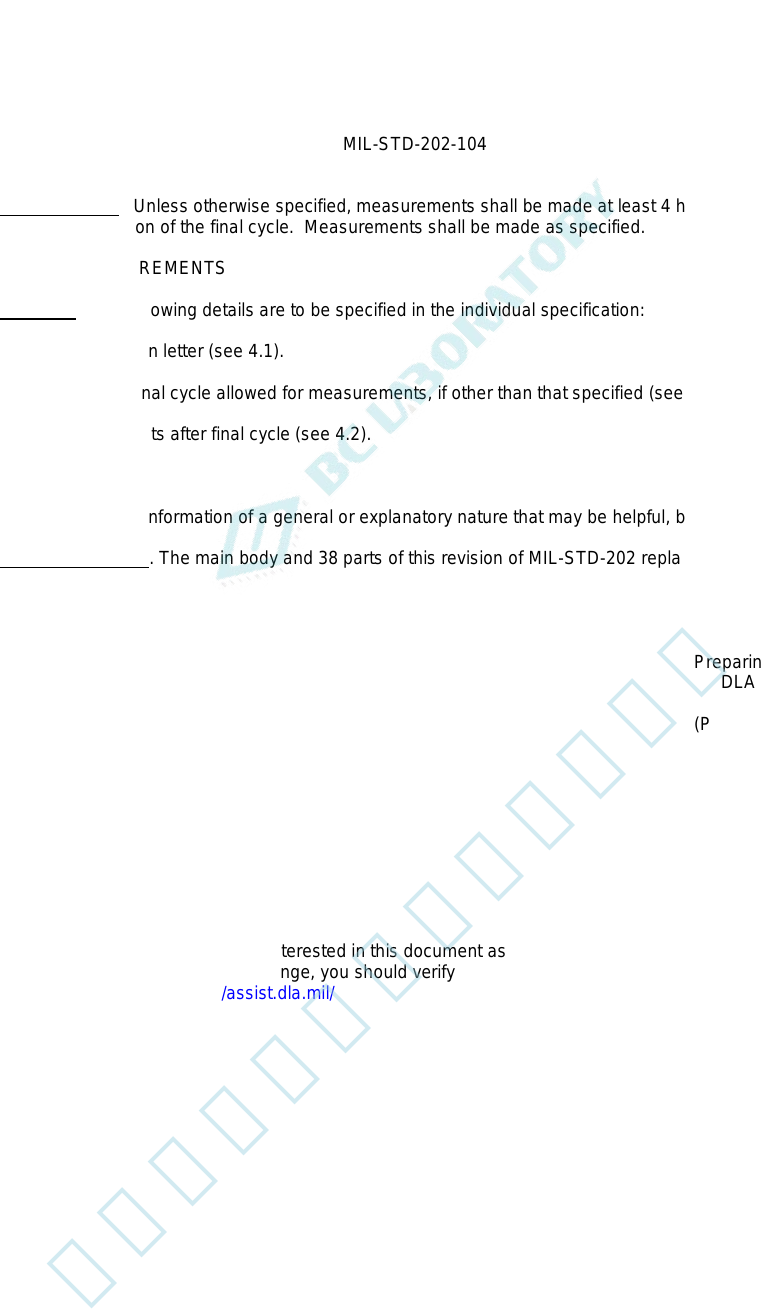
4.2 Measurements. Unless otherwise specified, measurements shall be made at least 4 hours, but not more than
24 hours, after completion of the final cycle. Measurements shall be made as specified.
5. DETAILED REQUIREMENTS
5.1 Summary. The following details are to be specified in the individual specification:
a. Test condition letter (see 4.1).
b. Time after final cycle allowed for measurements, if other than that specified (see 4.2).
c. Measurements after final cycle (see 4.2).
6. NOTES
(This section contains information of a general or explanatory nature that may be helpful, but is not mandatory.)
6.1 Supersession data. The main body and 38 parts of this revision of MIL-STD-202 replace superseded MIL-STD-
202.
Custodians: Preparing activity:
Army - CR DLA – CC
Navy - EC
Air Force - 85 (Project 59GP-2015-008)
DLA - CC
Review activities:
Army - AR, AT, AV, CR4, MI, SM, TE
Navy - AS, OS, SH
Air Force - 19, 99
NSA - NS
NOTE: The activities listed above were interested in this document as of the date of this document. Since
organizations and responsibilities can change, you should verify the currency of the information above using the
ASSIST Online database at https://assist.dla.mil/
2
北测(上海)电子科技有限公司
联系方式:xuyj@beice-sh.com 13917165676