FCM_User Reference Manual.pdf.pdf - 第95页
4022 591 96082 User Re ference Manual 02.02 FCM Multiflex 5-3 MIS 5.2 MI S P eriods an d Data Coll e c tion 5.2.1 MI S P e riod Creation During pr oduction, MIS data are collected from the v arious FCM Multifle x s ystem…
MIS
User Reference Manual 4022 591 96082
5-2 FCM Multiflex 02.02
5.1.3 User Access Level
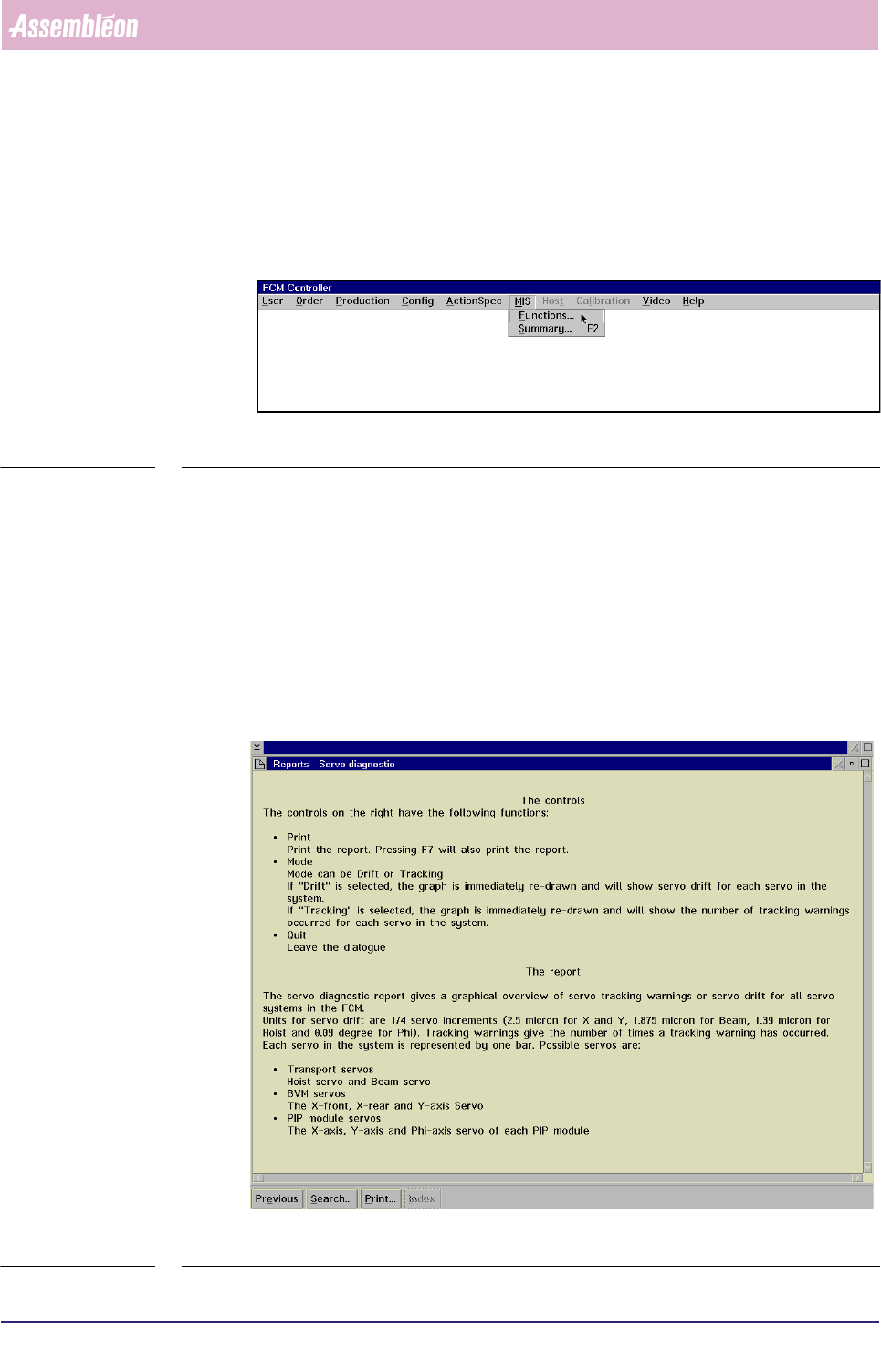
Via a pull-down menu in the FCM Multiflex controller main screen, you can access
the MIS
functions; see SCREEN 5-1.
fcm0506a.tif
SCREEN 5-1 MIS pull-down menu
There are two user access levels. If you are logged in as Operator, you have only
access to the process-related MIS functions.
Logged in as Supervisor, all MIS functions will be accessible.
5.1.4 Help Function
When using a MIS function, you can get help at any moment by pressing the help
key,
<F1>. This will result in a context-sensitive help screen with information that
may solve your question. Press the <Esc> key to leave the help screen.
fcm0507.tif
SCREEN 5-2 Help text screen example
4022 591 96082 User Reference Manual
02.02 FCM Multiflex 5-3
MIS
5.2 MIS Periods and Data Collection
5.2.1 MIS Period Creation
During production, MIS data are collected from the various FCM Multiflex system
parts to be monitored on request later. These MIS data are gathered in so-called
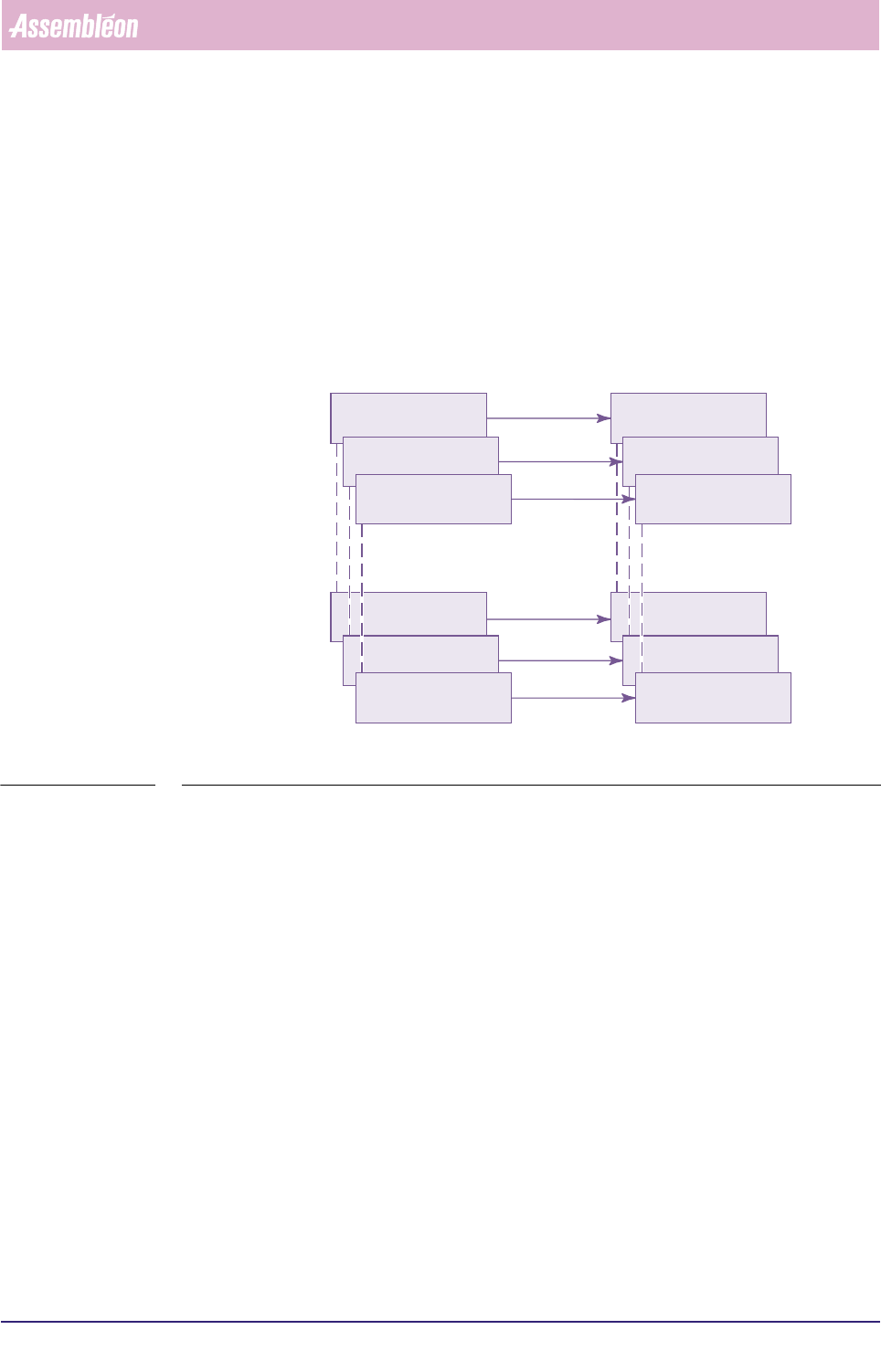
MIS periods. A MIS period is started/ended in one of two ways:
■ When a production order is entered/deleted;
■ On command from the supervisor.
fcm0502a.eps
FIGURE 5-2 Relation between order entry/deletion and MIS period existence
5.2.2 MIS Period Naming
When viewing old MIS periods, the MIS period’s name is important in order to be
able to select the right one. A MIS period name is automatically created on entering
a production order, and it consists of Date + Order name (given in the order
entry).
If two orders are started on the same day with the same name, the character “a” is
automatically appended to the MIS period name to distinguish between these two.
5.2.3 MIS Data Collection and Writing Actions
5.2.3.1 Data Collection
MIS data is collected from different parts of the FCM Multiflex. Some of these FCM
Multiflex parts write data immediately into the MIS database, whereas some other
parts do only on a MIS data collection command. As a consequence of this, the
MIS database of a running order may be inconsistent at sometime. So, when you
want to create a report that is surely based upon consistent data at any moment, a
(manual) MIS
new order A entered new MIS period A starts
order A deleted MIS period A ends
new order B entered new MIS period B starts
order B deleted MIS period B ends
new order C entered new MIS period C starts
order C deleted MIS period C ends
MIS
User Reference Manual 4022 591 96082
5-4 FCM Multiflex 02.02
data collection command should be given first. During production, an automatic
MIS data collection commands are given by the FCM Multiflex system periodically.
This is noticeable as the FCM Multiflex will pause for approximately 10 seconds 1 at
that time.
For FCM Multiflex systems without SECS-II option installed, automatic MIS data
collection commands are given every hour (on the hour).
For FCM Multiflex systems with SECS-II option installed, automatic MIS data
collection commands are given after a set period has been expired. Default
period setting is 1 hour; a value can be set between 1 hour and 10 seconds.
5.2.3.2 Writing Actions
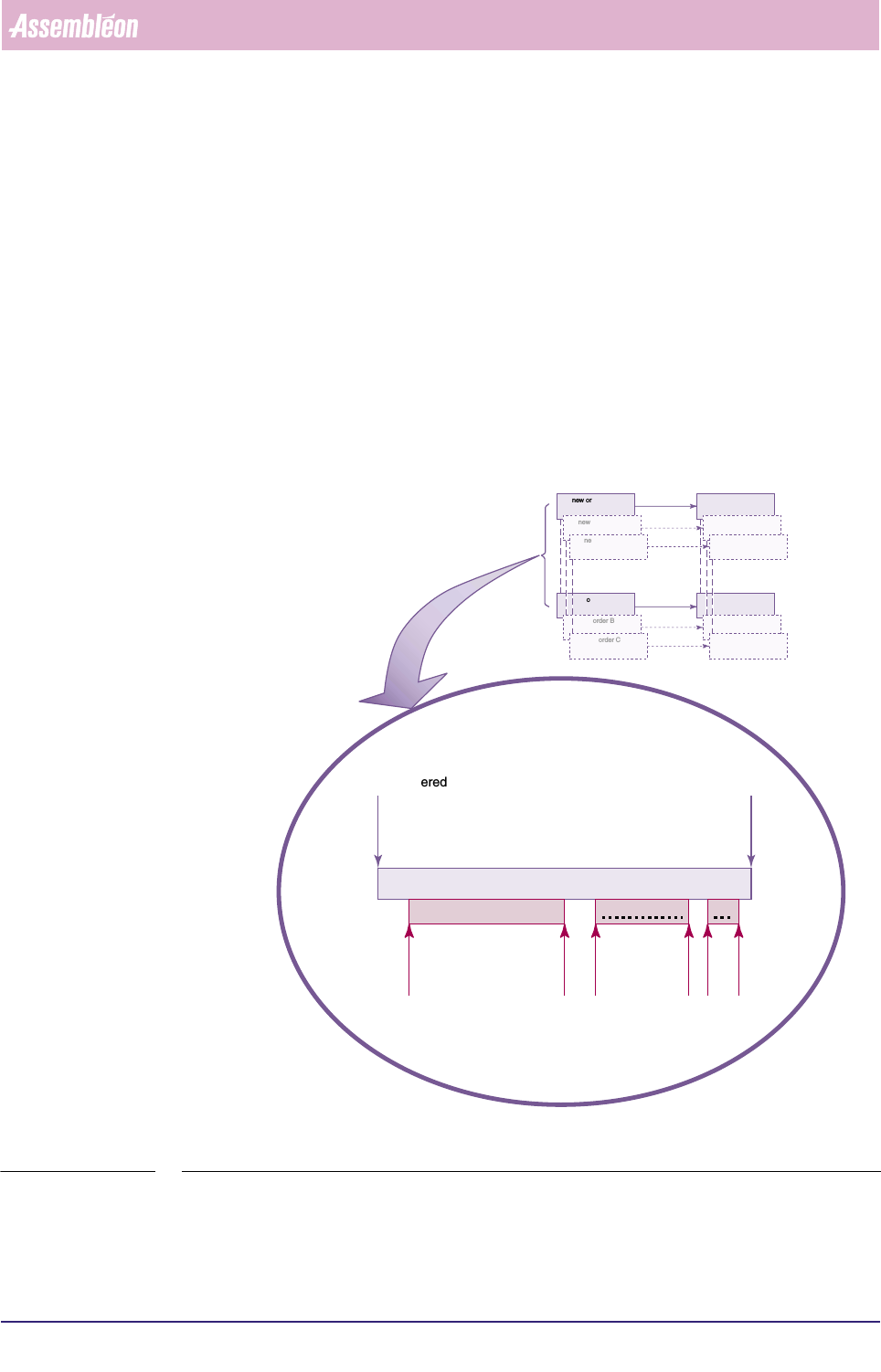
As long as an order has not been deleted, the MIS period of that order will be
updated any time this order is started. See FIGURE 5-3
fcm0503a.eps
FIGURE 5-3 MIS data being written in the same MIS period during different production runs
1. Depends on the number of installed placement
modules.
new order A entered order A deleted
MIS period A
started
started
started
stopped
stopped
stopped
MIS data being written MIS data being written
MIS d..
running order A running order A running
order A
new order A entered new MIS period A starts
order A deleted MIS period A ends
new order B entered new MIS period B starts
order B deleted MIS period B ends
new order C entered new MIS period C starts
order C deleted MIS period C ends