bnp-b2365(eng)b.pdf - 第30页
1. Installation 1 - 14 1-3-6 Heat radiation countermeasures In order to secure reliability and life, design the temperature in the panel so that the ambient temperature of each unit is 55°C or less. If heat accumulates a…
1. Installation
1 - 13
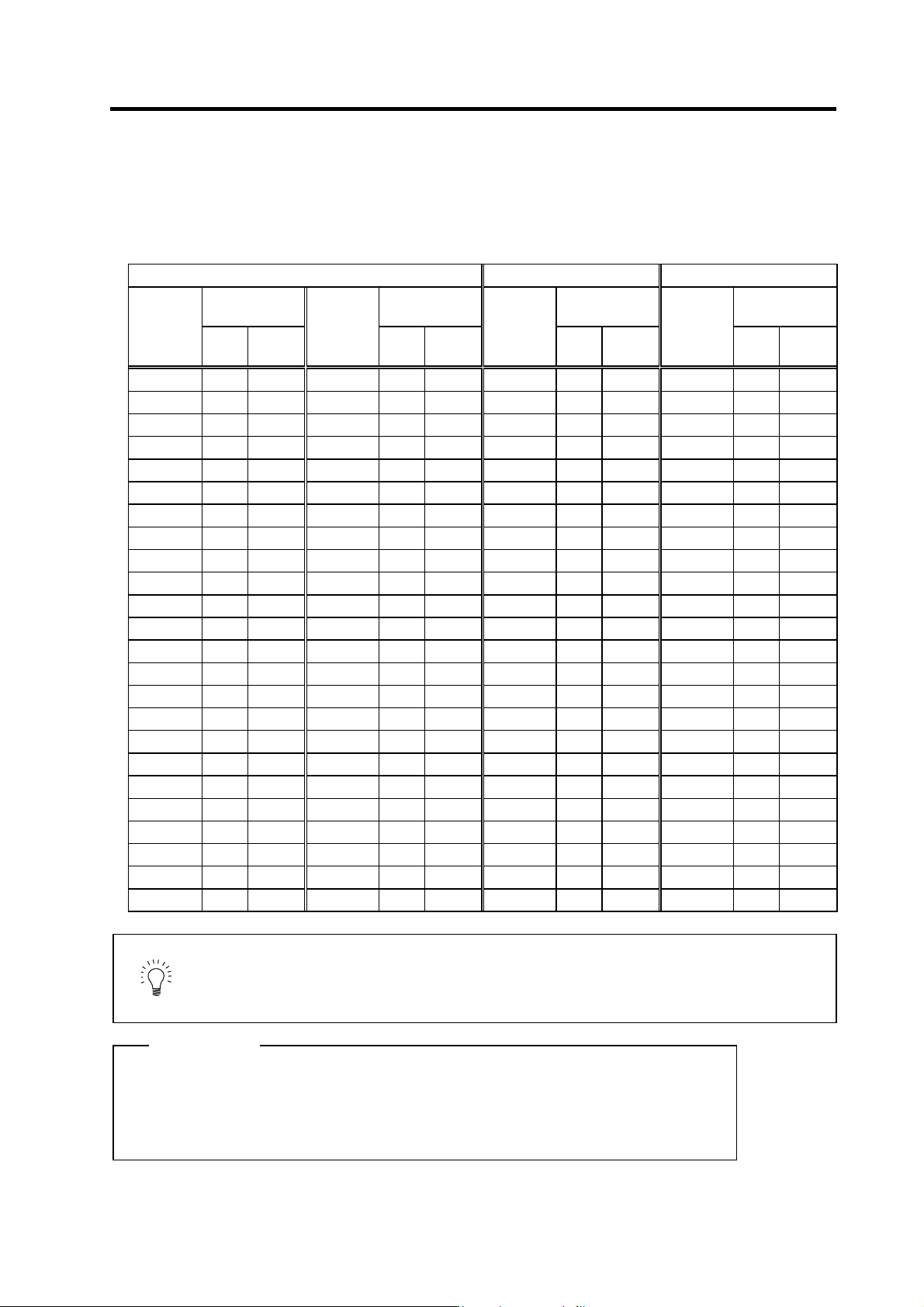
1-3-5 Heating value
Each heating value is calculated with the following values.
The values for the servo drive unit are for a stall output, and the values for the spindle drive unit are for
a continuous rated output. The value for the power supply unit includes the AC reactor's heating value.
Servo drive unit Spindle drive unit Power supply unit
Heating amount
[W]
Heating amount
[W]
Heating amount
[W]
Heating amount
[W]
Type
MDS-C1-
Inside
panel
Outside
panel
Type
MDS-C1-
Inside
panel
Outside
panel
Type
MDS-C1-
Inside
panel
Outside
panel
Type
MDS-C1-
Inside
panel
Outside
panel
V1- 01 21 0 V2-0101 38 0 SP- 04 30 0 CV- 37 21 34
V1- 03 27 0 V2-0301 41 0 SP- 075 40 0 CV- 55 23 42
V1- 05 37 0 V2-0303 43 0 SP- 15 49 0 CV- 75 25 55
V1- 10 53 0 V2-0501 46 0 SP- 22 26 42 CV-110 26 99
V1- 20 25 66 V2-0503 52 0 SP- 37 28 51 CV-150 29 126
V1- 35 30 102 V2-0505 62 0 SP- 55 31 76 CV-185 33 162
V1- 45S 34 124 V2-1005 78 0 SP- 75 35 102 CV-220 35 175
V1- 45 37 148 V2-1010 96 0 SP-110 41 140 CV-260 40 220
V1- 70S 38 151 V2-2010 37 117 SP-150S 48 140 CV-300 46 274
V1- 70 50 234 V2-2020 41 137 SP-150 48 187 CV-370 54 346
V1- 90 56 275 V2-3510S 44 146 SP-185 62 280
V1-110 74 392 V2-3510 42 148 SP-220 65 301
V1-150 96 545 V2-3520S 48 165 SP-260 80 403
V2-3520 45 168 SP-300 98 522
V2-3535 51 209
V2-4520 52 214
V2-4535 57 249
V2-4545S 55 225
V2-4545 64 295
V2-7035 70 336
V2-7045 77 382
V2-7070S 65 300
V2-7070 90 468
V2-9090S 65 300
POINT
Design the panel's heating value taking the actual axis operation (load rate) into
consideration. With a general machine tool, the servo drive unit's load rate is
approx. 50%, so the heating values inside the panel are half the values shown
above. (Excluding the power supply and spindle drive unit.)
When using MDS-C1-CV-260, MDS-C1-SP[]-185 and MDS-C1-V2-3535
Total heating value = (40 + 220) + (62 + 280) + (51 + 209) = 862 [W]
Heating value in panel = (40) + (62) + (51 × 0.5) = 127.5 [W]
(Example 1)
1. Installation
1 - 14
1-3-6 Heat radiation countermeasures
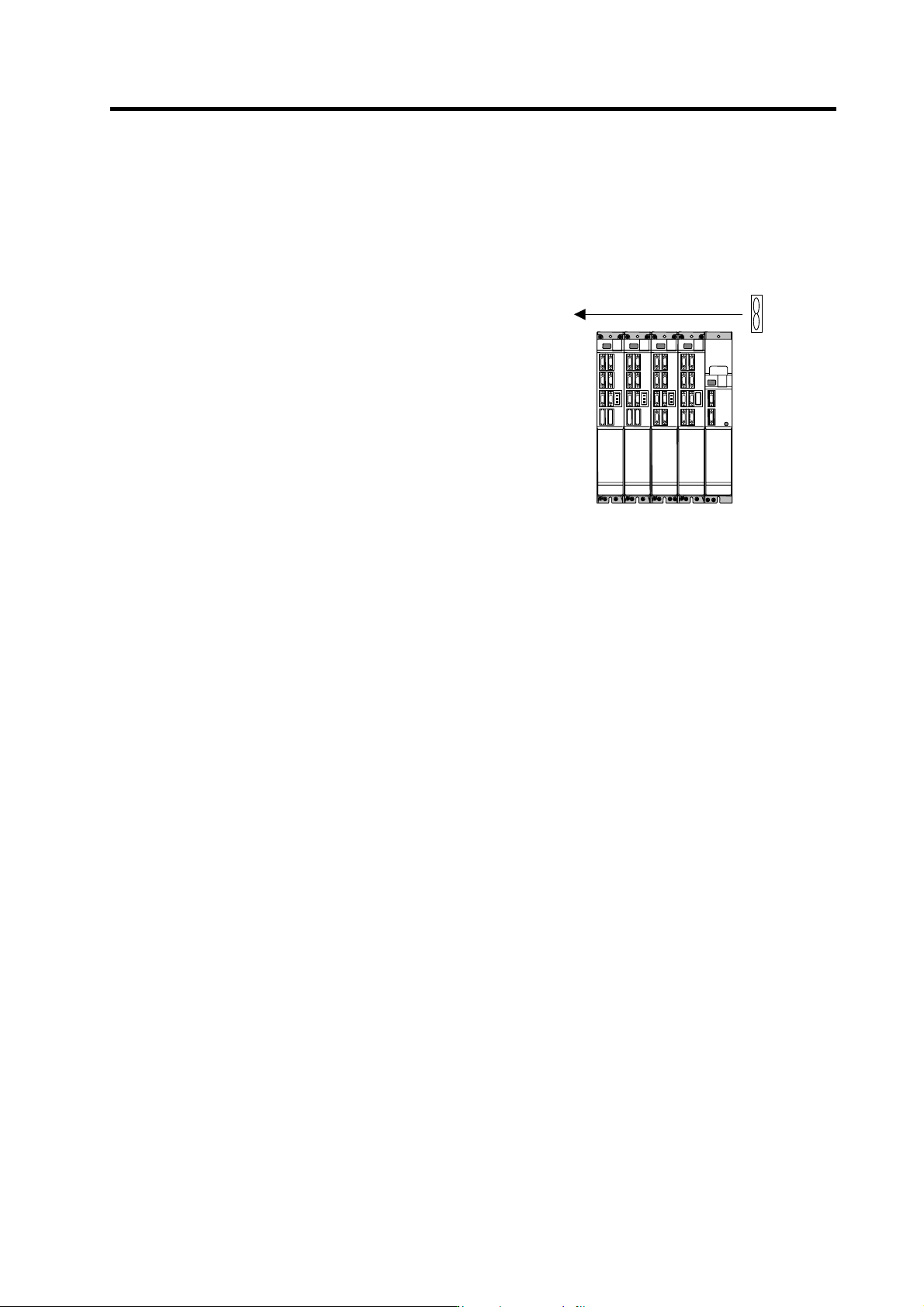
In order to secure reliability and life, design the temperature in the panel so that the ambient
temperature of each unit is 55°C or less.
If heat accumulates at the top of the unit, etc., install a fan so that the temperature in the panel remains
constant.
(Note) Due to the structure, heat easily accumulates at the
top of the unit. Install a fan in the power distribution
panel to circulate the heat at the top of the unit.
Fan
(Ins ide panel)
Wind speed 2m/ s or more
1. Installation
1 - 15
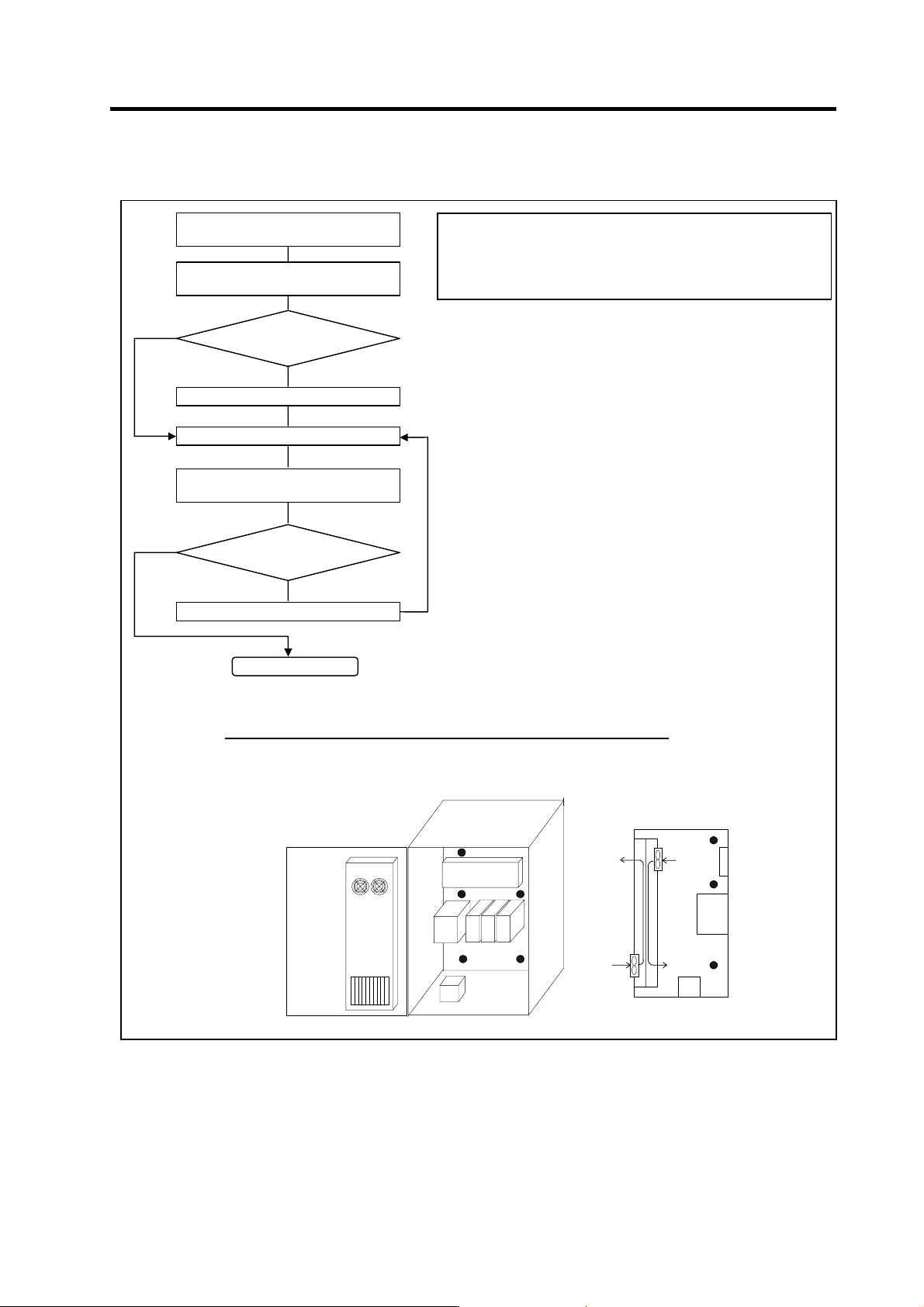
Please refer to following method for heat radiation countermeasures.
Heat
exchange
r
Unit
Flow of air
Flow of air
Relay, etc
Examples of mounting and temperature measurement positions (reference)
z
Measurement position (example)
Calculate total heat radiation of each
mounted unit (W)
Comparison of W and W1
W ≤ W1
Collection of internal temperature rise
distribution data
Mounting design
Improvements
Completion
Selection of heat exchanger
Evaluation
W>W1
∆T≤10°C
∆T>10°C
Calculate cabinet’s cooling capacity
(W1)
<Hypothetical conditions>
(1) Average temperature in cabinet : T ≤ 55°C
(2) Cabinet peripheral temperature : Ta ≤ 0°C to 45°C
(3) Internal temperature rise value : ∆T =T–Ta
max= 10°C
<Supplement>
1) Refer to Specifications Manual, etc. for the heat
generated by each unit.
2) Enclosed cabinet (thin steel plate) cooling capacity
calculation equation
W1 = U × A × ∆T
U: 6W/m
2
×
°C (with internal agitating fan)
4W/m
2
× °C (without internal agitating fan)
A: Effective heat radiation area (m
2
)
(Heat dissipation area in panel)
Sections contacting other objects are excluded.
∆T: Internal temperature rise value (10°C)
3) Points of caution for heat radiation countermeasures
when designing mounting state
• Layout of convection in panel
• Collect hot air at suction port in heat exchanger
cabinet.
4) Understanding the temperature rise distribution in the
panel
∆T (average value) ≤ 10°C
∆T
max (maximum value) ≤ 15°C
R (inconsistency) = (∆T
max – ∆Tmin) ≤ 6°C
(Evaluate existence of heat spots)