IPC-TM-650 EN 2022 试验方法--.pdf - 第252页
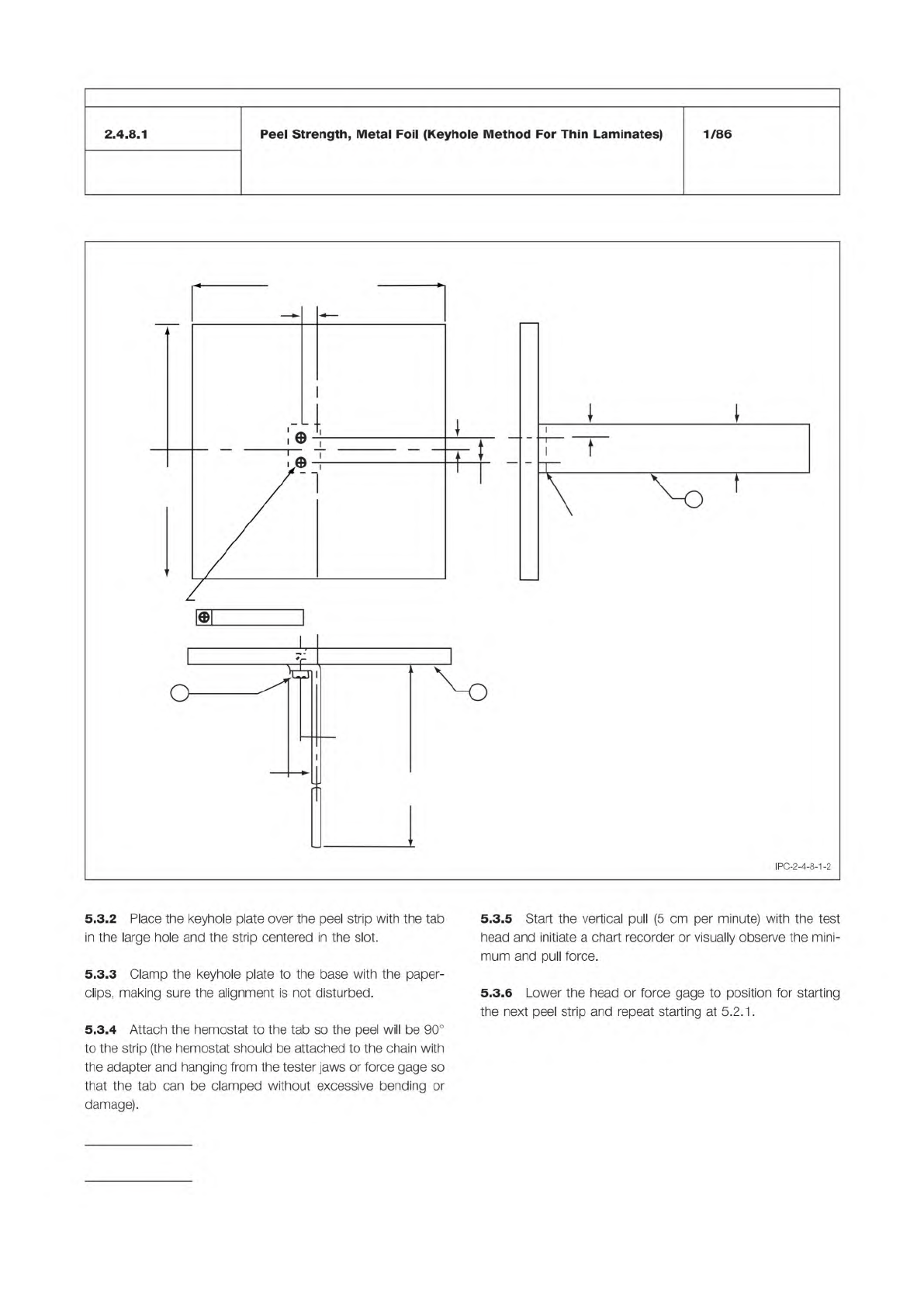
Figure 2 Keyhold H orizontal Axis 10 cm ± 0.25 cm (2) .138-32UN-2B 0.025 cm dia. 0.064 cm ± 0.05 cm 10 cm ± 0.25 cm 0.475 cm ± 0.025 cm 0.95 cm ± 0.025 cm 2 0.064 cm AL Alloy 0.475 cm ± 0.05 cm 0.95 cm ± 0.075 cm 3 MS 16…
IPC-TM-650
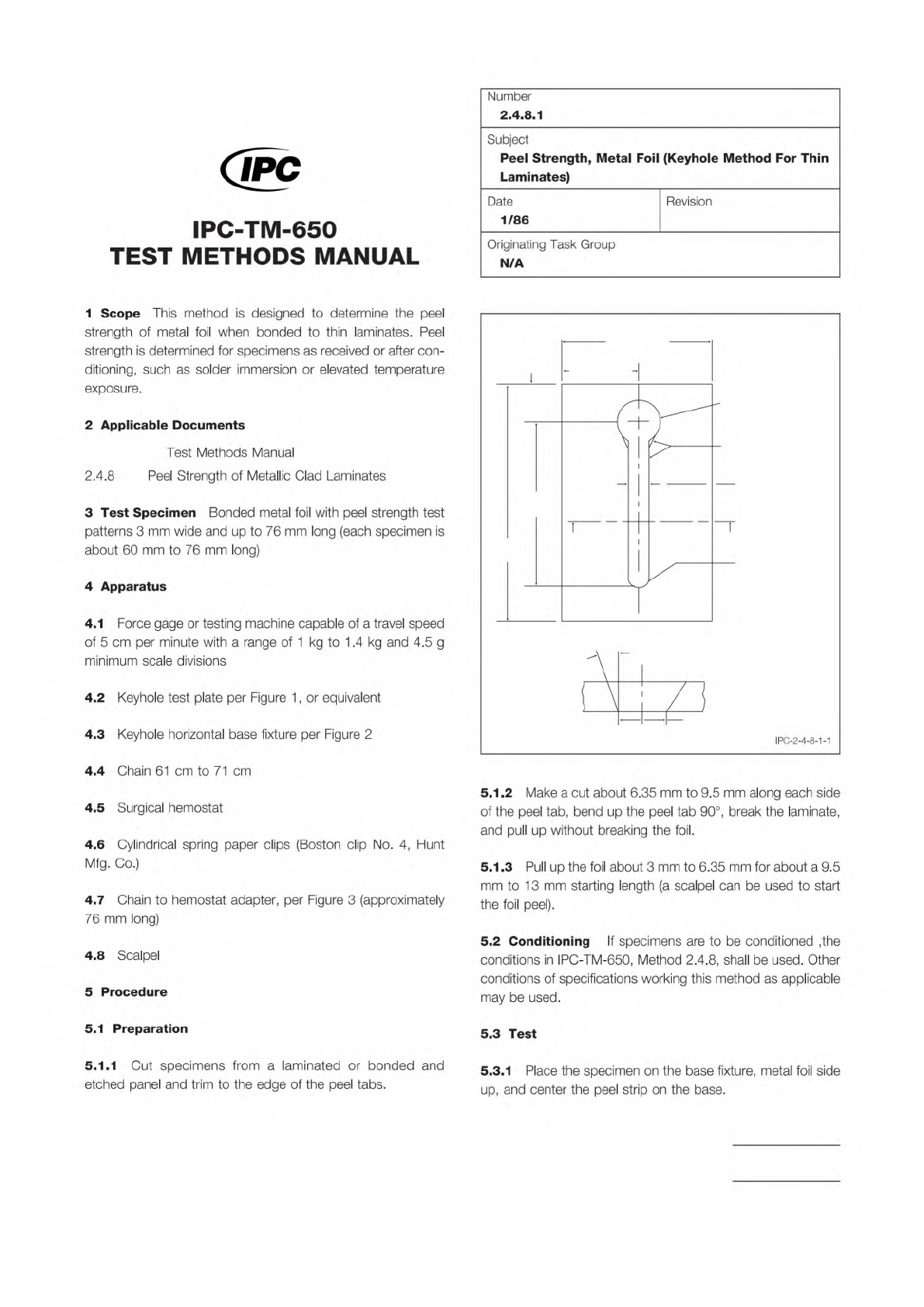
Figure 1 Keyhole Test Plate
8.5 cm
± 0.13 cm
‘‘A” ‘‘A”
3.8 cm ± 0.25 cm
2 cm
± 0.25 cm
13.5 cm
± 0.25 cm
8 cm ± 0.25 cm
1.9 cm
Blend entry edge of
hole into bevel of slot
0.4 cm ± 0.013 cm (Slot)
R
0.3 cm thick
AL Alloy
AA6061 T651
Pl
18 ± 2
0.41 cm Ref.
Section “A”-“A” Bevel detail 4x
+ 0.02 cm
- 0.013 cm
dia. hole
o
o
The Institute for Interconnecting and Packaging Electronic Circuits
2215 Sanders Road • Northbrook, IL 60062-6135
Material in this Test Methods Manual was voluntarily established by Technical Committees of the IPC. This material is advisory only
and its use or adaptation is entirely voluntary. IPC disclaims all liability of any kind as to the use, application, or adaptation of this
material. Users are also wholly responsible for protecting themselves against all claims or liabilities for patent infringement.
Equipment referenced is for the convenience of the user and does not imply endorsement by the IPC.
Page 1 of 3
IPC-TM-650
TEST
METHODS
MANUAL
1
Scope
This
method
is
designed
to
determine
the
peel
strength
of
metal
foil
when
bonded
to
thin
laminates.
Peel
strength
is
determined
for
specimens
as
received
or
after
con¬
ditioning,
such
as
solder
immersion
or
elevated
temperature
exposure.
2
Applicable
Documents
Test
Methods
Manual
2
.4.8
Peel
Strength
of
Metallic
Clad
Laminates
3
Test
Specimen
Bonded
metal
foil
with
peel
strength
test
patterns
3
mm
wide
and
up
to
76
mm
long
(each
specimen
is
about
60
mm
to
76
mm
long)
4
Apparatus
4.1
Force
gage
or
testing
machine
capable
of
a
travel
speed
of
5
cm
per
minute
with
a
range
of
1
kg
to
1
.4
kg
and
4.5
g
minimum
scale
divisions
4.2
Keyhole
test
plate
per
Figure
1
,
or
equivalent
4.3
Keyhole
horizontal
base
fixture
per
Figure
2
4.4
Chain
61
cm
to
71
cm
4.5
Surgical
hemostat
4.6
Cylindrical
spring
paper
clips
(Boston
clip
No.
4,
Hunt
Mfg.
Co.)
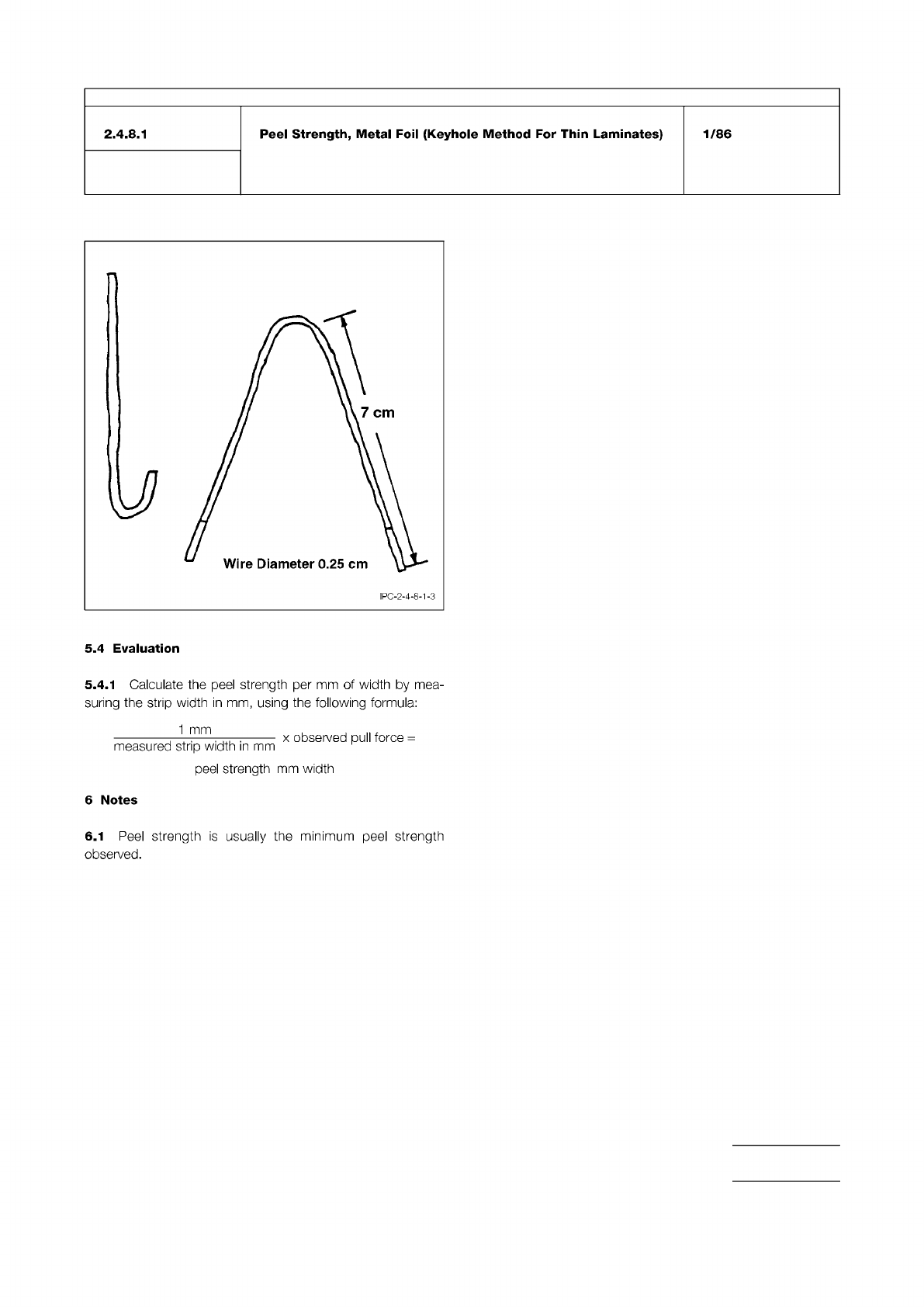
4.7
Chain
to
hemostat
adapter,
per
Figure
3
(approximately
76
mm
long)
4.8
Scalpel
5
Procedure
5.1
Preparation
5.1.1
Cut
specimens
from
a
laminated
or
bonded
and
etched
panel
and
trim
to
the
edge
of
the
peel
tabs.
Number
2.4.8.1
Subject
Peel
Strength,
Metal
Foil
(Keyhole
Method
For
Thin
Laminates)
Date
Revision
1/86
Originating
Task
Group
N/A
5.1
.2
Make
a
cut
about
6.35
mm
to
9.5
mm
along
each
side
of
the
peel
tab,
bend
up
the
peel
tab
90°,
break
the
laminate,
and
pull
up
without
breaking
the
foil.
5
J
.3
Pull
up
the
foil
about
3
mm
to
6.35
mm
for
about
a
9.5
mm
to
13
mm
starting
length
(a
scalpel
can
be
used
to
start
the
foil
peel).
5.2
Conditioning
If
specimens
are
to
be
conditioned
,the
conditions
in
IPC-TM-650,
Method
2.4.8,
shall
be
used.
Other
conditions
of
specifications
working
this
method
as
applicable
may
be
used.
5.3
Test
5.3.1
Place
the
specimen
on
the
base
fixture,
metal
foil
side
up,
and
center
the
peel
strip
on
the
base.
Figure
2 Keyhold Horizontal Axis
10 cm ±
0.25 cm
(2) .138-32UN-2B
0.025 cm dia.
0.064 cm
± 0.05 cm
10 cm ± 0.25 cm
0.475 cm
± 0.025 cm
0.95 cm ±
0.025 cm
2
0.064 cm
AL Alloy
0.475 cm
± 0.05 cm
0.95 cm ± 0.075 cm
3
MS 16995
SCR CAP SOC HD
10.5 cm
± 0.075 cm
AA6061 T651
0.475 cm
± 0.025 cm
1.9 cm
± 0.025 cm
0.4 cm
+ 0.013 cm
- 0.0075 cm
dia.
2 holes
0.32 cm thick
AL Alloy
AA6061 T651
1
GI
IPC-TM-650
Number
Subject Date
Revision
Page 2 of 3
2.4.8.1
Peel
Strength,
Metal
Foil
(Keyhole
Method
For
Thin
Laminates)
1/86
I
PC-2-4-8-1
-2
5.3.2
Place
the
keyhole
plate
over
the
peel
strip
with
the
tab
in
the
large
hole
and
the
strip
centered
in
the
slot.
5.3.3
Clamp
the
keyhole
plate
to
the
base
with
the
paper¬
clips,
making
sure
the
alignment
is
not
disturbed.
5.3.4
Attach
the
hemostat
to
the
tab
so
the
peel
will
be
90°
to
the
strip
(the
hemostat
should
be
attached
to
the
chain
with
the
adapter
and
hanging
from
the
tester
jaws
or
force
gage
so
that
the
tab
can
be
clamped
without
excessive
bending
or
damage).
5.3.5
Start
the
vertical
pull
(5
cm
per
minute)
with
the
test
head
and
initiate
a
chart
recorder
or
visually
observe
the
mini¬
mum
and
pull
force.
5.3.6
Lower
the
head
or
force
gage
to
position
for
starting
the
next
peel
strip
and
repeat
starting
at
5.2.1.
/
Figure 3 Chain to Hemostat Adapter
IPC-TM-650
Number
Subject Date
Revision
Page 3 of 3
2.4.8.1
Peel
Strength,
Metal
Foil
(Keyhole
Method
For
Thin
Laminates)
1/86
5.4
Evaluation
5.4.1
Calculate
the
peel
strength
per
mm
of
width
by
mea¬
suring
the
strip
width
in
mm,
using
the
following
formula:
1
mm
—
—
x
observed
pull
force
=
measured
strip
width
in
mm
peel
strength
mm
width
6
Notes
6.1
Peel
strength
is
usually
the
minimum
peel
strength
observed.