IPC-TM-650 EN 2022 试验方法--.pdf - 第470页
IPC- 2141 IPC-TM-650 IPC-TM-650 Page 2 of 23 Number 2.5.5.7 Subject Characteristic Impedance of Lines on Printed Boards by TDR Date 03/04 Revision A a. The transmission line under test varies along its length whereas the…
Note:
Material in this Test Methods Manual was voluntarily established by Technical Committees of IPC. This material is advisory only
and its use or adaptation is entirely voluntary. IPC disclaims all liability of any kind as to the use, application, or adaptation of this
material. Users are also wholly responsible for protecting themselves against all claims or liabilities for patent infringement.
Equipment referenced is for the convenience of the user and does not imply endorsement by IPC.
Page 1 of 23
r
ASSOCIATION
CONNECTING
/
ELECTRONICS
INDUSTRIES
®
221
5
Sanders
Road
Northbrook,
IL
60062-6135
IPC-TM-650
TEST
METHODS
MANUAL
1
Scope
This
document
describes
time
domain
reflectom-
etry
(TDR)
methods
for
measuring
and
calculating
the
charac¬
teristic
impedance,
Zo,
of
a
transmission
line
on
a
printed
cir¬
cuit
board
(PCB).
In
TDR,
a
signal,
usually
a
step
pulse,
is
injected
onto
a
transmission
line
and
the
Zo
of
the
transmis¬
sion
line
is
determined
from
the
amplitude
of
the
pulse
reflected
at
the
TDR/transmission
line
interface.
The
incident
step
and
the
time
delayed
reflected
step
are
superimposed
at
the
point
of
measurement
to
produce
a
voltage
versus
time
waveform.
This
waveform
is
the
TDR
waveform
and
contains
information
on
the
Zo
of
the
transmission
line
connected
to
the
TDR
unit.
The
signals
used
in
the
TDR
system
are
actually
rect¬
angular
pulses
but,
because
the
duration
of
the
TDR
wave¬
form
is
much
less
than
pulse
duration,
the
TDR
pulse
appears
to
be
a
step.
1.1
Applicability
The
observed
voltage
or
reflection
coeffi¬
cient
change
in
the
TDR
waveform
is
related
to
the
difference
between
Zo
of
the
transmission
line
and
the
impedance
of
the
TDR.
If
the
impedance
of
the
TDR
unit
is
known
via
proper
calibration,
then
the
Zo
of
the
transmission
line
attached
to
the
TDR
unit
may
be
determined.
Thus,
the
TDR
method
is
use¬
ful
for
measuring
Zo
and
changes
in
Zo
of
a
transmission
line.
These
impedance
values
thus
determined
can
be
used
to
verify
transmission
line
design
(engineering
development),
measure
production
repeatability,
and
qualify
manufacturers
via
transfer
or
artifact
standards.
Engineering
development
requires
detailed
information
on
the
electrical
performance
of
prototype
units
to
assure
the
trans¬
mission
line
design
yields
the
expected
performance
charac¬
teristics.
Detailed
laboratory
analysis
of
the
effect
of
variations
in
design
features
expected
in
actual
manufacture
can
be
done
to
assure
the
proposed
design
can
be
manufactured
at
a
useful
quality
level.
1.2
Measurement
System
Limitations
Measurements
of
Zo
often
vary
greatly,
depending
on
equipment
used
and
how
the
tests
were
performed.
Following
a
specified
method
helps
assure
accurate
and
consistent
results.
Both
single-ended
and
differential
line
measurements
have
limitations
in
com¬
mon,
including
the
following:
a.
The
Zo
measured
units
are
derived
and
not
directly
mea¬
sured.
Number
2.5.5.7
Subject
Characteristic
Impedance
of
Lines
on
Printed
Boards
by
TDR
Date
Revision
03/04
A
Originating
Task
Group
TDR
Test
Method
Task
Group
(D-24a)
b.
The
value
of
characteristic
impedance
obtained
from
TDR
measurements
is
traceable
to
a
national
metrology
insti¬
tute,
such
as
the
National
Institute
of
Standards
and
Tech¬
nology
(NIST),
through
coaxial
air
line
standards.
The
char¬
acteristic
impedance
of
these
transmission
line
standards
is
calculated
from
their
measured
dimensional
and
material
parameters.
c.
A
variety
of
methods
for
TDR
measurements
each
have
different
accuracies
and
repeatabilities.
d.
If
the
nominal
impedance
of
the
line(s)
being
measured
is
significantly
different
from
the
nominal
impedance
of
the
measurement
system
(typically
50
Q),
the
accuracy
and
repeatability
of
the
measured
numerical
valued
will
be
degraded.
The
greater
the
difference
between
the
nominal
impedance
of
the
line
being
measured
and
50
Q,
the
less
reliable
the
numerical
value
of
the
measured
impedance
will
be.
e.
Measurement
variation
(repeatability,
reproducibility)
may
only
be
a
small
component
of
the
total
uncertainty
in
the
value
of
the
characteristic
impedance.
For
example,
if
the
uncertainty
in
the
characteristic
impedance
of
the
reference
air
line
is
±
0.5
Q
(for
a
95
%
confidence
interval),
then
the
uncertainty
in
the
measured
characteristic
impedance
of
the
test
line
can
be
no
better
than
土
0.5
Q
even
if
measure¬
ment
variation
is
much
less.
f.
The
particular
TDR
methods
described
herein
are
not
suited
for
measuring
the
characteristic
impedance
as
a
function
of
position
along
the
transmission
line
(impedance
profiling)
because
signal
reflections
within
the
transmission
line
under
test
and
between
the
TDR
unit
and
transmission
line
under
test
may
adversely
affect
measurement
results.
g.
The
requirements
for
the
length
of
the
transmission
line
under
test
given
in
Section
3
of
this
test
method
as
well
the
IPC-2141
must
be
met.
Further
measurement
considerations
and
notes
are
provided
in
Section
6.
1
.3
Sample
Limitations
The
type
of
test
sample
used
may
also
impact
Zo
values
(see
IPC-2141).
The
sample-based
limi¬
tations
include:
IPC-2141
IPC-TM-650
IPC-TM-650
Page 2 of 23
Number
2.5.5.7
Subject
Characteristic
Impedance
of
Lines
on
Printed
Boards
by
TDR
Date
03/04
Revision
A
a.
The
transmission
line
under
test
varies
along
its
length
whereas
the
value
ofZo
obtained
assumes
a
uniform
trans¬
mission
line.
Therefore,
the
measured
Zo
only
approxi¬
mates
the
characteristic
impedance
of
an
ideal
line
that
is
representative
of
the
line
under
test.
b.
Lines
on
a
printed
circuit
board
may
deviate
significantly
from
design.
For
example,
microstrip
lines
longer
than
15
cm
[5.91
in]
on
boards
with
plated-through
holes
often
have
variations
in
line
width;
this
variation
is
due
to
plating
and/or
etching
variations.
c.
If
the
transmission
line
is
too
short,
the
accuracy
of
the
cal¬
culated
impedance
value
may
be
degraded
(see
4.1.2).
If
the
transmission
line
is
too
long,
skin
effect
and
dielectric
loss
may
cause
a
bias
in
the
impedance
measurement.
d.
Depending
on
where
the
measurements
are
made,
the
value
of
Zo
obtained
may
be
affected
by
dielectric
and
conductor
loss
and
other
effects.
The
farther
away
from
the
interface
between
the
probe
and
the
transmission
line
under
test,
the
worse
these
effects
will
be.
e.
Duration
of
the
measurement
window
(waveform
epoch)
may
need
to
be
adjusted
for
sample
length
and
location
of
midpoint
vias
along
the
transmission
line.
2
Reference/Applicable
Documents
Controlled
Impedance
Circuit
Boards
and
High
Speed
Logic
Design
IPC
Test
Methods
Manual
1
.9
Measurement
Precision
Estimation
for
Variables
Data
3
Test
Specimens
The
test
specimen
can
take
one
of
sev¬
eral
forms,
depending
on
the
application,
but
contains
at
least
one
transmission
(or
interconnect)
test
structure.
As
examples,
four
types
are
mentioned
in
3.1
.1
through
3.1
.4.
The
transmission
lines
to
be
measured
may
be
of
either
strip¬
line
or
microstrip
construction
and
configured
as
either
single-
ended
or
differential.
See
IPC-2141
for
a
recommended
test
coupon
design.
3.1
Test
Specimen
Examples
3.1.1
Example
1
Representative
samples
of
the
actual
PCB
being
manufactured
are
selected.
In
some
cases,
this
sample
set
may
contain
all
of
the
boards.
Agreed
upon
func¬
tional
or
nonfunctional
transmission
lines
within
the
sample
are
used
for
the
measurement.
Criteria
for
selection
of
such
lines
includes:
a.
Inclusion
of
the
PCB's
critical
features.
b.
Accessibility
of
terminations
for
the
line.
c.
Absence
of
branching.
d.
Absence
of
impedance
changes
within
the
transmission
line
under
test.
e.
Representation
of
controlled
Zo
signal
layers
in
a
multi-layer
board.
3.1.2
Example
2
Representative
samples
should
be
as
in
3.1
.1
,
except
that
the
test
lines
are
nonfunctional
lines
designed
into
the
board
for
easy
termination
for
TDR
mea¬
surements.
Such
test
lines
should
be
planned
to
include
criti¬
cal
features
typical
of
functional
lines
and
should
lie
in
con¬
trolled
Zo
signal
layers.
3.1.3
Example
3
Representative
samples
should
be
as
in
3.1
.1
,
except
test
coupons
are
cut
from
the
master
board
at
the
time
the
individual
PCBs
are
separated.
Such
test
cou¬
pons
will
have
one
or
more
sample
transmission
lines
with
termination
suited
for
testing.
Such
test
lines
should
include
critical
features
typical
of
functional
lines
and
will
be
fabricated
in
the
same
configuration
and
structure
as
the
master
board
on
the
same
controlled
Zo
layers.
3.1.4
Example
4
A
sample
of
the
substrate
laminate
to
be
characterized
before
use
in
manufacturing
PCBs
is
fabricated
with
test
transmission
lines.
The
fabrication
may
involve
lami¬
nating
several
board
layers
together
in
the
same
manner
anticipated
for
PCB
manufacture.
3.2
Identification
of
Test
Specimen
For
specimens
of
types
called
out
in
3.1.1
,
3.1
.2,
or
3.1
.3,
a
board
serial
num¬
ber,
part
number,
and
date
code
should
be
adequate.
Speci¬
mens
from
3.1
.4
should
include
whatever
lot
or
panel
identifi¬
cation
is
available
for
the
substrate
laminate
being
evaluated.
3.3
Conditioning
If
conditioning
is
required,
test
speci¬
mens
shall
be
stored
before
testing
at
23
(+1/-5)
[73.4
°F
(+
1
.8/-0
°F)]
and
50
%
RH
±
5
%
RH
for
no
less
than
16
hours.
If
a
different
conditioning
procedure
is
used,
it
must
be
specified
by
the
user.
4
Equipment
and
Instrumentation
The
TDR
measure¬
ment
system
contains
a
step
generator,
a
high-speed
sam¬
pling
oscilloscope,
and
all
the
necessary
accessories
for
con¬
necting
the
TDR
unit
to
the
device
under
test.
IPC-2141
provides
a
short
discussion
of
the
TDR
system
architecture,
system
considerations,
and
the
TDR
measurement
process.
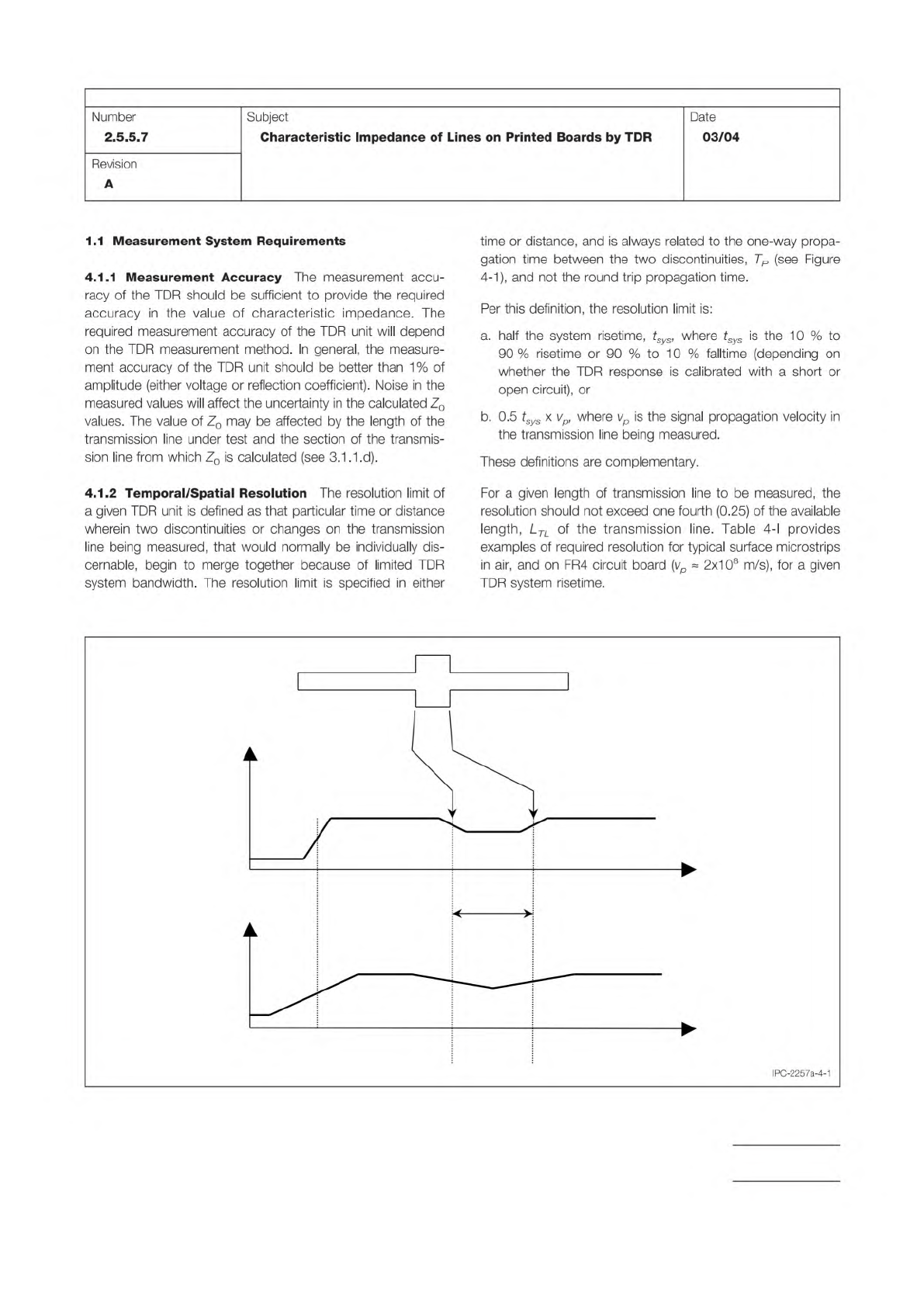
Figure 4-1 Resolution and Electrical Length of Transmission Line
t
V
adequate resolution
t
V
inadequate resolution
2 T
p
transmission line
IPC-TM-650
Page 3 of 23
Number
2.5.5.7
Subject
Characteristic
Impedance
of
Lines
on
Printed
Boards
by
TDR
Date
03/04
Revision
A
1.1
Measurement
System
Requirements
4.1.1
Measurement
Accuracy
The
measurement
accu¬
racy
of
the
TDR
should
be
sufficient
to
provide
the
required
accuracy
in
the
value
of
characteristic
impedance.
The
required
measurement
accuracy
of
the
TDR
unit
will
depend
on
the
TDR
measurement
method.
In
general,
the
measure¬
ment
accuracy
of
the
TDR
unit
should
be
better
than
1
%
of
amplitude
(either
voltage
or
reflection
coefficient).
Noise
in
the
measured
values
will
affect
the
uncertainty
in
the
calculated
Zo
values.
The
value
of
Zo
may
be
affected
by
the
length
of
the
transmission
line
under
test
and
the
section
of
the
transmis¬
sion
line
from
which
Zo
is
calculated
(see
3.1.1.d).
4.1.2
Temporal/Spatial
Resolution
The
resolution
limit
of
a
given
TDR
unit
is
defined
as
that
particular
time
or
distance
wherein
two
discontinuities
or
changes
on
the
transmission
line
being
measured,
that
would
normally
be
individually
dis¬
cernable,
begin
to
merge
together
because
of
limited
TDR
system
bandwidth.
The
resolution
limit
is
specified
in
either
time
or
distance,
and
is
always
related
to
the
one-way
propa¬
gation
time
between
the
two
discontinuities,
TP
(see
Figure
4-1),
and
not
the
round
trip
propagation
time.
Per
this
definition,
the
resolution
limit
is:
a.
half
the
system
risetime,
tsys,
where
%ys
is
the
10
%
to
90
%
risetime
or
90
%
to
10
%
falltime
(depending
on
whether
the
TDR
response
is
calibrated
with
a
short
or
open
circuit),
or
b.
0.5
kys
x
%,
where
vp
is
the
signal
propagation
velocity
in
the
transmission
line
being
measured.
These
definitions
are
complementary.
For
a
given
length
of
transmission
line
to
be
measured,
the
resolution
should
not
exceed
one
fourth
(0.25)
of
the
available
length,
Ltl
of
the
transmission
line.
Table
4-I
provides
examples
of
required
resolution
for
typical
surface
microstrips
in
air,
and
on
FR4
circuit
board
(%
=
2x1
08
m/s),
for
a
given
TDR
system
risetime.
IPC-2257a-4-1