IPC-TM-650 EN 2022 试验方法--.pdf - 第57页
low pressure setting 351.5 g/sq. cm [5.0 PSI] or l ess. Addi- tional variables that must be considered are volume of lubri- cant, type of nap s urface on polish cloth, and process t imes. The type of abrasive used must b…
5.4.3.1 Rough Polish
Rough polish (6 - 3 µm [236 -118
µin]) the specimen using a hard, low, or no nap cloth.
Reduced wheel speeds are generally used during final polish-
ing due to the increased drag on the microsection. Utilize rec-
ommended lubricant for each polishing medium. Following
rough polishing, microscopically examine the specimen to
verify removal of all previous grit scratches. Ultrasonically
clean the specimen, if desired.
5.4.3.2 Fine Polish
Continue polishing with 1.0 - 0.25 µm
[39.4 - 118 µin] using a hard, low, or no nap cloth and micro-
scopically examine the specimen to verify the removal of all
the previous scratches.
5.4.3.3 Method B – Polish Process Setup
The tooling
stops are recessed or removed from the mount holder during
polishing. The reason for this is that the polish process
removes a negligible amount of material and will not change
the flatness of the surface. The number of polish steps is
determined by the hardness of the specimen(s), distance to
the center of the hole, and scratch size of the last fine grind
step. There may be multiple intermediate polish steps but only
one final polish step.
5.4.3.4 Method B – Intermediate Polish Steps
The inter-
mediate steps must remove the fine grind scratches and pre-
pare the surface for the final polish step. The recommended
process settings for six mounts at 38.1 mm [1.5 in] diameter
is less than 351.5 g/sq. cm [5.0 PSI], a medium to hard pol-
ish cloth, short nap surface, and low wheel RPM (100-200).
Additional variables that must be considered are volume of
lubricant, lubricant types, abrasive size, abrasive type (dia-
mond or oxide), and process time.
5.4.3.5 Method B – Final Polish the Mounts
The final
polish step removes the scratches from intermediate polishing
and prepares the surface for evaluation. The recommended
process setting for the same surface areas as 5.4.3.4 are a
medium to soft polish cloth, low wheel RPM (100 - 200), and
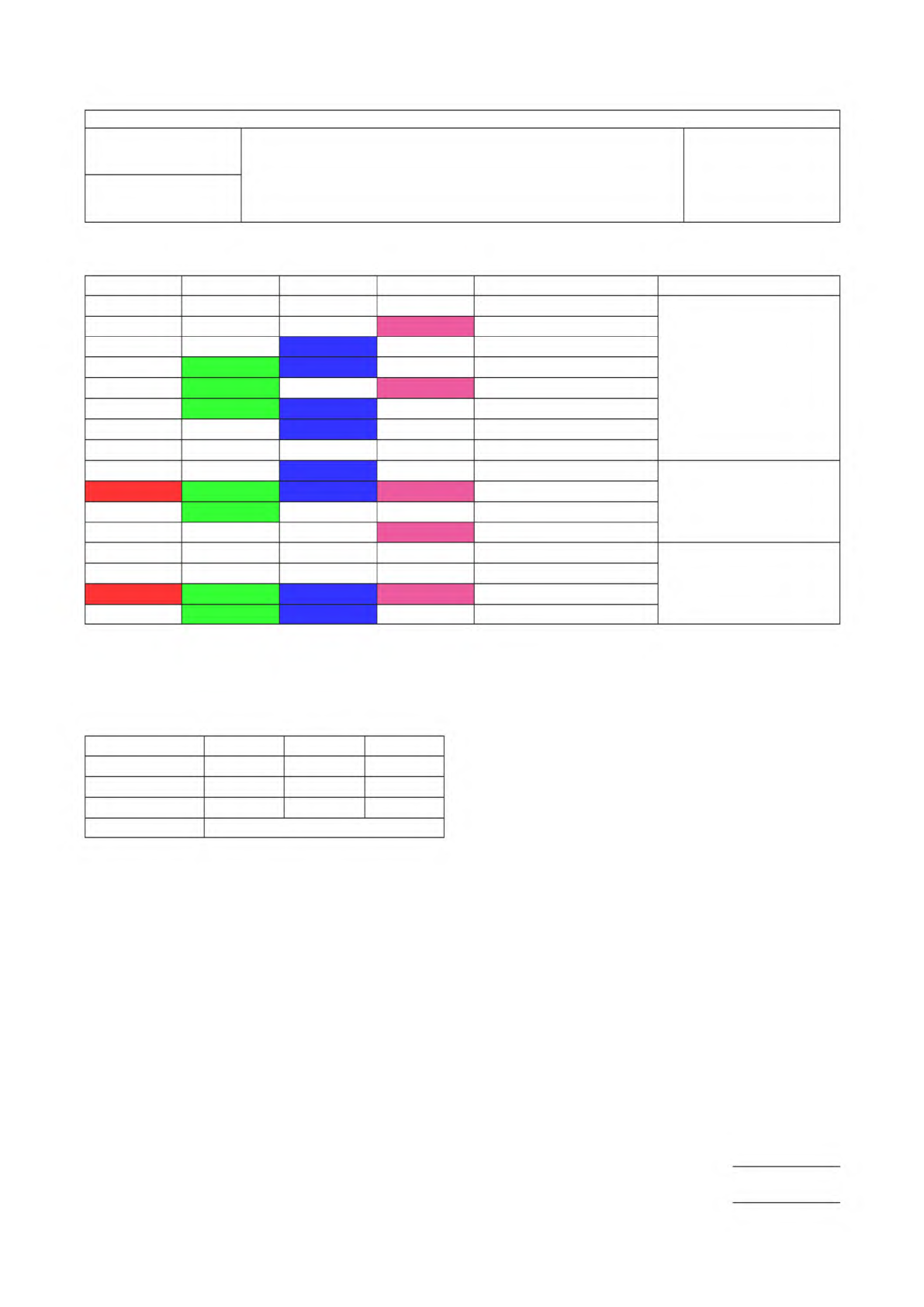
Table 5-1 Suggested Grinding/Polishing Steps – Method A
1,2
2 Step
3
3 Step 4 Step 5 Step Grit ANSI (FEPA)
60 (P60)
Rough Grinding
80 (P80)
120 (P120)
180 (P180)
220 (P220)
240 (P280)
280 (P320)
320 (P320)
400 (P800)
Fine Grinding
600 (P1200)
800 (P2000)
1200 (P4000)
5 micron
Polish
3 micron
1 micron
0.25 Micron
Note 1. The metallographer should recognize the fact that the coarser grit sizes (180, 240, and 320) induce a larger depth of deformed and fragmented material.
Since the depth of deformation decreases sharply below a particle size of about 30.0 µm [1181 µin] (400 grit), it is better practice to spend longer times on
400 grit and especially 600 grit to achieve the final plane sectioning, rather than on the coarser grit sizes.
Note 2. The multiple step method represent ranges that can be used and any one grit size can be used per step.
Note 3. The 2 step process may be used for in-process checks but is not recommended for final acceptance of product.
Table 5-2 Recommended Grinding Process – Method B
Step 1 Step 2 Step 3
Abrasive grit size P180 P 400(opt) P1000
RPM 200-300 200-300 200-300
Pressure (g/sq.cm) 351.5 351.5 351.5
Time 15 seconds after the stops touch
IPC-TM-650
Number
2.1.1
Subject
Microsectioning, Manual and Semi or Automatic Method
Date
6/15
Revision
F
Page 5 of 8
low pressure setting 351.5 g/sq. cm [5.0 PSI] or less. Addi-
tional variables that must be considered are volume of lubri-
cant, type of nap surface on polish cloth, and process times.
The type of abrasive used must be diamond (maximum rated
size: 1.0 µm [39.4 µin]) or colloidal silica.
WARNING: If a high nap polish cloth is used too long in the
final polish, the inspectors ability to see defects can be ham-
pered. This step must be engineered for short process times
(30 seconds or less) with a careful balance of lubricant to pre-
vent copper rounding.
A recommended polish process from which to start develop-
ment is provided in Table 5-3.
5.4.3.6
Rinse in mild soap and warm water or IPA and blow
dry.
Caution: Do not touch or wipe surface with anything that
might cause scratches to the polished surface.
5.4.3.7
Examine and repolish, beginning with 6.0 µm [236
µin] diamond, if necessary, until:
1) There are no scratches larger than those induced by the
final polishing abrasive.
2) The specimen is not higher or lower than the mounting
material (rounding of metal surfaces).
3) There is no smearing of the copper plating into the PTH or
base material.
4) The plane of microsectioning is at the centerline of the hole
as defined by the governing specification. If the grinding
depth is insufficient, additional grinding and repolishing
may be required.
5) There is little, if any, visible preparation induced damage to
the glass fibers of the base material.
See IPC-MS-810 for photomicrographs illustrating some of
the above qualities.
5.5 Examination of Microsections
5.5.1 ‘‘As-Polished’’ Condition
When specified, examine
the microsection of multilayer printed boards in the ‘‘as-
polished’’ condition to assess attributes such as internal layer
separation (which may appear as dark lines or partial dark
lines). These areas should be documented prior to microetch-
ing and verified after metallographic etching. There may not be
a one-to-one correlation of all separations noted ‘‘as-
polished’’ versus those noted after etching, when examined at
the specified magnifications.
It is recommended to microetch immediately after the ‘‘as-
polished’’ evaluation to avoid oxidation.
5.5.2 Microetched Condition
Caution: Over etching may totally obscure the demarcation
line between the copper foil and electroplated copper, pre-
venting accurate inspection.
5.5.2.1
Prepare a small volume of copper etch solution
such that:
a) (no more than 10ml) containing 50/50 v/v of ammonium
hydroxide (nominally 28%; grade is not defined) and stabi-
lized hydrogen peroxide (nominally 3%; grade is not
defined). This is the most active concentration and will last
about one hour.
Note: Hydrogen peroxide solution is light sensitive and
should be stored in an opaque container.
b) The addition of 25 ml of water (distilled or reverse osmosis)
will dilute the solution, resulting in longer etching times,
which may be desirable in certain situations. This concen-
tration will have to be remade with each batch.
5.5.2.2
Expose the surface of the microsection to the etch
solution by using one of the following methods:
a) Swab
1) Apply etchant to a swab (outcome based control: no
nonconforming scratches caused by swab).
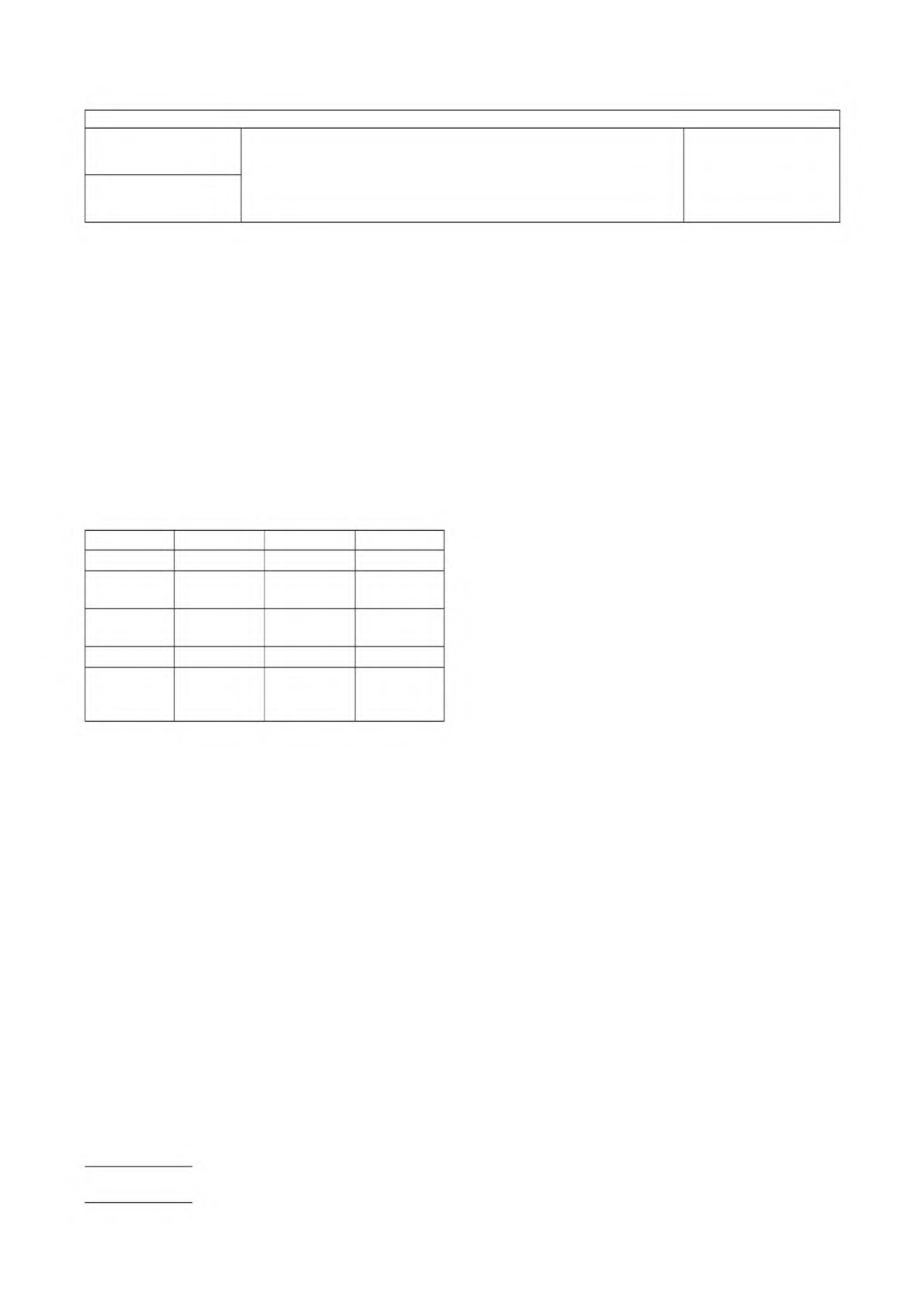
Table 5-3 Recommended Polishing Process - Method B
Intermediate Final Optional
1
Type of cloth Napless Napless Nap
Type of polish
abrasive
Diamond Diamond Diamond
Polish
abrasive size
3.0 µm
[118 µin]
1.0 µm
[39.4 µin]
1.0 µm
[39.4 µin]
Time — — 30 sec max.
Pressure
(g/sq. cm)
[PSI]
351.5
[5.0 psi] or
less
351.5
[5.0 psi] or
less
351.5
[5.0 psi] or
less
Note 1. When inspecting for innerlayer separations, the optional polish step
shall not be used (see 6.2).
Note 2. Generally, polishing using medium pressure during the above steps is
sufficient if the microsection has been ground correctly. This final
step is only performed for 10 - 20 seconds using light to medium
pressure when using oxide or silica polishing compounds. When
using diamond compounds on soft woven cloths, final polishing may
extend several minutes (see 6.3).
IPC-TM-650
Number
2.1.1
Subject
Microsectioning, Manual and Semi or Automatic Method
Date
6/15
Revision
F
Page 6 of 8

2) Activate the etchant with a copper solid (i.e., plated
copper/copper foil). Use a cotton swab to lightly rub a
piece of copper and return swab to solution.
3) Gently swab the surface of the microsection (outcome
based control: grain structure and plating interfaces are
slightly exposed).
4) Rinse with running tap or deionized water (quality is not
defined).
5) Rinse in suitable solvent (optional).
6) Blot dry with cloth or blow dry (outcome based control:
no nonconforming scratches caused by cloth, no oil or
debris from gas source).
b) Submersion
1) Activate the etchant with a copper solid (Using appro-
priate method).
2) Submerse microsection surface in etchant.
3) Provide a means to refresh the etchant at the surface
where the reaction is taking place (nominally 3 to 5 sec-
onds, outcome based control: grain structure and plat-
ing interfaces are slightly exposed).
4) Rinse with running tap or deionized water (quality is not
defined).
5) Rinse in suitable solvent (optional).
6) Blot dry with cloth or blow dry (outcome based control:
no nonconforming scratches caused by cloth, no oil or
debris from gas source).
5.6 Evaluation
5.6.1
Refer to the appropriate printed board performance
specification for magnification and evaluation requirements of
completed microsection.
6 Notes
6.1 Overplating
Overplating the specimen per ASTM E 3
with a layer of copper or other plating with a hardness similar
to the specimen, prior to encapsulation, provides better edge
retention, thereby providing more accurate final finish thick-
ness measurements. Plating can be done electrolytically or
with electroless solutions. Thoroughly clean the specimen sur-
face prior to plating to ensure good adhesion of the plating.
Milder cleaning treatments that involve detergents, solvents,
mild alkaline, or acidic solutions are recommended. Copper
and nickel are predominantly used in metallographic laborato-
ries. It is recommended that the plating thickness be at least
5 µm [0.0002 in]. This process is optional and is not for stan-
dard evaluation purposes.
6.2 Plating Separation Evaluation
For a more accurate
evaluation of possible internal plating separations (e.g., inner
layer interconnect and via to target land separation), the fol-
lowing procedure is recommended to remove the etch demar-
cation line and return a micro-etched sample to an
as-polished condition:
1) With the wheel in a stationary position, gently and manually
regrind the specimen using copious amounts of water and
600 grit abrasive medium. Six to eight double strokes
should be sufficient. This action will remove any copper
metal smear that may have occurred over the plating sepa-
ration during rotary polishing.
2) Rinse and dry specimen and repolish per 5.4.3.1 and
5.4.3.2, then reexamine to determine if any internal plating
separation exists.
6.3 Polishing Considerations
• The use of napped cloths can result in poor edge retention
(rounding) and relief between constituents since it exacer-
bates the varying rates of material removal (i.e., tin-lead alloy
and the softer encapsulation media are removed at a faster
rate than the copper or glass fibers in the base material); the
higher the nap, the more the effect. The user needs to mini-
mize the polishing time and use ample lubricant and light
pressure during final polishing. When using diamond com-
pounds on soft woven cloths, final polishing may extend
several minutes.
• Reduced wheel speeds of 100 to 150 rpm are generally
used during final polishing due to increased drag on the
microsection.
• Typically, 6.0 µm [236 µin] followed by 1.0 µm [39.4 µin]
diamond and a 0.04 µm [1.57 µin] colloidal silica or 0.05 µm
[1.97 µin] alumina have been used successfully. However,
other variations such as 6.0 µm [236 µin], 3.0 µm [118 µin],
and 0.25 µm [9.84 µin] diamond have also been used suc-
cessfully. Some have even used 1.0 µm and 0.3 µm [39.4
µin and 11.8 µin] alumina on napless cloths followed by 0.05
µm [1.97 µin] alumina on a soft, medium napped cloth.
NOTE: Alumina and napped cloths can be used successfully,
depending upon the skill of the metallographer, but will gener-
ally result in poorer edge retention and more relief effects than
the diamond compounds (see Section 7, Reference 1).
IPC-TM-650
Number
2.1.1
Subject
Microsectioning, Manual and Semi or Automatic Method
Date
6/15
Revision
F
Page 7 of 8