IPC-TM-650 EN 2022 试验方法--.pdf - 第523页
The tran smission line parameters R (f), L(f), C(f), and G(f) are a consequence of determining α (f) and β (f) from the fitted trans- mission line solution to t he measurements. The final step is the extraction of the re…

c) There must be sufficient spectral content within the TDR
step pulse for the frequency range of interest where range
of interest is determined by application.
d) The repeatability of the measurement is limited by the noise
and jitter response from the TDR instrument.
1.1.2 EBW Test Coupon and Conductor Caveats
This
method is designed to be used on any conductor. However
comparison between measurements is only valid for like inter-
connect structures.
The launch vias should be designed with minimum return loss.
It is recommended that the test coupon or conductor be of a
length greater than 5.0 cm [2.0 in].
EBW applicable documents include IPC-2141, IPC-TM-650,
Method 1.9 and Method 2.5.5.7.
1.2 RIE (Method B Description)
In this method a TDR
step with a specified rise time is injected into each of two
lengths of an unterminated conductor. The gated derivative of
the reflected edges is an impulse response for each respec-
tive line. The RIE value is the ratio of energy obtained by inte-
grating the impulse responses. One of the two lengths is
intended to be a relatively short piece; the other is substan-
tially longer and in close proximity to a considerably long con-
ductor on the same printed board layer. The RIE ratio is a
single value that is directly proportional to the aggregate trans-
mission line loss α, which is described in IPC-2141.
1.2.1 RIE Measurement System Limitations
RIE values
can vary depending on equipment used and how the tests
were performed. Following the specified method ensures con-
sistent results. Both single-ended and differential line mea-
surements have limitations in common which include the fol-
lowing:
a) RIE values are dependent on equipment bandwidth; this
document specifies only a minimum requirement for the
TDR signal source.
b) When attempting correlation between different systems, it
is critical that all systems have the same bandwidth.
c) The probe cabling, launch, test coupon vias affect mea-
surement accuracy.
d) All RIE loss values are derived and not directly measured.
e) The RIE process utilizes a filter algorithm to improve mea-
surement consistency.
1.2.2 RIE Test Coupon and Conductor Caveats
Various
limitations can be attributed to test samples and probing such
as:
a) The probe and launch structure reduces the signal energy
injected into the transmission line.
b) Crosstalk and associated effects, other than differential
coupling, are out of the scope of the RIE method.
c) The RIE method applies to reference structures and test
structures with specified transmission line lengths.
RIE applicable documents include IPC-2141, IPC-TM-650,
Methods 1.9 and 2.5.5.7.
1.3 SPP (Method C Description)
The SPP method allows
the extraction of broadband printed board electrical charac-
teristics that affect signal propagation using Time Domain
Reflectometry/Time Domain Transmission (TDR/TDT) equip-
ment. The SPP method produces frequency dependent mea-
surement results. Such frequency-dependent parameters
include the propagation constant (attenuation and phase con-
stant), dielectric constant, loss tangent, and characteristic
impedance. Conductor resistivity and line capacitance are
also assessed. The extracted parameters may be used to
generate predictive causal transmission line models for sys-
tem performance evaluations as well for monitoring produc-
tion line output.
The SPP technique employs a time-domain measurement that
is used to extract the broadband permittivity. The technique is
used on representative stripline structures built with small
interface discontinuities such as lands and vias.
A short pulse is injected into two lines of different lengths.
Signal processing of the digitized pulses consists of rectangu-
lar time windowing of the unwanted reflections from interface
discontinuities. This is followed by Fourier transformation.
From the ratio of the two Fourier transforms, the total attenu-
ation α(f) and phase constant β(f) are obtained. R(f), L(f), C(f),
and G(f), namely resistance, inductance, capacitance, and
conductance per unit length, are calculated using a causally-
enforced two-dimensional (2D) field solver that has a built-in
Debye function for the relation between C(f), and G(f), which
enforces the Kramer-Kronig causality requirement. The total
attenuation α(f) and β(f) are fitted to the measured values and
smooth interpolation and extrapolation is made over the
desired frequency range. The broadband Z
0
(f) can also be
obtained from Equation [1-1]:
Z
0
(,) =
Γ(,)
G(,) + j2πC(,)
[1-1]
Number
2.5.5.12
Subject
Test Methods to Determine the Amount of Signal Loss on
Printed Boards
Date
07/12
Revision
A
IPC-TM-650
Page
2
of
24

The transmission line parameters R(f), L(f), C(f), and G(f) are a
consequence of determining α(f) and β(f) from the fitted trans-
mission line solution to the measurements. The final step is
the extraction of the relative dielectric constant ε
r
and loss
tangent, tanδ.
Measurements made of the capacitance and loss tangent of
an additional large parallel plate structure embedded in the
same layer with the signal conductor allows the extraction of
ε
r
and tanδ at very low frequencies. The final R(f), L(f), C(f), and
G(f) are used to extract the complex permittivity using Equa-
tions [1-2] and [1-3].
ε
r
(ω) =
(
C(ω)
C
1MHz
)
x ε
r1MHz
[1-2]
tanδ(ω) =
G(ω)
ωC(ω)
[1-3]
where C
1MHz
is the calculated line capacitance at a low
frequency such as 1 MHz and ε
r1MHz
is the value obtained at
1 MHz from the parallel plate measurement. ω is the angular
frequency and equal to 2πf.
The IPC SPP method is intended for printed boards, however
it can be extended to measure coaxial single-ended and dif-
ferential cables, flex cables, multi-chip module ceramic wiring,
single and multi-chip organic module wiring, thin-film wiring,
and on-chip wiring. The extraction results produce results in
frequency range between 10 KHz to 40 GHz, depending on
the quality of the TDR equipments and test coupon structure.
1.4 SET2DIL (Method D Description)
In this method a
TDR step is injected into one half of a 101.6 mm [4.0 in] dif-
ferential pair, which has the two legs of the differential pair
shorted together at the far end. The waveforms of both halves
of the differential pair are captured and manipulated to derive
SDD21 (and Z
0
, if desired) of the equivalent differential pair.
1.4.1 SET2DIL Measurement System Caveats
SET2DIL
produces the SDD21 value for the differential pair being mea-
sured; it is not intended to rigorously differentiate between
loss elements (conductor vs. dielectric, for instance). The
same structure can also be used to measure the differential
impedance, though that calculation isn’t covered in this speci-
fication. Some other limitations of SET2DIL include:
a) SET2DIL SDD21 measurements will include losses due to
the vias, for stripline traces. To minimize errors induced by
vias, the following limitations are made to the SET2DIL
coupon design:
i. The coupon has an effective length of 203.2 [8.0 in],
which will cause the trace losses to overwhelm small via
losses.
ii. Stripline traces on the bottom portion of the board
(lower layers) are measured from the top to minimize
via stub effects. Upper stripline layers are measured
from the bottom of the board.
b) SET2DIL SDD21 measurements will include an error term
from SDD11 effects if the differential trace being measured
isn’t 100 Ω (2x the reference impedance of 50 Ω).
i. The coupon has an effective length of 203.2 mm [8.0 in],
causing the trace insertion losses (SDD21) to overwhelm
the relatively small return loss.
ii. The primary purpose of SET2DIL is to ensure the trace
properties match that of those in simulations. Thus,
SDD21 from simulations with a 50 Ω reference can be
used as the measurement criteria for SET2DIL, making
the reference error difference moot.
1.5 FD (Method E Description)
Three of the previously
described methods use TDR to determine the loss character-
istics of a printed board. This approach utilizes a Vector Net-
work Analyzer (VNA) or the fast fourier transform (FFT) of a
TDT for this purpose. The result is a direct measure of fre-
quency domain attenuation and loss. VNA equipment includes
calibration to the launch pad which must be used. The inser-
tion loss is directly related to transmission line design param-
eters utilized in signaling design analysis. The metric for the FD
method is the slope of the RMS insertion loss fit for a speci-
fied frequency range.
2 APPLICABLE DOCUMENTS
Controlled Impedance Circuit Boards and High
Speed Logic Design
Test Methods Manual
1.9 Measurement Precision Estimation for Variables Data
2.5.5.7 Characteristic Impedance of Lines on Printed Boards
by TDR
Annex 69b.4.1, ‘‘Fitted attenuation’’
2.1 Technical Publications
R. Mellitz, T. Ballou, and S.G. Pytel, ‘‘Energy Based TDR Loss
Method for PB Manufacturers,’’ from IPCWorks 2005, Las
Vegas, NV.
Number
2.5.5.12
Subject
Test Methods to Determine the Amount of Signal Loss on
Printed Boards
Date
07/12
Revision
A
IPC-TM-650
IPC-2141
IPC-TM-650
IEEE802.3ap
Std
2007
Page
3
of
24
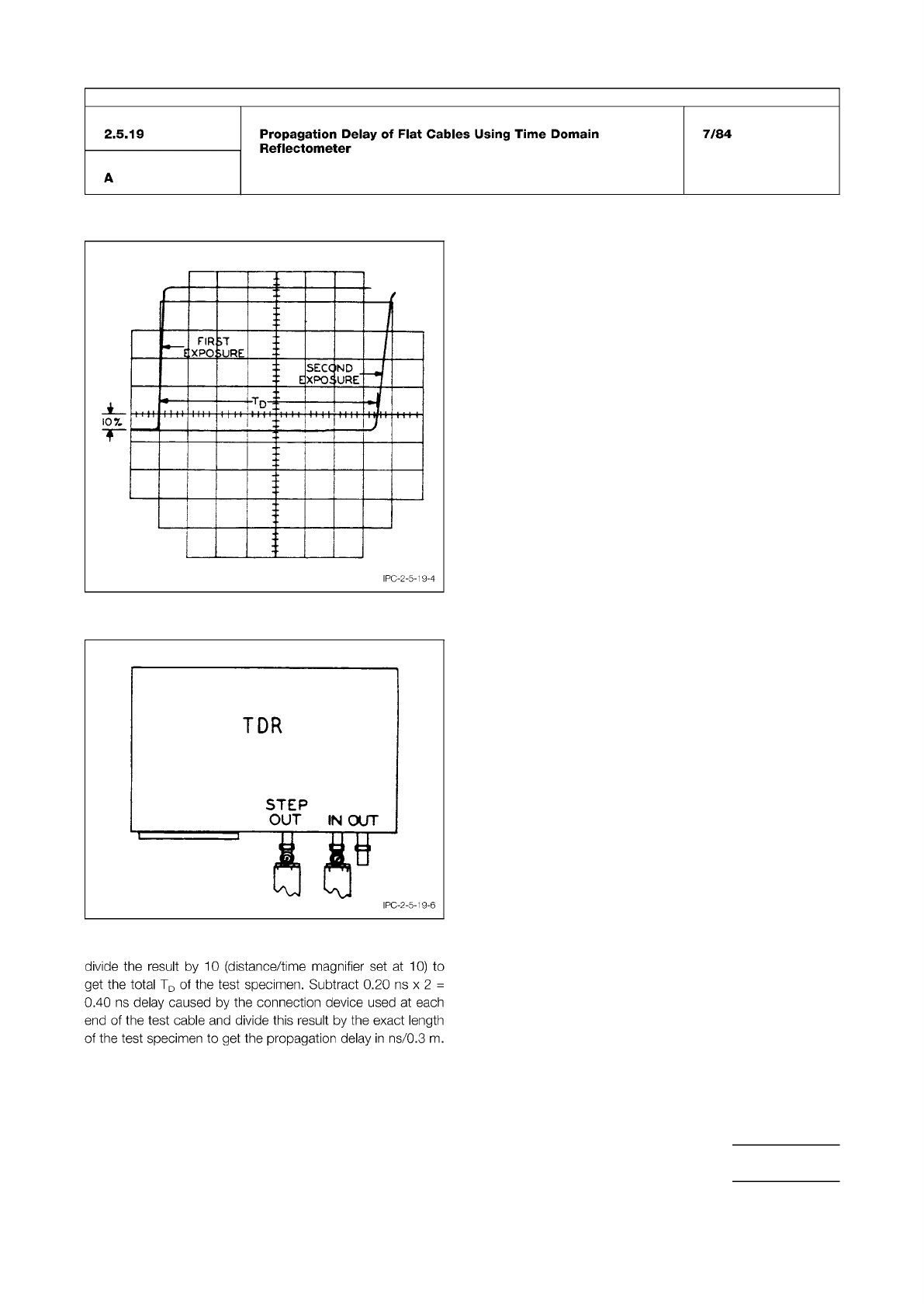
Figure 5 Dual Exposure Picture TDR Trace
Figure 6 Test Cable Hookup
IPC-TM-650
Number
Subject Date
Revision
Page 3 of 3
2.5.19
Propagation
Delay
of
Flat
Cables
Using
Time
Domain
Reflectometer
7/84
A
IPC-2-5-19-4
—
E
FIR
XPQ
ARE
7
:
E
SECC
XPOE
ND
URE”
i
-
i
l
-Tn
・
j
•一一
1111
1
1
1
1
f
>
f
!
”11
t t
t
t
TDR
STEP
OUT
IN
OUT
I
PC-2-5-1
9-6
divide
the
result
by
10
(distance/time
magnifier
set
at
10)
to
get
the
total
TD
of
the
test
specimen.
Subtract
0.20
ns
x
2
=
0.40
ns
delay
caused
by
the
connection
device
used
at
each
end
of
the
test
cable
and
divide
this
result
by
the
exact
length
of
the
test
specimen
to
get
the
propagation
delay
in
ns/0.3
m.