IPC-TM-650 EN 2022 试验方法--.pdf - 第405页
Figure 3 Three View D rawing of a Steel Clamping Bar (See 5.1.1) Cut to Length for the 50.8 mm L V alue (Extended #4-40 Threaded Rod Both Ends is Not Shown) Figure 4 Three View D rawing of a Copper G round Plate (See 5.1…
5.10.2
Use low-pressure compressed or canned air to gen-
tly flush any remaining dye from under the part until no further
dye runs out.
5.10.3
Dry the sample in an oven, not to exceed 100 °C or
as appropriate for the sample. If possible, allow the part to dry
overnight at ambient conditions. Wet dye can smear during
component separation, resulting in false conclusions.
5.11
Remove the sectioned part from the oven and allow it
to cool.
5.12
Perform the pull operation to physically/mechanically
remove the part from the board.
5.12.1
Abrade the surface to allow for an improved bonding
of the structural adhesive.
One way to perform this is to use a small piece of
coarse-grit sandpaper to lightly sand and roughen the part top
surface. This will remove the dried dye and will allow the top
surface to bond with the anchored tee nut.
5.12.2
Bond the tee nut to the top of the part using struc-
tural adhesive. Allow the structural adhesive to cure.
5.12.3
Use a pull-test fixture with a uniform tensile force to
separate the part from the board.
5.13
Examine the board and component for dye indications.
If necessary, gently dust with canned air or dry, filtered and
regulated compressed air to the separated part to clear away
pull debris (flakes of dye, solder mask, etc.).
5.13.1
Any fractured interface that was present will be
stained with dye. Usually, both sides are stained in a common
(mirrored) pattern.
5.14
Take photos of dyed regions and plot results as agreed
upon between the lab and the customer.
5.15 Test Report
Include the following (or as agreed upon
between the lab and the customer):
• Initial visual observations (see 5.2 and 5.5)
• Dyed interface separation location
• If required, dye indication amount/percentage (acceptability
criteria to be determined between laboratory and customer)
Other items that can be included in the test report include:
• Mapping of all separation locations
6 Notes/Figures
The figures in this section are included for informational pur-
poses only. They do not depict a correct or incorrect method
for conducting this test method.
Number
2.4.53
Subject
Dye and Pull Test Method (Formerly Known as Dye and Pry)
Date
8/2017
Revision
Page 3 of 11
IPC-TM-650
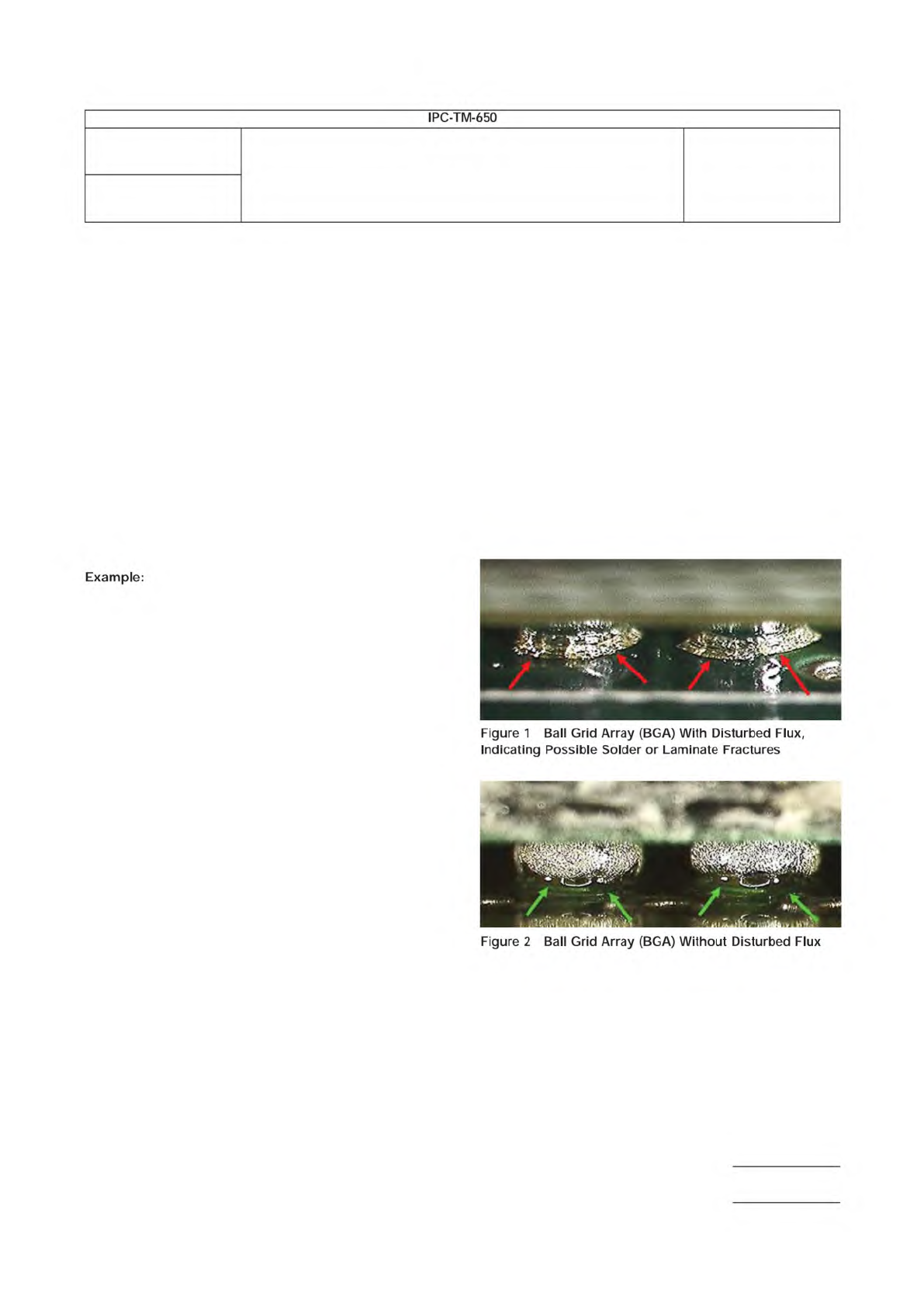
Example:
Figure
1
Ball
Grid
Array
(BGA)
With
Disturbed
Flux,
Indicating
Possible
Solder
or
Laminate
Fractures
Figure
2
Ball
Grid
Array
(BGA)
Without
Disturbed
Flux
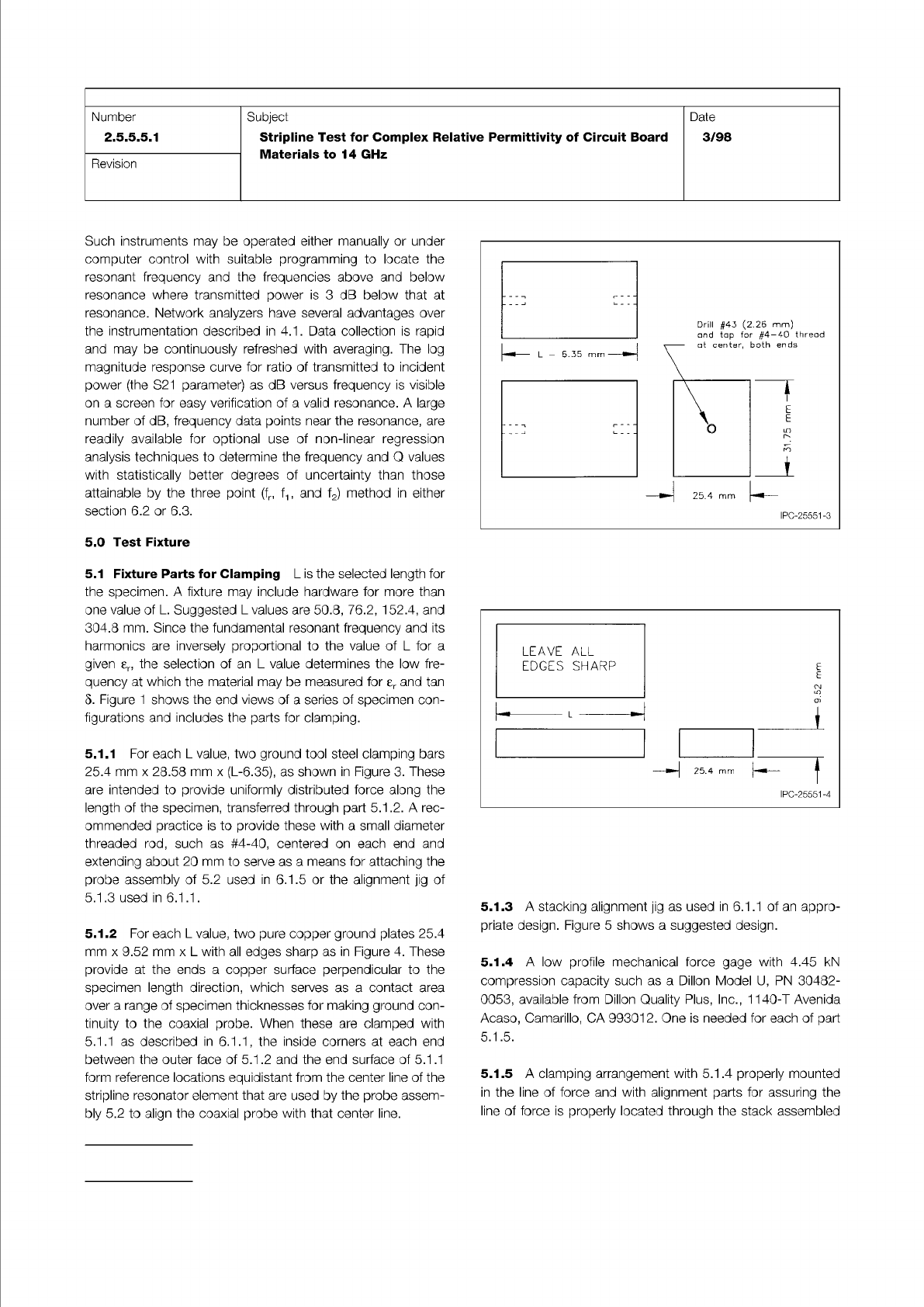
Figure 3 Three View Drawing of a Steel Clamping Bar
(See 5.1.1) Cut to Length for the 50.8 mm L Value
(Extended #4-40 Threaded Rod Both Ends is Not Shown)
Figure 4 Three View Drawing of a Copper Ground Plate
(See 5.1.2) for the 50.8 mm L Value
IPC-TM-650
Page 4 of 11
Number
2.5.5.5.1
Revision
Subject
Stripline
Test
for
Complex
Relative
Permittivity
of
Circuit
Board
Materials
to
14
GHz
Date
3/98
Such
instruments
may
be
operated
either
manually
or
under
computer
control
with
suitable
programming
to
locate
the
resonant
frequency
and
the
frequencies
above
and
below
resonance
where
transmitted
power
is
3
dB
below
that
at
resonance.
Network
analyzers
have
several
advantages
over
the
instrumentation
described
in
4.1.
Data
collection
is
rapid
and
may
be
continuously
refreshed
with
averaging.
The
log
magnitude
response
curve
for
ratio
of
transmitted
to
incident
power
(the
S21
parameter)
as
dB
versus
frequency
is
visible
on
a
screen
for
easy
verification
of
a
valid
resonance.
A
large
number
of
dB,
frequency
data
points
near
the
resonance,
are
readily
available
for
optional
use
of
non-linear
regression
analysis
techniques
to
determine
the
frequency
and
Q
values
with
statistically
better
degrees
of
uncertainty
than
those
attainable
by
the
three
point
(fr,
and
f2)
method
in
either
section
6.2
or
6.3.
5.0
Test
Fixture
5.1
Fixture
Parts
for
Clamping
L
is
the
selected
length
for
the
specimen.
A
fixture
may
include
hardware
for
more
than
one
value
of
L.
Suggested
L
values
are
50.8,
76.2,
152.4,
and
304.8
mm.
Since
the
fundamental
resonant
frequency
and
its
harmonics
are
inversely
proportional
to
the
value
of
L
for
a
given
£r,
the
selection
of
an
L
value
determines
the
low
fre¬
quency
at
which
the
material
may
be
measured
for
and
tan
8.
Figure
1
shows
the
end
views
of
a
series
of
specimen
con¬
figurations
and
includes
the
parts
for
clamping.
5.1.1
For
each
L
value,
two
ground
tool
steel
clamping
bars
25.4
mm
x
28.58
mm
x
(L-6.35),
as
shown
in
Figure
3.
These
are
intended
to
provide
uniformly
distributed
force
along
the
length
of
the
specimen,
transferred
through
part
5.1
.2.
A
rec¬
ommended
practice
is
to
provide
these
with
a
small
diameter
threaded
rod,
such
as
#4-40,
centered
on
each
end
and
extending
about
20
mm
to
serve
as
a
means
for
attaching
the
probe
assembly
of
5.2
used
in
6.1.5
or
the
alignment
jig
of
5.1
.3
used
in
6.1
.1
.
5.1.2
For
each
L
value,
two
pure
copper
ground
plates
25.4
mm
x
9.52
mm
x
L
with
all
edges
sharp
as
in
Figure
4.
These
provide
at
the
ends
a
copper
surface
perpendicular
to
the
specimen
length
direction,
which
serves
as
a
contact
area
over
a
range
of
specimen
thicknesses
for
making
ground
con¬
tinuity
to
the
coaxial
probe.
When
these
are
clamped
with
5.1
.1
as
described
in
6.1
.1
,
the
inside
corners
at
each
end
between
the
outer
face
of
5.1
.2
and
the
end
surface
of
5.1
.1
form
reference
locations
equidistant
from
the
center
line
of
the
stripline
resonator
element
that
are
used
by
the
probe
assem¬
bly
5.2
to
align
the
coaxial
probe
with
that
center
line.
IPC-25551-3
Drill
#43
(2.26
mm)
L
—
6.35
mm
L
LEAVE
ALL
EDGES
SHARP
5.1.3
A
stacking
alignment
jig
as
used
in
6.1
.1
of
an
appro¬
priate
design.
Figure
5
shows
a
suggested
design.
5.1.4
A
low
profile
mechanical
force
gage
with
4.45
kN
compression
capacity
such
as
a
Dillon
Model
U,
PN
30482-
0053,
available
from
Dillon
Quality
Plus,
Inc.,
11
40-T
Avenida
Acaso,
Camarillo,
GA
993012.
One
is
needed
for
each
of
part
5.1.5.
5.1.5
A
clamping
arrangement
with
5.1.4
properly
mounted
in
the
line
of
force
and
with
alignment
parts
for
assuring
the
line
of
force
is
properly
located
through
the
stack
assembled
Number
2.4.53
Subject
Dye and Pull Test Method (Formerly Known as Dye and Pry)
Date
8/2017
Revision
Page 5 of 11
IPC-TM-650
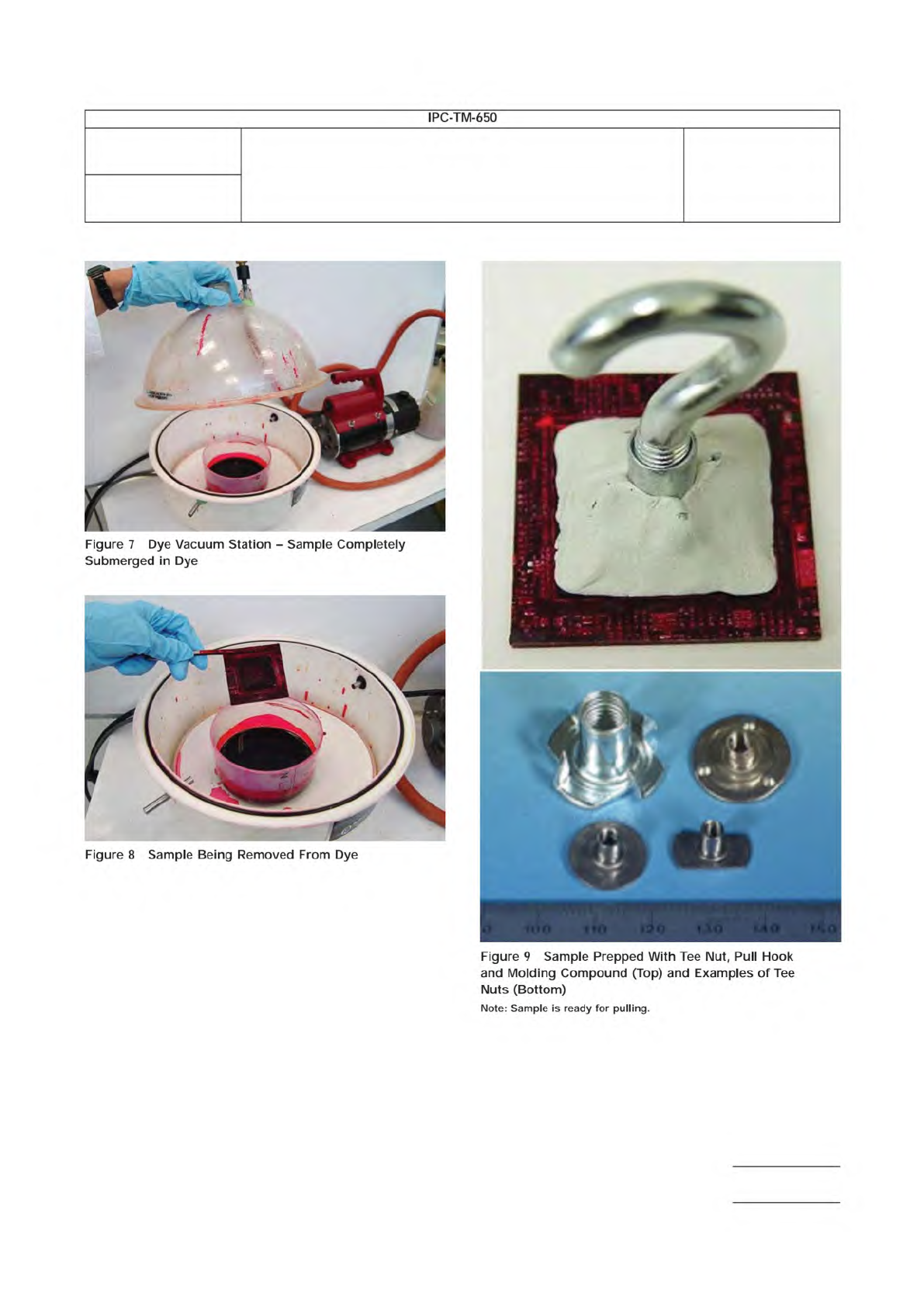
Figure
7
Dye
Vacuum
Station
-
Sample
Completely
Submerged
in
Dye
Figure
8
Sample
Being
Removed
From
Dye
Figure
9
Sample
Prepped
With
Tee
Nut,
Pull
Hook
and
Molding
Compound
(Top)
and
Examples
of
Tee
Nuts
(Bottom)
Note:
Sample
is
ready
for
pulling.