创建组件识别数据的方法.pdf - 第128页
128/178 IM-SMT-VSNDI C-0002 -000 Item s to be set Set value Explanation Find Pos X: 2W (mm ) Sets the reference pos ition X f or the lead of Gr oup 2 in the W direction. Find Pos Y : 2Wm m) Sets the reference pos ition Y…

127/178
IM-SMT-VSNDIC-0002-000
Items to be set
Set
value
Explanation
Lead Width: 1E (mm)
Sets the width of the leads of
Group 1 in the E direction.
Lead Pitch: 1E (mm)
Sets the lead pitch of Group 1 in
the E direction.
Find Pos X: 1E (mm)
Sets the reference position X for
the lead of Group 1 in the E
direction.
Find Pos Y: 1E(mm)
Sets the reference position Y for
the lead of Group 1 in the E
direction.
Lead Number: 2E
Sets the number of leads of
Group 2 in the E direction.
Reflect LL.: 2E(mm)
Sets the lead length on the
image of Group 2 in the E
direction.
Lead Width: 2Emm)
Sets the width of the leads of
Group 2 in the E direction.
Lead Pitch: 2E (mm)
Sets the lead pitch of Group 2 in
the E direction.
Find Pos X: 2E (mm)
Sets the reference position X for
the lead of Group 2 in the E
direction.
Group
2
Find Pos Y: 2E(mm)
Sets the reference position Y for
the lead of Group 2 in the E
direction.
Lead Group W
Sets the number of the Lead
Group (1or 2).
Common
Ruler Offset W
Sets the offset amount of the
detection line in the E direction.
Lead Number: 1W
Sets the number of leads of
Group 1 in the W direction.
Reflect LL.: 1W (mm)
Sets the lead length on the
image of Group 1 in the W
direction.
Lead Width: 1W (mm)
Sets the width of the leads of
Group 1 in the W direction.
Lead Pitch: 1W (mm)
Sets the lead pitch of Group 1 in
the W direction.
Find Pos X: 1W (mm)
Sets the reference position X for
the lead of Group 1 in the W
direction.
Group
1
Find Pos Y: 1W(mm)
Sets the reference position Y for
the lead of Group 1 in the W
direction.
Lead Number: 2W
Sets the number of leads of
Group 2 in the W direction.
Reflect LL.: 2W(mm)
Sets the lead length on the
image of Group 2 in the W
direction.
Lead Width: 2Wmm)
Sets the width of the leads of
Group 2 in the W direction.
W
direction
Group
2
Lead Pitch: 2W(mm)
Sets the lead pitch of Group 2 in
the W direction.
128/178
IM-SMT-VSNDIC-0002-000
Items to be set
Set
value
Explanation
Find Pos X: 2W(mm)
Sets the reference position X for
the lead of Group 2 in the W
direction.
Find Pos Y: 2Wmm)
Sets the reference position Y for
the lead of Group 2 in the W
direction.
Table 88
2.12.2. Odd-shape chips
<<Items to be set for odd-shape chips>>
Items to be set Set value
Explanation
Alignment Group Special Sets the component category.
Alignment Type
Odd.
Chip
Sets the component type.
Comp. Threshold
Sets the difference of the detection level for the lead
detection.
(See “Appendix 2. Detection level differences used to
detect leads (threshold value)”.)
Comp. Tolerance Specifies the tolerance of the shape as a percentage.
Search Area (mm) Sets the range of the detection.
Body Size X (mm) Sets the size of the outer edge.
Body Size Y (mm) Sets the size of the outer edge.
Body Size Z (mm) Sets the size of the outer edge.
Ruler Offset Sets the offset amount of the detection line.
Table 89
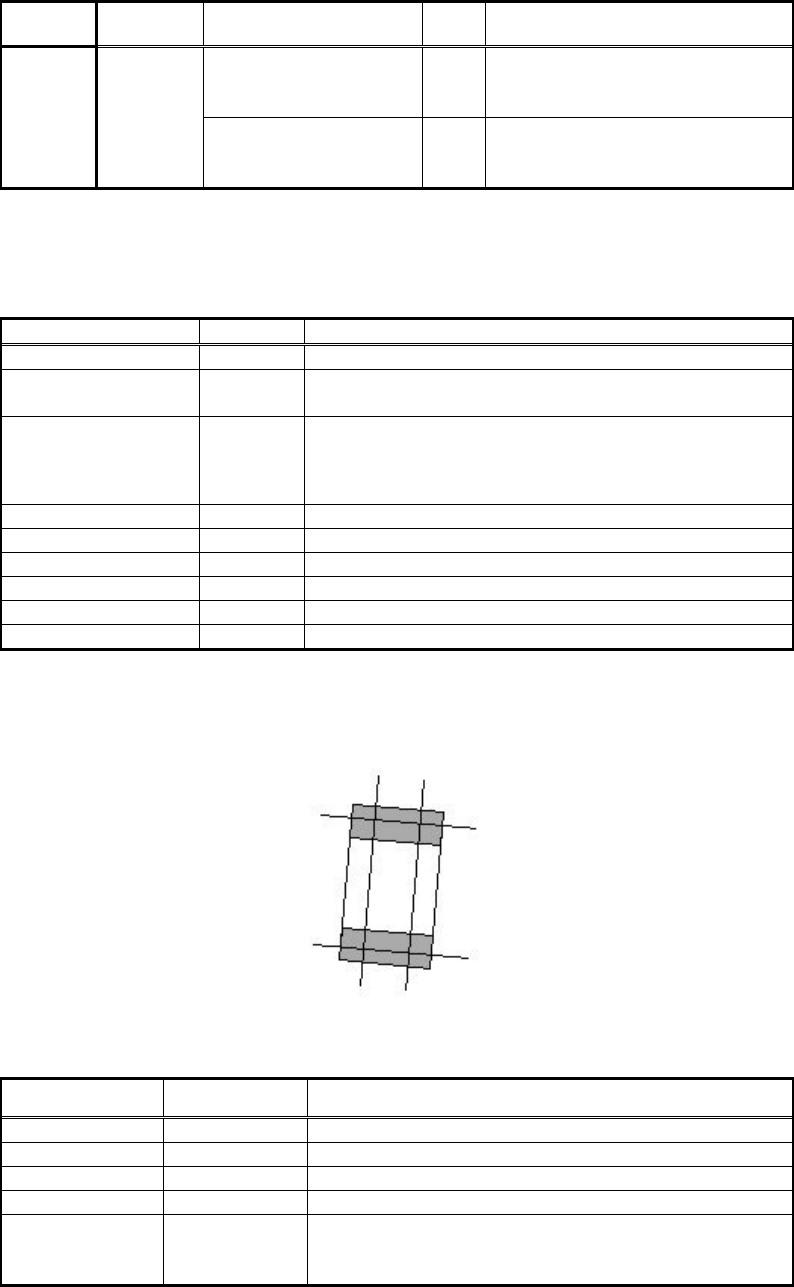
It is possible to recognize the lead regardless of whether it is black or white. (Recognition is
performed by using both black and white leads, and whichever produces a satisfactory result
is adopted.)
Figure 98
[Recognition check items]
Items Yes / No Notes
Body Size May exist Only Body Size Y is checked.
Lead pitch No
Lead width Yes
Lead length No
Lead position No
Checks if the center of the lead tip position of the
detected lead is in the range of Body Size Y x
tolerance.
Table 90
129/178
IM-SMT-VSNDIC-0002-000
2.12.3. Mark types
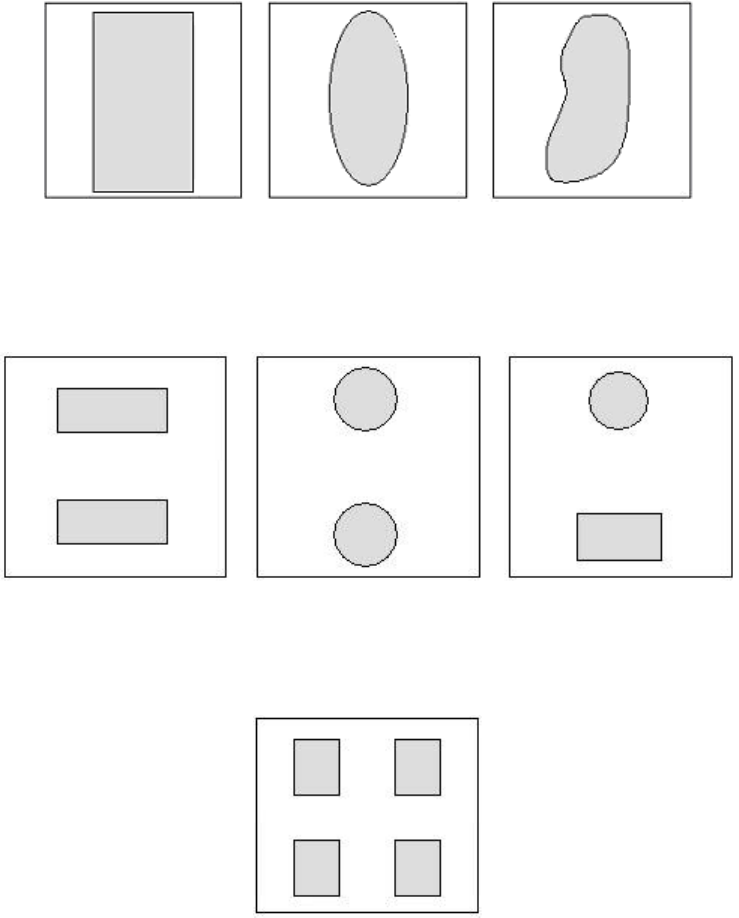
There are a number of algorithms available for recognition of mark types.
The target object is binarized, then the component is detected from the detected target object.
It is possible to use the fixed threshold and the automatic threshold for binarization.
1) Special components: Mark type (mark 1)
This is used for recognition of objects that consist of a single part as shown in
Figure 99
.
Figure 99
2) Algorithm: Special 1 (mark line)
3) Algorithm: Special 2 (mark 2)
This is used for recognition of objects that consist of two parts as shown in
Figure 100
.
Figure 100
4) Algorithm: Special 3 (mark 4)
This is used for recognition of objects that consist of four parts as shown in
Figure 101
.
Figure 101
5) Algorithm: Special 4 (mark, general-purpose)
This is used for recognition of objects that consist of multiple parts, as shown in
Figure 102.