创建组件识别数据的方法.pdf - 第171页
171/178 IM-SMT-VSNDI C-0002 -000 << Items to be set for Cont our rectangle detection / con tour triangle d etection >> Shape T ype (Square /Oblong) / Triangle Surface type Selects f rom Reflecting / N on refl…
170/178
IM-SMT-VSNDIC-0002-000
3.5. CirEdge detection
With this recognition method, the circular elements are detected from the contour of the
object with the largest surface area, and from those elements, those that are thought to be
circles are detected and recognized. As presumed circles are recognized, it is possible to
perform recognition in case a part of the contour is missing.
However, depends on the software version, when the missing part of the object is large, it
may not be able to be recognized as the surface area and shape constant are checked before
the contour of the circle is presumed. (Please refer to “3.1.
Center of Gravity detection
(Recognition type: Normal)
”.) “Edge circle detection” should be used for these objects.
This mode may also cause the inaccuracy as the shapes are presumed.
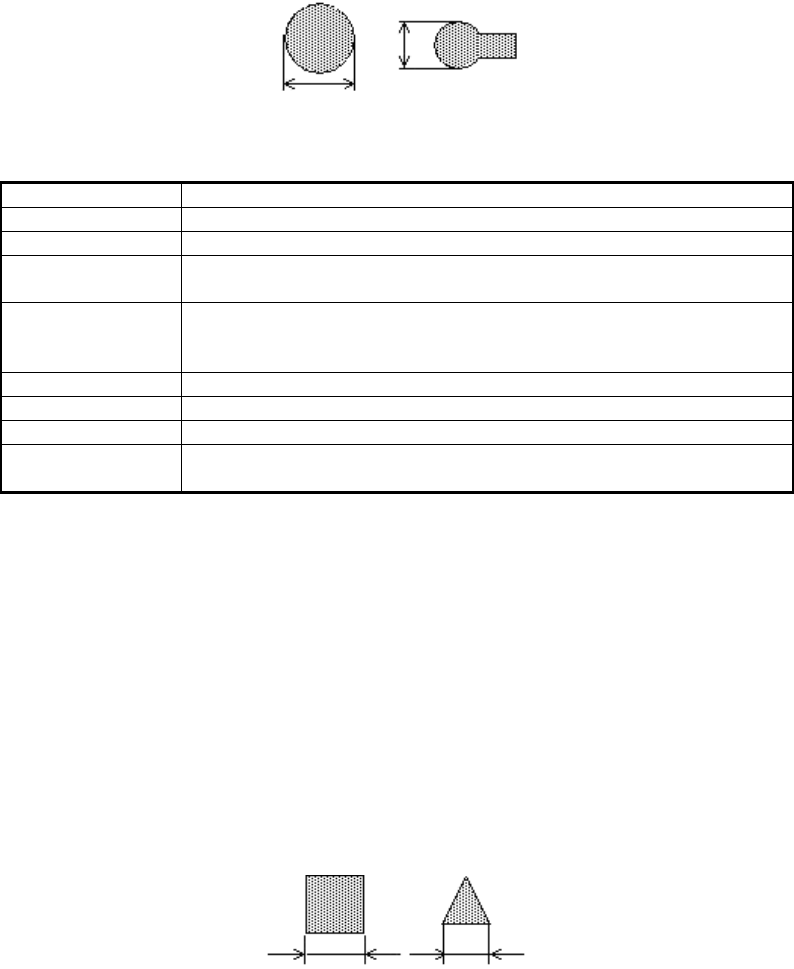
Figure 140
<< Items to be set for CirEdge detection >>
Shape Type Circle end detection
Surface type Selects from Reflect / Non reflect
Algorithm Type Normal
Mark Threshold
Sets the binarization level.
(When 0 is specified, binarization level is set automatically.
Tolerance
This is used when checking the surface area and perimeter (of the
outer edge of the line detection results). It is also used to check
shape constants.
Search Area Sets the detection range.
Cut Inner Noise Selects from 0 through 9.
Cut Outer Noise Selects from 0 through 9.
Mark Outsize
Sets the Body Size (diameter) of the mark.
(The dimension line in
Figure 140.)
Table 118
3.6. Contour rectangle detection / contour triangle detection
With this recognition method, the linear elements are detected from the contour of the
object with the largest surface area, and from those elements, those that are thought to
be rectangles / triangles are detected and recognized.
As presumed circles are recognized, it is possible to perform recognition in case a part of the
contour is missing.
However, when the missing part of the object is large, it may not be able to be recognized as
the surface area and shape constant are checked before the contour of the circle is presumed.
(Please refer to “3.1.
Center of Gravity detection (Recognition type: Normal)
”.)
“Edge rectangle / triangle detection” should be used for these objects.
This mode may also cause the inaccuracy as the shapes are presumed.
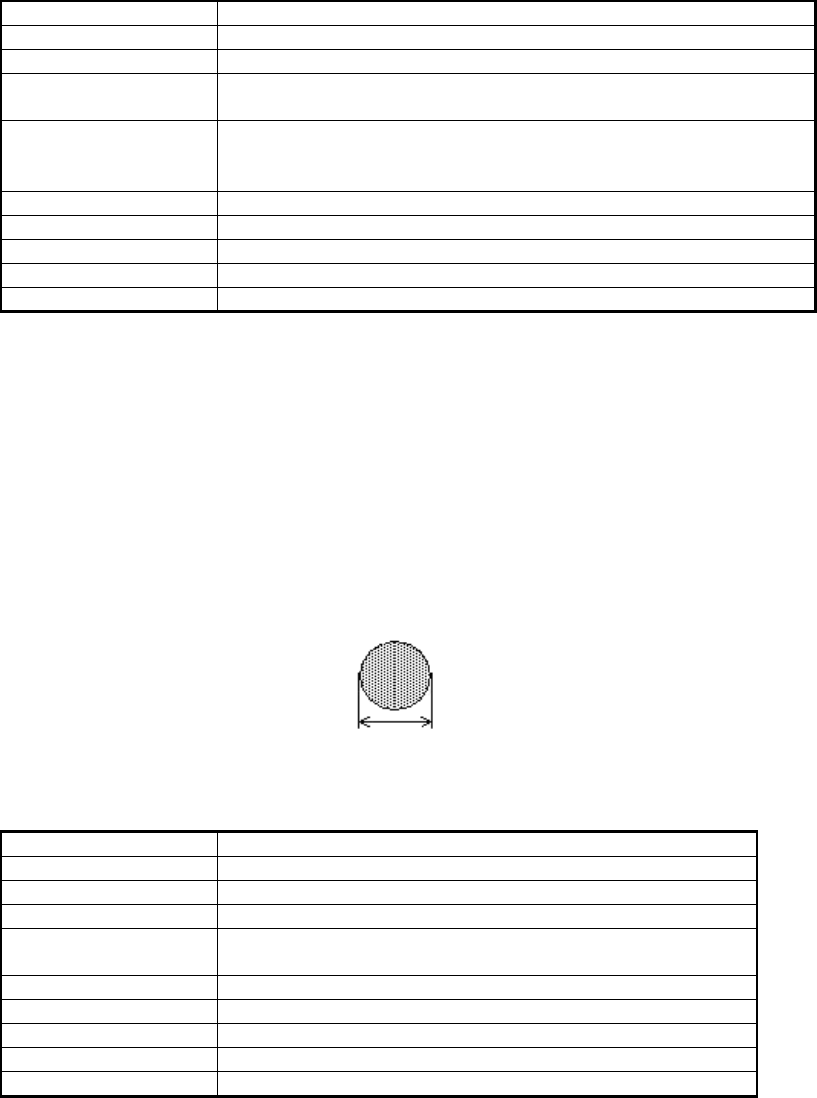
Figure 141
171/178
IM-SMT-VSNDIC-0002-000
<< Items to be set for Contour rectangle detection / contour triangle detection >>
Shape Type (Square/Oblong) / Triangle
Surface type Selects from Reflecting / Non reflecting
Algorithm Type Special 1
Mark Threshold
Sets the binarization level.
(When 0 is specified, binarization level is set automatically.
Tolerance
This is used when checking the surface area and the perimeter of
the detected rectangle or triangle.
It is also used to check the shape constants.
Search Area Sets the detection range.
Cut Inner Noise Selects from 0 through 9.
Cut Outer Noise Selects from 0 through 9.
Mark Outsize X (mm)
Sets the Body Size of the mark (side length
).
Mark Outsize Y (mm)
Sets the Body Size of the mark (side length
).
Table 119
3.7. Edge circle detection
Circular elements are detected from the edge detection results, and from those elements,
those that are thought to be circles are detected and recognized.
This approach is different from the contour detection on the point that all of the edge positions
in the detection range are targeted for detection.
Therefore, this recognition method is effective for the objects which are difficult to be detected
when performing the center of gravity detection and the contour detection due to the effects
such as uneven reflection.
There is a possibility that recognition will still be possible even in situations when a large
portion of the pattern is missing. In terms of accuracy, errors are more likely to occur.
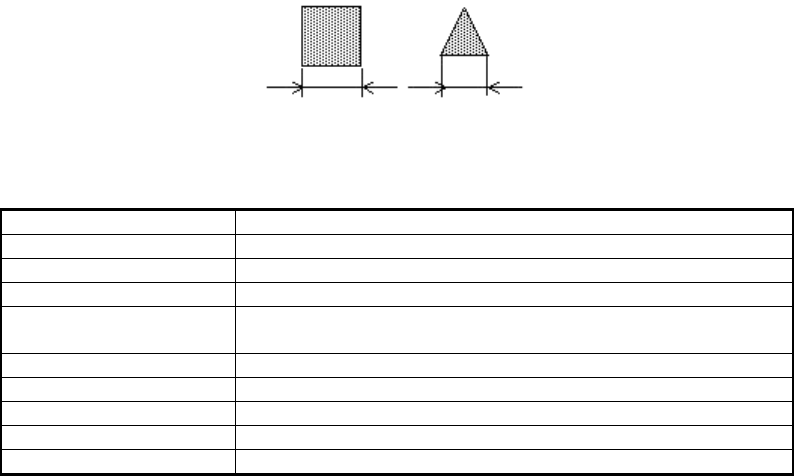
Figure 142
<< Items to be set for Edge circle detection >>
Shape Type Circle
Surface type Selects from Reflect / Non reflect
Algorithm Type Special 2
Mark Threshold Specifies the threshold value for edge detection.
Tolerance
This is used when checking the surface area and
perimeter.
Search Area Sets the detection range.
Cut Inner Noise Selects from 0 through 9.
Cut Outer Noise Selects from 0 through 9.
Mark Outsize X (mm)
Sets the Body Size of the mark.
Mark Outsize Y (mm)
Sets the Body Size of the mark.
Table 120
3.8 Edge rectangle / triangle detection
Linear elements are detected from the edge detection results, and from those elements,
172/178
IM-SMT-VSNDIC-0002-000
those components that are thought to be rectangles or triangles are detected and
recognized. This approach is different from contour detection on the point that all of the edge
positions in the detection range are targeted for detection.
Therefore, this recognition method is effective for the objects which are difficult to be detected
when performing the center of gravity detection and the contour detection due to the effects
such as uneven reflection.
There is a possibility that recognition will still be possible even in situations when a large
portion of the pattern is missing. In terms of accuracy, errors are more likely to occur.
Figure 143
<< Items to be set for Contour rectangle detection / contour triangle detection >>
Shape Type Selects from (Square/Oblong) / Triangle
Surface type Selects from Reflect / Non reflect
Algorithm Type Special 2
Mark Threshold Sets the threshold for edge detection.
Tolerance
This is used when checking the surface area and the
perimeter (of the outer edge of the line detection results).
Search Area Sets the detection range.
Cut Inner Noise Selects from 0 through 9.
Cut Outer Noise Selects from 0 through 9.
Mark Outsize X (mm) Sets the Body Size of the mark (side length
).
Mark Outsize Y (mm) Sets the Body Size of the mark (side length
).
Table 121