OptimaUserManual.pdf - 第131页
OPT IMA PAL SO FTW ARE Opti ma User M anual 125 The Utiliti es M enu Th e s ixt h me nu on t he Ma in P r ogra mming s cr ee n is t h e Utilities m enu: The U tilities menu You can cr eat e a co mplete lis t of devices s…
OPTIMA PAL SOFTWARE
Optima User Manual
124
The following vector test options are available:
q Off provides no vector testing of the device after programming
q Normal provides a single-pass vector test at nominal V
CC
for the device after
programming
q Low provides a single-pass vector test at device-rated low V
CC
q High provides a single-pass vector test at device-rated high V
CC
q Low and High provides a two-pass vector test; once at device-rated low V
CC
,
and a second at device-rated high V
CC
Options>Algorithm Options…
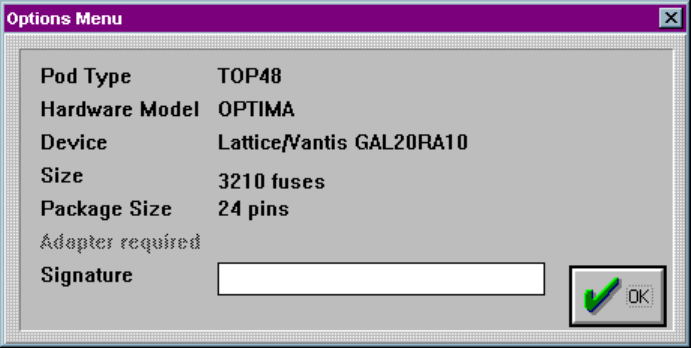
This selection provides device-specific information about the device to be
programmed:
Algorithm options screen
Certain PAL devices can store an electronic signature that contains user-defined data
such as ID codes, revision numbers, or inventory numbers.
The electronic signature is always available to the user independent of the state of the
security bit.
OPTIMA PAL SOFTWARE
Optima User Manual
125
The Utilities Menu
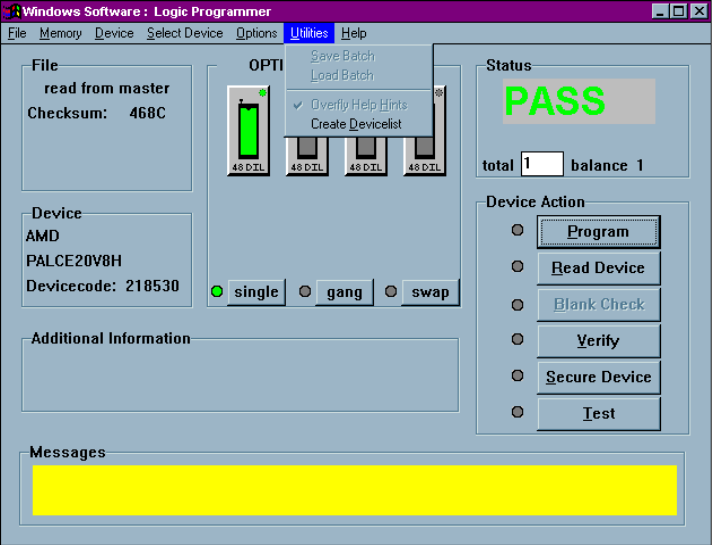
The sixth menu on the Main Programming screen is the Utilities menu:
The Utilities menu
You can create a complete list of devices supported by the Optima Family
programmers by using the Utilities menu.
OPTIMA PAL SOFTWARE
Optima User Manual
126
Utilities>Create Devicelist
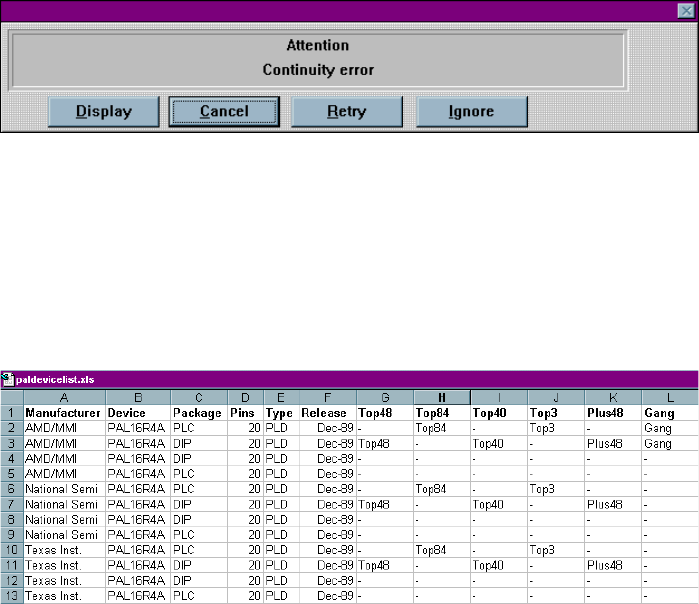
To create a device list, select Utilities>Create Devicelist. The following screen
appears:
Attention screen
Click <Yes> to continue.
A file titled “dev_pal.txt” is then created in your Optima directory. It lists all the
programmable logic devices supported for the installed version of Optima software.
The “dev_pal.txt” file is tab delimited and can be imported into an Excel spreadsheet.
Once imported, use Excel to filter the file to create a device list that meets your
specific needs.
Excel spreadsheet device list (portion)