MR8740T_Quick guide_eng_20191016H.pdf - 第14页
8 Operation Precautions Operation Precautions Follow these precautions to ensure safe operation and to obtain the full benets of the various functions. Checks before Use DANGER If the connection cords or the instrument …
7
Safety Information
Measurement categories
To ensure safe operation of measuring instruments, IEC 61010 establishes safety standards
for various electrical environments, categorized as CAT II to CAT IV, and called measurement
categories.
DANGER
• Using a measuring instrument in an environment designated with a higher-
numbered category than that for which the instrument is rated could result in a
severe accident, and must be carefully avoided.
• Never use a measuring instrument that lacks category labeling in a CAT II to
CAT IV measurement environment. Doing so could result in a serious accident.
CAT II: When directly measuring the electrical outlet receptacles of the primary electrical
circuits in equipment connected to an AC electrical outlet by a power cord (portable
tools, household appliances, etc.).
CAT III: When measuring the primary electrical circuits of heavy equipment (xed installations)
connected directly to the distribution panel, and feeders from the distribution panel to
outlets.
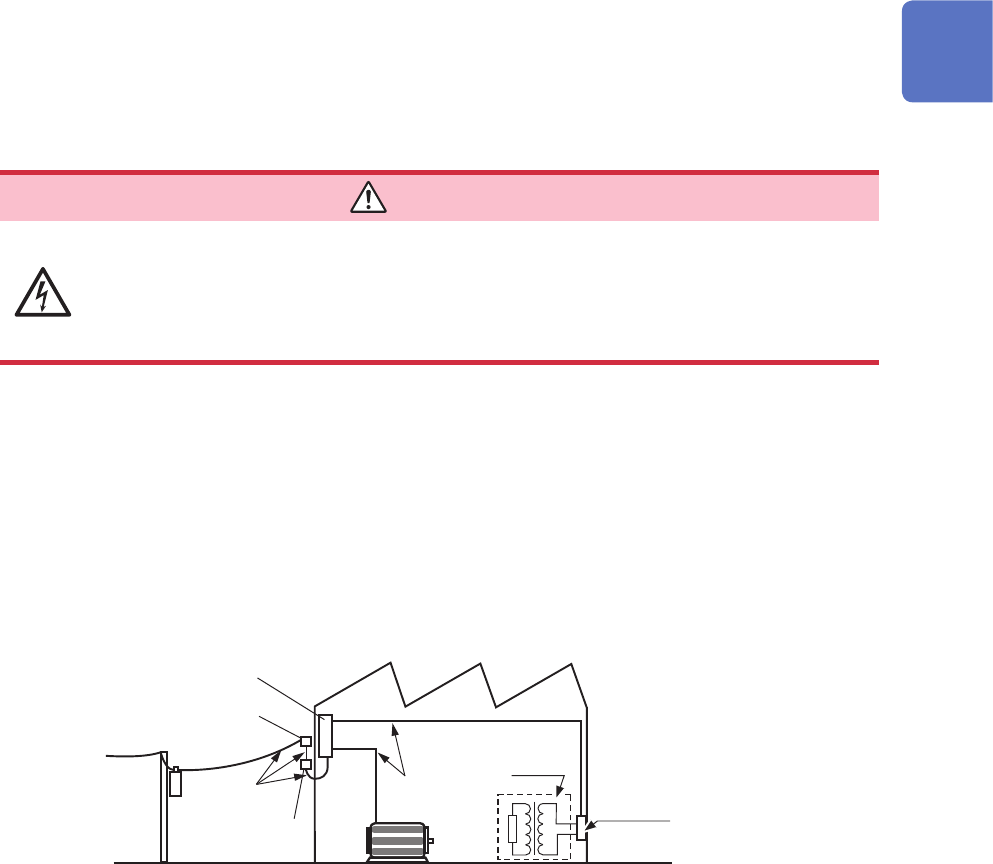
CAT IV: When measuring the circuit from the service drop to the service entrance, and to the
power meter and primary overcurrent protection device (distribution panel).
T
Outlet
CAT II
Internal Wiring
Distribution Panel
Service Entrance
Service Drop
CAT IV
Power Meter
CAT III
Fixed Installation
The applicable measurement category is determined based on the module being used.
Refer to “Handling the instrument and modules” (p. 10).
8
Operation Precautions
Operation Precautions
Follow these precautions to ensure safe operation and to obtain the full benets of the various
functions.
Checks before Use
DANGER
If the connection cords or the instrument is damaged, there is a risk of an electric
shock. Perform the following inspection before using the instrument:
• Check that the insulation of the connection cords are neither ripped nor torn
and that no metal parts are exposed before using the instrument. Using the
instrument under such conditions could result in an electric shock. Replace the
connection cords with those specied by our company.
• Check if there is any damage to the instrument occurred during storage or
shipping and verify that it operates normally before using the instrument. If you
nd any damage, contact your authorized Hioki distributor or reseller.
Installing the instrument and modules
WARNING
Installing the instrument in inappropriate locations could cause a malfunction of
the instrument an accident, or re. Avoid the locations that are:
• Exposed to direct sunlight or high temperatures
• Exposed to corrosive or combustible gases
• Exposed to strong electromagnetic elds or electrostatic charges
• Near induction heating systems (such as high-frequency induction heating
systems and IH cooking equipment)
• Susceptible to vibration
• Exposed to water, oil, chemicals, or solvents
• Exposed to high humidity or condensation
• Exposed to high quantities of dust particles
• Unplugging the power cord kills power to the instrument. Be sure to provide
enough unobstructed space to unplug the power cord immediately in an
emergency.
• Use M4 × 8 mm screws to x the rack-mount brackets on the MR8740-50.
Using a screw longer than 8 mm can cause damage to the inside of the instrument
or an electric shock.
9
Operation Precautions
CAUTION
Failure to observe the following precaution may result in bodily injury.
• The instrument weighs about 14 kg (20.8 kg with modules installed in all slots). It
should be moved by at least two people.
• The instrument is heavy. When transporting it, follow your company’s workplace safety
standards to assure safety (for example, by wearing non-slip gloves and protective
footwear).
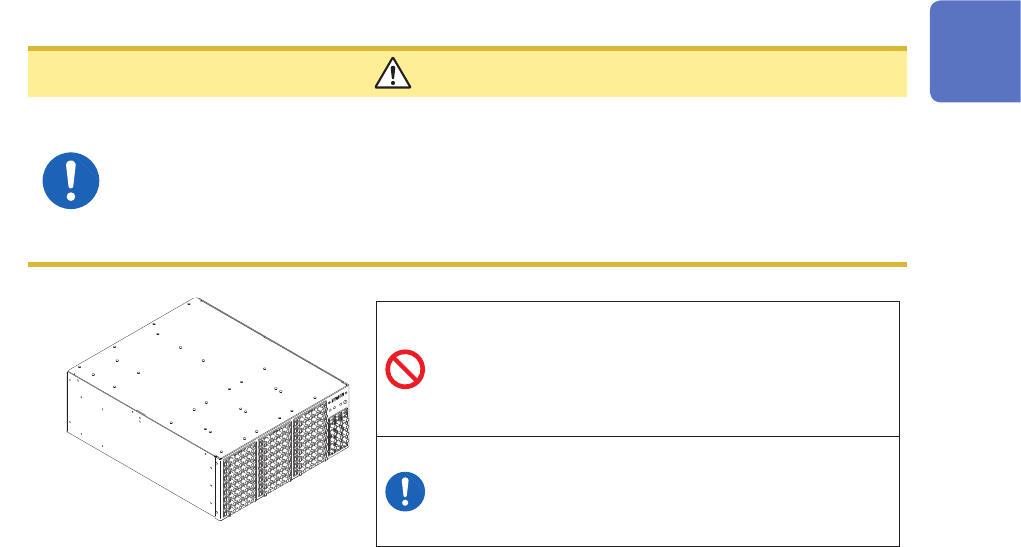
• Do not place the instrument on an unstable table.
• Do not place the instrument on an inclined
surface.
• Do not stack the multiple instruments.
• Vents must not be blocked.
• To prevent overheating, be sure to leave 5 cm
(2 inches) around the instrument.
• The instrument should be operated only with the
bottom side downwards.
5 cm or wider