00190725-01.pdf - 第49页
• COMPONENT CAMERA HEI GHT Selecting this menu allows you to det er mine t he height of t he centering camera (component cam er a). This height serves as the refer enc e value for lower ing the Z-axis ov er the coplanar …
5.1.11 EXECUTE NEXT 4 POINTS
This measuring routine allows you to carry out all menu options offered in the most favorable way:
• The PCB as well as the calibration plate have only to be inserted once at the beginning.
• The measurements are then carried out automatically and in the sequence required.
➤ Pay attention to the WORKAROUND pertaining to this menu option → section 12.4.
In order to check individual value, you can also select the "NEXT 4 POINTS" mentioned in the
following
indi-
vidually from the main menu:
• When selecting the menu options individually, observe the following:
Following the "DETERMINE CALIBRATION FACTORS" measuring routine, the
remaining
3 main menu options
must also be carried out if the new calibration factors are to be accepted(= after successful measurement!).
The calibration plate
must not be exchanged or turned
, not even 180 degrees, between the individual
measuring steps.
• Correctness of calibration factors is always a prerequisite for the checking of further values.
5.1.12 DETERMINE CALIBRATION FACTORS OF HEAD CAMERA
This measuring routine is used to determine the calibration factors of the head camera (for details see chapter 7).
• After changing the calibration factors,
all
of the following
3
points must always be performed!
5.1.13 DETERMINE ANGLE CORRECTION OF D-AXIS
This option is used to determine the D-zero point correction value (for details see description of operational
sequence, chapter 7).
5.1.14 DETERMINE CAMERA OFFSET
This measuring routine is used to determine the distance between the PCB camera and the nozzle center
(see chap. 7).
➤ Pay attention to the WORKAROUND pertaining to this menu option → section 12.4.
5.1.15 DETERMINE JAW OFFSET
The jaws offset represents the symmetrical offset of the Z or H-jaws (for details see chapter 7).
5.1.16 COMPONENT CAMERA MENU
The measuring routines of this menu are used to perform the complete calibration of the component vision system.
Since version 111.xxx the component camera may be assigned any track on the fixed side from 1 through 90. In
the case of BASIC MA-data, this track is to be entered when prompted to do so (default value is track 85).
5 Description of the Menu Options User’s Manual AutoCal Program
5.1 Description of the Menu Options for HS-180 Placement Stations Software Version 114.xxx
5 - 6
• COMPONENT CAMERA HEIGHT
Selecting this menu allows you to determine the height of the centering camera (component camera).
This height serves as the reference value for lowering the Z-axis over the coplanarity laser module.
• EXECUTE THE FOLLOWING POINTS
Selecting this menu option allows you the perform the complete further calibration of the component vision
system after the centering camera height has been determined. The menu options displayed underneath
are now called up in a block (see below).
The PCB and the calibration plate have only to be inserted once at the beginning, and the measurements
are then carried out automatically and in the sequence required.
Individual values can be checked by calling up the menu options individually:
• DETERMINE CALIBRATION FACTORS,
• DETERMINE CAMERA CENTER,
• DETERMINE ROTATION ANGLE,
Prerequisite for each succeeding calibration is always that the calibration factors have already been deter-
mined and are correct. The calibration plate must not be exchanged nor turned.
5.1.17 DETERMINE COPLANARITY COORDINATES
This measuring routines are used determine the exact laser coordinates (X, Y, Z-value of the laser focus).
These coordinates are prerequisite for the accurate coplanarity measurement during the placement cycle.
The laser coordinates determined are written to the MA_ZUSATZ file.
This file is saved during the AutoCal measuring sequence only if a coplanarity laser module has been set up
and activated in the MA-data.
The MA_Zusatz file must therefore be copied only in this case to the work diskette together with the MA_FILE.
The coplanarity laser module should be situated as close to the component camera as possible, however al-
ways on the fixed component table side. The X /Y-ACTUAL position is determined by teaching at the start of
the measuring routine.
Detailed information about the coplanarity laser module, such as e.g. DANGER warnings, requirements to be
fulfilled on the machine and required entries in the MA-data (activation of the "Coplanarity" option) are con-
tained in the "Retrofit Instructions of Coplanarity Laser Module on HS-180".
5.1.18 MEASURE ANY HOLE (REPEATEDLY)
This measuring routine is used for testing purposes and for an accuracy check of the machine in the case of
an error.
You can approach and measure any hole by means of "Teach" (reproducibility during measuring is ± 0.02
mm. After selecting the menu, the submenu providing the possibility for entering the criteria for the measure-
ment appears (see measuring sequence, chap. 7).
User’s Manual AutoCal Program 5 Description of the Menu Options
Software Version 114.xxx 5.1 Description of the Menu Options for HS-180 Placement Stations
5 - 7
5.1.19 CONVEYOR BELT WIDTH ADJUSTMENT
NOTE:
For machines up to and including
batch identity no. 3
the conveyor width is adjustment with the main
menu displayed (handwheel !).
This function allows you, when required, to adjust the conveyor to the PCB width required in the AutoCal
measuring sequence.
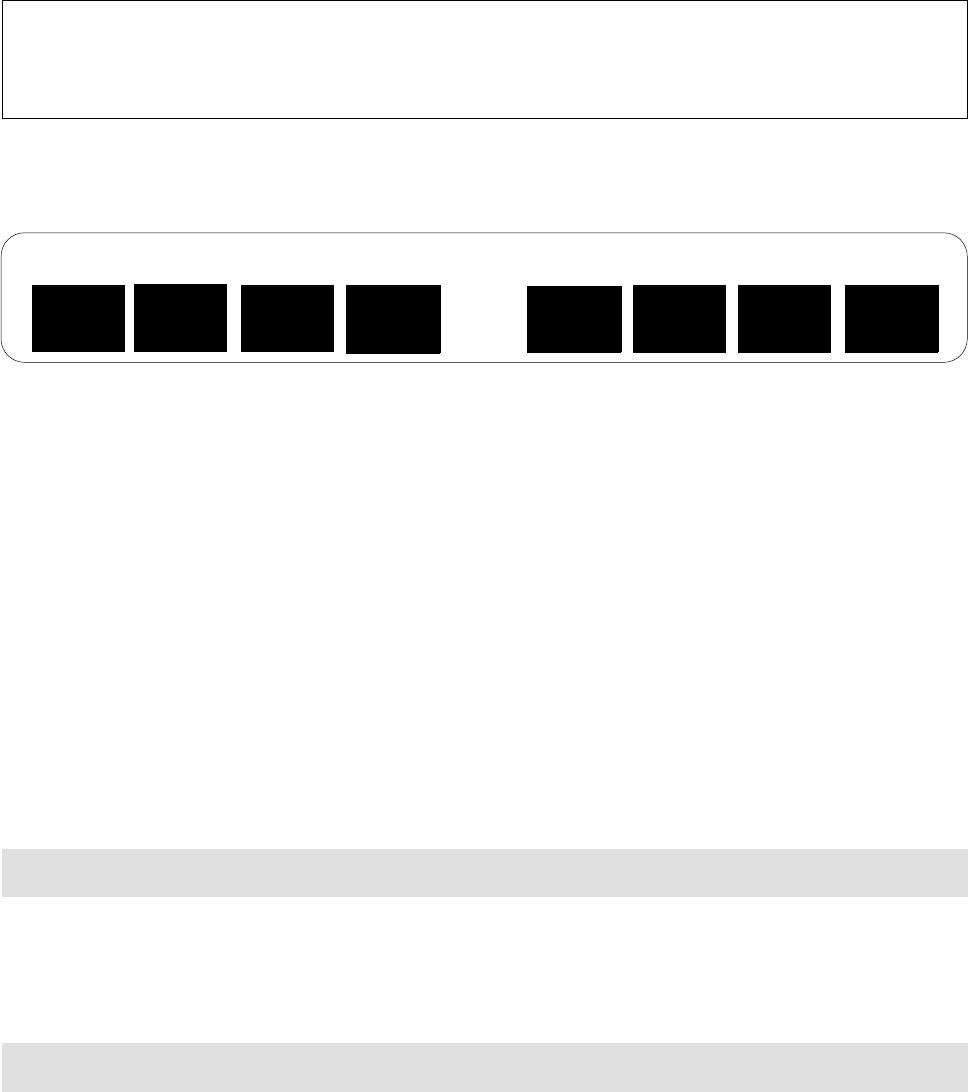
After the menu option has been selected, the following function bar appears on the screen:
Description of the function keys offered on the screen:
— "SLOW / FAST"
(toggle): to select the speed for the width adjustment. Preset: "fast".
— "CONVEYOR <-->"
or
"CONVEYOR ->--<-" =
to start the adjustment (<--> = increase, ->-<- = decrease).
— "STOP"
= to stop the adjustment process.
— "STEP OFF"
= to perform width adjustment in steps.
— "PCB --> EXIT"
= to convey the PCB to the output station, e.g. to check the adjusted width).
— "WIDTH IN MM"
= to enter the desired PCB width (see "Prerequisite" below).
—
"END"
= to return to the main menu.
➤ On machines with automatic width adjustment pay attention to the WORKAROUND → section 12.2
➤
Prerequisite
for the exact adjustment to the width entered (function key F 7) is that "PCB EDGE FIXED
TABLE" has already been determined.
➤ When adjusting the conveyor width, the PCB
must not
be placed above the light barrier as otherwise
width adjustment cannot be carried out.
• When function key F7 is selected, the following prompt is displayed on the screen:
PC-BOARD WIDTH [MM]
• Procedure: input the desired value (= PCB width used) → approach the movable table side → gantry mo-
ves to the appropriate, internally calculated width → width adjustment of the conveyor is started and is
stopped when the Bero on the movable table side is activated.
• If the Bero fails to be activated, the following
error message
is displayed:
CONVEYOR IS AT LIMIT SWITCH
•
Error correction:
Using the appropriate function key (see above) move the conveyor away from the li-
mit switch and correct the error (incorrect sensing distance / defective Bero).
• Subsequently, repeat the adjustment of the conveyor width.
ADJUST CONVEYOR WIDTH TO PCB WIDTH
WIDTH
IN MM
END
PCB -->
EXIT
STEP
OFF
CON
VEYOR
<--> STOP
SLOW
CONVEYOR
>--<
5 Description of the Menu Options User’s Manual AutoCal Program
5.1 Description of the Menu Options for HS-180 Placement Stations Software Version 114.xxx
5 - 8