X3_X4_Series machine.pdf - 第432页
7 Station extensions User manual SIPLACE X-S eries 7.11 Component s ensor for the C& P12 head Software Version SR.601.xx 11/2005 US Edition 432 PLEAS E NOTE 7 If you are placi ng 0201 compo nents with the 906 nozzle,…
User manual SIPLACE X-Series 7 Station extensions
Software Version SR.601.xx 11/2005 US Edition 7.11 Component sensor for the C&P12 head
431
7.11.1 Description of the functions of the component sensor
The component sensor is fixed to the bottom of the housing of the 12-segment Collect&Place
head (see Fig. 7.11 - 1
). It scans the outline of a component and checks whether there is a com-
ponent at the nozzle. It also determines the height of the component. This data can be used to
determine whether the component is in the normal position or on edge at the nozzle. Component
heights from 0.1 to 4 mm can be checked. For larger components, only the presence of the com-
ponent at the nozzle is checked.
The component sensor is configured in the package form editor on the SIPLACE Pro computer.
Every nozzle, including the special nozzles, can be scanned by the component sensor.
7.11.2 Measuring conditions
The two following conditions must be fulfilled in order to obtain a valid measurement:
– The light beam must touch the empty nozzle tip during the calibration process.
– The nozzle tip must be inside the light beam when it is holding a component.
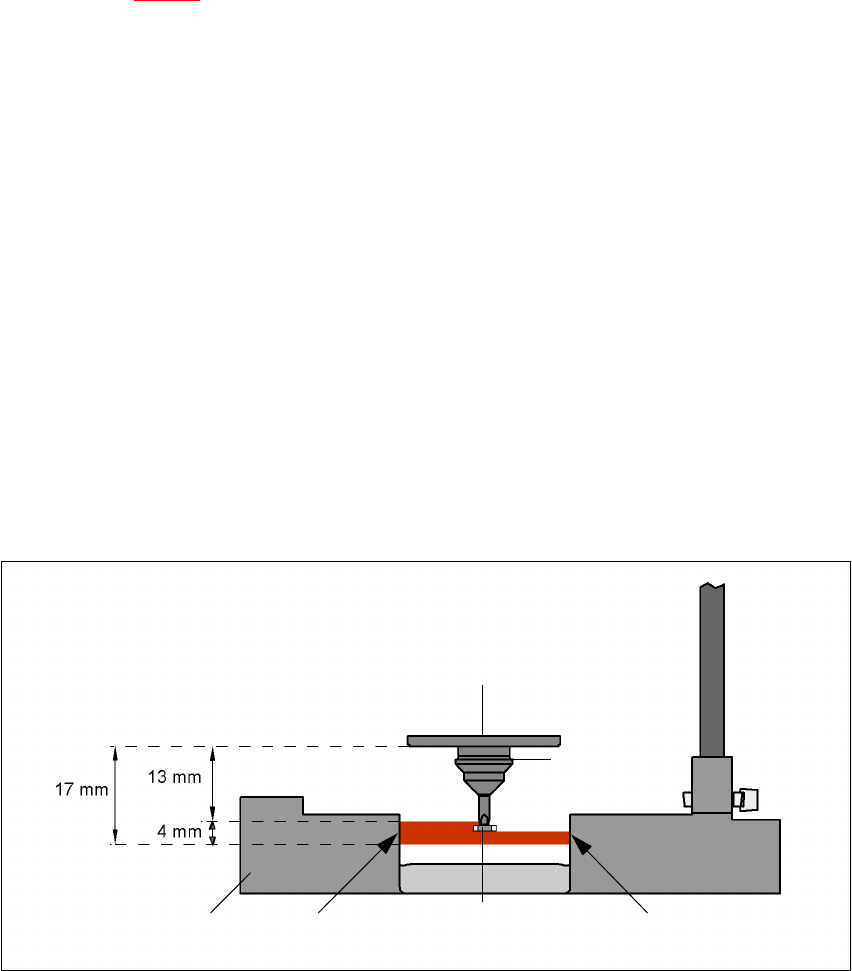
– Minimum nozzle length 13 mm
– Nozzle length + component height + tolerance < 17 mm
If these conditions are fulfilled, it is possible to determine whether a component is present or ab-
sent, or to measure the component height. The minimum difference in height is 100 µm.
7
Fig. 7.11 - 2 Component sensor, working principle
Incremental disk
Component
Nozzle
IR LED PhototransistorCross-section through
component sensor

7 Station extensions User manual SIPLACE X-Series
7.11 Component sensor for the C&P12 head Software Version SR.601.xx 11/2005 US Edition
432
PLEASE NOTE 7
If you are placing 0201 components with the 906 nozzle, it is essential to use the component sen-
sor since no vacuum measurements are possible. 7
Using the component sensor can improve the dpm rate even when placing other small compo-
nents, such as 0402 or 0603 components. When you select a component sensor from the pack-
age form list, remember that the component can only be placed on machines that are equipped
with that component sensor.
If you wish to test components with the component sensor, then it must be configured on the line.
The following alternatives are then available:
New set-up The set-up optimization automatically assigns the components to the
component sensor, if the sensor is installed.
Old set-up A new GF number is assigned to components to be checked with the
component sensor.
Central data management If not every machine on the line is equipped with the component sen-
sor, then a new package form number is assigned for every compo-
nent to be checked with the component sensor.
PLEASE NOTE 7
– The component sensor may only be retrofitted by SIEMENS AG service engineers.
– Recalibrate the 12-segment C&P head with the SITEST program after installing the compo-
nent sensor.
User manual SIPLACE X-Series 7 Station extensions
Software Version SR.601.xx 11/2005 US Edition 7.12 Coplanarity laser module
433
7.12 Coplanarity laser module
Item no. 00119719-xx
7.12.1 Description of the functions
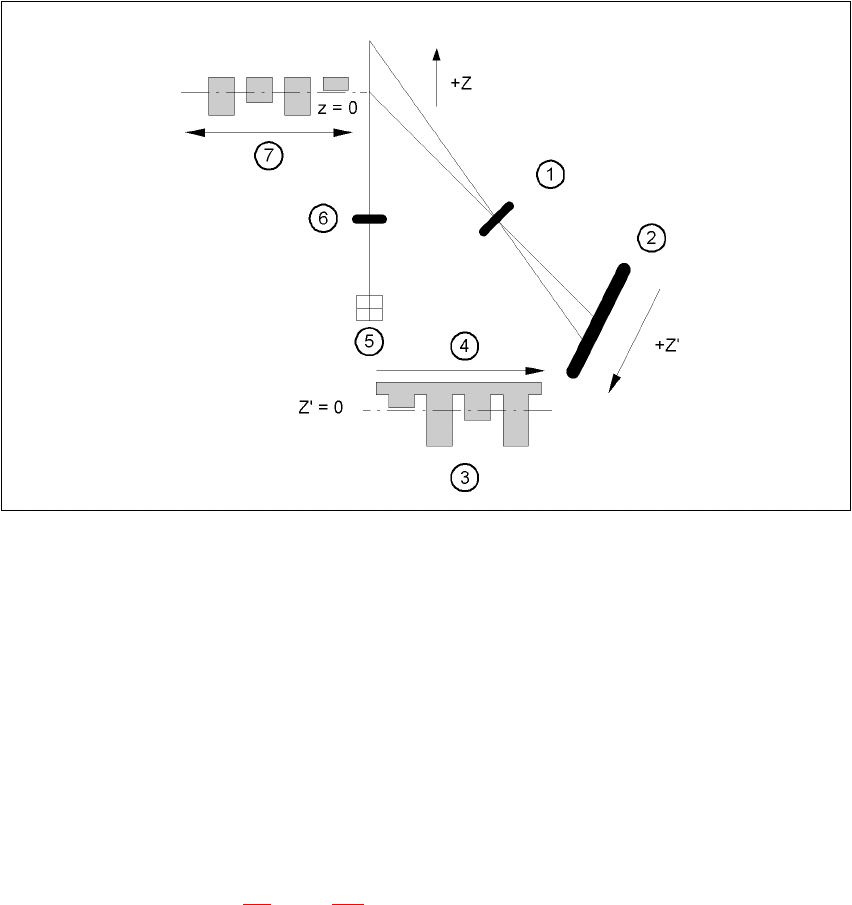
The coplanarity laser module is used to measure vertical bending of the leads. The lead length is
measured without contact using the laser triangulation principle.
7
Fig. 7.12 - 1 Laser triangulation measurement principle
(1) Receiver lens
(2) Detector
(3) Measuring signal
(4) Time t
(5) Laser
(6) Transmitter lens
(7) Travel direction
The TwinHead picks up the component to be checked, centers it optically using the component
vision camera (see section 7.3
, page 411) and moves all four sides one after another over the
fixed laser beam of the coplanarity laser module. In this way, every lead is scanned from below
by the laser beam. The laser light scattered by the underside of the lead is recorded by a sensor,