00195193-02 SG D4 FSE en (1).pdf - 第283页
Modular conveyor Width adjustment unit (Driver) Conveyor Settings Student Guide SIPLACE D4 (FSE) EN 09/2006 Modular conveyor 267 X Place the drive r at the final dimension of 2/10 mm, press the actuat or onto the final d…
Modular conveyor
Conveyor Settings Width adjustment unit (Driver)
Student Guide SIPLACE D4 (FSE)
Modular conveyor EN 09/2006
266
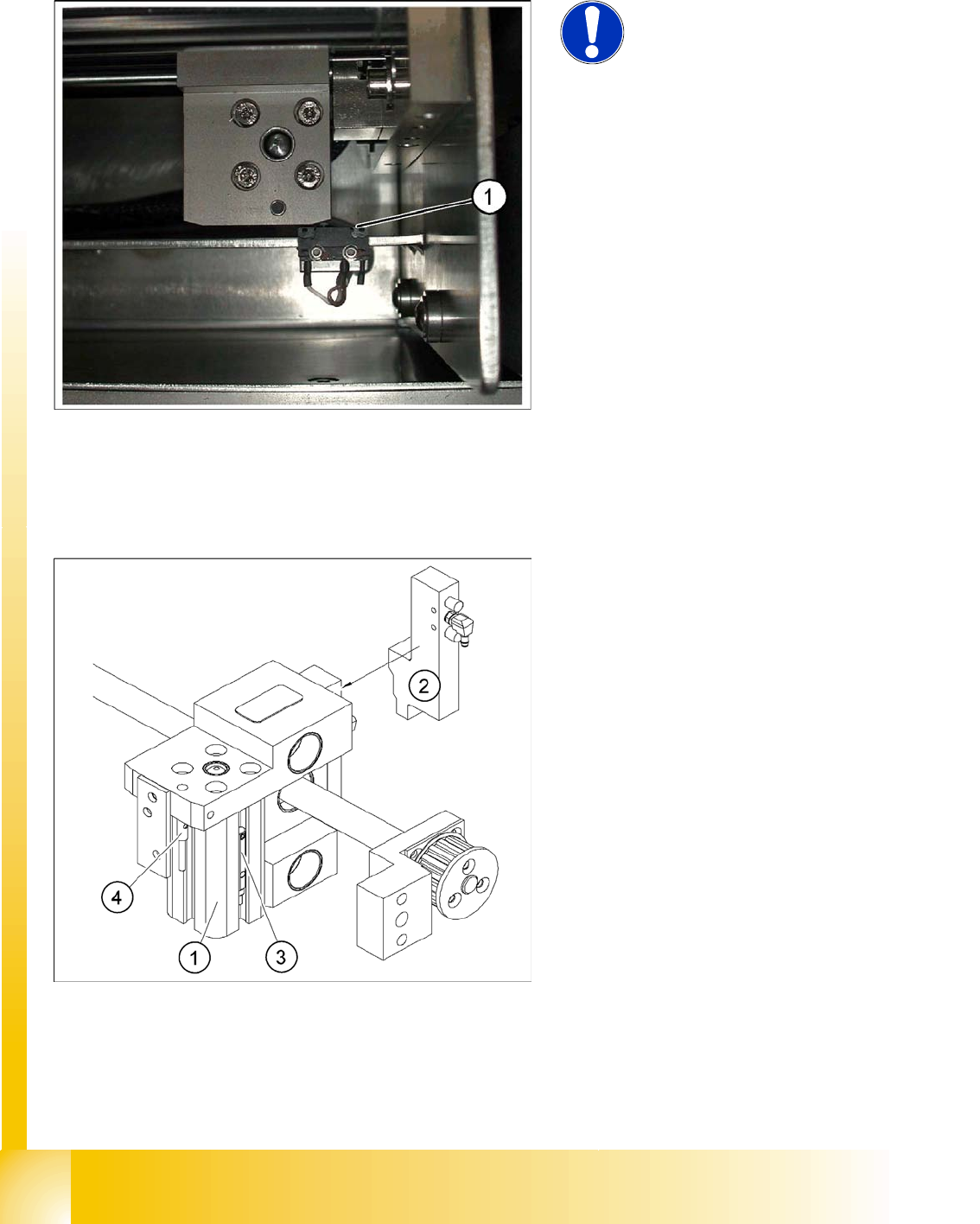
11.3.4.1 Adjusting the limit switch for initialize the driver
11.3.5 Width adjustment unit (Driver)
11.3.5.1 Setting the BERO on the driver
X When installing the proximity switch (4) , make sure that the proximity switch is level with the
adjustment unit housing.
X The switching point is set via the actuator on the conveyor side
X Move the driver under the conveyor side, then loosen the actuator using the screw.
NOTE:
This setting is only required after
replacing the switch or other error
functions in the width adjustment
reference run.
X Move the driver for the width adjustment by
hand (via the toothed belt) to the conveyor
side.
X Loosen the two screws on the limit switch (1).
X Move the limit switch in the slot towards the
driver and make sure, that the limit switch is
safely switched on.
X Check the switching state of the
corresponding LED (H11 for conveyor 201)
(H41 for conveyor 301) in the conveyor control
software.
X Fit the limit switch in this position.
X Calibrate the conveyor width via the SITEST
program.
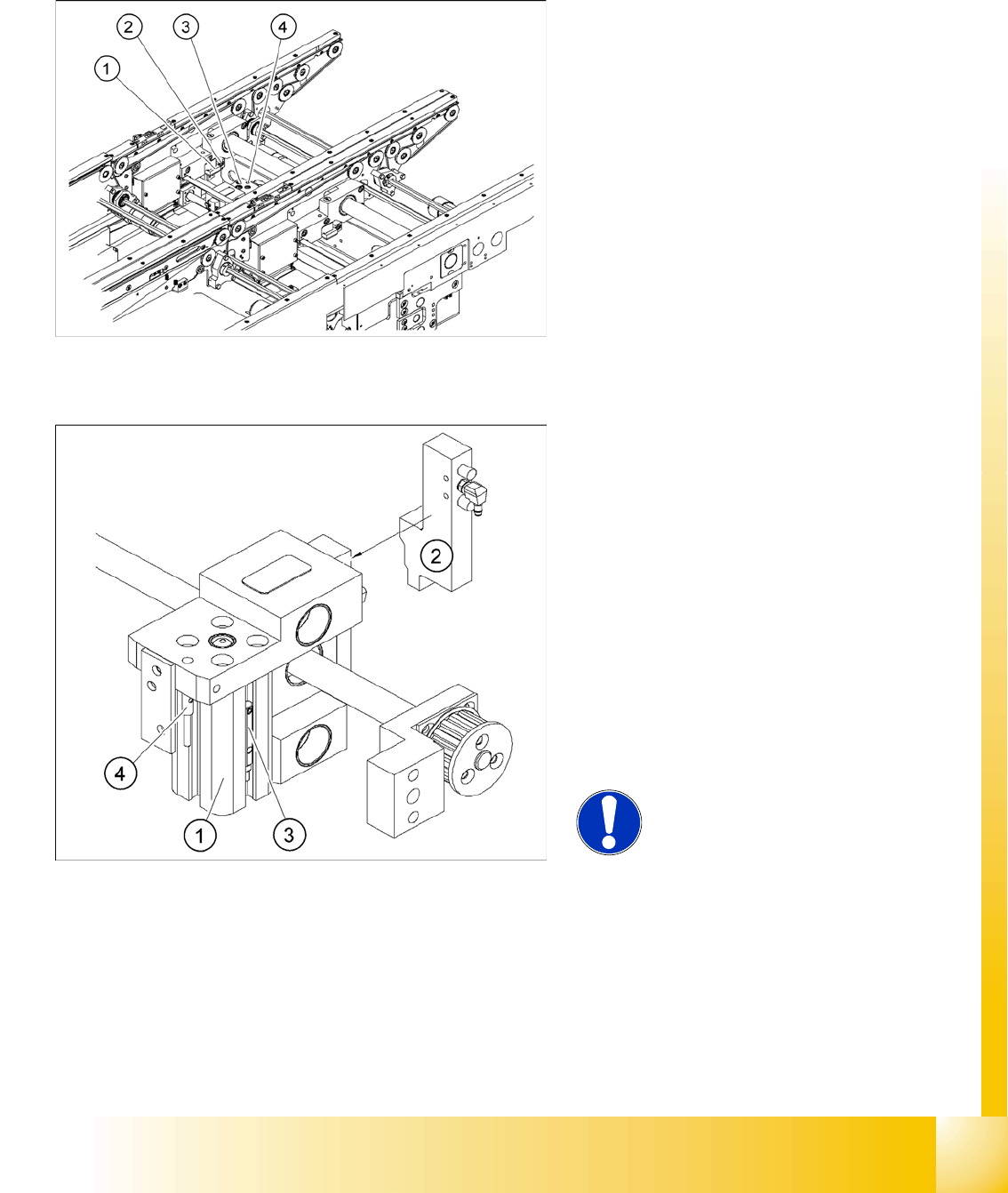
Legend:
1. Pneumatic cylinder
2. Solenoid valve
3. Proximity switch for pneumatic cylinder (for
"locking pin up" recognition)
4. Proximity switch for adjustment unit(for
conveyor side recognition)
X The proximity switch (3) serves as a signal for
controlling the pneumatic valve of the
adjustment unit. Once the switching point
"conveyor side present" has been reached,
the conveyor side is connected via the
pneumatic valve.
Modular conveyor
Width adjustment unit (Driver) Conveyor Settings
Student Guide SIPLACE D4 (FSE)
EN 09/2006 Modular conveyor
267
X Place the driver at the final dimension of 2/10 mm, press the actuator onto the final dimension and
fix with the screw.
X Actuators on all conveyor sides have to be checked and maybe adjusted.
X
Calibrate the conveyor
with SITEST.
11.3.5.2 Setting the ’pneumatic cylinder BERO’ on the driver
X Start SITEST
X Set any conveyor width. The adjustment units are positioned directly under the conveyor side.
X Start the I/O menu.
X Activate the pneumatic cylinder.
X Set the proximity switch on the pneumatic cylinder so that the LED (H36/H37 TSP 301) (H64/65
TSP 201) shines when connected.
Legend:
1. Actuator
2. Actuator fixing screw
3. Driver
4. Proximity switch, adjustment unit
Legend:
1. Pneumatic cylinder
2. Solenoid valve
3. Proximity switch for pneumatic cylinder (for
"locking pin up" recognition)
4. Proximity switch for adjustment unit(for
conveyor side recognition)
The proximity switch (3) on the adjustment unit
cylinder should operate when the adjustment
unit pin is pushed out by the pneumatic
cylinder and therefore connected to the
conveyor side. This signal enables the width
adjustment motor.
NOTE:
The BERO on the pneumatic cylinder
is set.
The proximity switch is off when the
cylinder extended into free space.
Modular conveyor
Conveyor Settings Setting and checking the laser light barrier for the stopper position
Student Guide SIPLACE D4 (FSE)
Modular conveyor EN 09/2006
268
11.3.6 Setting and checking the laser light barrier for the stopper position
DANGER: Laser class 2
The laser light barrier transmitter emits class 2 laser beams. You do not need
to take additional protective measures!
X You should never look into the laser beam, however.
X Do the adjustment of the LASER Diode Beam direction only from the rear
side of the LASER (left machine side). Keep right side machine covers
closed!
NOTE:
The laser beam deflection has greatest effect at the maximum conveyor width,
it should always be calibrated at the maximum conveyor width.
NOTE:
After setting the laser light barrier you must check or re-teach the PCB
reference corner!
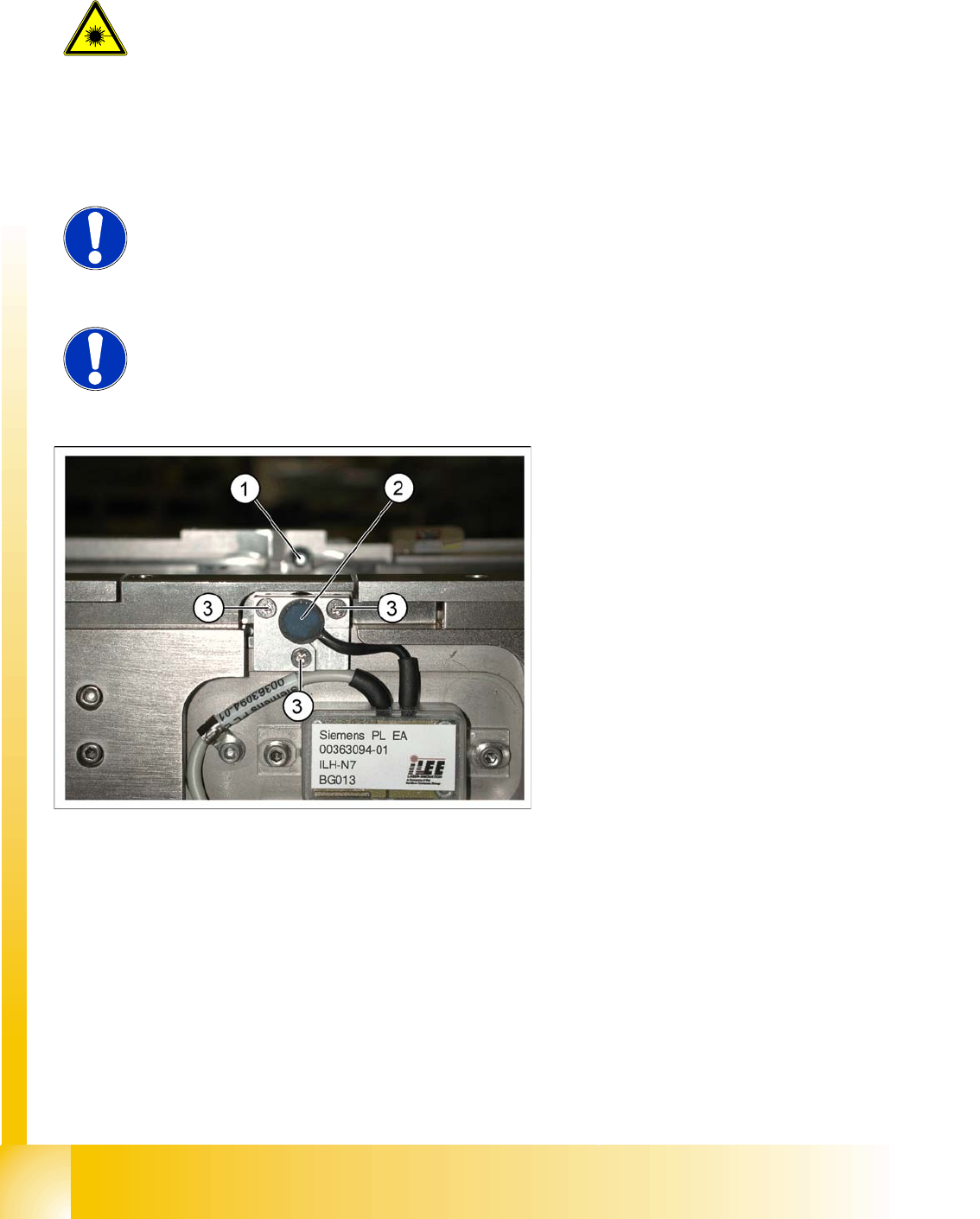
Legend:
1. Laser receiver
2. Laser diode
3. Setting screws (3x)