YesAX V3.1.2 - Software User Manual.pdf - 第122页
10 - 28 General Inspecti on Methodolo gy 10.4.6 Percent Void Para meters The Percent Void inspection enables measurement of the number of pixels and the percentage of pixels in a user selected window within a defined gra…
General Inspection Methodology 10-27
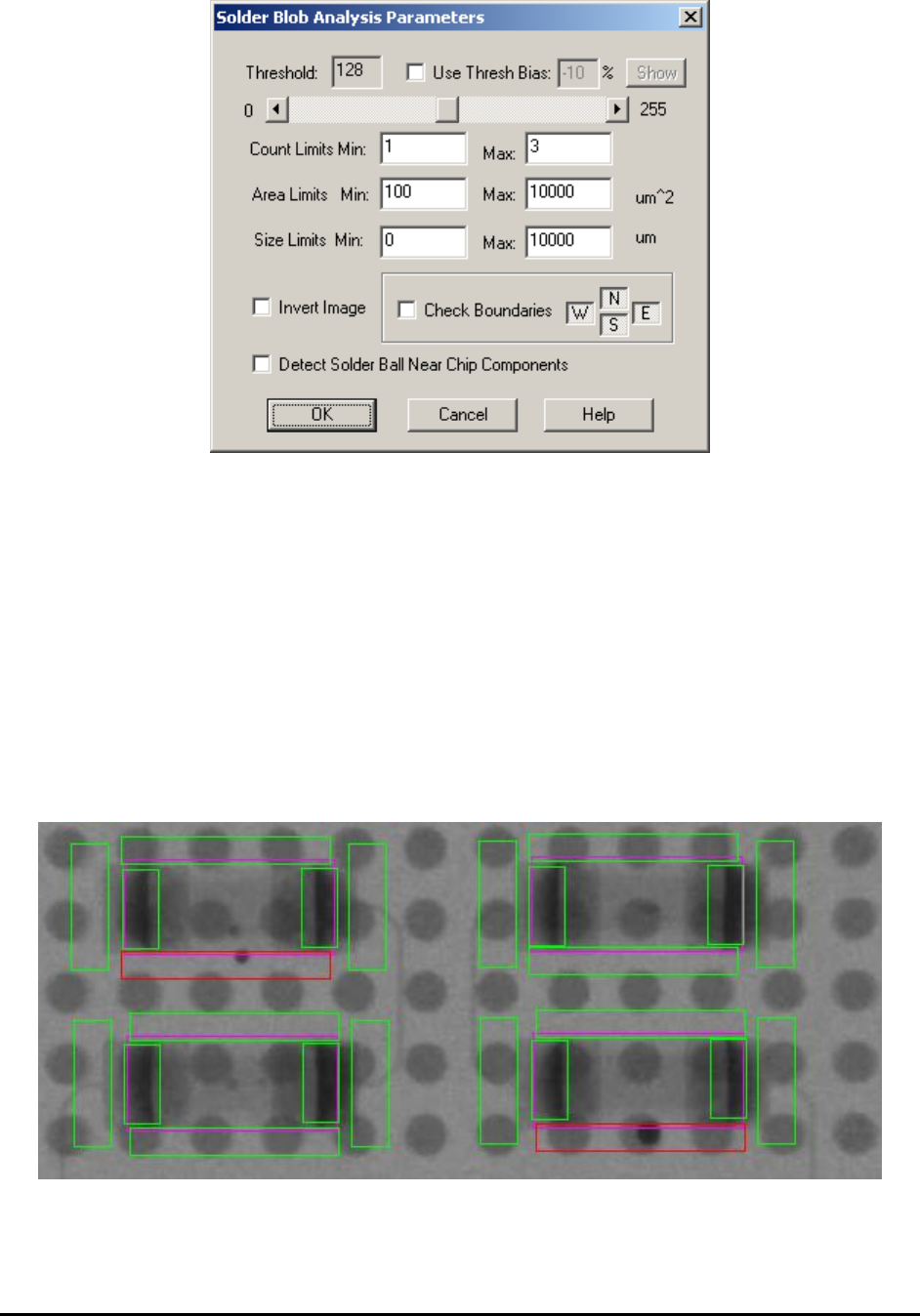
Similar to Xray Solder inspection, the Solder Blob Analysis uses a threshold value to binarize the
image into black or white pixels. The user can select to use either a fixed Threshold value (by
moving the slider bar left and right) or use a dynamic threshold (by putting a number in the Bias
field). The Bias field and the Show button will only be enabled if the user checks the Use Thresh
field.
The Count Limits Min and Max set the acceptable blob count. The Area Limit Min sets the
minimum area of the blob. Blobs smaller than the minimum area will not be counted as a blob.
The Size Limits field sets the acceptable size (width or height) of the blobs.
To detect a solder ball around chip components the Count Limit Min and Max should both be
set to 0s. The Area Limits Min should be set to the minimum area of the solder ball that is
considered a defect. The Invert Image checkbox should be checked to make a black solder ball
appear as a white blob.
10-28 General Inspection Methodology
10.4.6 Percent Void Parameters
The Percent Void inspection enables measurement of the number of pixels and the percentage of
pixels in a user selected window within a defined gray scale range. The Percent Void function is
designed primarily for semiconductor applications such as measuring an area of a device which
may show some bonding inconsistencies, bonding voids, solder voids, air gaps and provide the
user with a percentage of the area that may be affected. The percent void measurement can be
applied to many other measurements where an area defect or point of interest is concerned.
The function computes the total number of pixels, the number of highlighted, “lit”, pixels and the
number of pixels in the largest lit blob within the windowed area. It determines the percentage of
lit pixels and the percentage of pixels in the largest lit blob, and then compares them with the
pass/fail thresholds set in the Max Void and the Largest Void fields. If either percentage is more
than its threshold, the system reports that Percent Void failed; otherwise, it is reported to have
passed.
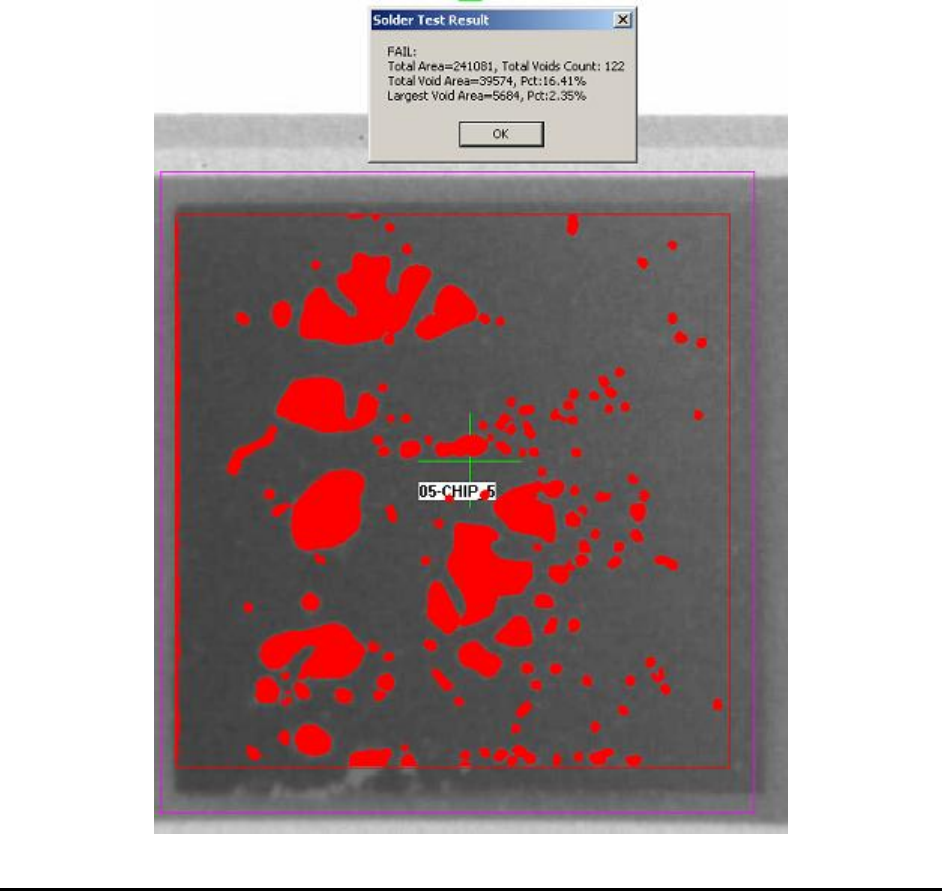
The Percent Void result is presented in the Solder Test Result dialog box as shown below. By
default the void area been detected will be shown in red.
General Inspection Methodology 10-29
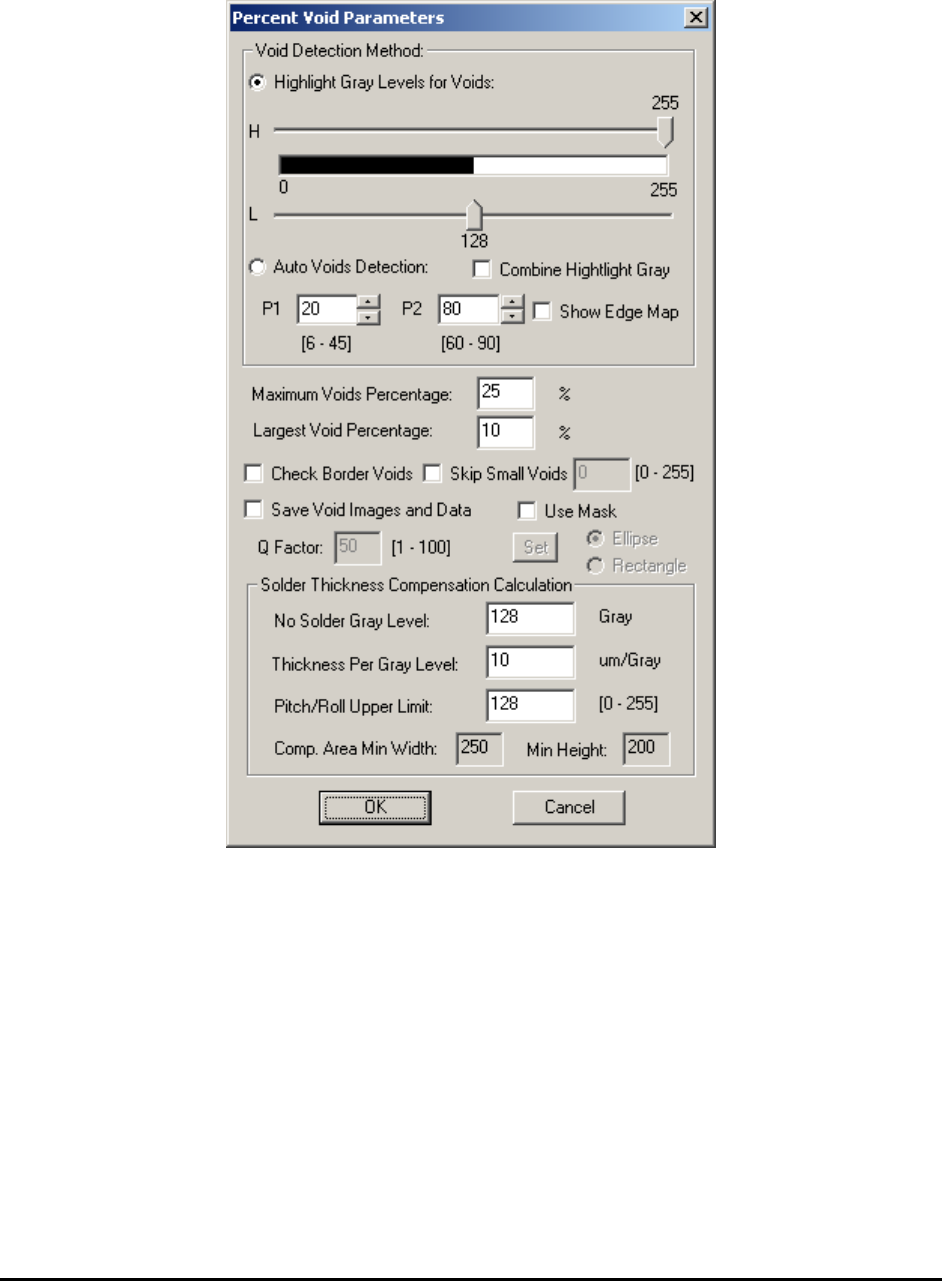
Select Percent Void Params from the Solder pop-up menu to open the Percent Void Parameters
dialog.
The Highlight Gray Levels for Voids enables the user to highlight a range of gray scale values
that include the feature of interest. These highlighted pixels will be considered “lit” during the
Percent Void computation.
The Auto Voids Detection applies edge detection techniques to find voids. There are two
parameters for this function: P1 and P2. P1 is the indicator for a Gaussian Median filter and P2
represents one high threshold value. The normal range for P1 is from 6 to 45 and the range for P2
is from 60 to 90, as shown under each box. For most applications you may set P1 somewhere
between 12 and 24 and set P2 between 70 and 80. The default values for P1 and P2 are 20 and 75,
correspondingly.