N7201A652E.pdf - 第59页
NPM- TT2 EJM1EE-SF-01N-05 1-7 Confirmation Handling the used ba tter y 1-7 This produ ct has a battery used for controlling PCBs. Disposal may be regu lated in your community due to environmen tal considerat ions. Please…
NPM-TT2 EJM1EE-SF-01N-05
1-6
Disposing the gas
spring
1-6
The gas spring is used to open/close covers. It is very dangerous to dispose of it as it is, because high-
pressure air is sealed into it. When disposing a gas spring, be sure to degas before disposed.
To remove or dispose, please send a request to the gas spring manufacturer.
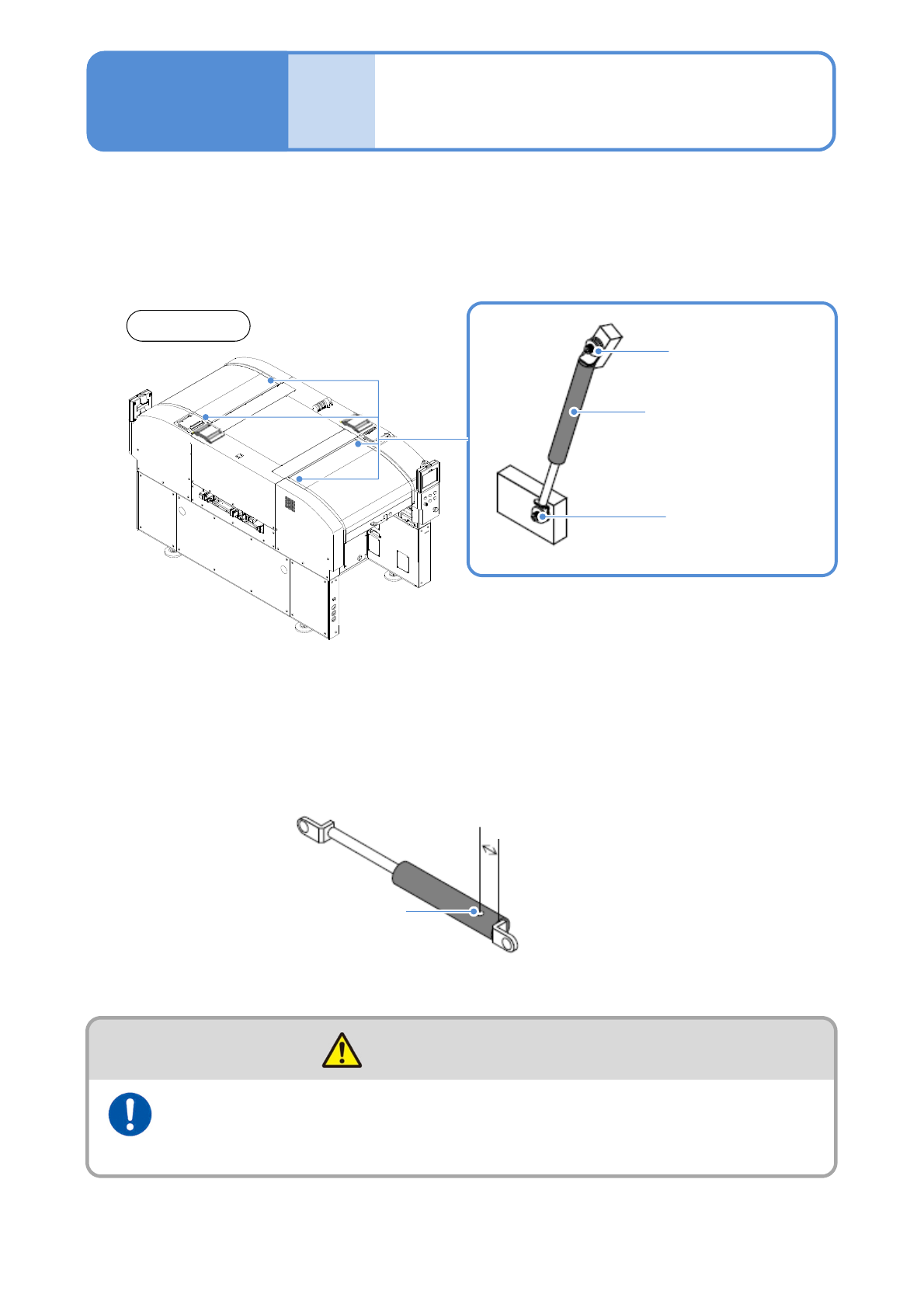
■Locations where the gas spring is used
■Removing gas spring
Turn the hexagon socket head cap screws counterclockwise and remove the spring.
●Two men should work as a team. The unintentional closing of the cover could cause injury.
■Disposing gas spring
Make a hole with the drill and degas completely inside the gas spring.
Drilled hole
Front side
15 to 20 mm
(4 locations)
Hexagon socket
head cap screw
Gas spring
Hexagon socket
head cap screw
Wear a hard hat and protective goggles
during maintenance work
(Risk of injury)
CAUTION
NPM-TT2 EJM1EE-SF-01N-05
1-7
Confirmation
Handling the used
battery
1-7
This product has a battery used for controlling PCBs. Disposal may be regulated in your
community due to environmental considerations. Please dispose of or recycle it in conformity
with the laws or regulations of your country, or contact your local authorities for more
information.
ATTENTION
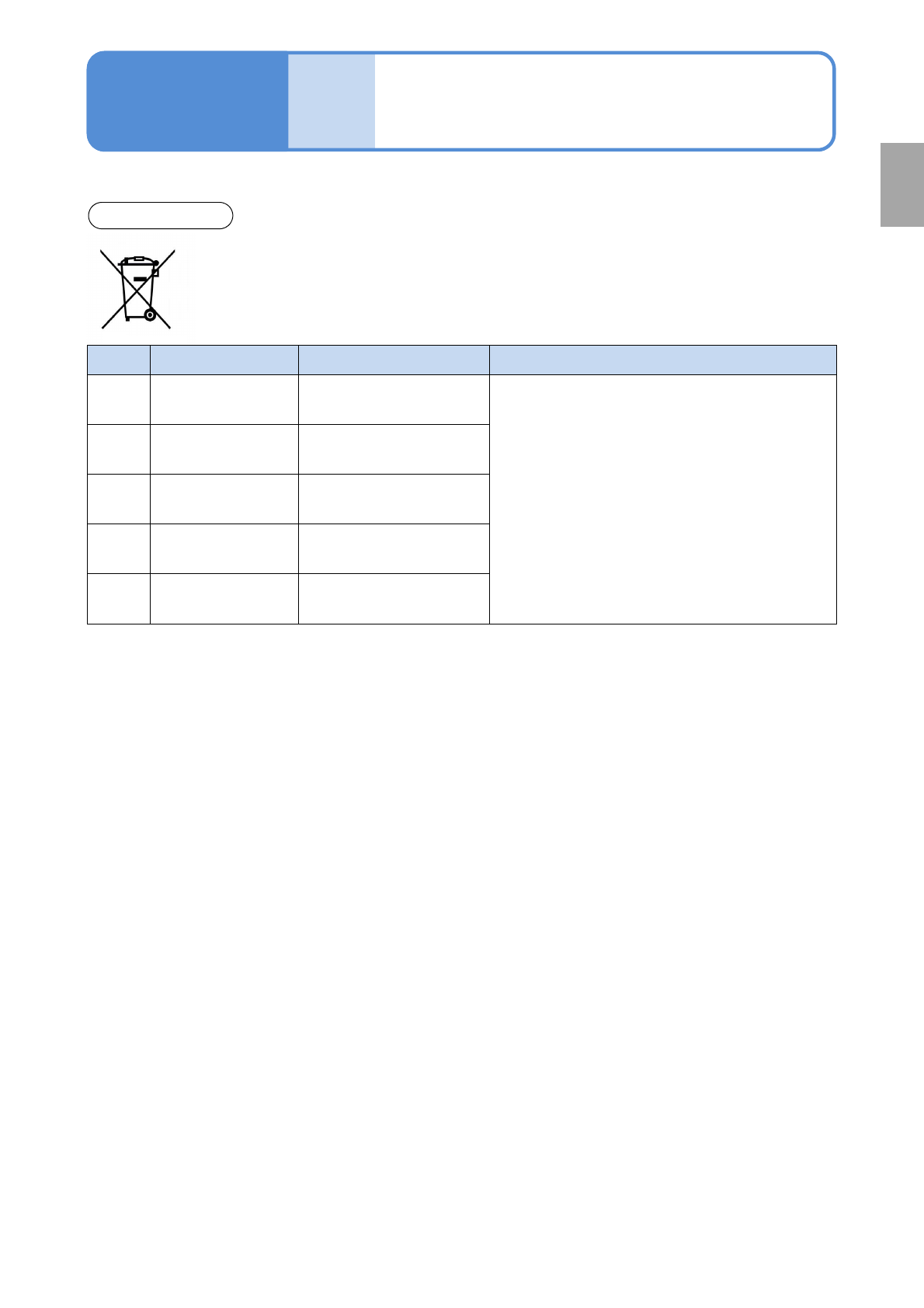
No. Mount location Battery type Reference page
1. CPU board Lithium battery
‘Replacing the batteries’ in [Maintenance]
(→ P.12-3)
2. NCIO board Lithium battery
3. Jig station Alkaline battery
4.
FA PC:Calendar
battery(LNB)
Lithium battery
5.
FA PC:UPS
battery(LNB)
Nickel hydride battery
●Lithium batteries are primary batteries that cannot be recharged.
EU
NPM-TT2 EJM1EE-SF-01N-05
Repairs on or disposal
of linear motors
1-8
Make repairs or dispose of the linear motor appropriately after fully understanding the following matters.
TO THE CUSTOMER
1. You are prohibited to remove or disassemble the
linear motor on your own.
Using a special jig, trained service engineer have to disassemble or dispose of the linear motor.
Please entrust to a waste disposal expert or contact us.
2. Submit this page and the next page to a waste
disposal expert when disposing.
When disposing of the linear motor, the waste disposal expert has to be informed of the disposal procedures
to prevent a waste disposal accident.
Some waste disposal experts may not handle the disposal of linear motors. In such a case, please contact us.
1-8-1
■Precautions
・ The stator produces the attractive force, which the mover lacks.
・ While the attractive force generated by the stator (permanent magnet) varies depending on the axis, it can
be strong enough to attain 10,000N at the maximum.
Once one stator is stuck to another or a thick steel sheet, they cannot be detached from each other easily.
・ A magnetic body (e.g. tool, jig, or bolt), such as iron, or a device, including a watch, cellular phone, or
magnetic card, should be kept 40 mm away from the linear motor. Failure to do so can result in serious
injury when the stator attracts the magnetic body and then your finger or hand is caught between them.
Also, the strong magnetic force may damage the watch or the cellular phone and destroy the data
on the magnetic card.
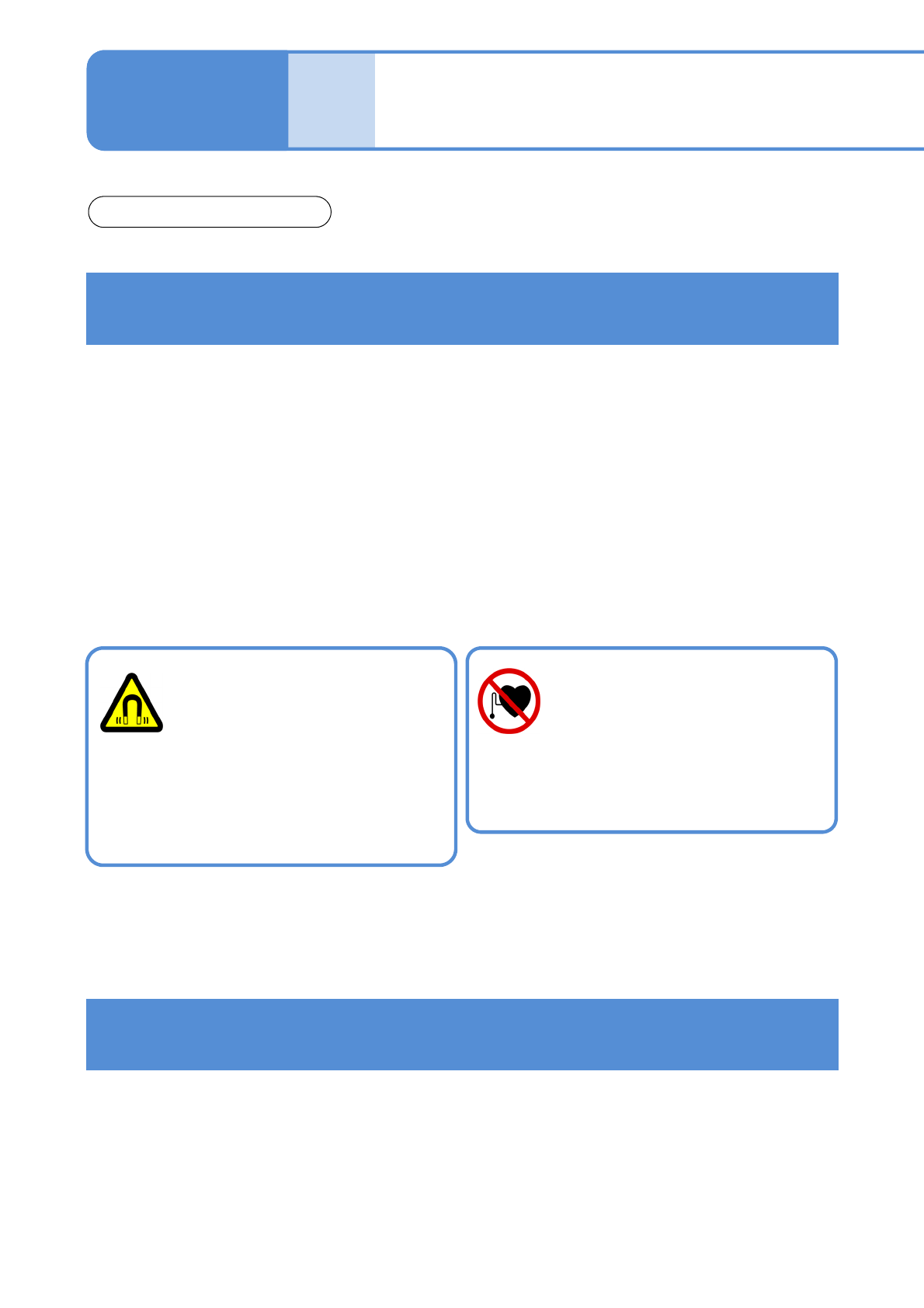
Individuals with
Pacemakers should
keep away from the
linear motor
(Risk of injury)
Do not wear any
metal during work
(Risk of injury when your hands are
pinched or pulled in due to the
strong magnetic force of the linear
motor)
●Pierced earrings,necklaces,
watchesandtools