00196608-01_AI_Stationaere_Kamera_Typ33_36_de_en.pdf - 第106页
Installation General Preparations 106 Stationary Camera Type 33/36 Stationäre Kamera Typ 33/ 36 3.1 General Preparations The following tasks must be performed irrespective of the machi ne type: ► Create a data backup fil…
Installation
Stationary Camera Type 33/36 Stationäre Kamera Typ 33/36 105
3 Installation
NOTICE
Usage, differences between the cameras
The type 33 stationary cameras can be installed in SX and X series, D3 and D1 SIPLACE ma-
chines; type 36 cameras can be installed in D1 machines. The camera design and the assem-
bly procedure for each camera is generally the same for the individual machines. Any
differences will be explicitly indicated in this guide.
CAUTION
Do not hold or carry the camera by its electronics unit.
The camera electronics assembly is a sensitive unit and can be easily damaged.
► Only hold or carry the camera by its metal frame.
► Always pull the illumination unit carefully up and off.
► The metal housing must always be hooked out of the lower section of the camera.
NOTICE
The upper section of the camera has a fixed assignment to the bottom section of the camera!
The upper section of the camera may not be used with a different bottom section. Both the up-
per and lower sections are mechanically and electrically coordinated and may not be ex-
changed for use with other cameras.
► The serial and version numbers of the top and bottom sections of the camera must be iden-
tical.
Installation
General Preparations
106 Stationary Camera Type 33/36 Stationäre Kamera Typ 33/36
3.1 General Preparations
The following tasks must be performed irrespective of the machine type:
► Create a data backup file for the existing machine configuration. (Hosts.txt, MaData.zip, MaDataIn-
fo.zip, Services.txt)
► Perform a machine data backup run.
► Save the complete SRCMA folder under a different name.
► Change over to the Service menu and select "Settings --> Machine Configuration". For detailed in-
structions about how to configure the camera, refer to the Online Help.
► Configure the new camera (standard camera type 33) in the machine configurator and save the data.
► Remove the component trolley/WPC from the camera installation position.
► Switch off the machine and secure it to prevent unauthorized reactivation. Observe the instructions
in section "1.2 Preparatory Work..." [ ➙ 93].
► Remove the waste tape chute. This is either screwed or hooked into place, depending on your ma-
chine.
► Change the machine configuration for the new camera in SIPLACE Pro.
► Perform placement program optimization for the line.
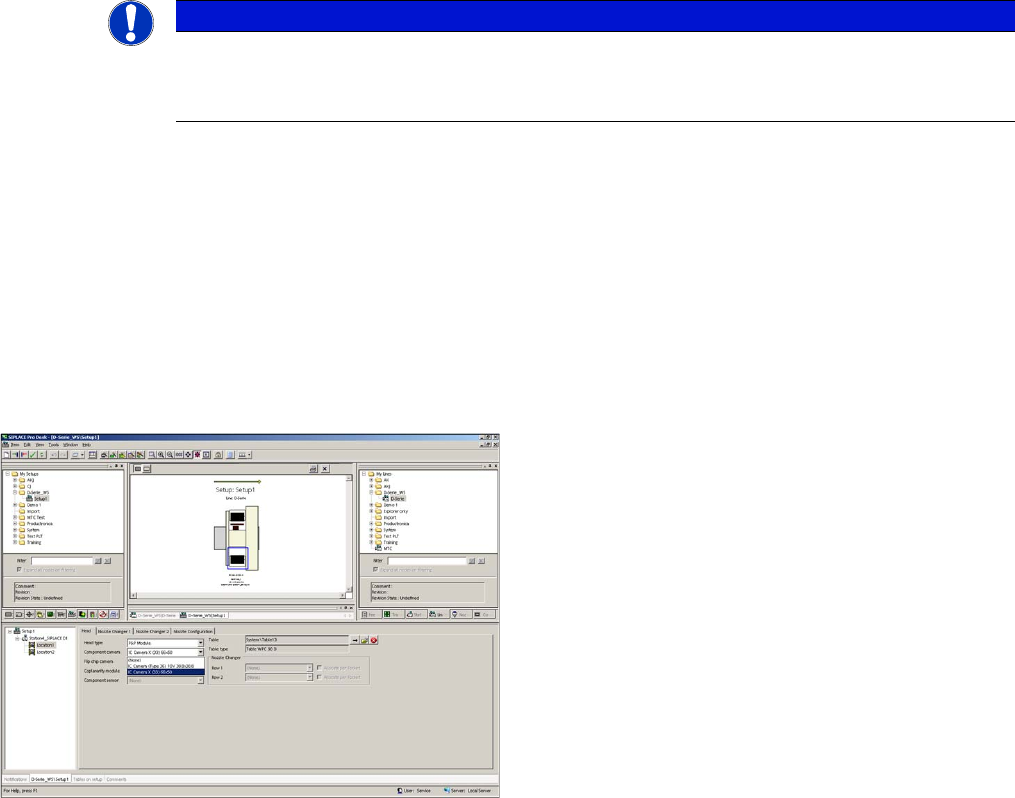
Configuration of stationary camera with SIPLACE Pro
See also
1.2 Preparatory Work... [ ➙ 93]
NOTICE
Camera configuration
For detailed instructions about how to configure the camera, refer to the SITEST Online Help
at "Settings - Settings for Placement Head".
Configuration of stationary camera (using example of D1)
► Switch over to "Setup-Location-Head tab" and enter
the P&P head.
► Re-optimize the setup in SIPLACE Pro.
Installation
Moving COT Insert with X Tables General Preparations
Stationary Camera Type 33/36 Stationäre Kamera Typ 33/36 107
3.1.1 Moving COT Insert with X Tables
To access the stationary camera installation position, you may need to loosen the COT insert and push
it forwards.
3.1.1.1 Overview
3.1.1.2 Dismantling the Side Cover (X Series and D3)
CAUTION
Service manual
► Read the section "Replacing the COT Insert" in your service manual!
NOTICE
Example of X series
The following description of how to move the COT insert uses the example of an X series ma-
chine, unless it states otherwise. The procedure is the same for other machines.
NOTICE
Mark the positions of the screws
► Mark the positions of all screws, to make clear assignment easier later on.
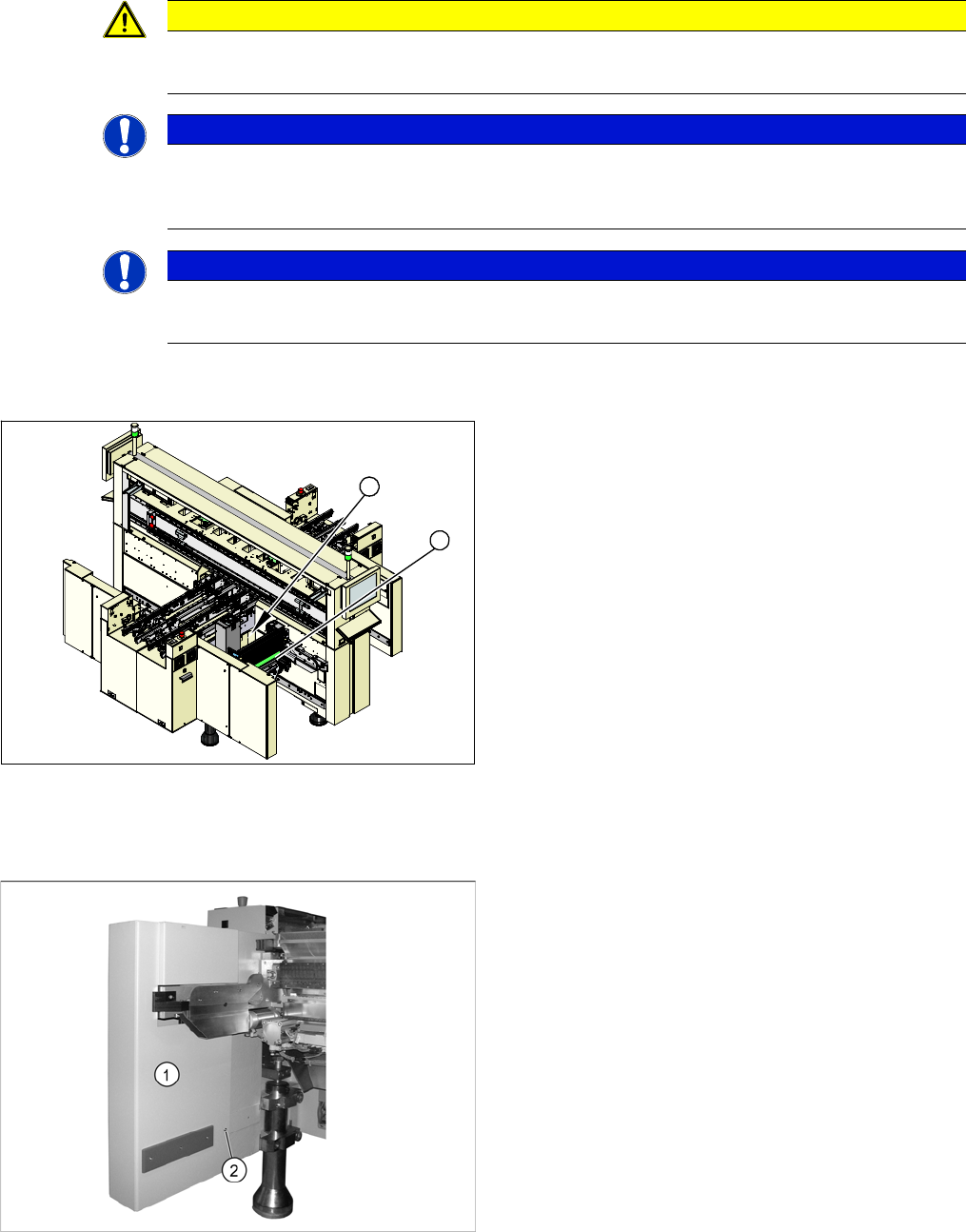
COT insert (using example of X series)
1. COT insert assembly
2. Installation position for stationary cameras
1
2
► Undock the component trolley from the placement
machine at the installation position of the stationary
camera.
► Switch the placement machine off at the main switch.
► Loosen the screw (2), fastening the side cover (1) on
the inside.