00196608-01_AI_Stationaere_Kamera_Typ33_36_de_en.pdf - 第130页
Installation Assembly in a D1 Machine Mechanical Assembly 130 Stationary Camera Type 33/36 Stationäre Kamera Typ 33/ 36 ► Fit the camera base unit onto the set screws and fasten this ba se unit, together with the fiducia…
Installation
Mechanical Assembly Assembly in a D1 Machine
Stationary Camera Type 33/36 Stationäre Kamera Typ 33/36 129
Fitting a new camera
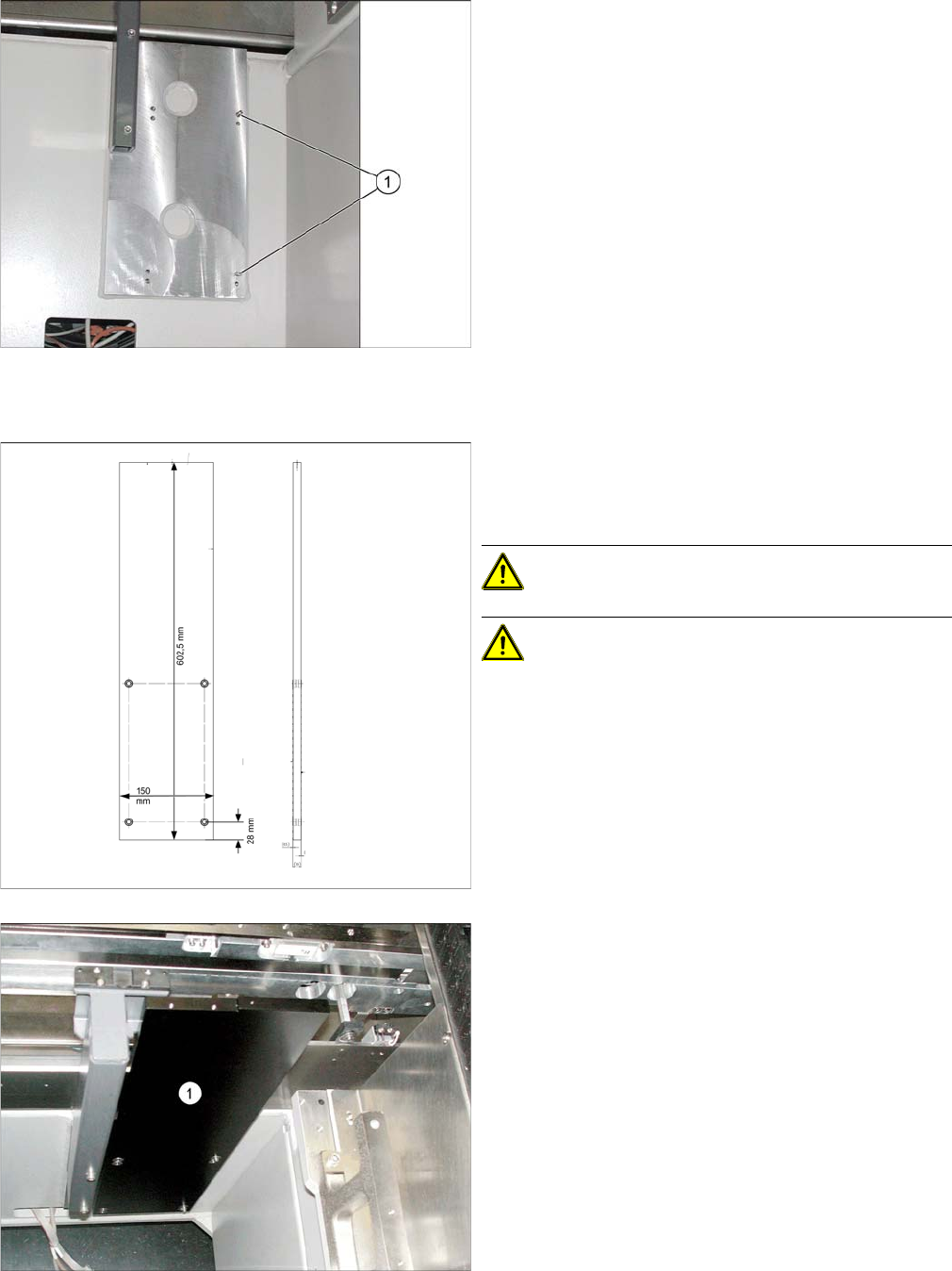
Stationary camera - set screws (D1)
► Use the two set screws (1) as an assembly aid for the
camera fiducial plate and the camera base unit. The
Allen key side of the set screws must point to the out-
side, so that they can be unscrewed again.
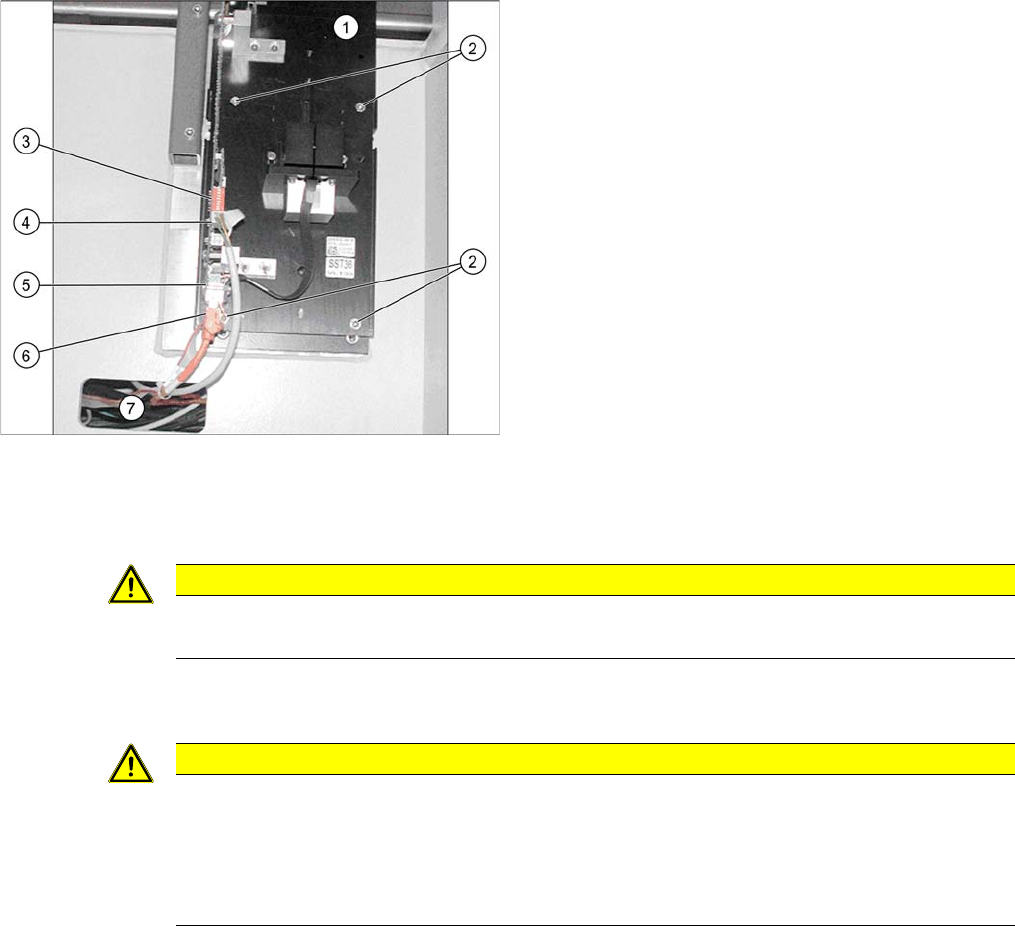
Fiducial sandwich plate [03039370-xx]
Suitable for IC camera type 36 and type 33
Use in SIPLACE D1 machines
CAUTION!
CAUTION! For assembly in D1 machines, al-
ways use the fiducial sandwich plate [03039370-xx]. If
you do not, machine accuracy will not be guaranteed and
there will be a risk of a head crash occurring.
Stationary camera – sandwich plate (D1)
► Fit the fiducial sandwich plate onto the set screws.
These must exactly match the holes in the machine
frame and be fastened with the recess at the top left.
Installation
Assembly in a D1 Machine Mechanical Assembly
130 Stationary Camera Type 33/36 Stationäre Kamera Typ 33/36
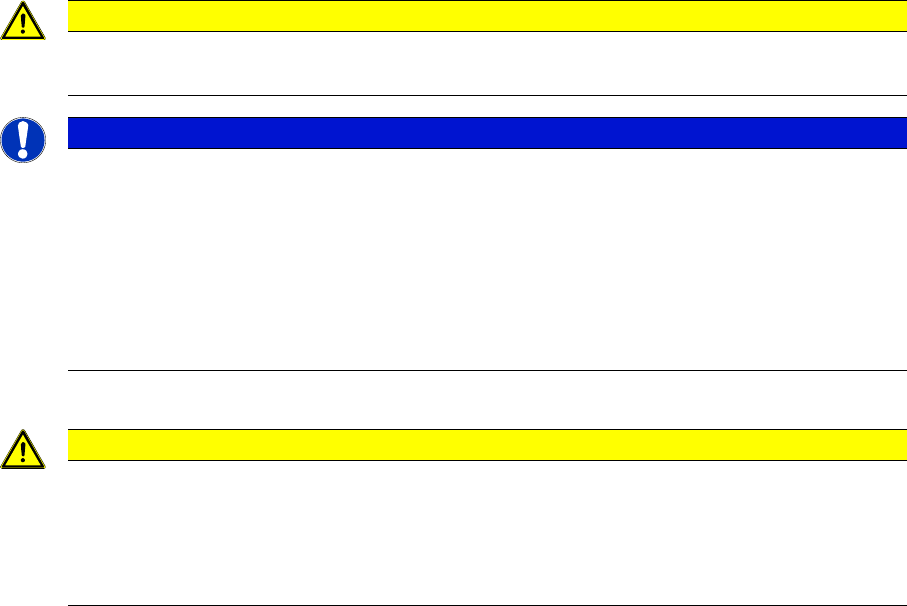
► Fit the camera base unit onto the set screws and fasten this base unit, together with the fiducial sand-
wich plate, using two socket head screws (Allen screws) DIN912-M6x35-8.8 [00845062-xx].
► Replace the two set screws with two socket head screws (Allen screws) DIN912-M6x35-8.8
[00845062-xx]. Screw the camera tight.
Stationary camera - camera base plate (D1)
1. Stationary camera
2. Screws DIN912-M6x35-8.8 [00845062-xx]
3. DIP switch
4. Power supply
5. CAN bus
6. Camera bus
7. Opening for camera cable in machine frame
CAUTION
Do not hold or carry the camera by its electronics unit.
The camera electronics assembly is a sensitive unit and can be easily damaged.
CAUTION
Remove the set screws!
Make sure that no set screws are left behind the camera. If these are left, the camera might be
fitted at a slant.
► If you are unable to remove the set screws, dismantle the camera again and move the set
screws as required.
Installation
Electrical Connections Assembly in a D1 Machine
Stationary Camera Type 33/36 Stationäre Kamera Typ 33/36 131
3.3.3 Electrical Connections
See also
4.2.1 Cameras Type 33 From Version 03 To 07, Cameras Type 36 From Version 01 [ ➙ 155]
4.7 Circuit Diagrams D1 [ ➙ 168]
3.3.3.1 Connecting the Camera
► Pull the three connection cables for the IC camera through the opening and out of the machine
frame. See also"3.3.2 Mechanical Assembly" [ ➙ 128]
► Check the jumper setting. See also"4.2.1 Cameras Type 33 From Version 03 To 07, Cameras Type
36 From Version 01" [ ➙ 155]
► Connect the CAN bus cable, the camera bus and the voltage supply cable to the camera. See also
"4.2.1 Cameras Type 33 From Version 03 To 07, Cameras Type 36 From Version 01" [ ➙ 155] and
"4.7 Circuit Diagrams D1" [ ➙ 168]
3.3.3.2 Connecting the Hotlink Cable to the BoxPC
► Connect your camera cable as follows:
CAUTION
Never connect a LAN cable to the hotlink card
This could damage the hotlink card.
NOTICE
Connection for stationary cameras
► Observe section "4 Appendix" [ ➙ 153] and the latest circuit diagrams for your machine.
► When installed, the version of your hotlink card can only be determined by the position of
the camera connection label and the order of CAM connections.
► The stationary cameras are always connected to CAM2 or CAM3.
► The camera cables are labeled with their relevant connection details according to the pat-
tern X*p*.
CAUTION
Correctly connecting the camera cable
► Make sure that you connect the cameras correctly. Observe the labels on the hotlink cards
and therefore the type of hotlink card used. If you do not observe this, placement perfor-
mance may be adversely affected.
Pay particular attention to the different order of connections on the PCI-A24!