00197471-03_Service Manual Internal WPC5_6, EN_01-2019.pdf - 第155页
Service Manual In ternal WPC5 / WPC6 Page 5-155 If you need to adjust th e positions of the front, bottom guide rails, you m ust remove the front cover, which also covers the l ifting axis motor, and the si de covers. …
Service Manual Internal WPC5 / WPC6
Page 5-154
WARNING
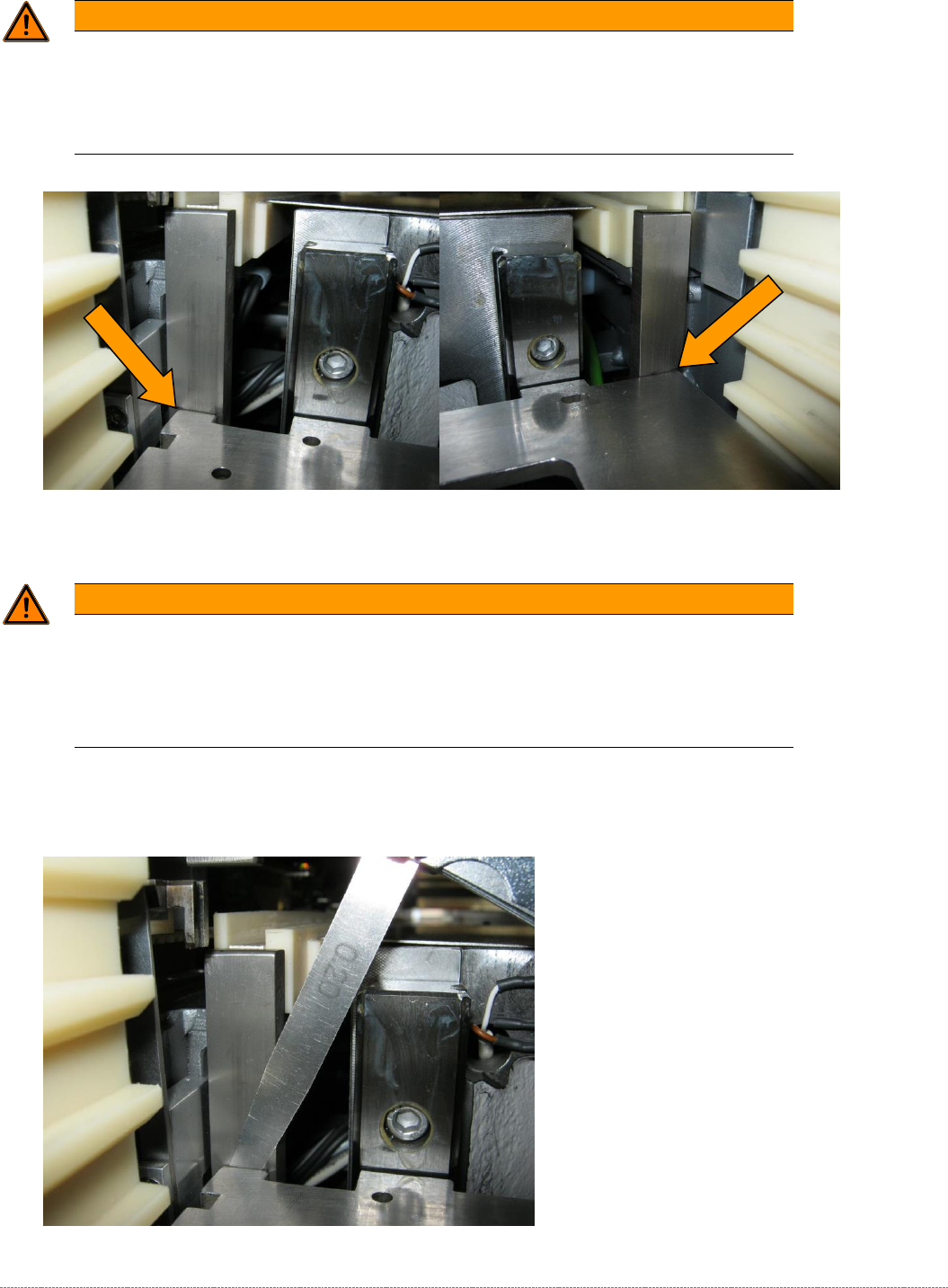
Alignment of the gauge
If you position the gauge to align with the right-hand rail, and then set the gap for both
sides, the gap at the left-hand rail will be incorrect because you will be positioning the
feeler gauge on the chamfer of the guide rail.
Figure 5.10: Abstand Führungsleiste unten, vorne, obere Position überprüfen, 0,2mm.
WARNING
Do not displace the gauge
Although the gauge is clamped in the tower, it is not clamped tightly.
When you are performing this work, in particular when you are inserting the feeler gauge,
make sure that you do not displace the gauge.
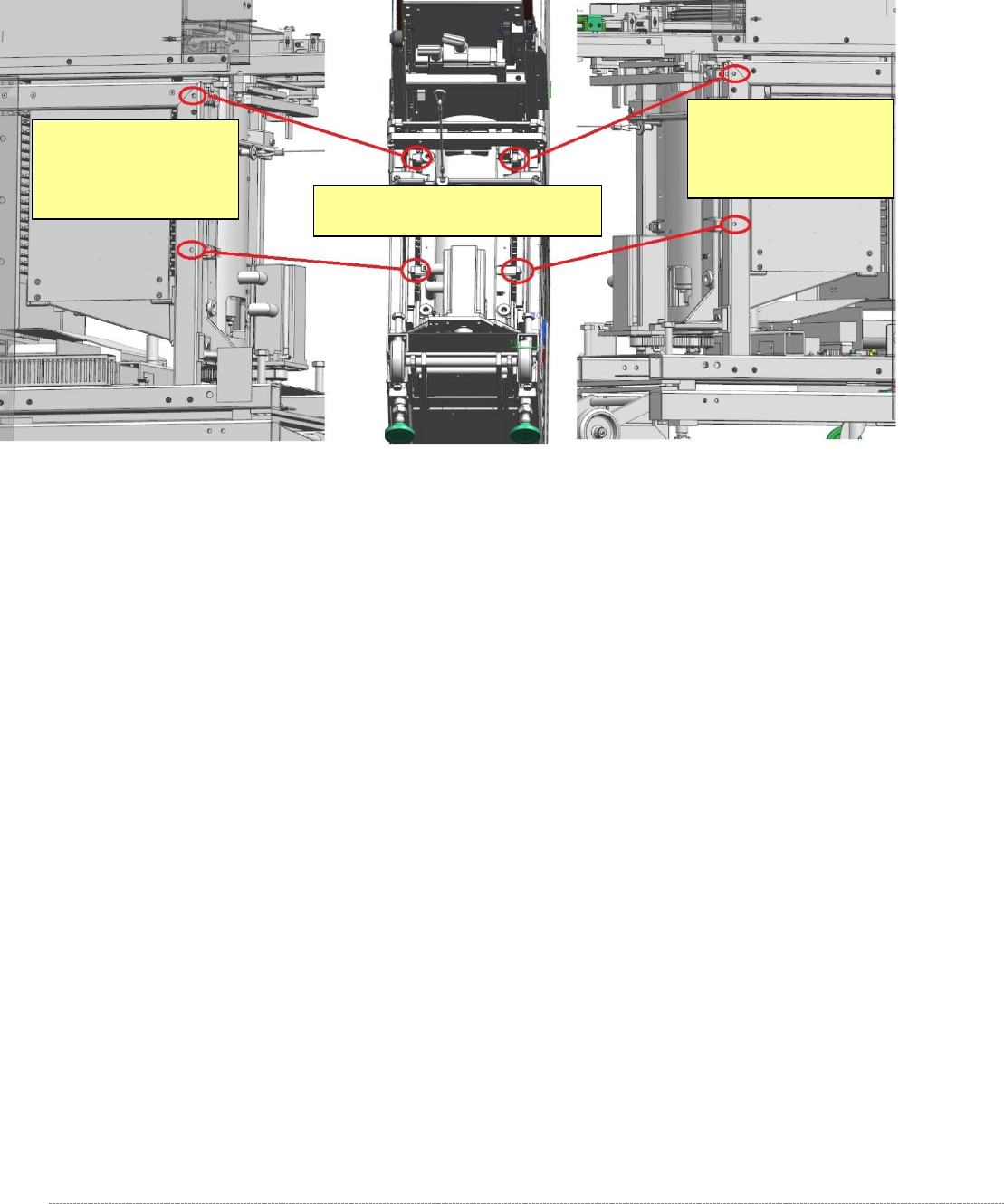
Now use a feeler gauge to set a gap of 0.2 mm between the guide rail and the baseplate of the
gauge.
Figure 5.11: Gap at the front, bottom guide rail, checking the top position.
Service Manual Internal WPC5 / WPC6
Page 5-155
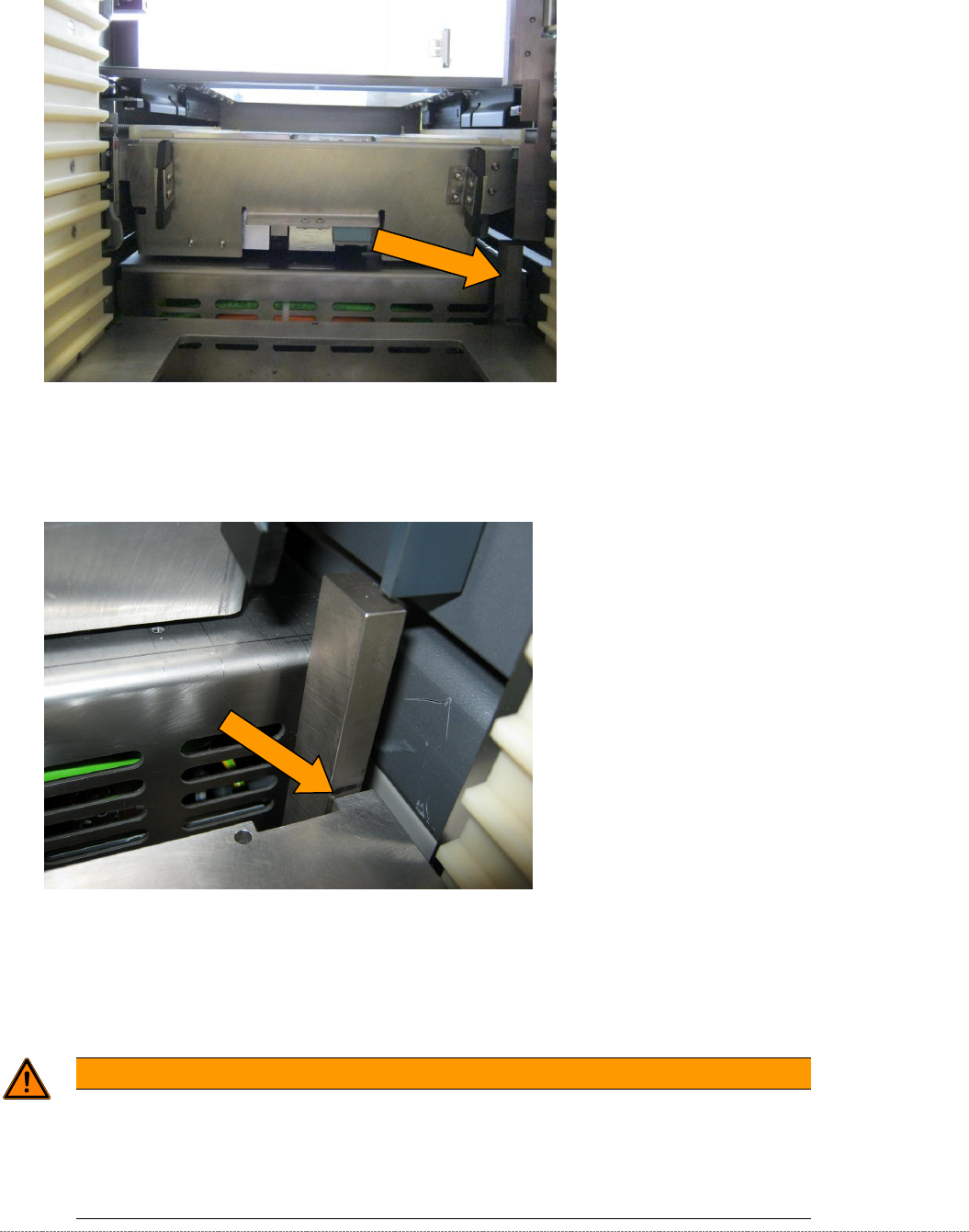
If you need to adjust the positions of the front, bottom guide rails, you must remove the front cover,
which also covers the lifting axis motor, and the side covers.
Figure 5.12: Securing positions of the front, bottom guide rails
Now use a feeler gauge to set a gap of 0.2 mm between the guide rail and the baseplate of the
gauge.
An oval hole allows the guide rails to be
moved forwards and backwards.
The securing screws for the
guide rails can be
accessed through holes in
the frame to allow them to
be released and tightened.
The securing screws for the
guide rails can be
accessed through holes in
the frame to allow them to
be released and tightened.
Service Manual Internal WPC5 / WPC6
Page 5-156
5.5.2 Rear, bottom guide rail, top position (transition to loading axis)
Figure 5.13: Rear, bottom guide rail
Now move the tower further down until it aligns with the mark for the start of the chamfer on the rear
guide rails.
Figure 5.14: Bottom, rear guide rail, setting the top position. 0.2 mm
Again use a feeler gauge to set a gap of 0.2 mm between the guide rail and the baseplate of the
gauge.
WARNING
Do not displace the gauge
Although the gauge is clamped in the tower, it is not clamped tightly.
When you are performing this work, in particular when you are inserting the feeler gauge,
make sure that you do not displace the gauge.