IPC-7095C-2013.pdf - 第84页
The cooling technique to be used in the printed board assembly applications must be known in order to ensure the proper printed board assembly design. For commercial applications, direct-air cooling (i.e., where cooling …
physical evaluations that the process and the recipe used to
make the part stay in the control that is necessary to meet
requirements. This concept is essential for BGAs since one
cannot see the lands or the solder joints once the assembly
has taken place. Test coupons or specimens should reflect
the specific board or panel characteristics. The data derived
from panels should be used to establish the requirements
for vias and lands, conductors, spaces, etc. When speci-
mens are used to establish process control parameters, they
shall consistently use single hole size or land configuration
which reflects the process. Process characteristics and gen-
eral board characteristics should be matched.
IPC-2221 provides excellent coupons that are used to
evaluate those board and assembly characterizations. They
include:
• Hole Solderability
• Solder Resist Tenting
• Thermal Stress Plating
• Thickness and Bond Strength
• Plating Adhesion
• Surface Solderability
• Solder Resist
• Surface Mount Solderability
• Surface Bond Strength
• Surface Insulation Resistance
• Moisture Insulation Resistance
• Registration
• Interconnect Resistance
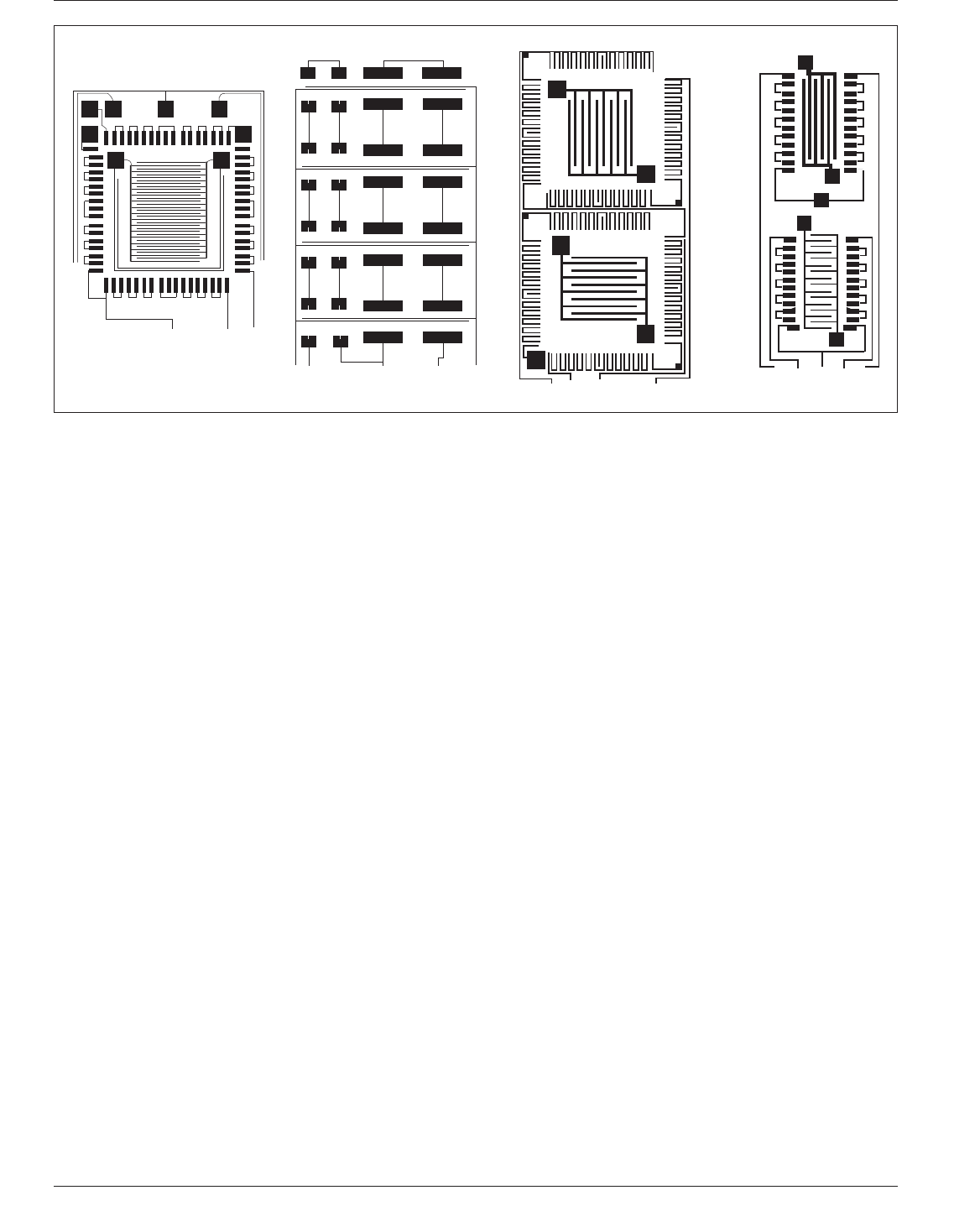
Figure 6-32 shows alternate coupons that can be used to
evaluate the cleanliness of a board after ball attachment has
been completed. These comb patterns are used on the board
in order to make certain that flux or flux residue does not
impair the electrical properties of the product.
6.7 Thermal Management The primary objective of
thermal management is to ensure that all circuit compo-
nents, especially the BGAs, are maintained within both
functional and maximum allowable limits. The functional
temperature limits provide the ambient or component pack-
age (case) temperature range within which the electronic
circuits can be allowed to properly perform.
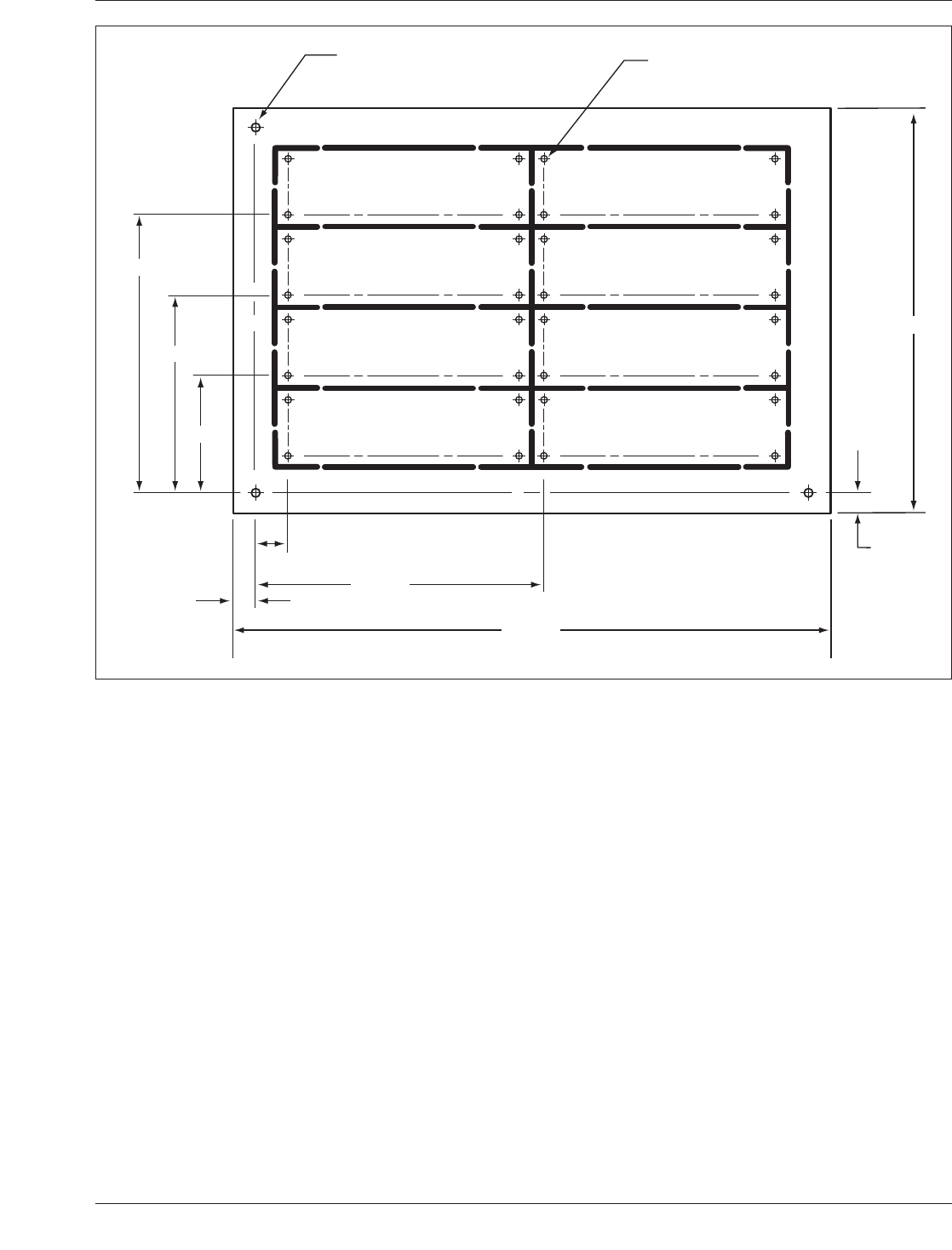
IPC-7095c-6-31
Figure 6-31 Board Panelization
X.XX
X.XX
X.XXX
X.XXX
X.XXX
X.XX
X.XXX
DATUM
DATUM
X.XXX
X.XX
8 BOARD PANELIZATION
PANEL TOOLING HOLE
(3 PLACES)
INDIVIDUAL BOARD TOOLING HOLES
(3 PLACES PER BOARD)
January 2013 IPC-7095C
69
Copyright IPC-Association Connecting Electronics Industries
Provided by IHS under license with IPC
Not for Resale
No reproduction or networking permitted without license from IHS
--`,,```,,,,````-`-`,,`,,`,`,,`---
The cooling technique to be used in the printed board
assembly applications must be known in order to ensure
the proper printed board assembly design. For commercial
applications, direct-air cooling (i.e., where cooling air con-
tacts the printed board assembly), is usually used.
For rugged and hostile usage, other cooling techniques
must be used to cool the printed board assembly. In this
application, the assembly is mounted to the cooling struc-
ture that is air or liquid cooled, and the board components
are cooled by the conduction through a heat exchange sur-
face. These designs must use appropriate metal heatsinks
on the printed board assembly. Appropriate component
mounting and bonding may be required. To ensure
adequate design, thermal dissipation maps must be pro-
vided to aid analysis and thermal design of the printed
board assembly.
The dissipation of heat generated within electronic equip-
ment results from the interaction of the three basic modes
of heat transfer: conduction, radiation, and convection.
These heat transfer modes can, and often do, act simulta-
neously. Thus, any thermal management approach should
attempt to maximize their natural interaction.
6.7.1 Conduction Conduction takes place to a varying
degree through all materials. The conduction of heat
through a material is directly proportional to the thermal
conductivity constant (K) of the material, the cross-
sectional area of the conductive path and the temperature
difference across the material. Conduction is inversely pro-
portional to the length of the path and the thickness of the
material (see Table 6-11).
6.7.2 Radiation Thermal radiation is the transfer of heat
by electromagnetic radiation, primarily in the infrared (IR)
wavelengths. It is the only means of heat transfer between
bodies that are separated by a vacuum, as in space environ-
ments.
Heat transfer by radiation is a function of the surface of the
‘‘hot’’ body with respect to its emissivity, its effective sur-
face area and the differential to the fourth power of the
absolute temperatures involved.
The emissivity is the ratio of energy radiated by a material
to energy radiated by a black body with an emissivity of
one (1.0) at the same temperature The optical color of a
body has little to do with it being a ‘‘thermal black body.’’
The emissivity of anodized aluminum is the same if it is
black, red or blue. However, surface finish is important. A
matte or dull surface will be more radiant than a bright or
glossy surface (see Table 6-12).
Devices, components, etc. close to one another will absorb
each others’ radiant energy. If radiation is to be the prin-
ciple means of heat transfer, ‘‘hot’’ spots must be kept clear
of each other.
6.7.3 Convection The convection heat transfer mode is
the most complex. It involves the movement of molecules
within a fluid, usually air.
The rate of heat flow by convection from a body to a fluid
is a function of the surface area of the body, the tempera-
ture differential, the velocity of the fluid and certain prop-
erties of the fluid.
The contact of any fluid with a hotter surface reduces the
density of the fluid and causes it to rise. The circulation
resulting from this phenomenon is known as ‘‘free’’ or
‘‘natural’’ convection. The air flow can be induced in this
manner or by some external artificial device, such as a fan
IPC-7095c-6-32
Figure 6-32 Comb Pattern Examples
IPC-7095C January 2013
70
Copyright IPC-Association Connecting Electronics Industries
Provided by IHS under license with IPC
Not for Resale
No reproduction or networking permitted without license from IHS
--`,,```,,,,````-`-`,,`,,`,`,,`---

or blower. Heat transfer by forced convection can be as
much as ten times more effective than natural convection.
6.7.4 Thermal Interface Materials Attachment of heat
sinks to BGAs is the most common technique today in
cooling the silicon devices packaged within the BGAs.
These heat sinks require a thermal interface material to be
sandwiched between the heat sink and the BGA in order to
conduct the heat from the top of the package surface and
into the bottom of the heat sink surface.
When selecting a thermal interface material, keep in mind
the surface flatness of the BGA body and the heatsink.
Warpage of the BGA package during reflow and large tol-
erances on the heatsink contact surface can result in large
gaps that are difficult to fill reliably with some interface
materials. This in turn can cause poor thermal conductivity
and/or a weak heatsink attachment bond.
There are various types of thermal interface materials
(TIM). These are described below.
6.7.4.1 Adhesives Metal filled epoxies and silicone
adhesives were commonly used as TIMs initially. They
play a dual part of being a TIM as well as a mechanical
attachment method since when cured they become highly
cross-linked and attain high cohesive strength. Hence,
unlike the other TIMs, supplementary mechanical attach-
ment methods are not necessary when using adhesive. Dis-
advantages of adhesives include a thermal cure step being
necessary after the BGA is soldered on the board and the
potential for severe delamination at the interfaces that the
adhesive bonds to due to coefficient of thermal expansion
mismatches between the heat sink and the package.
Another subclass of adhesives are the Pressure Sensitive
Adhesives (PSAs), which do not require a cure to generate
the interfacial bond, but instead require a certain amount of
pressure, typically in the 20 to 30 psi range. Their use for
BGAs is therefore limited since this pressure, if not prop-
erly controlled, may adversely impact the BGA solder
joints.
6.7.4.2 Greases Thermal greases are metal filled poly-
mers that have the inherent advantage of being a viscous
liquid and conforming to the macroscopic and microscopic
irregularities in the surfaces of the heat sink and the BGA
component. They have excellent thermal performance and,
unlike adhesives, do not require a cure. A major disadvan-
tage of thermal greases is that they tend to migrate out
from between the heat sink and package interfaces over
time. This phenomenon is known as ‘‘pump-out,’’ and is
caused by the thermo-mechanical stresses exerted at the
interfaces during temperature cycling.
6.7.4.3 Phase Change Materials (PCM) Phase change
materials are in a solid state at room temperature but
become liquid at the higher temperatures at which they are
required to conduct heat away from the BGA surface.
Hence, they offer ease of handling and dispensing because
they typically are in a film form and do not need to be
cured. However, their thermal conduction properties are
inferior to greases, adhesives and the other TIM alterna-
tives so they are only suitable for use with low wattage
devices.
Table 6-11 Effects of Material Type on Conduction
Materials
Thermal Conductivity (K)
Watts/inch °C Watts/m °C Gram-calorie/cm °C • s
Still Air 0.0007 0.0276 0.000066
Epoxy 0.005 0.200 0.00047
Thermally Conductive Epoxy 0.02 0.787 0.0019
Aluminum Alloy 1100 5.63 222 0.530
Aluminum Alloy 3003 4.88 192 0.459
Aluminum Alloy 5052 3.52 139 0.331
Aluminum Alloy 6061 4.36 172 0.410
Aluminum Alloy 6063 4.88 192 0.459
Copper 4.93 194 0.464
Steel Low Carbon 1.19 46.9 0.112
Table 6-12 Emissivity Ratings for Certain Materials
Material and Finish Emissivity
Aluminum Sheet - Polished 0.040
Aluminum Sheet - Rough 0.055
Anodized Aluminum - any color 0.80
Brass - Commercial 0.040
Copper - Commercial 0.030
Copper - Machined 0.072
Steel - Rolled Sheet 0.55
Steel - Oxided 0.667
Nickel Plate - Dull Finish 0.11
Silver 0.022
Tin 0.043
Oil Paints - Any Color 0.92-0.96
Lacquer - Any Color 0.80-0.95
January 2013 IPC-7095C
71
Copyright IPC-Association Connecting Electronics Industries
Provided by IHS under license with IPC
Not for Resale
No reproduction or networking permitted without license from IHS
--`,,```,,,,````-`-`,,`,,`,`,,`---