743844-015.pdf - 第153页
10.0 Display Display Technologies Support Technology Standard eDP* 1.4b VESA* Embedded DisplayPort* Standard 1.4b MIPI DSI MIPI* DSI 2 Specification V ersion 1.0 MIPI* DPHY Specification V ersion 2.0 DisplayPort* 2.1 VES…

Hardware Accelerated Transcoding
Transcoding is a combination of decode, video processing (optional) and encode. Using
the above hardware capabilities can accomplish a high-performance transcode
pipeline. There is not a dedicated API for transcoding.
The processor graphics supports the following transcoding features:
• High performance high quality flexible encoder for video editing, video archiving.
• Low-power low latency encoder for video conferencing, wireless display, and game
streaming.
• Lossless memory compression for media engine to reduce media power.
• High-quality Advanced Video Scaler (AVS)
• Low power Scaler and Format Converter.
Platform Graphics Hardware Feature
Hybrid Graphics
Microsoft* Windows* operating system enables the Windows* Hybrid graphics
framework wherein the GPUs and their drivers can be simultaneously utilized to
provide users with the benefits of both performance capability of discrete GPU (dGPU)
and low-power display capability of the processor GPU (iGPU). For instance, when
there is a high-end 3D gaming workload in progress, the dGPU will process and render
the game frames using its graphics performance, while iGPU continues to perform the
display operations by compositing the frames rendered by dGPU. We recommend that
OEMS should seek further guidance from Microsoft* to confirm that the design fits all
the latest criteria defined by Microsoft* to support HG.
Microsoft* Hybrid Graphics definition includes the following:
1. The system contains a single integrated GPU and a single discrete GPU.
2. It is a design assumption that the discrete GPU has a significantly higher
performance than the integrated GPU.
3. Both GPUs shall be physically enclosed as part of the system.
a. Microsoft* Hybrid DOES NOT support hot-plugging of GPUs
b. OEMS should seek further guidance from Microsoft* before designing systems
with the concept of hot-plugging
4. Starting with Windows*10 Th1 (WDDM 2.0), a previous restriction that the
discrete GPU is a render-only device, with no displays connected to it, has been
removed. A render-only configuration with NO outputs is still allowed, just NOT
required.
9.1.1.4
9.1.2
9.1.2.1
R
Intel
®
Core
™
, Xeon
™
6300 And Xeon
™
E 2400 Processors—Graphics
13
th
Generation Intel
®
Core
™
, Intel
®
Core
™
14
th
Generation, Intel
®
Core
™
Processor (Series 1) and (Series 2), Intel
®
Xeon
™
E
2400 Processor and Intel
®
Xeon
™
6300 Processor
Datasheet, Volume 1 of 2 May 2025
152 Doc. No.: 743844, Rev.: 015
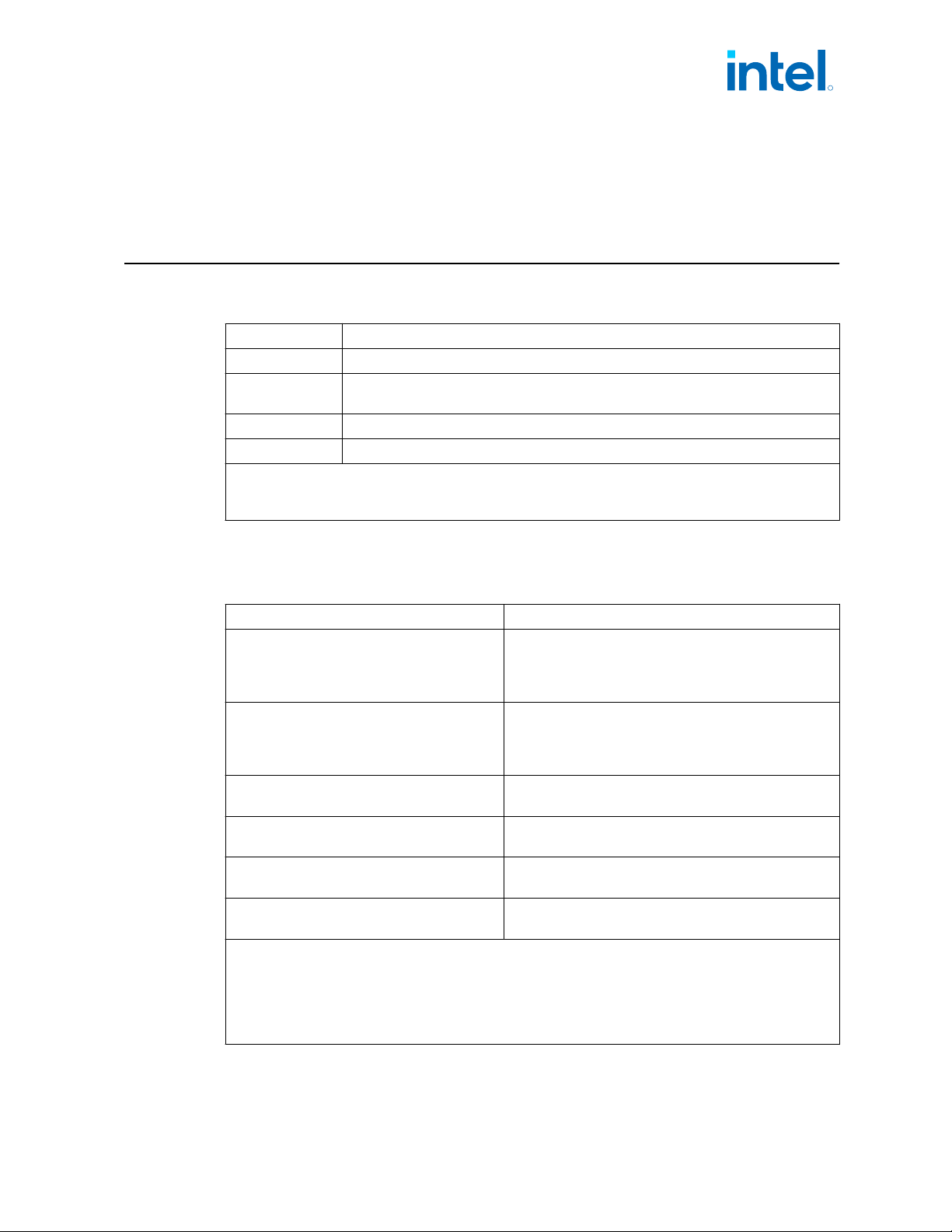
10.0 Display
Display Technologies Support
Technology Standard
eDP* 1.4b VESA* Embedded DisplayPort* Standard 1.4b
MIPI DSI
MIPI* DSI 2 Specification Version 1.0
MIPI* DPHY Specification Version 2.0
DisplayPort* 2.1 VESA* DisplayPort* Standard 2.1
HDMI* 2.1 High-Definition Multimedia Interface Specification Version 2.1
Notes: • Processor support native HDMI* 2.1 TMDS compatible ports.
• Processor support non-native HDMI* 2.1 port by using DP*to HDMI* protocol converter.
• DisplayPort 2.1 is supported over Type-C only.
Display Configuration
Table 58. Display Ports Availability and Link Rate for P, H, U - Processor Lines
Port P, H/H Refresh, U/U Refresh -Processor Lines
4
DDI A
eDP* up to HBR3
MIPI DSI up to 2.5 Gbps
DP* up to HBR3
1
HDMI* up to 5.94 Gbps
DDI B
eDP* up to HBR3
MIPI DSI up to 2.5 Gbps
DP* up to HBR3
1
HDMI* up to 5.94 Gbps
TCP 0
DP* up to UHBR20
HDMI* up to 5.94 Gbps
TCP 1
DP* up to UHBR20
HDMI* up to 5.94 Gbps
TCP 2
DP* up to UHBR20
HDMI* up to 5.94 Gbps
TCP 3
DP* up to UHBR20
HDMI* up to 5.94 Gbps
Notes: 1. On board re-timer is required.
2. HBR3 - 8.1 Gbps lane rate.
3. HBR2 - 5.4 Gbps lane rate.
4. UHBR20 - 20 Gbps lane rate.
5. Dual Embedded panels supported on P product lines using Port A and B.
6. For non Type-C ports DisplayPort maximum supported link rate is HBR3.
10.1
10.2
R
Display—Intel
®
Core
™
, Xeon
™
6300 And Xeon
™
E 2400 Processors
13
th
Generation Intel
®
Core
™
, Intel
®
Core
™
14
th
Generation, Intel
®
Core
™
Processor (Series 1) and (Series 2), Intel
®
Xeon
™
E
2400 Processor and Intel
®
Xeon
™
6300 Processor
May 2025 Datasheet, Volume 1 of 2
Doc. No.: 743844, Rev.: 015 153
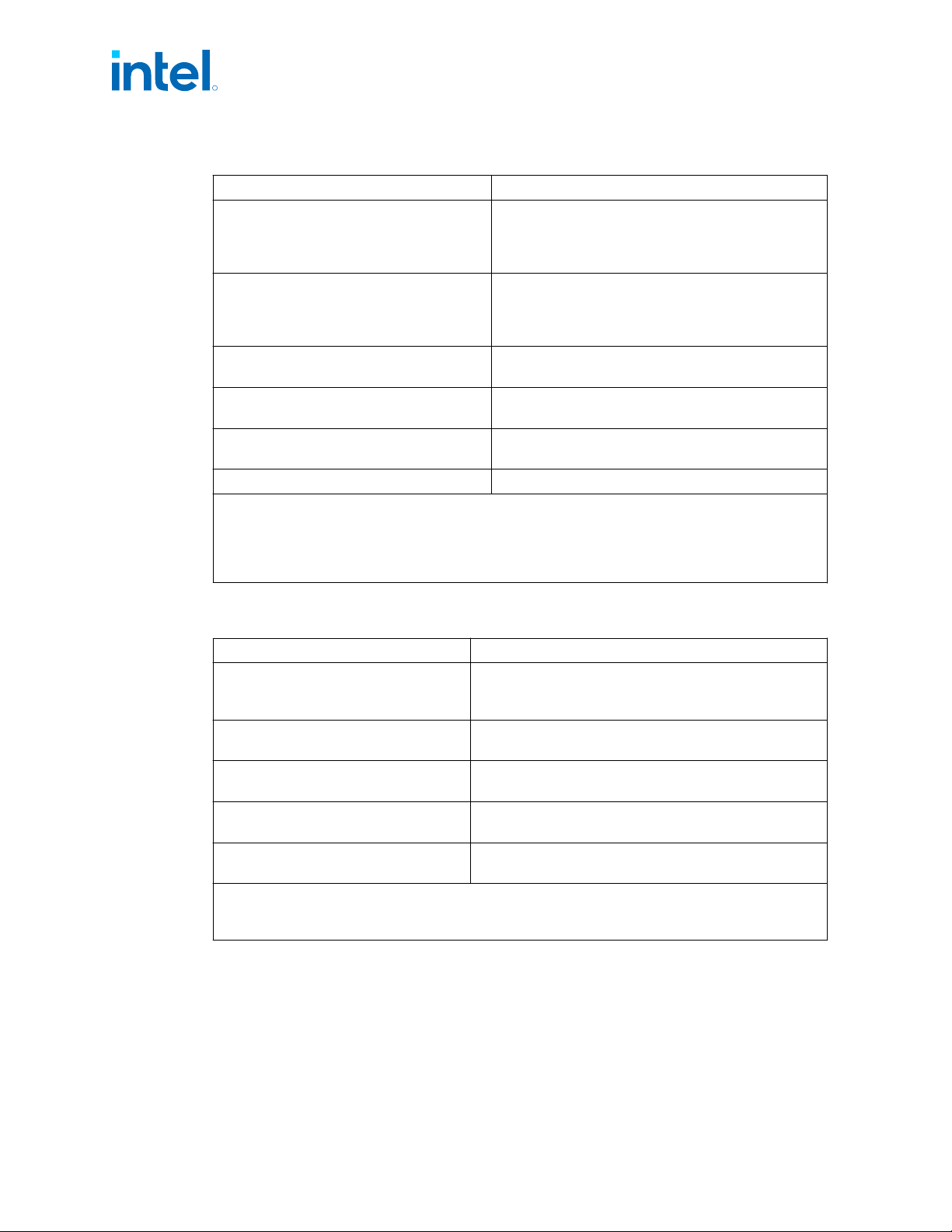
Table 59. Display Ports Availability and Link Rate for PX - Processor Lines
Port PX-Processor Line
4
DDI A
eDP* up to HBR3
MIPI DSI up to 2.5 Gbps
DP* up to HBR3
1
HDMI* up to 5.94 Gbps
DDI B
eDP* up to HBR3
MIPI DSI up to 2.5 Gbps
DP* up to HBR3
1
HDMI* up to 5.94 Gbps
TCP 0
DP* up to UHBR20
HDMI* up to 5.94 Gbps
TCP 1
DP* up to UHBR20
HDMI* up to 5.94 Gbps
TCP 2
DP* up to UHBR20
HDMI* up to 5.94 Gbps
TCP 3 N/A
Notes: 1. On board re-timer is required.
2. HBR3 - 8.1 Gbps lane rate.
3. HBR2 - 5.4 Gbps lane rate.
4. UHBR20 - 20 Gbps lane rate.
5. For non Type-C ports DisplayPort maximum supported link rate is HBR3.
Table 60. Display Ports Availability and Link Rate for S/S Refresh, HX/HX Refresh -
Processor Lines
Port S/S Refresh, HX - Processor Lines
DDI A
eDP* up to HBR3
DP* up to HBR3
1
HDMI* up to 5.94 Gbps
DDI B
DP* up to HBR3
1
HDMI* up to 5.94 Gbps
DDI C
DP* up to HBR3
1
HDMI* up to 5.94 Gbps
DDI D
DP* up to HBR3
1
HDMI* up to 5.94 Gbps
DDI E
DP* up to HBR3
1
HDMI* up to 5.94 Gbps
Notes: 1. On board re-timer is required.
2. HBR3 - 8.1 Gbps lane rate.
3. HBR2 - 5.4 Gbps lane rate.
R
Intel
®
Core
™
, Xeon
™
6300 And Xeon
™
E 2400 Processors—Display
13
th
Generation Intel
®
Core
™
, Intel
®
Core
™
14
th
Generation, Intel
®
Core
™
Processor (Series 1) and (Series 2), Intel
®
Xeon
™
E
2400 Processor and Intel
®
Xeon
™
6300 Processor
Datasheet, Volume 1 of 2 May 2025
154 Doc. No.: 743844, Rev.: 015