743844-015.pdf - 第35页
— This avoids flushes on VM tr ansitions to give a lower-cost VM tr ansition time and an over all reduction in virtualization overhead. • Guest Preemption Timer — The mechanism for a VMM to preempt the execution of a gue…

2. If the translation of the linear address specifies supervisor mode (the
U/ S bit was clear in at least one of the paging-structure entries used
to translate the linear address), the resulting guest-physical address is
executable under EPT only if the XS bit is set in every EPT paging-
structure entry used to translate the guest-physical address.
• The XU and XS bits are used only when translating linear addresses for
guest code fetches. They do not apply to guest page walks, data accesses,
or A/D-bit updates.
• VMEntry - If the "activate secondary controls" and "Mode-based execute control
for EPT" VM-execution controls are both 1, VM entries ensure that the "enable
EPT" VM-execution control is 1. VM entry fails if this check fails. When such a
failure occurs, control is passed to the next instruction.
• VMExit - The exit qualification due to EPT violation reports clearly whether the
violation was due to User mode access or supervisor mode access.
— Capability Querying: IA32_VMX_PROCBASED_CTLS2 has bit to indicate the
capability, RDMSR can be used to read and query whether the processor
supports the capability or not.
• Extended Page Table (EPT) Accessed and Dirty Bits
— EPT A/D bits enabled VMMs to efficiently implement memory management and
page classification algorithms to optimize VM memory operations, such as de-
fragmentation, paging, live migration, and check-pointing. Without hardware
support for EPT A/D bits, VMMs may need to emulate A/D bits by marking EPT
paging-structures as not-present or read-only, and incur the overhead of EPT
page-fault VM exits and associated software processing.
• EPTP (EPT pointer) switching
— EPTP switching is a specific VM function. EPTP switching allows guest software
(in VMX non-root operation, supported by EPT) to request a different EPT
paging-structure hierarchy. This is a feature by which software in VMX non-
root operation can request a change of EPTP without a VM exit. The software
will be able to choose among a set of potential EPTP values determined in
advance by software in VMX root operation.
• Pause loop exiting
— Support VMM schedulers seeking to determine when a virtual processor of a
multiprocessor virtual machine is not performing useful work. This situation
may occur when not all virtual processors of the virtual machine are currently
scheduled and when the virtual processor in question is in a loop involving the
PAUSE instruction. The new feature allows detection of such loops and is thus
called PAUSE-loop exiting.
The processor IA core supports the following Intel
®
VT-x features:
• Extended Page Tables (EPT)
— EPT is hardware assisted page table virtualization
— It eliminates VM exits from guest OS to the VMM for shadow page-table
maintenance
• Virtual Processor IDs (VPID)
— Ability to assign a VM ID to tag processor IA core hardware structures (such
as TLBs)
R
Intel
®
Core
™
, Xeon
™
6300 And Xeon
™
E 2400 Processors—Technologies
13
th
Generation Intel
®
Core
™
, Intel
®
Core
™
14
th
Generation, Intel
®
Core
™
Processor (Series 1) and (Series 2), Intel
®
Xeon
™
E
2400 Processor and Intel
®
Xeon
™
6300 Processor
Datasheet, Volume 1 of 2 May 2025
34 Doc. No.: 743844, Rev.: 015

— This avoids flushes on VM transitions to give a lower-cost VM transition time
and an overall reduction in virtualization overhead.
• Guest Preemption Timer
— The mechanism for a VMM to preempt the execution of a guest OS after an
amount of time specified by the VMM. The VMM sets a timer value before
entering a guest
— The feature aids VMM developers in flexibility and Quality of Service (QoS)
guarantees
• Descriptor-Table Exiting
— Descriptor-table exiting allows a VMM to protect a guest OS from internal
(malicious software based) attack by preventing the relocation of key system
data structures like IDT (interrupt descriptor table), GDT (global descriptor
table), LDT (local descriptor table), and TSS (task segment selector).
— A VMM using this feature can intercept (by a VM exit) attempts to relocate
these data structures and prevent them from being tampered by malicious
software.
Intel
®
Virtualization Technology for Directed I/O
Intel
®
VT-d Objectives
The key Intel
®
Virtualization Technology (Intel
®
VT) for Directed I/O (Intel
®
VT-d)
objectives are domain-based isolation and hardware-based virtualization. A domain
can be abstractly defined as an isolated environment in a platform to which a subset
of host physical memory is allocated. Intel
®
VT-d provides accelerated I/O
performance for a Virtualization platform and provides software with the following
capabilities:
• I/O Device Assignment and Security: for flexibly assigning I/O devices to VMs
and extending the protection and isolation properties of VMs for I/O operations.
• DMA Remapping: for supporting independent address translations for Direct
Memory Accesses (DMA) from devices.
• Interrupt Remapping: for supporting isolation and routing of interrupts from
devices and external interrupt controllers to appropriate VMs.
• Reliability: for recording and reporting to system software DMA and interrupt
errors that may otherwise corrupt memory or impact VM isolation.
Intel
®
VT-d accomplishes address translation by associating transaction from a given
I/O device to a translation table associated with the Guest to which the device is
assigned. It does this by means of the data structure in the following illustration. This
table creates an association between the device's PCI Express* Bus/Device/Function
(B/D/F) number and the base address of a translation table. This data structure is
populated by a VMM to map devices to translation tables in accordance with the device
assignment restrictions above and to include a multi-level translation table (VT-d
Table) that contains Guest specific address translations.
2.2.2
R
Technologies—Intel
®
Core
™
, Xeon
™
6300 And Xeon
™
E 2400 Processors
13
th
Generation Intel
®
Core
™
, Intel
®
Core
™
14
th
Generation, Intel
®
Core
™
Processor (Series 1) and (Series 2), Intel
®
Xeon
™
E
2400 Processor and Intel
®
Xeon
™
6300 Processor
May 2025 Datasheet, Volume 1 of 2
Doc. No.: 743844, Rev.: 015 35
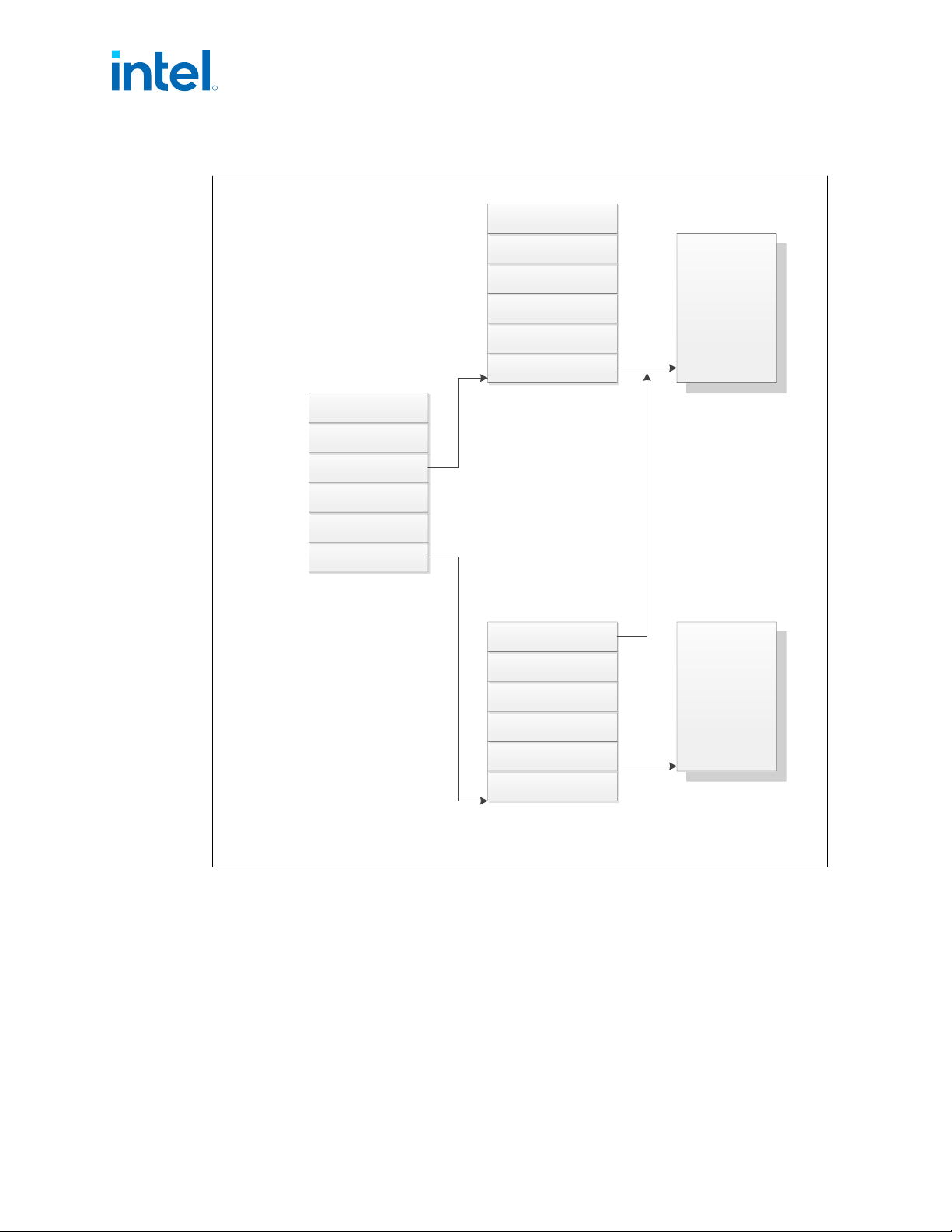
Figure 10. Device to Domain Mapping Structures
Root entry 0
Root entry N
Root entry 255
Context entry 0
Context entry 255
Context entry 0
Context entry 255
(Bus 255)
(Bus N)
(Bus 0)
Root entry table
(Dev 31, Func 7)
(Dev 0, Func 1)
(Dev 0, Func 0)
Context entry Table
For bus N
Context entry Table
For bus 0
Address Translation
Structures for Domain A
Address Translation
Structures for Domain B
Intel
®
VT-d functionality often referred to as an Intel
®
VT-d Engine, has typically been
implemented at or near a PCI Express* host bridge component of a computer system.
This might be in a chipset component or in the PCI Express functionality of a processor
with integrated I/O. When one such VT-d engine receives a PCI Express transaction
from a PCI Express bus, it uses the B/D/F number associated with the transaction to
search for an Intel
®
VT-d translation table. In doing so, it uses the B/D/F number to
traverse the data structure shown in the above figure. If it finds a valid Intel
®
VT-d
table in this data structure, it uses that table to translate the address provided on the
PCI Express bus. If it does not find a valid translation table for a given translation, this
results in an Intel
®
VT-d fault. If Intel
®
VT-d translation is required, the Intel
®
VT-d
engine performs an N-level table walk.
R
Intel
®
Core
™
, Xeon
™
6300 And Xeon
™
E 2400 Processors—Technologies
13
th
Generation Intel
®
Core
™
, Intel
®
Core
™
14
th
Generation, Intel
®
Core
™
Processor (Series 1) and (Series 2), Intel
®
Xeon
™
E
2400 Processor and Intel
®
Xeon
™
6300 Processor
Datasheet, Volume 1 of 2 May 2025
36 Doc. No.: 743844, Rev.: 015