743844-015.pdf - 第158页
DisplayPort* The DisplayP ort* is a digital communication interface that uses differential signaling to achieve a high-bandwidth bus interface designed to support connections between PCs and monitors, projectors, and TV …

Display Features
General Capabilities
• Up to four simultaneous displays.
— Single 8K60Hz panel, supported by joining two pipes over single port.
— Up to 4x4K60Hz display concurrent.
• Display interfaces supported:
— DDI interfaces supports DP*, HDMI*, eDP*, DSI*
— TCP interfaces supports DP*, HDMI*, Display Alt Mode over Type-C and
Display tunneled.
— Up to two wireless display captures.
• Audio stream support on external ports.
• HDR (High Dynamic Range) support.
• Four Display Pipes - Supporting blending, color adjustments, scaling and dithering.
• Transcoders - Containing the Timing generators supporting eDP*, DP*, HDMI*
interfaces.
• Up to two Low Power optimized pipes supporting Embedded DisplayPort* and/or
MIPI* DSI.
— LACE (Localized Adaptive Contrast Enhancement), supported up to 5 K
resolutions.
— 3D LUT - power efficient pixel modification function for color processing.
— FBC (Frame Buffer Compression) - power saving feature.
Multiple Display Configurations
The following multiple display configuration modes are supported (with appropriate
driver software):
• Single Display is a mode with one display port activated to display the output to
one display device.
• Display Clone is a mode with up to four display ports activated to drive the display
content of same color depth setting but potentially different refresh rate and
resolution settings to all the active display devices connected.
• Extended Desktop is a mode with up to four display ports activated to drive the
content with potentially different color depth, refresh rate, and resolution settings
on each of the active display devices connected.
High-bandwidth Digital Content Protection (HDCP)
HDCP is the technology for protecting high-definition content against unauthorized
copy or unreceptive between a source (computer, digital set top boxes, and so on) and
the sink (panels, monitor, and TVs). The processor supports both HDCP 2.3 and 1.4
content protection over wired displays (HDMI* and DisplayPort*).
The HDCP 1.4, 2.3 keys are integrated into the processor.
10.3
10.3.1
10.3.2
10.3.3
R
Display—Intel
®
Core
™
, Xeon
™
6300 And Xeon
™
E 2400 Processors
13
th
Generation Intel
®
Core
™
, Intel
®
Core
™
14
th
Generation, Intel
®
Core
™
Processor (Series 1) and (Series 2), Intel
®
Xeon
™
E
2400 Processor and Intel
®
Xeon
™
6300 Processor
May 2025 Datasheet, Volume 1 of 2
Doc. No.: 743844, Rev.: 015 157
DisplayPort*
The DisplayPort* is a digital communication interface that uses differential signaling to
achieve a high-bandwidth bus interface designed to support connections between PCs
and monitors, projectors, and TV displays.
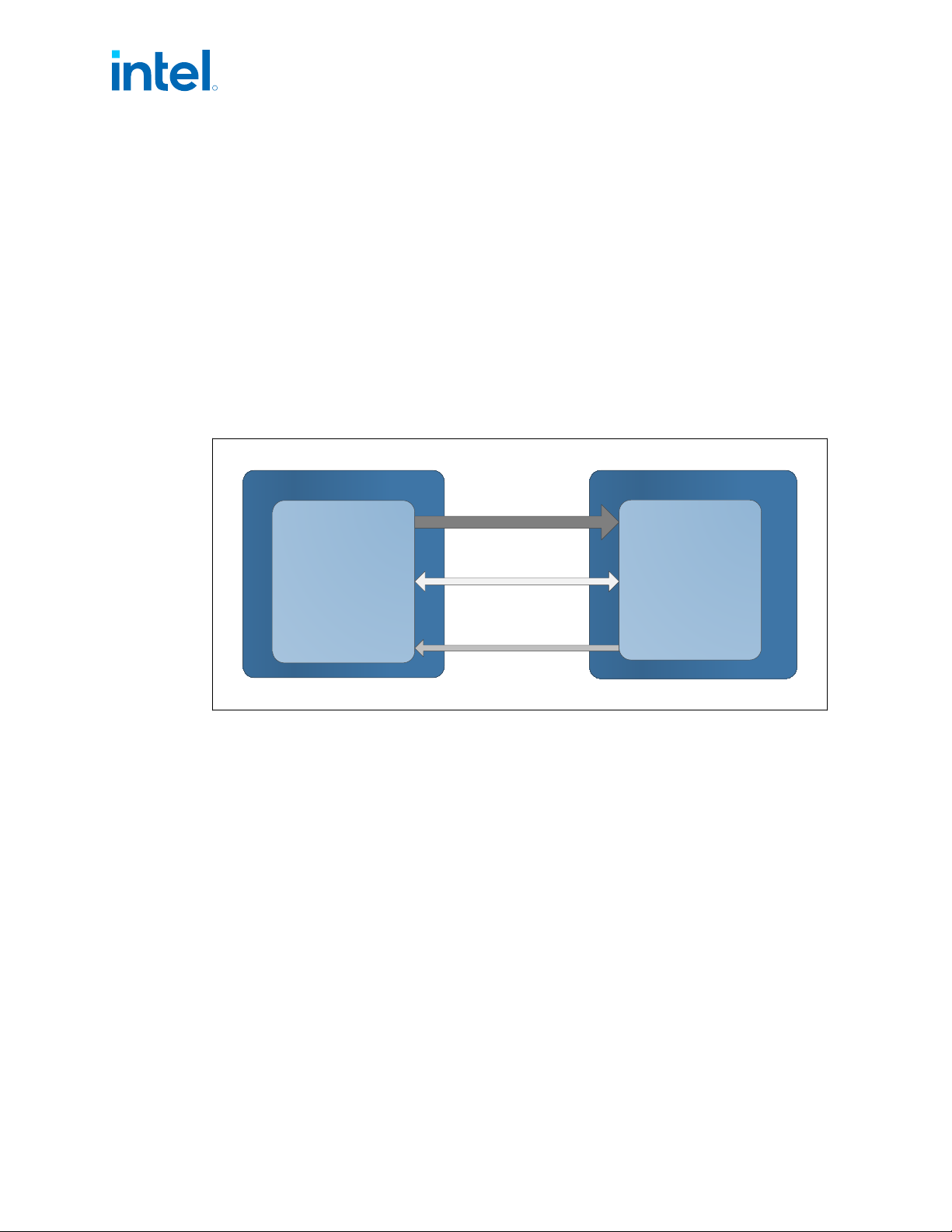
A DisplayPort* consists of a Main Link (four lanes), Auxiliary channel, and a Hot-Plug
Detect signal. The Main Link is a unidirectional, high-bandwidth, and low-latency
channel used for transport of isochronous data streams such as uncompressed video
and audio. The Auxiliary Channel (AUX CH) is a half-duplex bi-directional channel used
for link management and device control. The Hot-Plug Detect (HPD) signal serves as
an interrupt request from the sink device to the source device.
The processor is designed in accordance with VESA* DisplayPort* specification. Refer
to Display Technologies Support on page 153.
Figure 24. DisplayPort* Overview
Source Device Sink Device
Main Link
(Isochronous Streams)
AUX CH
(Link/Device Managemet)
Hot-Plug Detect
(Interrupt Request)
DisplayPort Tx
(Processor)
DisplayPort Rx
• Support main link of 1, 2, or 4 data lanes.
• Link rate support up to UHBR20 (UHBR13.5 is not supported).
• Aux channel for Link/Device management.
• Hot Plug Detect.
• Support up to 36 BPP (Bit Per Pixel).
• Support SSC.
• Support YCbCR 4:4:4, YCbCR 4:2:0, YCbCR 4:2:2, and RGB color format.
• Support MST (Multi-Stream Transport).
• Support VESA DSC 1.1.
• Adaptive Sync.
Multi-Stream Transport (MST)
• The processor supports Multi-Stream Transport (MST), enabling multiple monitors
to be used via a single DisplayPort connector.
• Maximum MST DP supported resolution:
10.3.4
10.3.4.1
R
Intel
®
Core
™
, Xeon
™
6300 And Xeon
™
E 2400 Processors—Display
13
th
Generation Intel
®
Core
™
, Intel
®
Core
™
14
th
Generation, Intel
®
Core
™
Processor (Series 1) and (Series 2), Intel
®
Xeon
™
E
2400 Processor and Intel
®
Xeon
™
6300 Processor
Datasheet, Volume 1 of 2 May 2025
158 Doc. No.: 743844, Rev.: 015
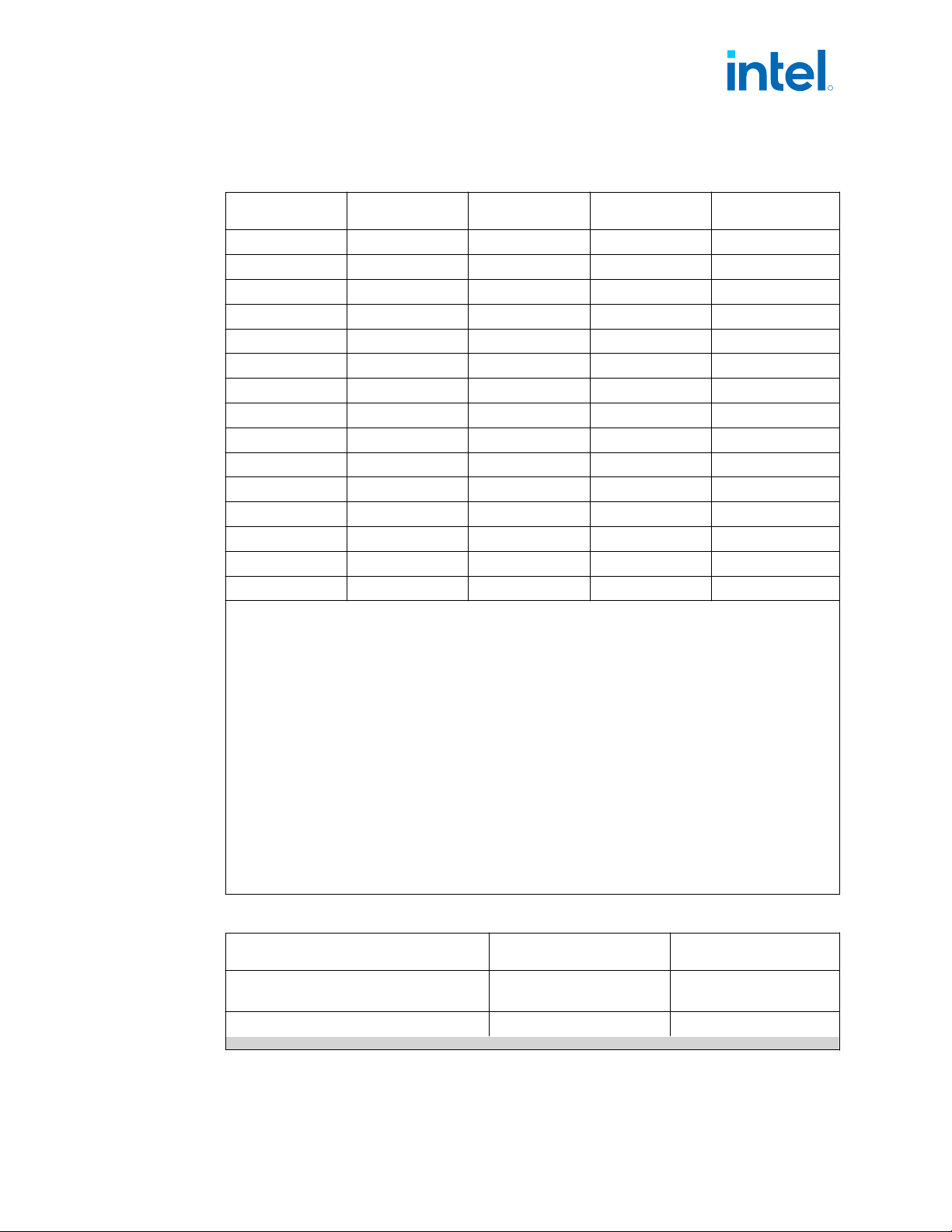
Table 61. Display Resolutions and Link Bandwidth for Multi-Stream Transport
Calculations
Pixels per Line Lines
Refresh Rate
[Hz]
Pixel Clock [MHz]
Link Bandwidth
[Gbps]
1920 1080 60 148.5 4.46
1920 1200 60 154 4.62
2048 1152 60 156.75 4.70
2048 1280 60 174.25 5.23
2048 1536 60 209.25 6.28
2304 1440 60 218.75 6.56
2560 1440 60 241.5 7.25
3840 2160 30 262.75 7.88
2560 1600 60 268.5 8.06
2880 1800 60 337.5 10.13
3200 2400 60 497.75 14.93
3840 2160 60 533.25 16.00
4096 2160 60 556.75 16.70
4096 2304 60 605 18.15
5120 3200 60 1042.5 31.28
Notes: 1. All the above is related to bit depth of 24.
2. The data rate for a given video mode can be calculated as- Data Rate = Pixel Frequency * Bit
Depth.
3. The bandwidth requirements for a given video mode can be calculated as: Bandwidth = Data
Rate * 1.25 (for 8b/10b coding overhead).
4. The link bandwidth depends if the standards is reduced blanking or not.
If the standard is not reduced blanking - the expected bandwidth may be higher.
For more details, refer to VESA and Industry Standards and Guidelines for Computer Display
Monitor Timing (DMT). Version 1.0, Rev. 13 February 8, 2013
5. To calculate what are the resolutions that can be supported in MST configurations, follow the
below guidelines:
a. Identify what is the link bandwidth column according to the requested display resolution.
b. Summarize the bandwidth for two of three displays accordingly, and make sure the final
result is below 21.6 Gbps. (for example: 4 lanes HBR2 bit rate)
For example:
a. Docking two displays: 3840x2160@60 Hz + 1920x1200@60hz = 16 + 4.62 = 20.62 Gbps
[Supported]
b. Docking three displays: 3840x2160@30 Hz + 3840x2160@30 Hz + 1920x1080@60 Hz =
7.88 + 7.88 + 4.16 = 19.92 Gbps [Supported].
Table 62. DisplayPort Maximum Resolution
Standard PX, H-Processor Line
U/U Refresh , P -
Processor Line
DP* 4096x2304 60Hz 36bpp
5120x3200 60Hz 24bpp
4096x2304 60Hz 36bpp
5120x3200 60Hz 24bpp
DP* with DSC
4
5120x3200 120Hz 30bpp 5120x3200 120Hz 30bpp
continued...
R
Display—Intel
®
Core
™
, Xeon
™
6300 And Xeon
™
E 2400 Processors
13
th
Generation Intel
®
Core
™
, Intel
®
Core
™
14
th
Generation, Intel
®
Core
™
Processor (Series 1) and (Series 2), Intel
®
Xeon
™
E
2400 Processor and Intel
®
Xeon
™
6300 Processor
May 2025 Datasheet, Volume 1 of 2
Doc. No.: 743844, Rev.: 015 159