743844-015.pdf - 第33页
Intel ® VT for Intel ® 64 and Intel ® Architecture Objectives Intel ® Virtualization T echnology for Intel ® 64 and Intel ® Architecture (Intel ® VT -x) provides hardware acceler ation for virtualization of IA platforms.…
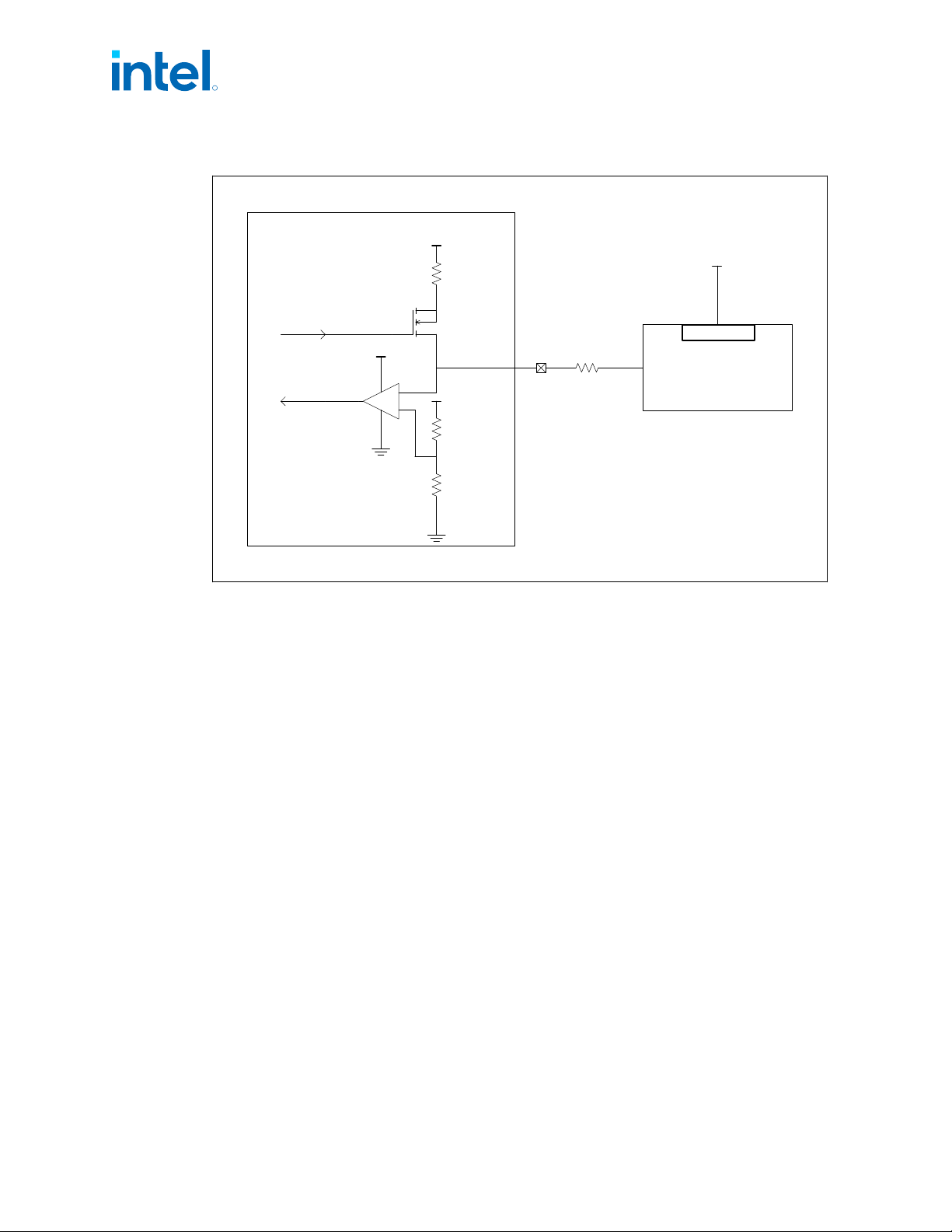
Figure 9. Example for PECI EC Connection
VCCST
VCCST
VCCST
R
In
Out
Processor
PECI
43 Ohm
Embedded
Controller
VCCST
VREF_CPU
Intel
®
Virtualization Technology
Intel
®
Virtualization Technology (Intel
®
VT) makes a single system appear as multiple
independent systems to software. This allows multiple, independent operating systems
to run simultaneously on a single system. Intel
®
VT comprises technology components
to support Virtualization of platforms based on Intel
®
architecture microprocessors
and chipsets.
Intel
®
Virtualization Technology (Intel
®
VT) Intel
®
64 and Intel
®
Architecture (Intel
®
VT-x) added hardware support in the processor to improve the Virtualization
performance and robustness. Intel
®
Virtualization Technology for Directed I/O (Intel
®
VT-d) extends Intel
®
VT-x by adding hardware assisted support to improve I/O device
Virtualization performance.
Intel
®
VT-x specifications and functional descriptions are included in the Intel
®
64
Architectures Software Developer’s Manual, Volume 3. Available at:
http://www.intel.com/products/processor/manuals
The Intel
®
VT-d specification and other VT documents can be referenced at:
http://www.intel.com/content/www/us/en/virtualization/virtualization-technology/.
2.2
R
Intel
®
Core
™
, Xeon
™
6300 And Xeon
™
E 2400 Processors—Technologies
13
th
Generation Intel
®
Core
™
, Intel
®
Core
™
14
th
Generation, Intel
®
Core
™
Processor (Series 1) and (Series 2), Intel
®
Xeon
™
E
2400 Processor and Intel
®
Xeon
™
6300 Processor
Datasheet, Volume 1 of 2 May 2025
32 Doc. No.: 743844, Rev.: 015

Intel
®
VT for Intel
®
64 and Intel
®
Architecture
Objectives
Intel
®
Virtualization Technology for Intel
®
64 and Intel
®
Architecture (Intel
®
VT-x)
provides hardware acceleration for virtualization of IA platforms. Virtual Machine
Monitor (VMM) can use Intel
®
VT-x features to provide an improved reliable
Virtualization platform. By using Intel
®
VT-x, a VMM is:
• Robust: VMMs no longer need to use para-virtualization or binary translation. This
means that VMMs will be able to run off-the-shelf operating systems and
applications without any special steps.
• Enhanced: Intel
®
VT enables VMMs to run 64-bit guest operating systems on IA
x86 processors.
• More Reliable: Due to the hardware support, VMMs can now be smaller, less
complex, and more efficient. This improves reliability and availability and reduces
the potential for software conflicts.
• More Secure: The use of hardware transitions in the VMM strengthens the
isolation of VMs and further prevents corruption of one VM from affecting others
on the same system.
Key Features
The processor supports the following added new Intel
®
VT-x features:
• Mode-based Execute Control for EPT (MBEC) - A mode of EPT operation which
enables different controls for executability of Guest Physical Address (GPA) based
on Guest specified mode (User/ Supervisor) of linear address translating to the
GPA. When the mode is enabled, the executability of a GPA is defined by two bits
in EPT entry. One bit for accesses to user pages and other one for accesses to
supervisor pages.
— This mode requires changes in VMCS and EPT entries. VMCS includes a bit
"Mode-based execute control for EPT" which is used to enable/disable the
mode. An additional bit in EPT entry is defined as "execute access for user-
mode linear addresses"; the original EPT execute access bit is considered as
"execute access for supervisor-mode linear addresses". If the "mode-based
execute control for EPT" VM-execution control is disabled the additional bit is
ignored and the system work with one bit i.e. the original bit, for execute
control for both user and supervisor pages.
— Behavioral changes - Behavioral changes are across three areas:
• Access to GPA - If the "Mode-based execute control for EPT"
VMexecution control is 1, treatment of guest-physical accesses by
instruction fetches depends on the linear address from which an
instruction is being fetched.
1. If the translation of the linear address specifies user mode (the U/S bit
was set in every paging structure entry used to translate the linear
address), the resulting guest-physical address is executable under EPT
only if the XU bit (at position 10) is set in every EPT paging-structure
entry used to translate the guest-physical address.
2.2.1
R
Technologies—Intel
®
Core
™
, Xeon
™
6300 And Xeon
™
E 2400 Processors
13
th
Generation Intel
®
Core
™
, Intel
®
Core
™
14
th
Generation, Intel
®
Core
™
Processor (Series 1) and (Series 2), Intel
®
Xeon
™
E
2400 Processor and Intel
®
Xeon
™
6300 Processor
May 2025 Datasheet, Volume 1 of 2
Doc. No.: 743844, Rev.: 015 33

2. If the translation of the linear address specifies supervisor mode (the
U/ S bit was clear in at least one of the paging-structure entries used
to translate the linear address), the resulting guest-physical address is
executable under EPT only if the XS bit is set in every EPT paging-
structure entry used to translate the guest-physical address.
• The XU and XS bits are used only when translating linear addresses for
guest code fetches. They do not apply to guest page walks, data accesses,
or A/D-bit updates.
• VMEntry - If the "activate secondary controls" and "Mode-based execute control
for EPT" VM-execution controls are both 1, VM entries ensure that the "enable
EPT" VM-execution control is 1. VM entry fails if this check fails. When such a
failure occurs, control is passed to the next instruction.
• VMExit - The exit qualification due to EPT violation reports clearly whether the
violation was due to User mode access or supervisor mode access.
— Capability Querying: IA32_VMX_PROCBASED_CTLS2 has bit to indicate the
capability, RDMSR can be used to read and query whether the processor
supports the capability or not.
• Extended Page Table (EPT) Accessed and Dirty Bits
— EPT A/D bits enabled VMMs to efficiently implement memory management and
page classification algorithms to optimize VM memory operations, such as de-
fragmentation, paging, live migration, and check-pointing. Without hardware
support for EPT A/D bits, VMMs may need to emulate A/D bits by marking EPT
paging-structures as not-present or read-only, and incur the overhead of EPT
page-fault VM exits and associated software processing.
• EPTP (EPT pointer) switching
— EPTP switching is a specific VM function. EPTP switching allows guest software
(in VMX non-root operation, supported by EPT) to request a different EPT
paging-structure hierarchy. This is a feature by which software in VMX non-
root operation can request a change of EPTP without a VM exit. The software
will be able to choose among a set of potential EPTP values determined in
advance by software in VMX root operation.
• Pause loop exiting
— Support VMM schedulers seeking to determine when a virtual processor of a
multiprocessor virtual machine is not performing useful work. This situation
may occur when not all virtual processors of the virtual machine are currently
scheduled and when the virtual processor in question is in a loop involving the
PAUSE instruction. The new feature allows detection of such loops and is thus
called PAUSE-loop exiting.
The processor IA core supports the following Intel
®
VT-x features:
• Extended Page Tables (EPT)
— EPT is hardware assisted page table virtualization
— It eliminates VM exits from guest OS to the VMM for shadow page-table
maintenance
• Virtual Processor IDs (VPID)
— Ability to assign a VM ID to tag processor IA core hardware structures (such
as TLBs)
R
Intel
®
Core
™
, Xeon
™
6300 And Xeon
™
E 2400 Processors—Technologies
13
th
Generation Intel
®
Core
™
, Intel
®
Core
™
14
th
Generation, Intel
®
Core
™
Processor (Series 1) and (Series 2), Intel
®
Xeon
™
E
2400 Processor and Intel
®
Xeon
™
6300 Processor
Datasheet, Volume 1 of 2 May 2025
34 Doc. No.: 743844, Rev.: 015