743844-015.pdf - 第66页
While individual threads can request low-power C -states, power saving actions only take place once the processor IA core C -state is resolved. processor IA core C -states are automatically resolved by the processor . Fo…
OS/HW Controlled P-states
Enhanced Intel SpeedStep
®
Technology
Enhanced Intel SpeedStep
®
Technology enables OS to control and select P-state. For
more information, refer to Enhanced Intel SpeedStep
®
Technology on page 49.
Intel
®
Speed Shift Technology
Intel
®
Speed Shift Technology is an energy efficient method of frequency control by
the hardware rather than relying on OS control. For more details, refer to Intel
®
Speed Shift Technology on page 50.
Low-Power Idle States
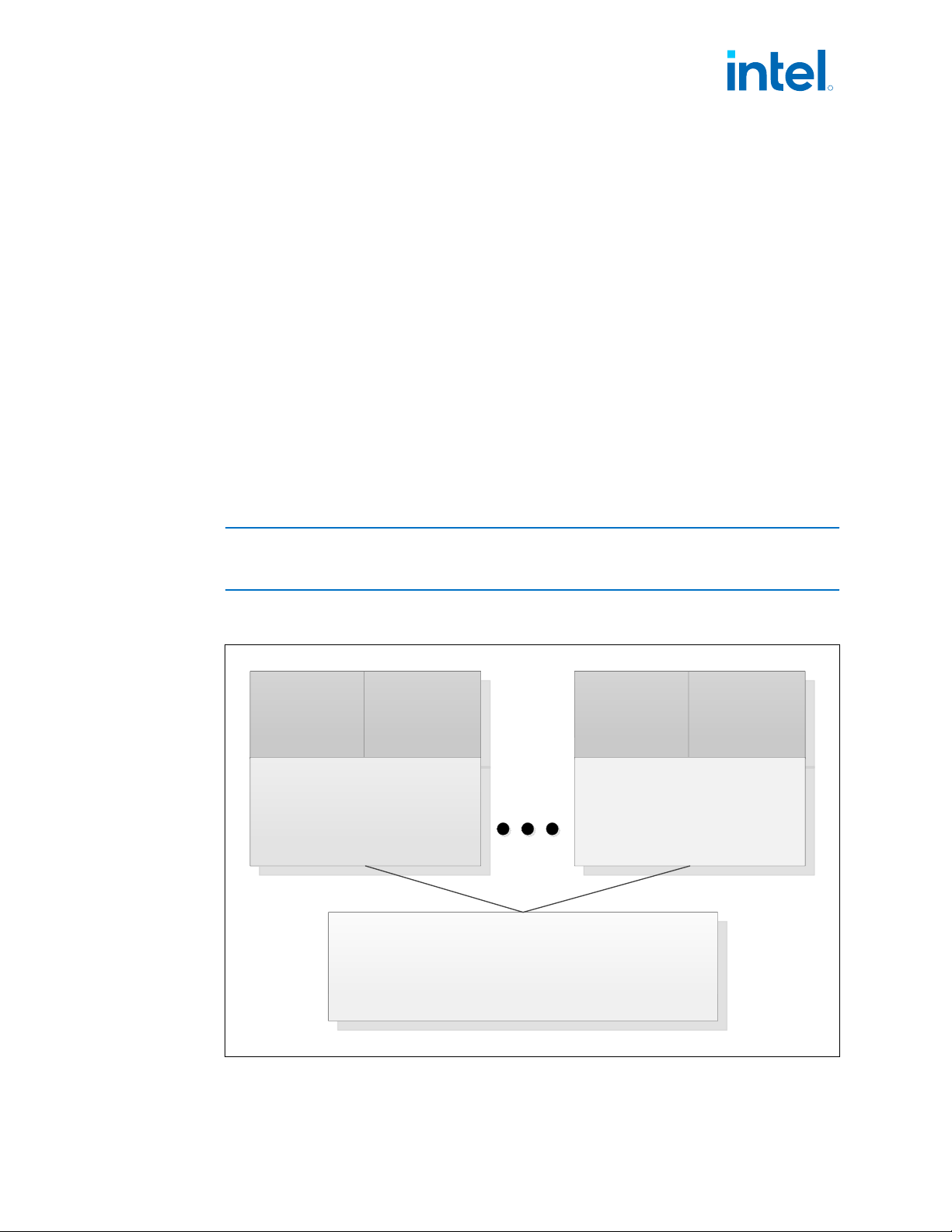
When the processor is idle, low-power idle states (C-states) are used to save power.
More power savings actions are taken for numerically higher C-states. However,
deeper C-states have longer exit and entry latencies. Resolution of C-states occurs at
the thread, processor IA core, and processor package level.
CAUTION
Long-term reliability cannot be assured unless all the Low-Power Idle States are
enabled.
Figure 15. Idle Power Management Breakdown of the Processor IA Cores
Thread 0 Thread 1
Core 0 State
Thread 0 Thread 1
Core N State
Processor Package State
3.2.1
3.2.1.1
3.2.1.2
3.2.2
R
Power Management—Intel
®
Core
™
, Xeon
™
6300 And Xeon
™
E 2400 Processors
13
th
Generation Intel
®
Core
™
, Intel
®
Core
™
14
th
Generation, Intel
®
Core
™
Processor (Series 1) and (Series 2), Intel
®
Xeon
™
E
2400 Processor and Intel
®
Xeon
™
6300 Processor
May 2025 Datasheet, Volume 1 of 2
Doc. No.: 743844, Rev.: 015 65

While individual threads can request low-power C-states, power saving actions only
take place once the processor IA core C-state is resolved. processor IA core C-states
are automatically resolved by the processor. For thread and processor IA core C-
states, a transition to and from C0 state is required before entering any other C-state.
Requesting the Low-Power Idle States
The primary software interfaces for requesting low-power idle states are through the
MWAIT instruction with sub-state hints and the HLT instruction (for C1 and C1E).
However, the software may make C-state requests using the legacy method of I/O
reads from the ACPI-defined processor clock control registers, referred to as P_LVLx.
This method of requesting C-states provides legacy support for operating systems that
initiate C-state transitions using I/O reads.
For legacy operating systems, P_LVLx I/O reads are converted within the processor to
the equivalent MWAIT C-state request. Therefore, P_LVLx reads do not directly result
in I/O reads to the system. The feature, known as I/O MWAIT redirection, should be
enabled in the BIOS..
The BIOS can write to the C-state range field of the PMG_IO_CAPTURE MSR to restrict
the range of I/O addresses that are trapped and emulate MWAIT like functionality. Any
P_LVLx reads outside of this range do not cause an I/O redirection to MWAIT(Cx) like
the request. They fall through like a normal I/O instruction.
When P_LVLx I/O instructions are used, MWAIT sub-states cannot be defined. The
MWAIT sub-state is always zero if I/O MWAIT redirection is used. By default, P_LVLx
I/O redirections enable the MWAIT 'break on EFLAGS.IF’ feature that triggers a wake
up on an interrupt, even if interrupts are masked by EFLAGS.IF.
Processor IA Core C-State Rules
The following are general rules for all processor IA core C-states unless specified
otherwise:
• A processor IA core C-State is determined by the lowest numerical thread state
(such as Thread 0 requests C1E while Thread 1 requests C6 state, resulting in a
processor IA core C1E state). Refer to G, S, and C Interface State Combinations
table.
• A processor IA core transitions to C0 state when:
— An interrupt occurs
— There is an access to the monitored address if the state was entered using an
MWAIT/Timed MWAIT instruction
— The deadline corresponding to the Timed MWAIT instruction expires
• An interrupt directed toward a single thread wakes up only that thread.
• If any thread in a processor IA core is active (in C0 state), the core’s C-state will
resolve to C0.
• Any interrupt coming into the processor package may wake any processor IA core.
• A system reset re-initializes all processor IA cores.
3.2.3
3.2.4
R
Intel
®
Core
™
, Xeon
™
6300 And Xeon
™
E 2400 Processors—Power Management
13
th
Generation Intel
®
Core
™
, Intel
®
Core
™
14
th
Generation, Intel
®
Core
™
Processor (Series 1) and (Series 2), Intel
®
Xeon
™
E
2400 Processor and Intel
®
Xeon
™
6300 Processor
Datasheet, Volume 1 of 2 May 2025
66 Doc. No.: 743844, Rev.: 015
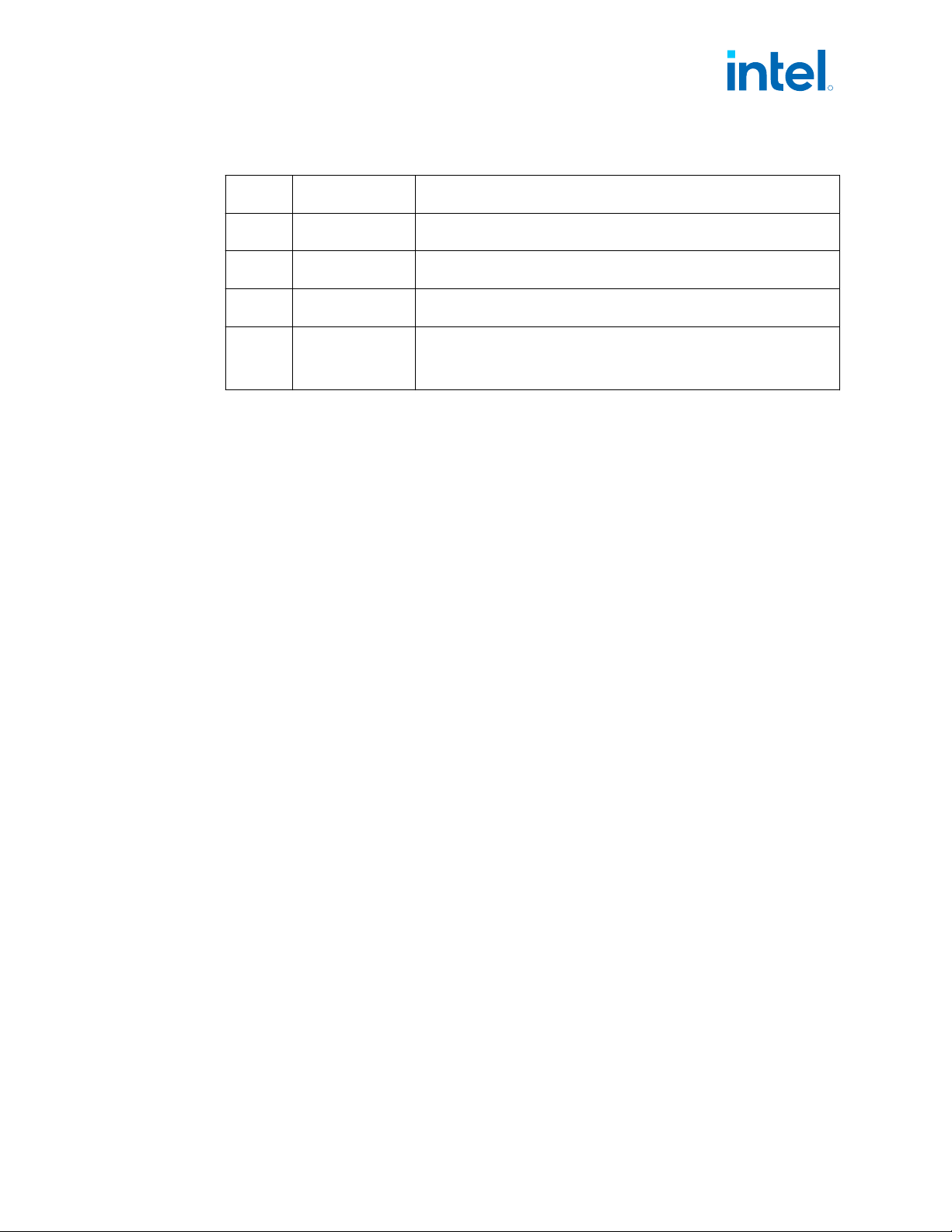
Table 7. Core C-states
Core C-
State
C-State Request
Instruction
Description
C0 N/A
The normal operating state of a processor IA core where a code is being
executed
C1 MWAIT(C1)
AutoHalt - core execution stopped, autonomous clock gating (package in
C0 state)
C1E MWAIT(C1E)
Core C1 + lowest frequency and voltage operating point (package in C0
state)
C6-C10
MWAIT(C6/C8/10)
or IO
read=P_LVL3//6/8
Processor IA, flush their L1 instruction cache, the L1 data cache, and L2
cache to the LLC shared cache cores save their architectural state to an
SRAM before reducing IA cores voltage, if possible may also be reduced to
0V. Core clocks are off.
Core C-State Auto-Demotion
In general, deeper C-states, such as C6, have long latencies and have higher energy
entry/exit costs. The resulting performance and energy penalties become significant
when the entry/exit frequency of a deeper C-state is high. Therefore, incorrect or
inefficient usage of deeper C-states have a negative impact on battery life and idle
power. To increase residency and improve battery life and idle power in deeper C-
states, the processor supports C-state auto-demotion.
C-State auto-demotion:
• C6 to C1/C1E
The decision to demote a processor IA core from C6 to C1/C1E is based on each
processor IA core’s immediate residency history. Upon each processor IA core C6
request, the processor IA core C-state is demoted to C1 until a sufficient amount of
residency has been established. At that point, a processor IA core is allowed to go into
C6 . If the interrupt rate experienced on a processor IA core is high and the processor
IA core is rarely in a deep C-state between such interrupts, the processor IA core can
be demoted to a C1 state.
This feature is disabled by default. BIOS should enable it in the
PMG_CST_CONFIG_CONTROL register. The auto-demotion policy is also configured by
this register.
Package C-States
The processor supports C0, C2, C3, C6, C8, and C10 package states. The following is a
summary of the general rules for package C-state entry. These apply to all package C-
states, unless specified otherwise:
• A package C-state request is determined by the lowest numerical processor IA
core C-state amongst all processor IA cores.
• A package C-state is automatically resolved by the processor depending on the
processor IA core idle power states and the status of the platform components.
— Each processor IA core can be at a lower idle power state than the package if
the platform does not grant the processor permission to enter a requested
package C-state.
— The platform may allow additional power savings to be realized in the
processor.
3.2.5
R
Power Management—Intel
®
Core
™
, Xeon
™
6300 And Xeon
™
E 2400 Processors
13
th
Generation Intel
®
Core
™
, Intel
®
Core
™
14
th
Generation, Intel
®
Core
™
Processor (Series 1) and (Series 2), Intel
®
Xeon
™
E
2400 Processor and Intel
®
Xeon
™
6300 Processor
May 2025 Datasheet, Volume 1 of 2
Doc. No.: 743844, Rev.: 015 67