IPC-A-600H-2010 中文版 印制板的可接受性 (1).pdf - 第137页
T arget Condition - Class 1,2,3 (⽬标条件 - 1,2,3级) • Plating is smooth and uniform throughout the hole. No evidence of roughness or nodules. • 整个孔 的 镀层 平滑 而均匀 。没有 粗糙 或 结 瘤迹 象。 Acceptable - Class 1,2,3 (可接受条件 - 1,2,3级) • Rou…
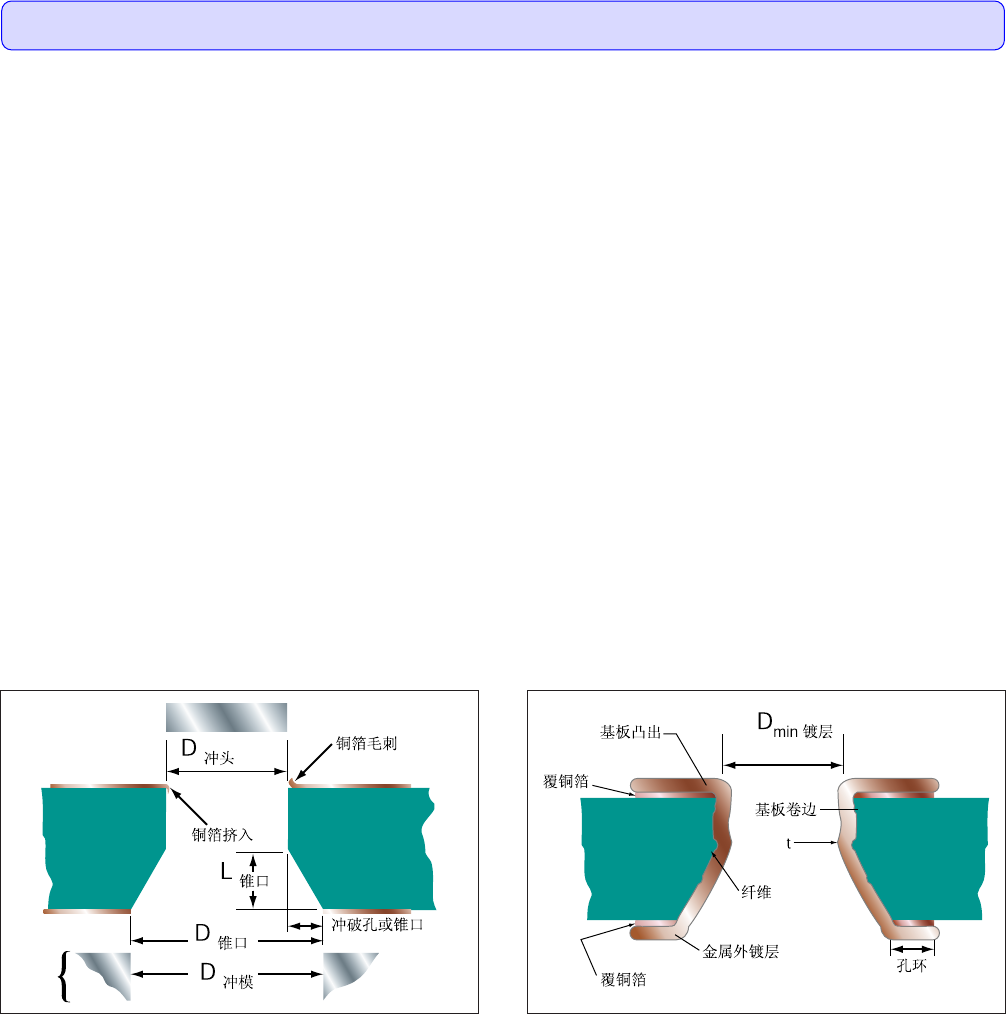
The figures below depict a punched hole and a punched and plated hole in a reinforced laminate. The figures show the characteristics which
may be exhibited in a punched hole. Punched holes may appear different than drilled holes. Drilled holes have straight wall geometry while
the geometry of punched holes will vary from straight to those seen in the figures. The difference in the hole characteristics are attributed to:
Ê
Laminate type and thickness
Ê
Thickness and type of cladding
Ê
Design of punch and die
Ê
Tool maintenance
Ê
Processing techniques
The laminate type is very important in determining its punchability. Laminates in which all the base material is woven fabric are difficult to
punch. The composite materials utilizing a woven fabric top and bottom sheet and a random fiber internal mat are easily punched and the
straight wall geometry of the drilled hole can be approached. Punch and die clearance and sharpness are also important when a straight wall
is desired and a small flare is required. The amount of flare, foil burr, foil intrusion, laminate bulge, and laminate rollover seen in the figures
do not necessarily degrade the plated-through hole quality and are acceptable for all classes provided other requirements are in compliance
with the performance specifications and the engineering description.
下面各图所示为增强层压板上的冲孔及冲孔镀覆孔的情况。示意图图示了冲孔中可能呈现的特征。冲孔外观可能不同于钻孔。钻
孔孔壁具有垂直的几何形状,而冲孔的外形会出现从笔直的孔壁到类似于附图中所看到的各种变化。导致冲孔呈现不同特征归因
于:
Ê
层压板的类型及厚度;
Ê
覆铜箔的厚度及类型;
Ê
冲头及冲模的设计;
Ê
工具的维护;
Ê
加工技术。
层压板的类型是决定可冲性的非常重要的因素。基材全是编织型玻璃布的层压板很难进行冲孔。用玻璃布作为上、下面而中间夹
入不规则玻璃纤维毡组成的复合板则易于冲孔,同时也能得到近似钻孔那样的笔直的孔壁。当期望得到笔直孔壁及较小锥口时,
冲头与冲模的间隙以及其锐利性也是很重要的。冲孔后出现如图中的锥口、铜箔毛刺、铜箔挤入、基板凸出、基板卷边等缺陷,
只要板子其它方面都符合性能规范与工程说明的要求,且其缺陷又没有降低镀覆孔的品质时,则对于所有级别产品均是可接受的。
Although
burrs
and fibers can also be associated with the straight wall geometry of a drilled hole, the concepts of flare and intrusion relate
specifically to punched hole formation techniques. An intrusion of copper foil within the punched hole can result from excessive punch-to-
die clearance or a dull punch. Tapered flare or breakout is a normal condition on the exit side of a punched hole and may be caused by the
stress generated within the laminate during hole formation. The degree of flare can be controlled through variations in punch-to-die clearance
and other operating parameters.
尽管钻孔的直壁上也会出现毛刺与玻璃纤维,但锥口及铜箔卷入则特别与冲孔成形技术有关。冲孔中铜箔卷入可能归因于冲头与
冲模之间的间隙过大或冲头太钝。另外冲制孔在出口端呈锥形或破孔都是正常现象,其原因可能是孔成形时在板材内产生应力所
造成。锥口的程度可以通过改变冲头与冲模的间隙及其它加工参数加以控制。
图35a 冲孔 图35b 冲孔镀覆孔
3.5 PLATED-THROUGH HOLES – PUNCHED(镀覆孔 – 冲孔)
Introduction(引⾔)
128 IPC-A-600H-20102010年4月
Visual observations made on cross-sections only.(仅对显微切片进行目检观察。)
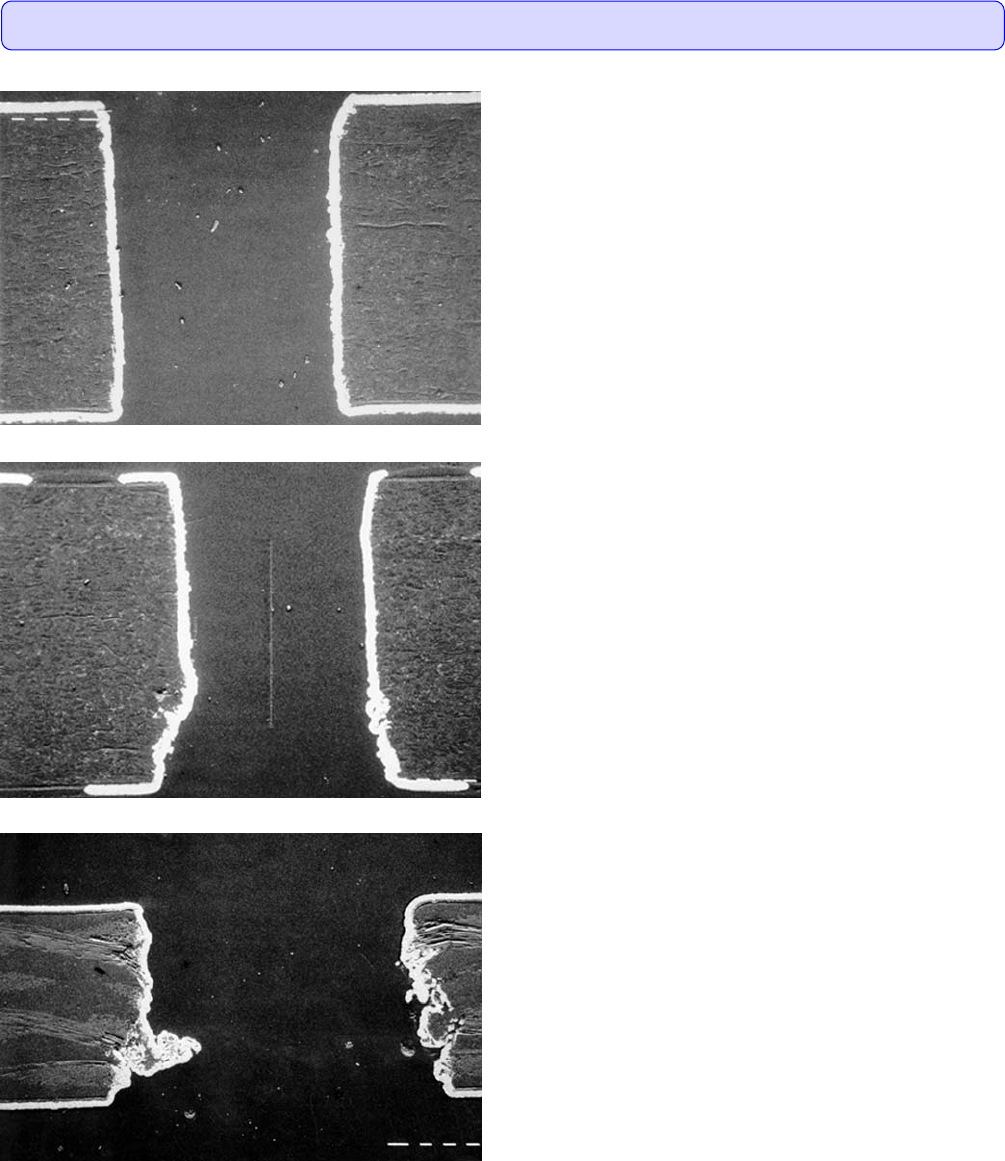
Target Condition - Class 1,2,3(⽬标条件 - 1,2,3级)
• Plating is smooth and uniform throughout the hole. No evidence
of roughness or nodules.
• 整个孔的镀层平滑而均匀。没有粗糙或结瘤迹象。
Acceptable - Class 1,2,3(可接受条件 - 1,2,3级)
• Roughness or nodules do not reduce plating thickness or hole
diameter below minimum requirements.
• 粗糙或结瘤没有使镀层厚度或孔径减小至低于最小要求。
Nonconforming - Class 1,2,3(不符合条件 - 1,2,3级)
• Defects either do not meet or exceed above criteria.
• 缺陷不符合或超出上述要求。
图351a
图351b
图351c
3.5 PLATED-THROUGH HOLES – PUNCHED(镀覆孔 – 冲孔)
3.5.1 Roughness and Nodules(粗糙度和结瘤)
129IPC-A-600H-2010 2010年4月
Visual observations made on cross-sections only.(仅对显微切片进行目检观察。)
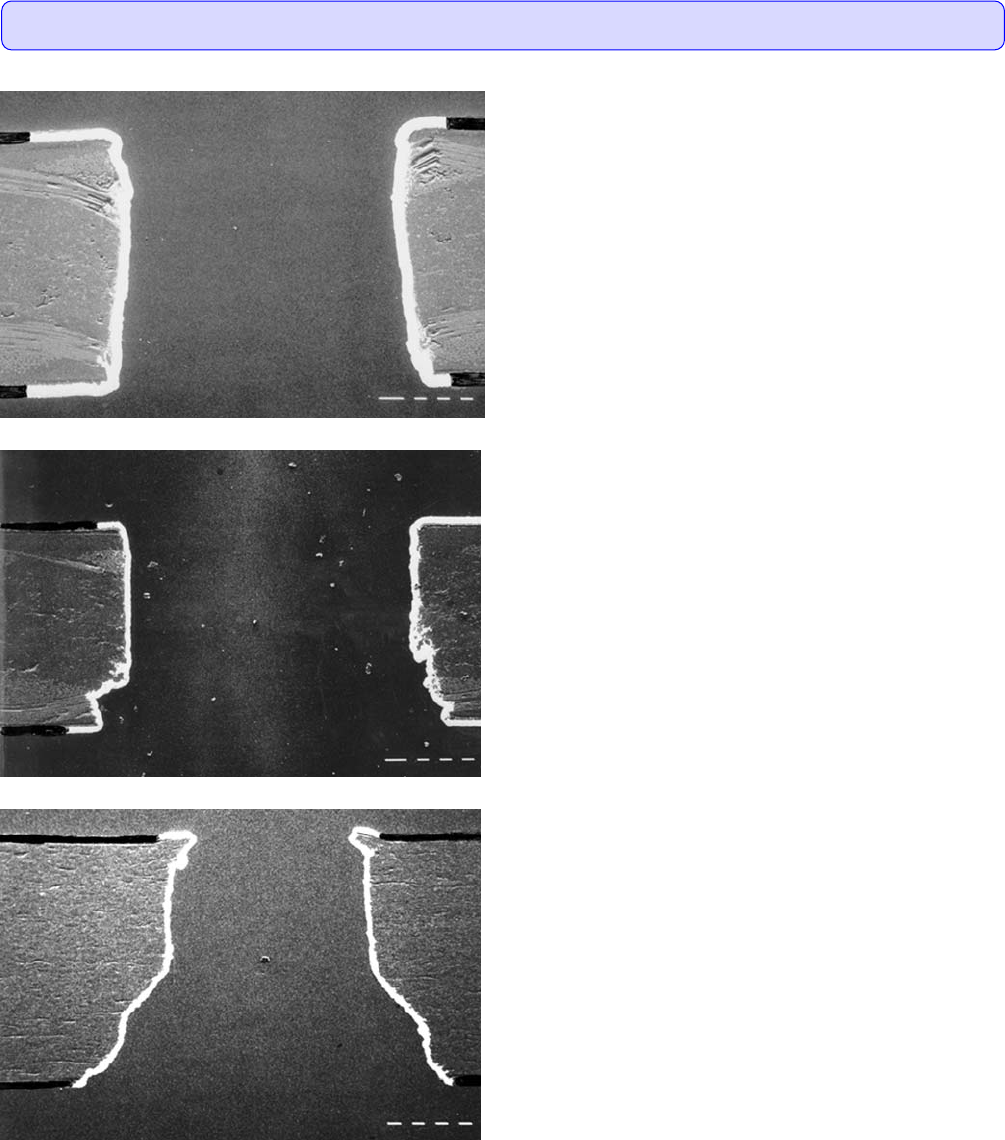
Target Condition - Class 1,2,3(⽬标条件 - 1,2,3级)
• Hole exhibits only slight flare and does not violate minimum
annular ring requirements.
• 孔仅呈现轻微的锥口且未违反最小环宽要求。
Acceptable - Class 1,2,3(可接受条件 - 1,2,3级)
• Hole exhibits flare but it does not violate minimum annular ring
requirements.
• 孔呈现锥口,但没有违反最小环宽要求。
Nonconforming - Class 1,2,3(不符合条件 - 1,2,3级)
• Defects either do not meet or exceed above criteria.
• 缺陷不符合或超出上述要求。
图352a
图352b
图352c
3.5 PLATED-THROUGH HOLES – PUNCHED(镀覆孔 – 冲孔)
3.5.2 Flare(锥⼝)
130 IPC-A-600H-20102010年4月
Visual observations made on cross-sections only.(仅对显微切片进行目检观察。)