IPC-A-600H-2010 中文版 印制板的可接受性 (1).pdf - 第160页
Nonconforming - Class 1,2,3 (不符合条件 - 1,2,3级) • Defects either do not meet or exceed above criteria. • 缺陷不符合或 超 出上述要求。 图 4113c 4.1 FLEXIBLE AND RIGID-FLEX PRINTED BOARDS ( 挠 性 及刚挠 性印制板) 4.1.13 Silver Film Integrity (cont.…
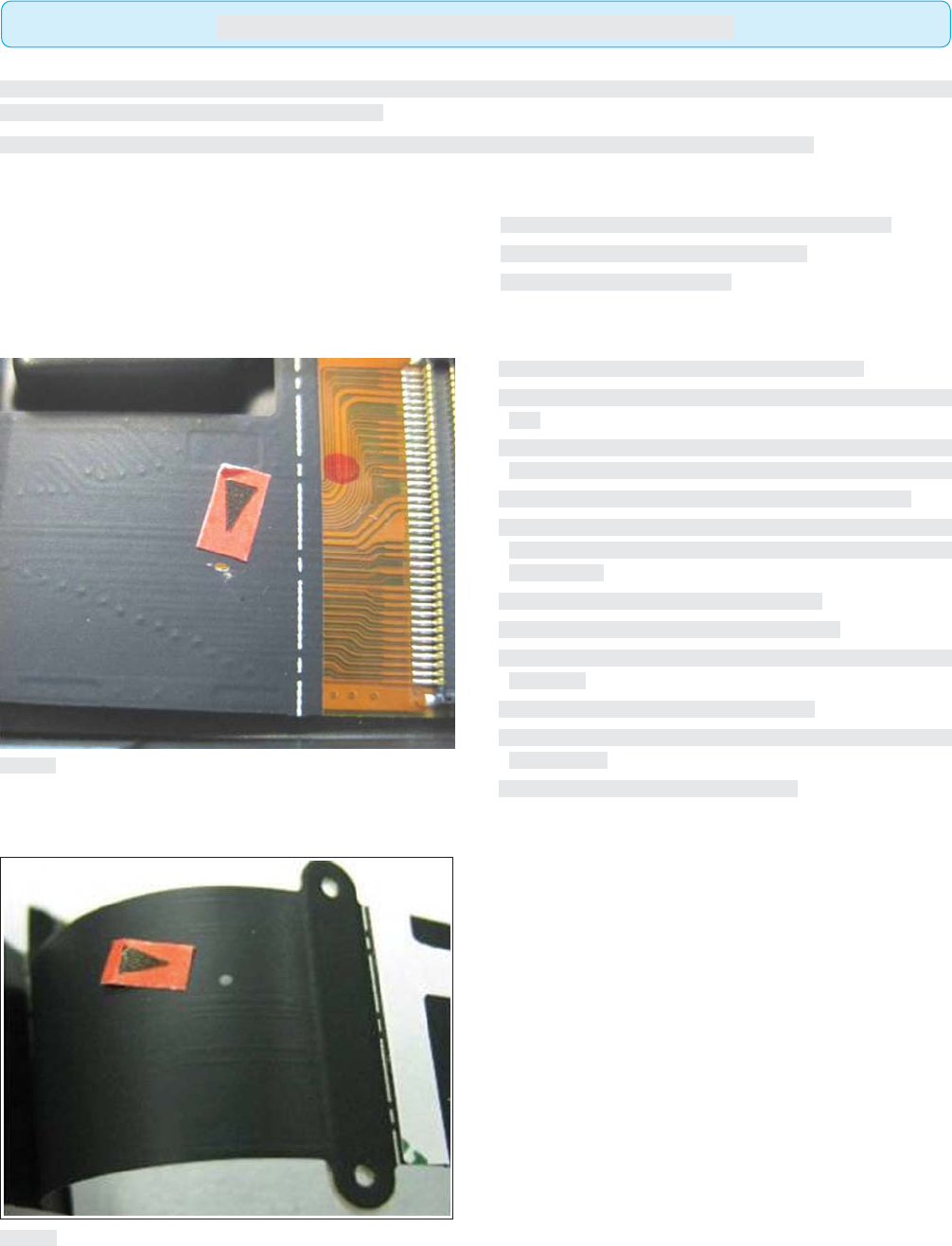
Silver film can be used for electro-static discharge (ESD) shielding in flexible printed boards. Scratches and voids may occur on the surface
of the silver film when the liner material is peeled away.
银膜可用作挠性印制板的静电释放(ESD)屏蔽层。当覆盖膜材料被剥离时银膜表面可能会产生划痕和空洞。
Target Condition - Class 1,2,3(⽬标条件 - 1,2,3级)
• Free of voids, scratches or foreign material.
• 无空洞、划痕或外来夹杂物。
Acceptable - Class 1,2,3(可接受条件 - 1,2,3级)
• Voids, scratches or foreign material do not exceed 5 locations per
side.
• Voids, scratches or foreign material do not expose metal under-
neath the silver film (exposed coverlay underneath is acceptable).
• Voids are less than 3.0 x 3.0 mm [0.118 x 0.118 in] in size.
• The width of scratches does not exceed 1.5 mm [0.060 in], and
their length does not exceed 50% of the length of the flexible
printed board.
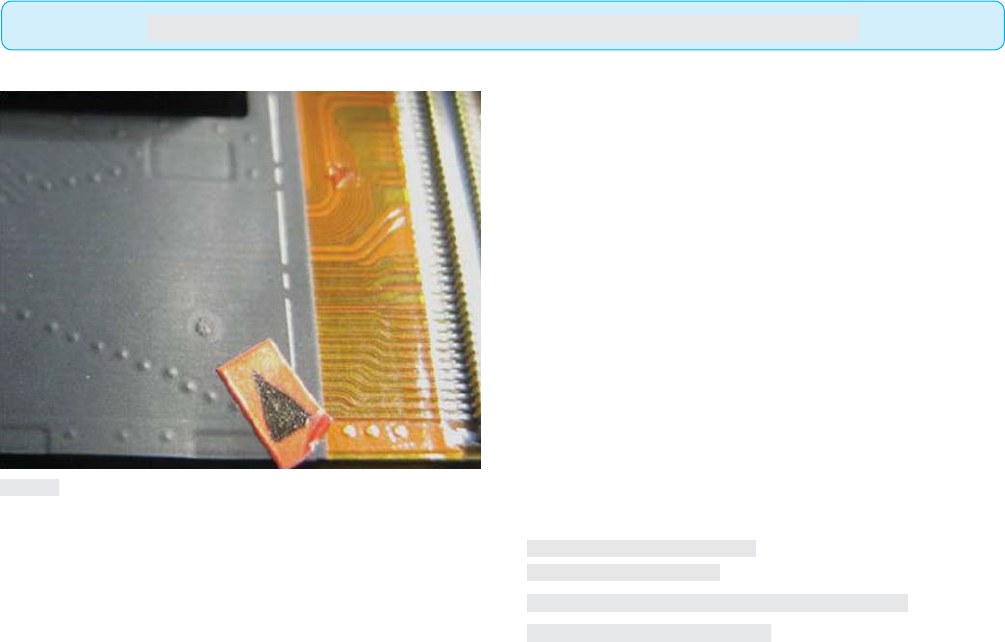
• Touch up by black oil pen (see Figure 4113c).
• 每面的空洞、划痕或外来夹杂物不超过5处。
• 空洞、划痕或外来夹杂物未暴露银膜下的金属(暴露覆盖层
可接受)。
• 空洞尺寸小于3.0x3.0mm[0.118x0.118in]。
• 划痕宽度未超过1.5mm[0.060in],且长度未超过挠性印制板
长度的50%。
• 用黑色油性笔进行修补(见图4113c)。
图4113a
图4113b
4.1 FLEXIBLE AND RIGID-FLEX PRINTED BOARDS(挠性及刚挠性印制板)
4.1.13 Silver Film Integrity(银膜完整性)
151IPC-A-600H-2010 2010年4月
Nonconforming - Class 1,2,3
(不符合条件 - 1,2,3级)
• Defects either do not meet or exceed above criteria.
• 缺陷不符合或超出上述要求。
图4113c
4.1 FLEXIBLE AND RIGID-FLEX PRINTED BOARDS(挠性及刚挠性印制板)
4.1.13 Silver Film Integrity (cont.)(银膜完整性(续))
152 IPC-A-600H-20102010年4月

There are two types of metal core printed boards, both having one or more conductive patterns on each side of an insulated metal substrate.
Interconnection between conductive patterns is made with PTHs.
In the first type, for double-sided printed boards, the metal core is laminated on each side with single-sided copper clad laminate to form a
two-sided printed board with the conductors subsequently etched and plated by conventional printed board processes. For multilayer appli-
cations, additional etched internal layers may be laminated to the core or multiple cores. The cores may serve as a heat sink, a power or ground
plane, or as a constraining plane to decrease the coefficient of thermal expansion (CTE) of the printed board in the planar direction.
For this type, the cores are commonly aluminum, copper, or (for CTE control) copper clad invar or molybdenum. If the cores are not to be
electrically connected to the circuitry (as is normally the case with aluminum cores), clearance holes for PTHs are drilled or punched prior to
lamination and filled with an insulating material. Copper cores may be electrically connected through the PTH. However, copper clad invar
or molybdenum requires special processing to make acceptable electrical connections.
In the second type of metal core printed board, clearance holes are drilled, punched or machined in the bare core and it is then coated with an
insulating material by spray coating, electrophoretic processes, or fluidized bed techniques. The coating must be pinhole free and of the
specified thickness required to withstand electrical leakage and arc-over. After coating, the insulation is covered with electroless copper and
plated and etched to provide required surface conductors and PTHs. For this type, the core may be copper, aluminum or steel, and most often
acts as a heat sink or stiffener.
金属芯板有两种类型,两种类型都是在一个覆绝缘层金属基材的两面有一个或多个导电图形。导电图形之间的互连是通过镀覆孔
来实现的。
在第一种类型中,对双面印制板来说,是在金属芯的两面层压单面覆铜层压板来形成双面板,接着采用常规的印制板工艺进行蚀
刻和电镀制作导线。作为多层板应用时,另外蚀刻的内层层压到一个金属芯或多个金属芯上。这些金属芯可作为散热层、电源层
或接地层,或者作为减小印制板在平面方向的热膨胀系数(CTE)的抑制层。
对于这种类型的金属芯印制板来说,其金属芯通常是铝、铜或(作为控制CTE用的)覆铜因瓦钢或钼板。如果金属芯不作为电气
连接线路(这种情况下通常用铝芯),则对于镀覆孔的隔离孔要在层压之前钻孔或冲孔并用绝缘材料加以填充。铜金属芯可以通
过镀覆孔来实现电气连接。但是,覆铜因瓦钢或钼芯材料则要求采用特殊加工才能获得可接受的电气连接。
在第二类的金属芯印制板中,隔离孔是在裸芯材中采用钻孔、冲孔或其它机械方法加工而成。然后采用喷涂、电泳工艺或流化床
技术涂覆上一层绝缘材料。这种类型的涂覆层必须没有针孔并达到耐漏电和抗电弧放电等所规定的厚度要求。在涂覆绝缘层后,
采用化学镀铜和电镀铜覆盖在绝缘层上,然后通过蚀刻以提供所要求的表面导体和镀覆孔。对于这种类型来说,金属芯材可以是
铜、铝或钢,其功用多数是作为散热层或增强板。
4.2
METAL CORE PRINTED BOARDS(⾦属芯印制板)
Introduction(引⾔)
153IPC-A-600H-2010 2010年4月