IPC-A-600H-2010 中文版 印制板的可接受性 (1).pdf - 第168页
This section covers acceptability criteria for flush printed boards. In flush printed boards, the surfaces, holes and other parameters for accept- ability are the same as in standard single-and double-sided printed board…
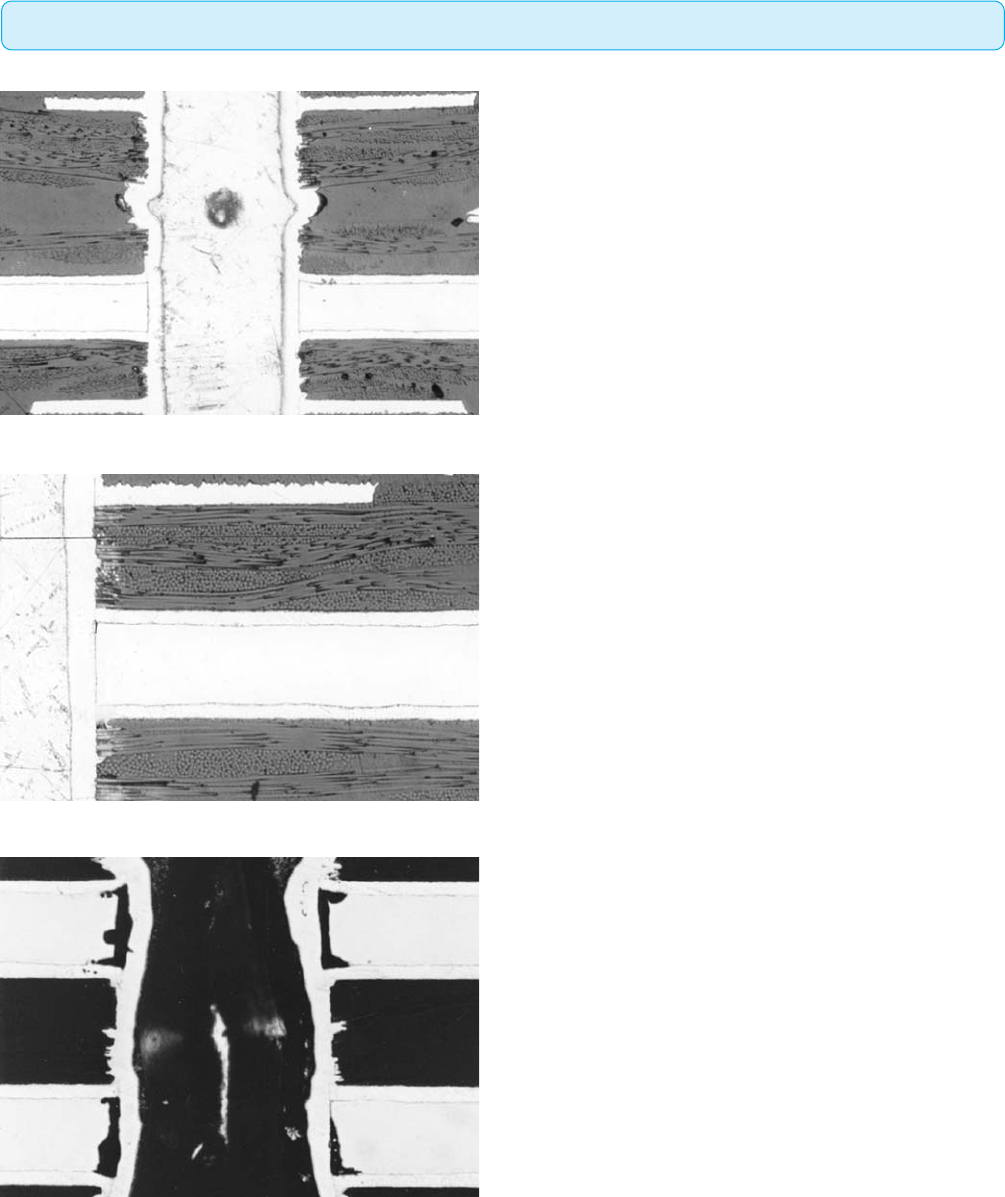
Target Condition - Class 1,2,3(⽬标条件 - 1,2,3级)
• Complete bond on both sides.
• 两侧均完全粘接。
Acceptable - Class 1,2,3(可接受条件 - 1,2,3级)
• Interconnection separation not more than 50% of the non-copper
core thickness. If copper clad core is used it shall not have any
separation in the copper portion of the interconnect.
• 互连处的分离不大于非铜金属芯厚度的50%。如采用覆铜金
属芯,则在互连处的铜部分不应当出现任何分离的现象。
Nonconforming - Class 1,2,3(不符合条件 - 1,2,3级)
• Defects either do not meet or exceed above criteria.
• 缺陷不符合或超出上述要求。
图426a
图426b
图426c
4.2 METAL CORE PRINTED BOARDS(⾦属芯印制板)
4.2.6 Core Bond to Plated-Through Hole Wall(⾦属芯与镀覆孔壁的连接)
159IPC-A-600H-2010 2010年4月
This section covers acceptability criteria for flush printed boards. In flush printed boards, the surfaces, holes and other parameters for accept-
ability are the same as in standard single-and double-sided printed boards. This section covers the additional parameters that are important to
the evaluation of flush printed boards.
本节涵盖了齐平印制板的可接受性准则。在齐平印制板中,板表面、孔和其它性能的可接受性与常规的单面及双面印制板相同。
而本节所涉及的是对齐平印制板的评定有重要作用的附加参数。
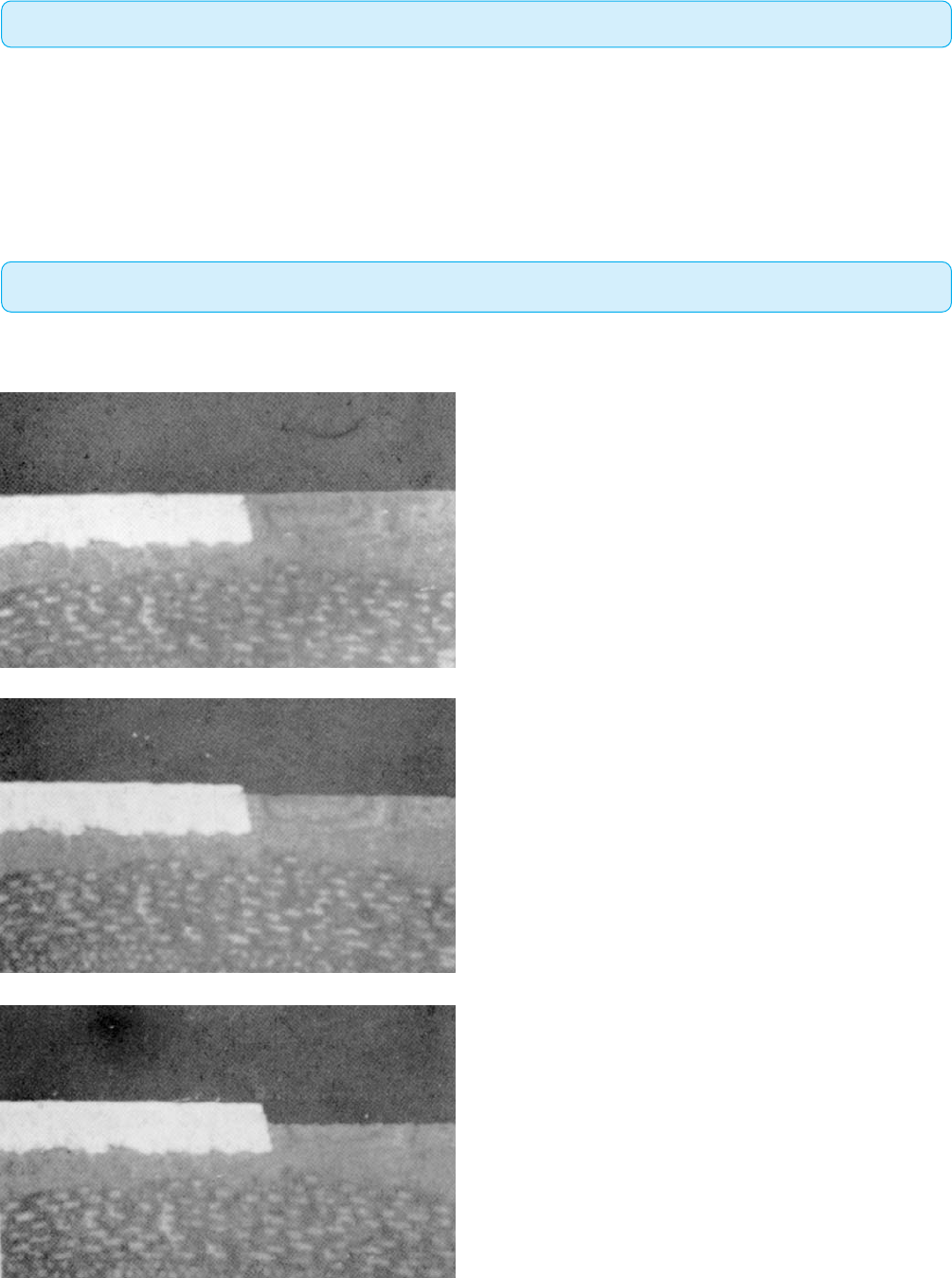
4.3.1 Flushness of Surface Conductor(表⾯导体的平整性)
The application of flush circuitry requires that the conductor surfaces and the base material be essentially in the same plane.
齐平电路要求导体表面和基材表面必需处在同一平面上。
Target Condition - Class 1,2,3(⽬标条件 - 1,2,3级)
• Conductor is flush to the base material or surrounding insulating
material surface.
• 导体与基材或所围绕的绝缘材料表面齐平。
Acceptable - Class 1,2,3(可接受条件 - 1,2,3级)
• Conductor is not flush but meets the minimum requirements.
• 导体虽不齐平,但满足最低要求。
Nonconforming - Class 1,2,3(不符合条件 - 1,2,3级)
• Defects either do not meet or exceed above criteria.
• 缺陷不符合或超出上述要求。
图431a
图431b
图431c
4.3 FLUSH PRINTED BOARDS(齐平印制板)
Introduction(引⾔)
160 IPC-A-600H-20102010年4月

The purpose of this section is to assist the reader in better understanding the importance of correct handling procedures in order to avoid dam-
age and contamination during cleanliness testing.
The following general rules minimize surface contaminants when handling printed boards:
1. Work stations should be kept clean and neat.
2. There should be no eating, drinking or use of tobacco products at the work station or other activities that are likely to cause contamination
of the printed board surfaces.
3. Hand creams and lotions containing silicone should not be used since they could result in solderability and other processing problems.
Specially formulated lotions are available.
4. Handling of printed boards by their edges is desirable.
5. Lint free cotton or disposable plastic gloves should be used when handling bare printed boards. Gloves should be changed frequently as
dirty gloves can cause contamination problems.
6. Unless special racks are provided, stacking printed boards without interleaving protection should be avoided. Cleanliness testing is used
to determine organic or inorganic, and ionizable or nonionizable contaminants.
The following are examples of the more common contaminants found on printed boards:
1. Flux residues
2. Particulate matter
3. Chemical salt residues
4. Fingerprints
5. Corrosion (oxides)
6. White residues
Due to the destructive nature of contaminants, it is recommended that cleanliness requirements of applicable procurement documentation be
adhered to.
The solvent resistivity shall be in accordance with IPC-6010 series unless otherwise specified. The specimens shall be tested for ionic con-
tamination in accordance with IPC-TM-650, Method 2.3.25 and 2.3.26.
本节的目的是帮助读者更好地理解正确持取方法的重要性,以避免在清洁度测试过程中导致损坏和污染。当持取印制板时,
下列通用规则可使表面污染最小化:
1. 工作台应该保持清洁与整洁。
2. 工作区不应该吃东西、喝饮料或吸烟,不应该作其它可能导致印制板面污染的活动。
3. 不应该使用含硅酮的护手霜和洗手液,因为它们会给印制板的可焊性和其它制程带来问题。可以采用特殊配方的洗手液。
4.
持取印制板时要求夹持板边。
5. 当持取裸板时,应该采用无尘棉织手套或一次性塑料手套。手套应该经常更换,因为脏的手套会导致污染问题。
6. 除非提供专门的架子,否则应该避免板子不加间隔保护而叠放。
下面是在印制板上常见污染的例子:
1. 助焊剂残留物
2. 颗粒物
3. 化学盐类残留物
4. 手指印
5. 腐蚀(氧化物)
6. 白色残留物
由于污染物具有破坏性,建议遵守适用采购文件的清洁度要求。
除非另有规定,清洗溶剂的电阻率应当符合IPC-6010系列文件的要求。应当按照IPC-TM-650测试方法2.3.25和2.3.26测试样本的
离子污染。
5
CLEANLINESS TESTING(清洁度测试)
Introduction(引⾔)
161IPC-A-600H-2010 2010年4月