MV-9_Chapter 5. Teaching.pdf - 第90页
MV -9 Use r Manual 5- 90 - Preview image for tap inspection displays only the area that will be finally detected as defect . T ap sep aration - This parameter is to sepa rate area betw een tap a reas and tap. Select pr…
错误!使用“开始”选项卡将 제목 2 应用于要在此处显示的文字。错误!使用“开始”选项卡将 제목 2 应用
于要在此处显示的文字。 .
5-89
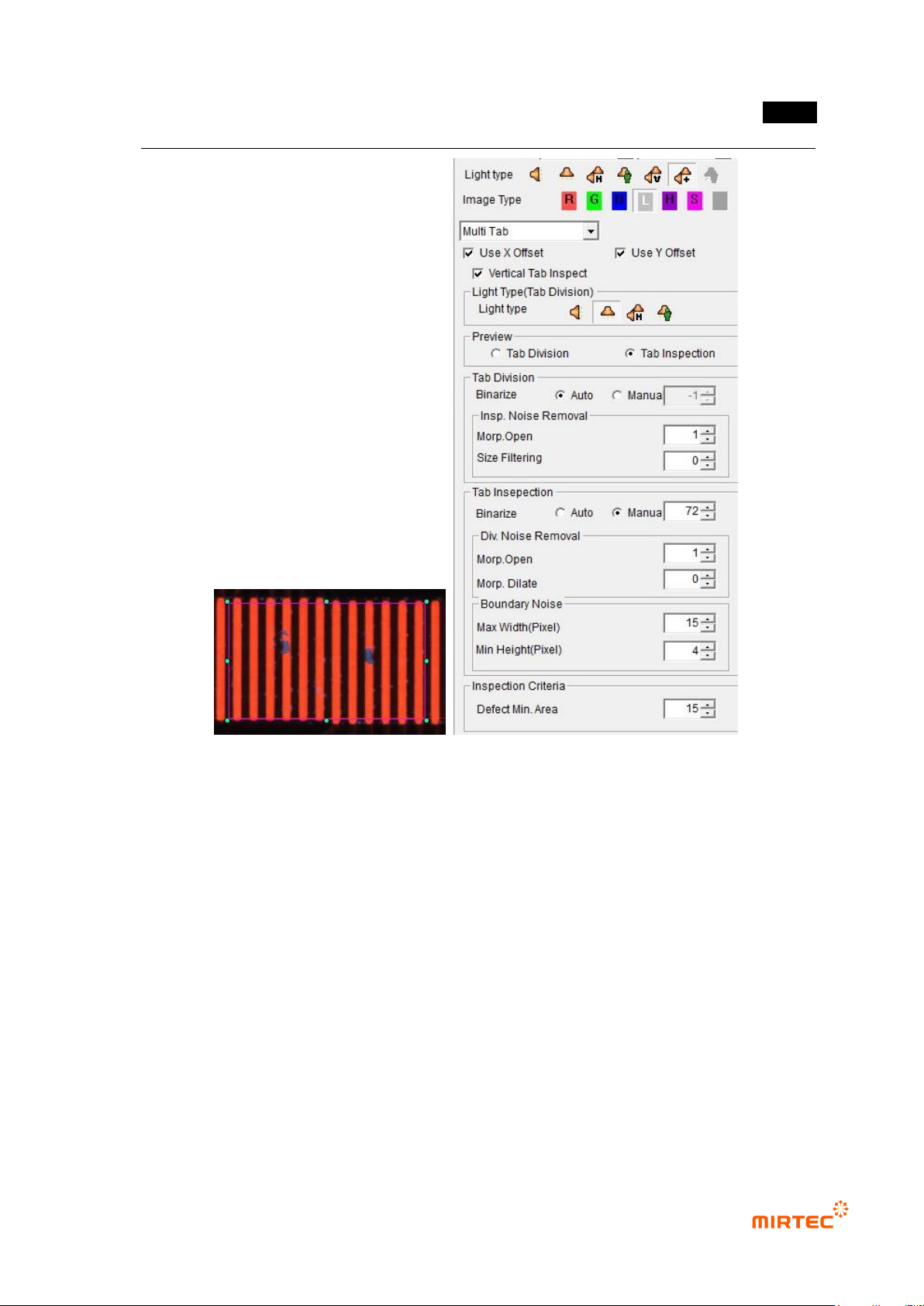
[Figure 5-94 Teaching example of multiple tap inspection window]
① Parameter description
Vertical tap inspection
- Check at this option to inspect tap of vertical direction.
Light for tap separation
- Light used to separate area between tap areas and tap. In general, vertical light is selected.
- Select light type and image type in common parameter for light for tap inspection, and
select horizontal + vertical light and R or L. In case of white light, select horizontal light and
L
Preview
- This is to select preview image type displayed in the screen. There are preview image for
tap separation and preview image for tap inspection.
MV-9 User Manual
5-90
- Preview image for tap inspection displays only the area that will be finally detected as
defect.
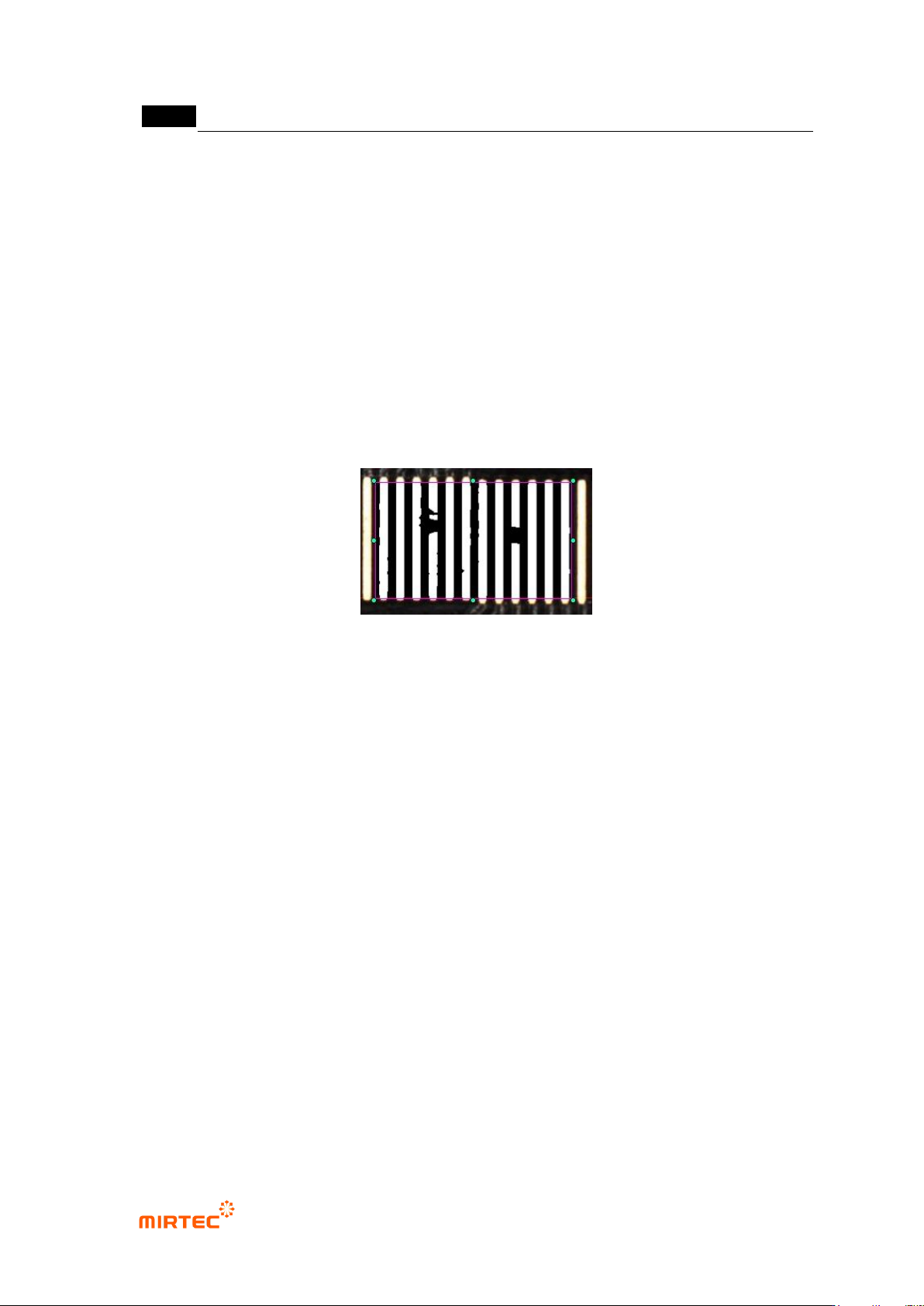
Tap separation
- This parameter is to separate area between tap areas and tap. Select preview for tap
separation, and adjust the parameter.
- Binarization: conduct binarization for image for tap separation, and select auto or manual.
Adjust binarization value for good tap separation.
- Noise removal for tap separation
Open: morphology - function to delete protruded part using open algorithm. Set for
good tap separation by removing noise on tap area. Basically, enter 1.
Size filtering: Enter number of pixel relevant to area of noise desired to be removed
[Figure 5-95 Tap separation preview image]
Tap inspection
- This parameter is to extract defect only for tap inspection. Select preview for tap inspection,
and adjust parameter.
- Binarization: conduct binarization for image for tap inspection, and select auto or manual.
Adjust binarization value for good separation of defect like solder ball and foreign material.
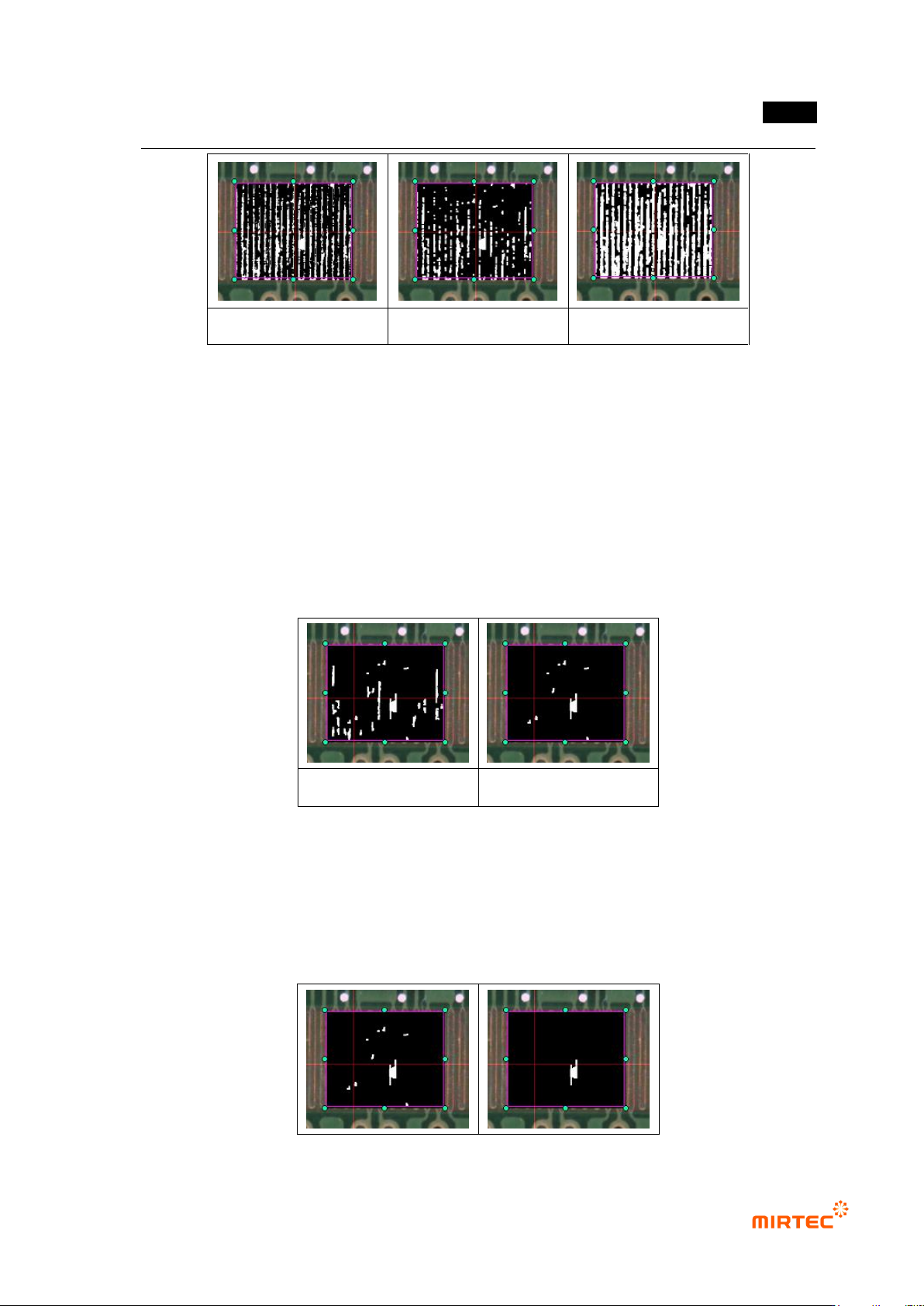
- Noise removal for tap inspection
Open: parameter to remove unnecessary noise. Basically, enter 1. If it is set high,
real defect is removed. Hence, set it low.
Expansion: function to expand white area using morphology-expansion algorithm.
This function is to expand white area that is reduced by opening. In general, set it
to below 2.
By opening and expansion, thin and long noise will be removed and only white area
detected as defect will remain.
错误!使用“开始”选项卡将 제목 2 应用于要在此处显示的文字。错误!使用“开始”选项卡将 제목 2 应用
于要在此处显示的文字。 .
5-91
Binary image
After 1 time application of
opening
After 1 time application of
expansion
[Figure 5-96 morphology open and expansion apply example]
- Tap boundary noise removal
In many cases, exterior boundary line of tap area appears bright by horizontal light,
and this will cause false defect during inspection.
Characteristic of boundary line is thin and long toward vertical or horizontal
direction by binarization. Hence, firstly, remove boundary line noise using width and
length.
Max width means max thickness of boundary line to be removed, and min length
means min length of boundary line.
Before boundary noise
removal
After boundary noise
removal
[Figure 5-97 application example of boundary line noise removal]
Normal criteria
- Enter min area of white pixel region that is judged as defect in binarization image. white
area that is larger than this value will be detected as defect.
- Only white area (defect) larger than min area will be displayed in preview image.