SL940-Install-Ops-Maintenance-7210918_B.pdf - 第39页
Safety 2-5 • Lift your head and shou lders firs t and with your back straight, u se the strength o f your legs to slow ly and smooth ly raise yourself up. • DO NOT twist your b ody. Chang e direction by fir st moving you…
2-4 Safety
2.4.4 High-Pressure Fluids
High-pressure fluids, unless they are safely contained, are extremely hazardous. Always relieve fluid
pressure before adjusting or servicing high-pressure equipment. Fluids penetrating the skin can cause
toxic poisoning.
If you suffer a fluid injection injury, seek medical care immediately. If possible, provide a copy of the
MSDS for the injected fluid to the health care provider.
2.4.5 Halogenated Hydrocarbon Solvent Hazards
Do not use halogenated hydrocarbon solvents in a pressurized system that contains aluminum
components. Under pressure, these solvents can react with aluminum and explode, causing injury, death,
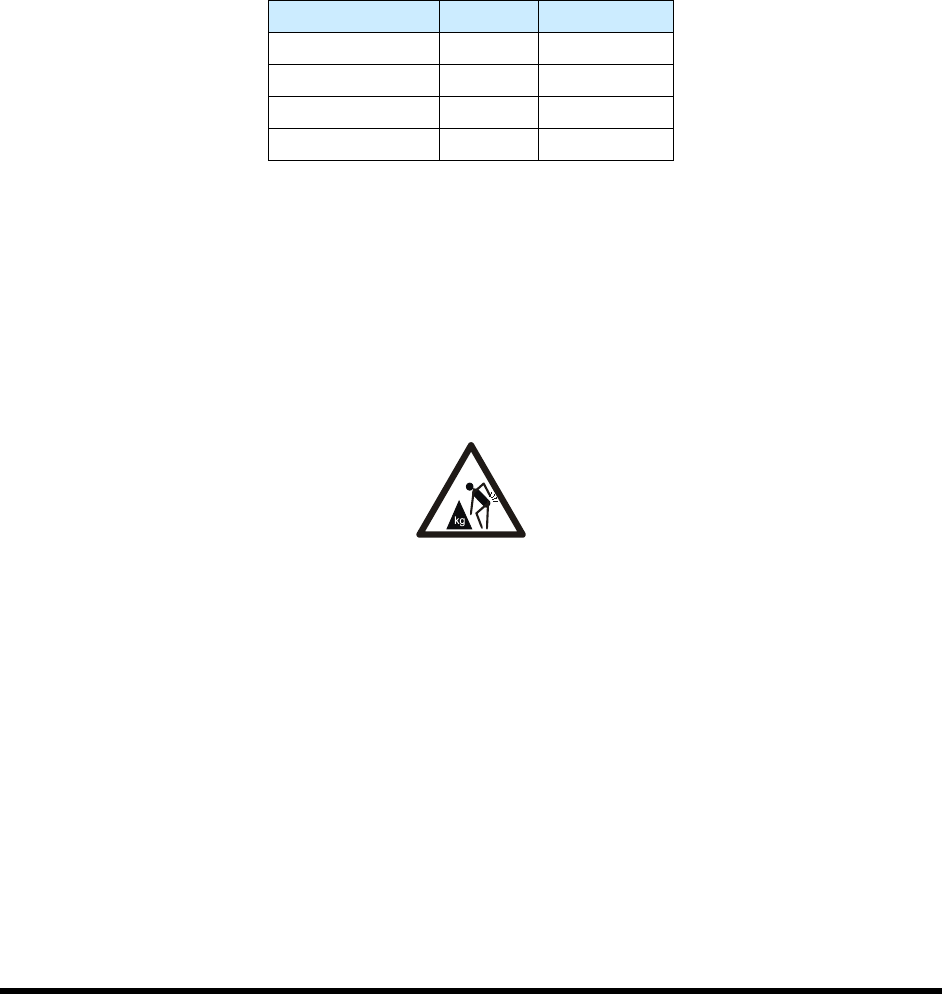
or property damage. Halogenated hydrocarbon solvents contain one or more of the following elements:
Element Symbol Prefix
Fluorine F “Fluoro-”
Chlorine Cl “Chloro-”
Bromine Br “Bromo-”
Iodine I “Iodo-”
2.5 Disposal
Dispose of equipment and materials used in operation and servicing in accordance with local regulations.
2.6 Lifting and Transport Precautions
1. Before attempting to lift a load, personnel should take into consideration the following
factors:
• Does the load display a lift hazard warning label as shown below?
• Is lifting and transporting equipment available that might make the task safer and
easier?
• Do you need to use personal protective equipment such as back supports and work
gloves?
• Do you need an assistant to help you lift or guide the load?
• Do you know the destination for the load and the route you have to follow?
• Has the load been prepared for lifting (doors closed, facility cables/air lines
disconnected, loose items secured, earthquake-bolts removed)?
2. When lifting, transporting, and lowering heavy or large loads, personnel should observe the
following precautions:
• Stand close to the load to be lifted and place your feet at shoulder width.
• Firmly grip the load and bring the load close to your body.
Safety 2-5
• Lift your head and shoulders first and with your back straight, use the strength of
your legs to slowly and smoothly raise yourself up.
• DO NOT twist your body. Change direction by first moving your feet.
• When transporting the load on a cart or a lifting device, reduce back strain by
pushing rather than pulling the load.
• When lowering the load, bend your knees, lower it slowly and smoothly, and keep
your fingers out from under the load.
2.7 Laser Radiation
The optional Laser Fan Width Control uses a Class II laser sensor. The following safety precautions
should be observed in addition to the standard coating system safety precautions.
• Operate the Laser Fan Width Control only according to the procedures described in the
instructions included. Failure to do so may result in injury due to exposure to the laser beam.
• DO NOT look directly at the laser beam.
WARNING! Looking directly at the laser beam may result in serious eye injury.
NOTE The laser beam is not harmful to the skin. There is no danger in exposing arms or hands
to the beam. The only possible health hazard is in exposing the eyes to the laser beam.
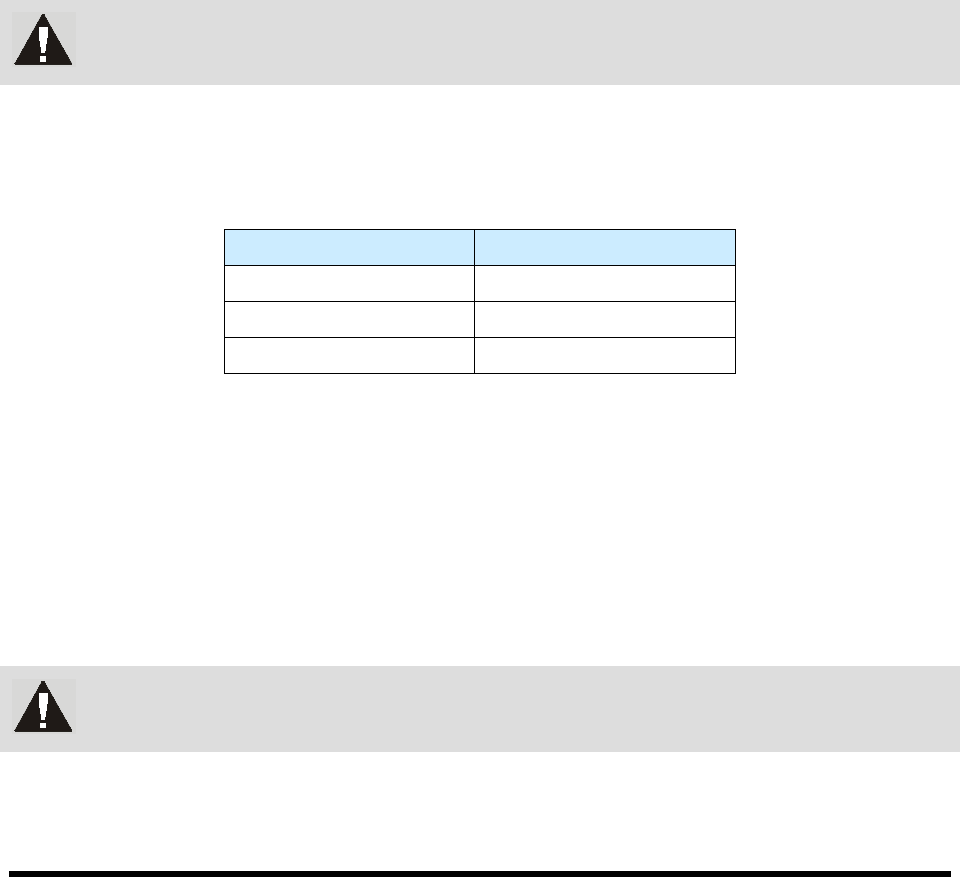
Table 2-1 Laser Fan Width Control Specifications
ORGANIZATION CLASSIFICATION
FDA CLASS II
IEC 60825-1 1998-01 CLASS 2
DIN EN 60825-1 1998-01 KLASSE 2
2.8 Earthquake Precautions
In the event of an earthquake, your coating system must be secured to prevent movement that could
cause injury to personnel and damage to the coating system and facility. Each coating system leveler
(foot) should be anchored to the floor. See 3.9 Anchoring the Coating System.
As a safety precaution, all hazardous electrical and pneumatic energy is automatically bled out of the
system if electrical power is lost.
WARNING! All personnel should follow facility earthquake safety guidelines.
2-6 Safety
2.9 Safety Warning Labels
WARNING! CAUTION!
Comply with all safety warning labels or serious injury to personnel or damage to
the coating system may occur. Worn or damaged labels should be replaced with
new labels having the same part number.
Warning labels on your Select Coat SL-940E/SL-941E point out areas where personnel must use extreme
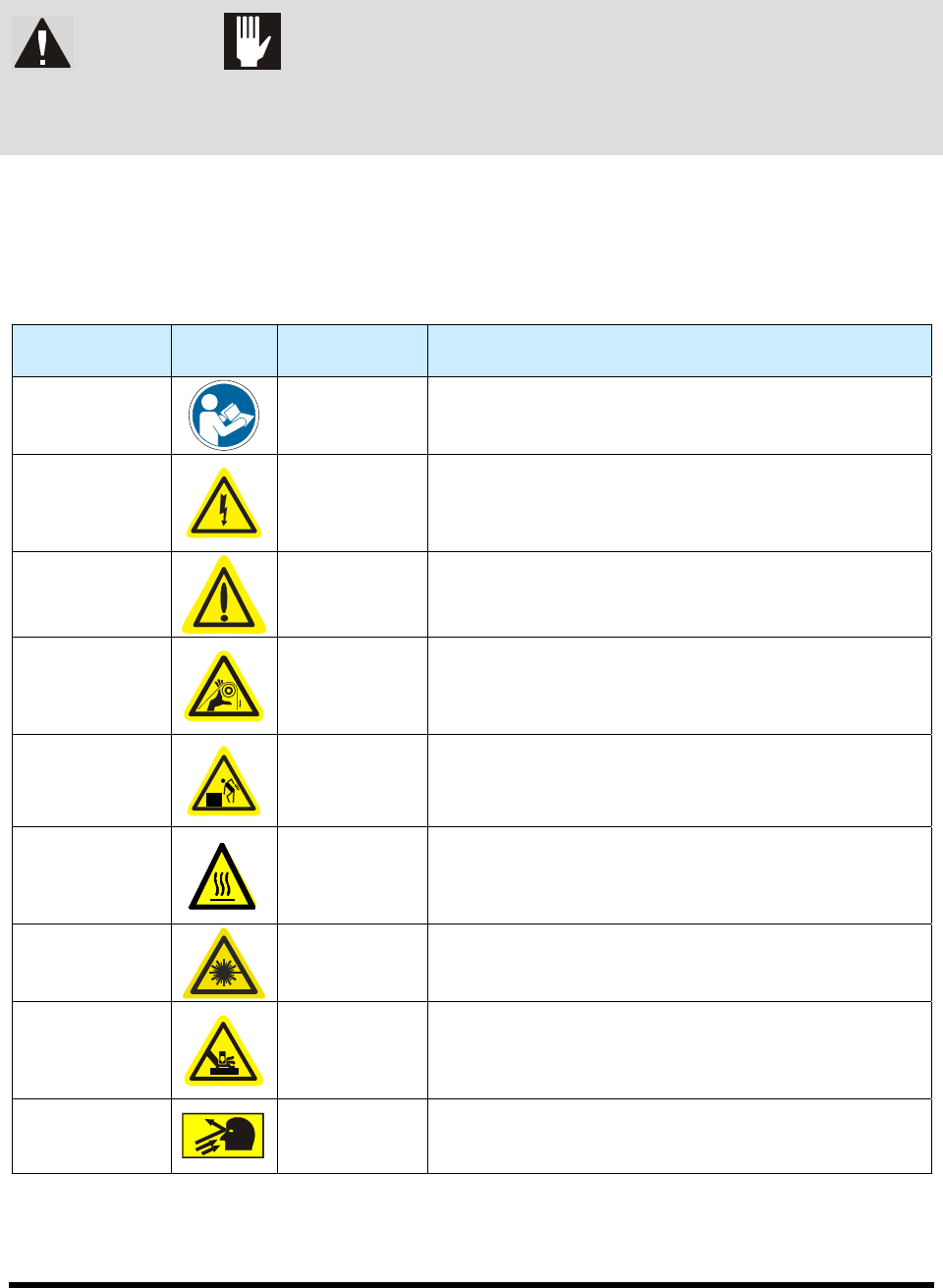
caution to prevent serious injury and property damage. Table 2-2 shows the warning symbols that may be
found on your coating system or optional equipment. The location of warning labels found on a typical
SL-940E/SL-941E is shown in Figure 2-2 and Figure 2-4.
Table 2-2 Safety Warning Symbols
Warning Type Symbol
Part
Number
Hazard
Consult
Operator’s
Manual
7206854
Warns personnel to read Operator’s Manual before
operating machine.
Electrical
(Shock Hazard)
70-0116-00
(1)
or
70-0050-00
(2)
This label warns of a high-voltage component that can
cause shock, burn, or death. Use extreme caution
when working in or around these areas. Disconnect
and lock out power before servicing.
General
Warning
70-0055-00
This label identifies a component that requires special
attention. Can cause serious bodily harm to the user.
Hand
Entanglement/
Moving
Material
7214364
(1)
This label warns of moving parts that can cause
serious injury to hands and fingers.
Disconnect and lock out power before servicing.
Heavy Object
(Lifting Hazard)
70-0118-00
(1)
or
196666
(2)
This label warns that the labeled component is heavy
and can cause muscle strain or back injury to
personnel trying to lift it.
Hot Surface
70-0121-00
(1)
or
70-2150-00
(2)
Thermal warning labels identify potentially hot
components and surfaces. Use extreme caution when
working on or around these areas. Can cause severe
burns.
Laser Radiation
Warning
7206858
(2)
This label warns of the possibility of hazardous
radiation exposure.
Moving Parts
Present
70-0120-00
(1)
or
198883
(2)
This label warns of moving parts that can cause
serious injury to hands or fingers. Keep hands away
from moving parts. Disconnect and lock out power
before servicing.
Pressure Relief
Warning
322352
This label warns that the pressure relief valve should
be pulled before performing service on the pneumatic
system or opening the fluid reservoir.
Notes: (1) Rectangular labels with symbols and text. These labels are placed on machines that are shipped anywhere but the
European community.
(2) Triangular labels with symbols only. These labels are placed on machines that are shipped to the European
community, referred to as “CE labeled” machines.