00196457-05_UM_SX12DX12_SR706_EN.pdf - 第205页
User Manual SIPLACE SX1/SX2/DX1/DX2 4 Setting up and commissioning From software version SC.706.xx Version 06/2012 EN 4.1 Transportation and Delivery Configuration 205 4.1.4 T ransporting the machine in the crate 4.1.4.1…
4 Setting up and commissioning User Manual SIPLACE SX1/SX2/DX1/DX2
4.1 Transportation and Delivery Configuration From software version SC.706.xx Version 06/2012 EN
204
4.1.3.2 SIPLACE DX1/DX2
The machine is configured as follows when delivered:
The track on the single conveyor is set to a width of 210 mm. This width setting will be important
when fine-tuning the machine.
– Both keyboards are disconnected and dismantled.
– Both monitors are dismantled.
– Both indicator lamps are dismantled.
– The tape container and waste tape container are packed separately.
– All the gantry axes are fixed with shipping braces.
4
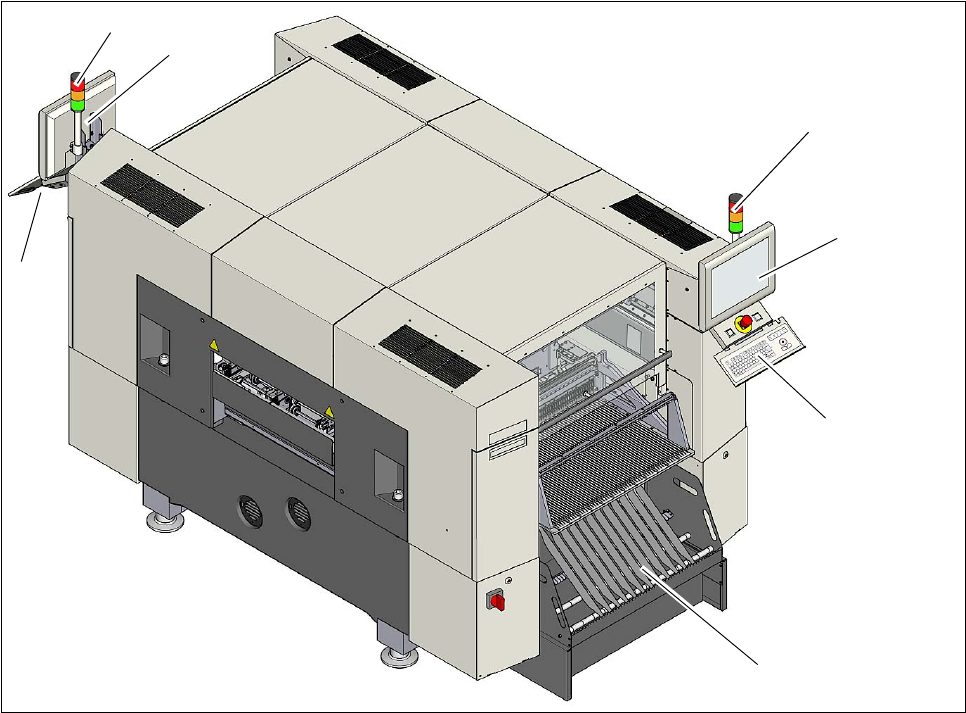
Fig. 4.1 - 3 SIPLACE DX1/DX2 delivery configuration
(1) Indicator lamp (both dismantled)
(2) Monitor (both dismantled)
(3) Operating panel with support plate (both dismantled)
(4) Tape container and waste tape container (all separate)
(1)
(3)
(2)
(4)
(1)
(2)
(3)

User Manual SIPLACE SX1/SX2/DX1/DX2 4 Setting up and commissioning
From software version SC.706.xx Version 06/2012 EN 4.1 Transportation and Delivery Configuration
205
4.1.4 Transporting the machine in the crate
4.1.4.1 Services
As a special service, SIPLACE offers to realize the complete integration of your SIPLACE ma-
chine in your production line. With our extensive expertise and by using the right tools and equip-
ment, we can ensure that the installation process runs smoothly and efficiently. However, this will
require you to clarify the infrastructure aspects in advance and make any necessary changes at
your production facility.
Please note that the safest way to transport the machine is always in the transport crate - or at the
very least on the pallet. This will prevent serious damage to the machine caused by the feet col-
liding with obstacles, for example.
4.1.4.2 Safety instructions
WARNING 4
– The applicable accident prevention regulations concerning the transportation of heavy goods
must be followed.
– If you do not use the fork-lift truck specified in section 4.1.4.3
, page 205 to transport the ma-
chine, you will risk that the machine tips over.
– In particular, you should wear safety boots to minimize the risk of crushing your feet.
4.1.4.3 Means of transport
To transport the machine on a palette or on a transportation crate, use a fork lift truck with the fol-
lowing specifications:
Fork length: min. 1800 mm
Carrying power: min. 6000 kg
Clear width between forks: min. 350 mm 4
4
4 Setting up and commissioning User Manual SIPLACE SX1/SX2/DX1/DX2
4.1 Transportation and Delivery Configuration From software version SC.706.xx Version 06/2012 EN
206
4.1.4.4 Fork-lift attachment points on the transport crate or pallet
Position the fork-lift truck only at the points marked (A). in fig. 4.1 - 1, page 201. We recommend
that you keep the crate or the pallet with packaging for later use.
WARNING 4
If you still decide to transport the machine without a crate or pallet, you MUST follow the instruc-
tions in the next section to avoid serious damage to your machine.
4
4
4
4.1.5 Transporting the machine without a crate or pallet
4.1.5.1 Safety instructions
WARNING 4
The applicable accident prevention regulations concerning the transportation of heavy goods
must be followed.
In particular, you should wear safety boots to minimize the risk of crushing your feet.
Read this section in full before transporting the machine to avoid severe damage.
When you are transporting the machine, make sure that all the feet are clear of the floor. If
they are not clear, the feet will drag along the floor and bump into obstacles. This could dam-
age the machine foot thread in the machine frame.