SiplaceX4_en.pdf - 第475页
1 - 7 S tudent Guide SIPLACE X Edition 09/2005 10 Modular conveyor 7 10.1.9 Structure of the single conveyor On the HF’s and the HS-60, the s ingle conv eyor consists of the input conveyor , two placement areas, the inte…
1 - 6
Student Guide SIPLACE X
10 Modular conveyor Edition 09/2005
6
10.1.6 Lifting table
Depending on the version (single/dual conveyor), one or two independent lifting tables are used
in each placement area. The lifting table drive works indirectly via a pneumatic cylinder controlled
by a 5/3-way valve. PCB‘s of different thickness will automatically be compensated for. The PCB
is guided in the Z direction at four points on the lifting table plate. The lifting path is determined via
a distance measuring system.
The top lifting table position is detected by the incremental measuring system and a piezo force
sensor(piezo force sensor only till Machine number xx, piezo force sensor not used on HF3). The
upper lifting table position and with that the correct clamping of the PCB board will be check in the
current mode with the transportation motors.The lowest lifting table position is detected by the in-
cremental measuring system and an end position BERO on the pneumatic cylinder. The default
clearance under the PCB is 40 mm.
If you use a dual conveyor as an single conveyor you must couple both lifting tables.
Please Note: The old red (74mm height) PCB supports for the S20, F4, S25HM, S27HM, F5HM,
HS50,HS50+ can no longer be used at the HS60 and HF machines.
The correct supports pin for the HS60 and HF machines are the black, 94mm height ones.
10.1.7 Firmware functions
– Transporting, clamping, temporarily storing the PCBs, positioning the PCB using a laser light
barrier, mechanical stopper for long PCBs as an option
– Single functions for controlling the conveyor
– Adjusting the conveyor width
– Controlling the inputs/outputs (using the Sitest program)
– Downloading the firmware via SITEST
– Setting the conveyor parameters (conveyor speed) in Sitest
– Synchronous transport mode
10.1.8 Conveyor control TSP 201/301 supports the following options
– Flexible left conveyor rail fixed (default: right conveyor rail fixed)
– PCB Alignment pin
– "Long PCB" option
– Ceramic substrate centering
– Vacuum tooling
– PCB barcode
– SMEMA interface, SIEMENS (option)
1 - 7
Student Guide SIPLACE X
Edition 09/2005 10 Modular conveyor
7
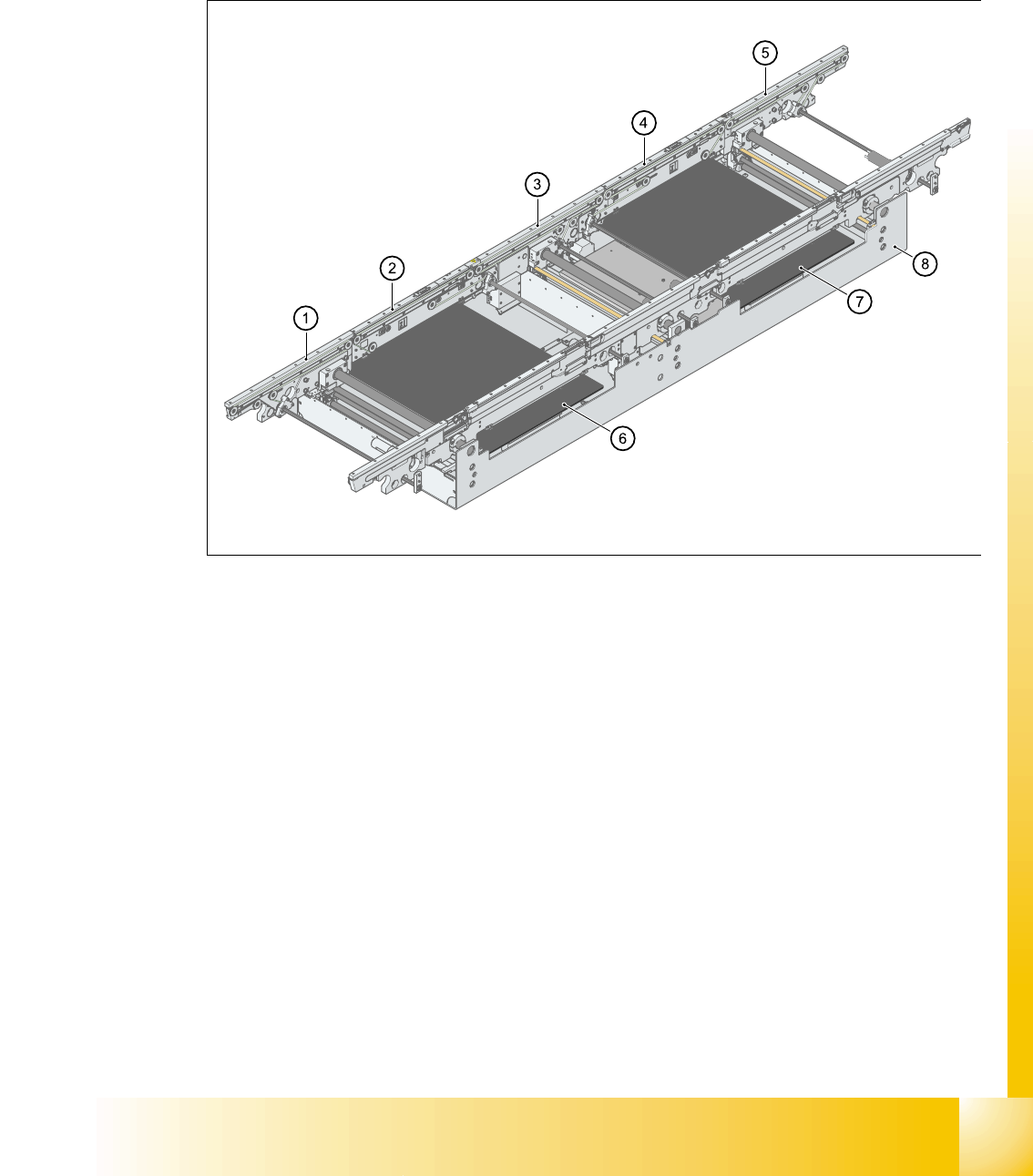
10.1.9 Structure of the single conveyor
On the HF’s and the HS-60, the single conveyor consists of the input conveyor, two placement
areas, the intermediate conveyor and the output conveyor. The conveyor has an automatic width
adjustment unit and a lifting table for clamping the PCB.
Fig. 10.1 - 1 PCB transport - single conveyor (HF)
Key
(1) Input conveyor (2) Placement area 1
(3) Intermediate conveyor (4) Placement area 2
(5) Output conveyor (6) Lifting table placement area 1
(7) Lifting table placement area 2 (8) Mounting frame
1 - 8
Student Guide SIPLACE X
10 Modular conveyor Edition 09/2005
8
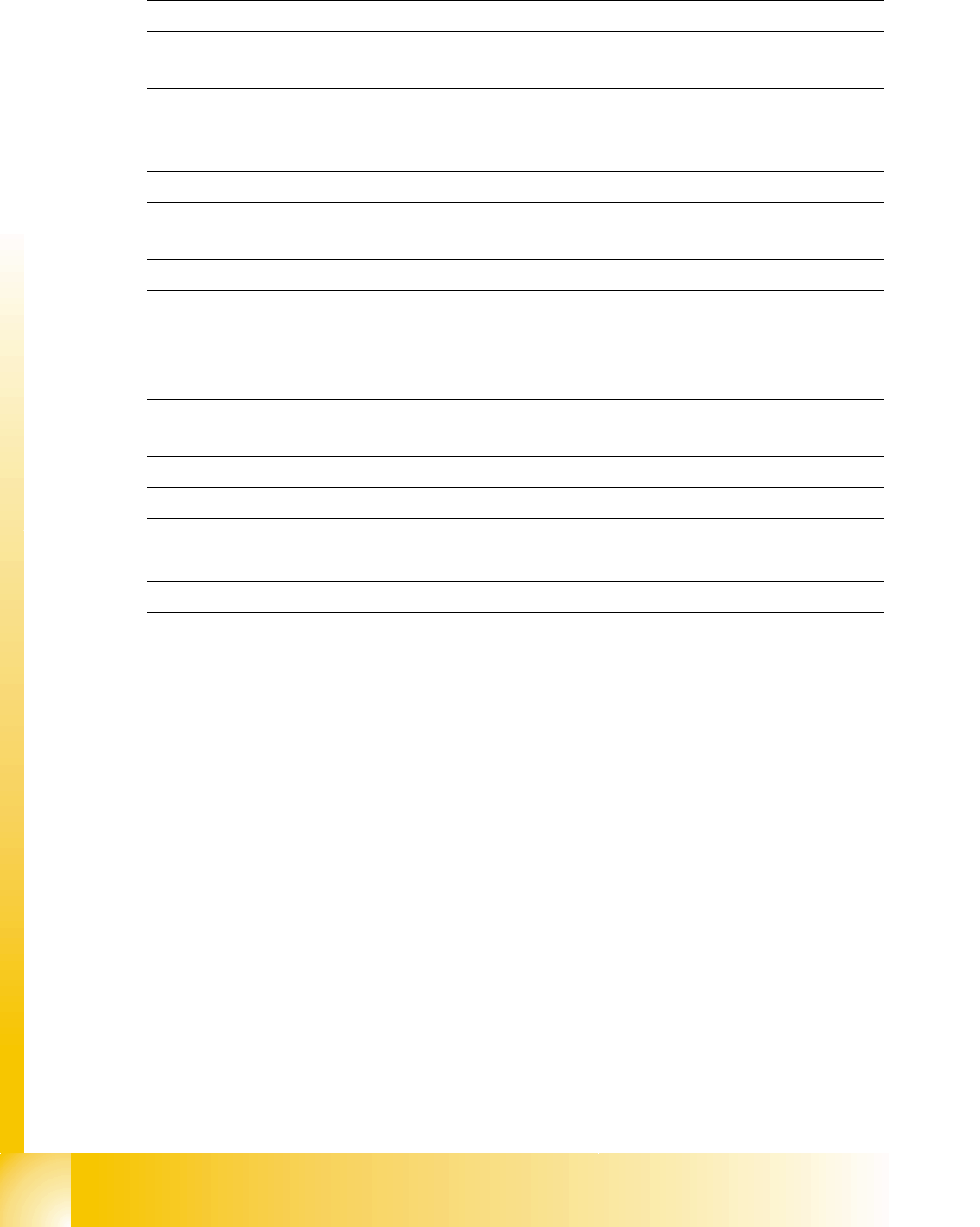
10.1.10 Technical data - single conveyor
Fixed conveyor side Right (standard), left (optional)
Max. component height 6 mm for the 12-segment Collect&Place head
8.5 mm for the 6-segment Collect&Place head
PCB format(LxW) 50 mm x 50 mm to 450 mm x 508 mm
2" x 2" to 18" x 20"
Long board: length up to 610 mm (24"), (option)
PCB thickness 0.5 mm to 4.5 mm
Max. PCB warpage upwards: 4.5 mm - PCB thickness
downwards: 0.3 mm + PCB thickness
Clearance on PCB underside max. 40 mm
PCB transport height 830mm ± 15mm (standard)
900mm ± 15mm (option)
930mm ± 15mm (option)
950mm ± 15mm (SMEMA: optional)
Type of interface SMEMA (standard)
SIEMENS (option)
PCB weight 3 kg
Component-free PCB handling edge 3mm
PCB changeover time 2.5 s
Ink spot recognition possible
Automatic width adjustment possible