00195741-0102_UM_D1_D2_SR605_EN.pdf - 第312页
6 Station extensions User Manual SIPLACE D1/D2 6.17 Vacuum pump From software version SR.605.xx 07/2008 EN Edition 312 6.17 V acuum pump Item no. 001 19017-xx V acuum pump Item no. 001 19899-xx Connection kit for vacuum …
User Manual SIPLACE D1/D2 6 Station extensions
From software version SR.605.xx 07/2008 EN Edition 6.16 Coplanarity laser module
311
6
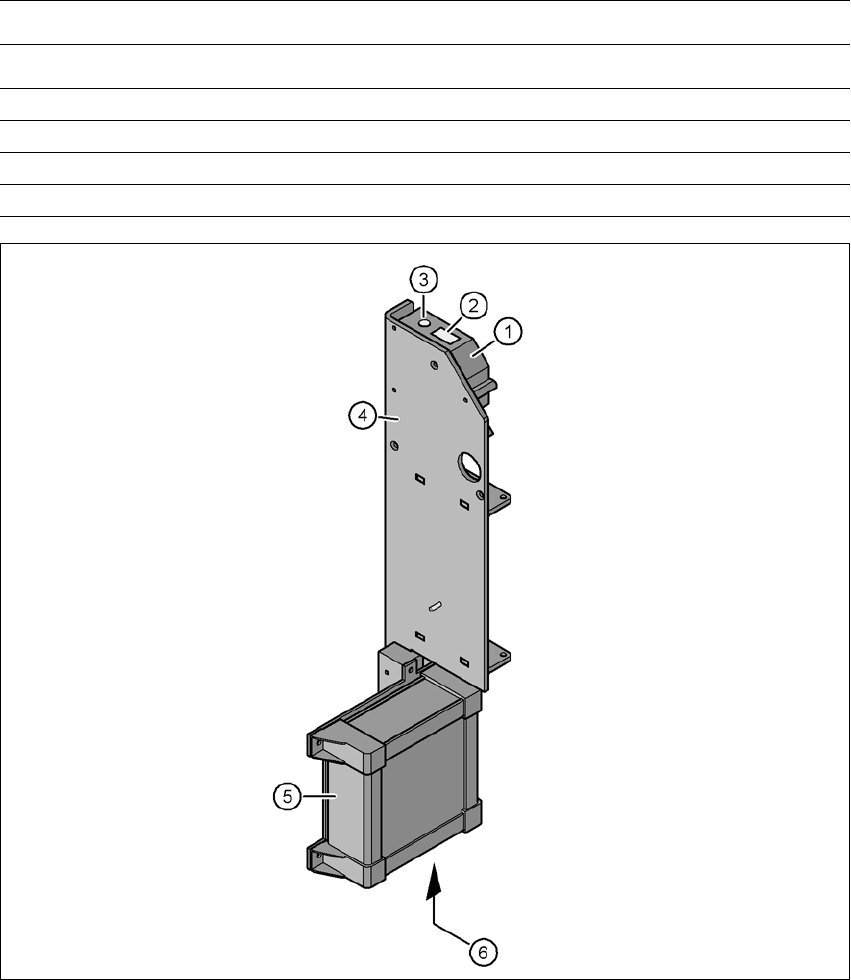
Fig. 6.16 - 5 Coplanarity laser module
(1) Laser sensor
(2) Detector
(3) Laser emitter
(4) Assembly bracket
(5) Controller
(6) LED displays and connections on the controller
LED avg avg1 avg2
Off Off No averaging
Red Off Averaging 1
Off Red Averaging 2
Red Red Averaging 3
LED state Status display

6 Station extensions User Manual SIPLACE D1/D2
6.17 Vacuum pump From software version SR.605.xx 07/2008 EN Edition
312
6.17 Vacuum pump
Item no. 00119017-xx Vacuum pump
Item no. 00119899-xx Connection kit for vacuum pump D1/D2
Every Collect&Place head has a separate vacuum generator that supplies the holding and place-
ment circuit with the vacuum that it needs. The vacuum generator works on the Venturi principle.
The D2 machine's compressed air consumption is 485 Nl/min, which means that the compressed
air supply must be dimensioned accordingly. If the owner does not have sufficient capacity locally,
the associated investment costs would be high, so we supply a vacuum pump that will provide the
necessary vacuum.
Other advantages of using the vacuum pump are:
– It roughly halves the machine's compressed air consumption.
– It reduces the input pressure.
– The machine can be easily integrated into existing lines.
– The ongoing operating costs reduce according to the energy costs.
The vacuum pump is maintenance-free and 100% oil-free. They have sufficient capacity to supply
the holding circuits of the Collect&Place heads.
Placement machine
a
Compressed air consumption of the machine
a) Under normal atmospheric conditions at 20°C and 1013 hPa
SIPLACE D1
Without vacuum pump
With vacuum pump
345 st. l/min (C&P/P&P)
205 st. l/min (C&P/P&P)
SIPLACE D2
Without vacuum pump
With vacuum pump
485 st. l/min (2 x C&P)
205 st. l/min (2 x C&P)
User Manual SIPLACE D1/D2 6 Station extensions
From software version SR.605.xx 07/2008 EN Edition 6.18 SIPLACE Productivity Lift
313
6.18 SIPLACE Productivity Lift
6.18.1 Concept of parallel placement
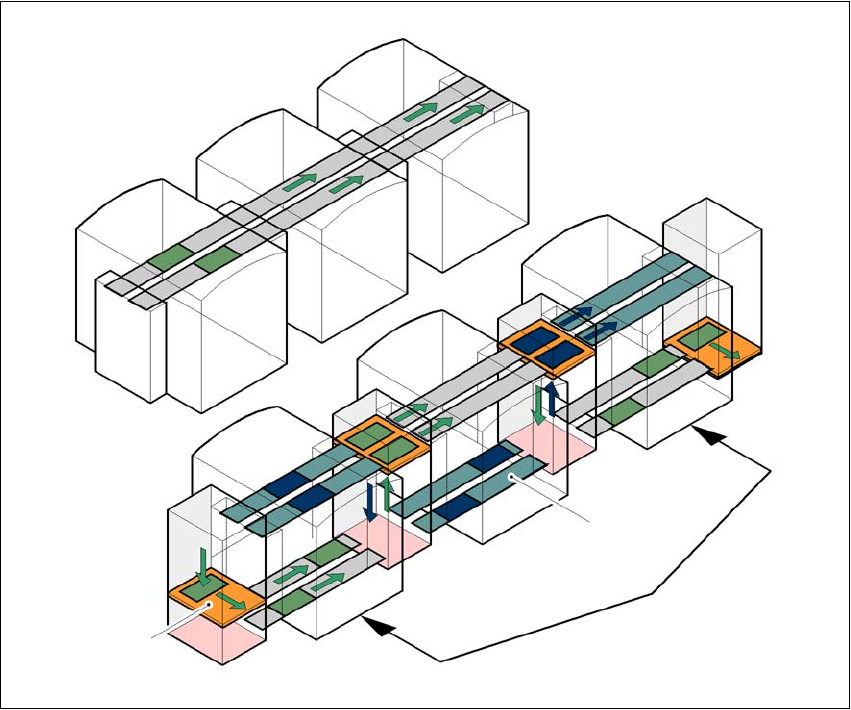
Placement lines are generally arranged in series and are linked to one another serially. The place-
ment program is processed sequentially while the PCBs are transported from one machine to the
next. This means that the placement of a PCB is distributed between various machines.
6
Fig. 6.18 - 1 A comparison of serial and parallel lines
When machines are connected in parallel, the components to be placed by individual machines
are combined. Several machines work through the same placement program. They place all the
components on one machine that would be distributed between several machines with serial pro-
cessing. When one machine runs out of capacity, the PCBs are moved to and placed at the next
machine with the same placement program. This combination of machines with the same compo-
nents to be placed is known as a group or “cluster”.
Serial line
Parallel line
Underfloor conveyor
Group (cluster)
Horizontal/
vertical lift