00197498-03_UM_SiplaceCA-Serie_EN.pdf - 第187页
User Manual SIPLACE CA-Series 3 Technical Data From software version SC.708.0 Edition 12/20 14 EN -DRAFT 3.13 Single PC B Conveyor 187 3.13.2 T echnical Data 3 3 S tationary conveyor side Right or left PCB dimensions S t…
3 Technical Data User Manual SIPLACE CA-Series
3.13 Single PCB Conveyor From software version SC.708.0 Edition 12/2014 EN -DRAFT
186
3.13 Single PCB Conveyor
[00119625-xx] Modular single conveyor II, 2380 mm
[00119626-xx] Fixed conveyor side right, HF/X/CA/D-Series
[00119628-xx] Fixed conveyor side left, HF/X/CA/D-Series
[00119629-xx] Conveyor width 250/508 mm, HF/X/CA-Series
In its standard version, the placement machine is equipped with a PCB single conveyor. The PCB
dual conveyor is available as an option ex factory (see section 3.14
, page 189). The left or the
right side of the PCB conveyor can be used as the stationary side, as required.
The conveyor belts are driven by DC motors. There is a lifting table for clamping the PCBs in each
processing area. The PCB conveyor width can either be set from the user interface or preset in
the placement program.
3.13.1 Structure
3
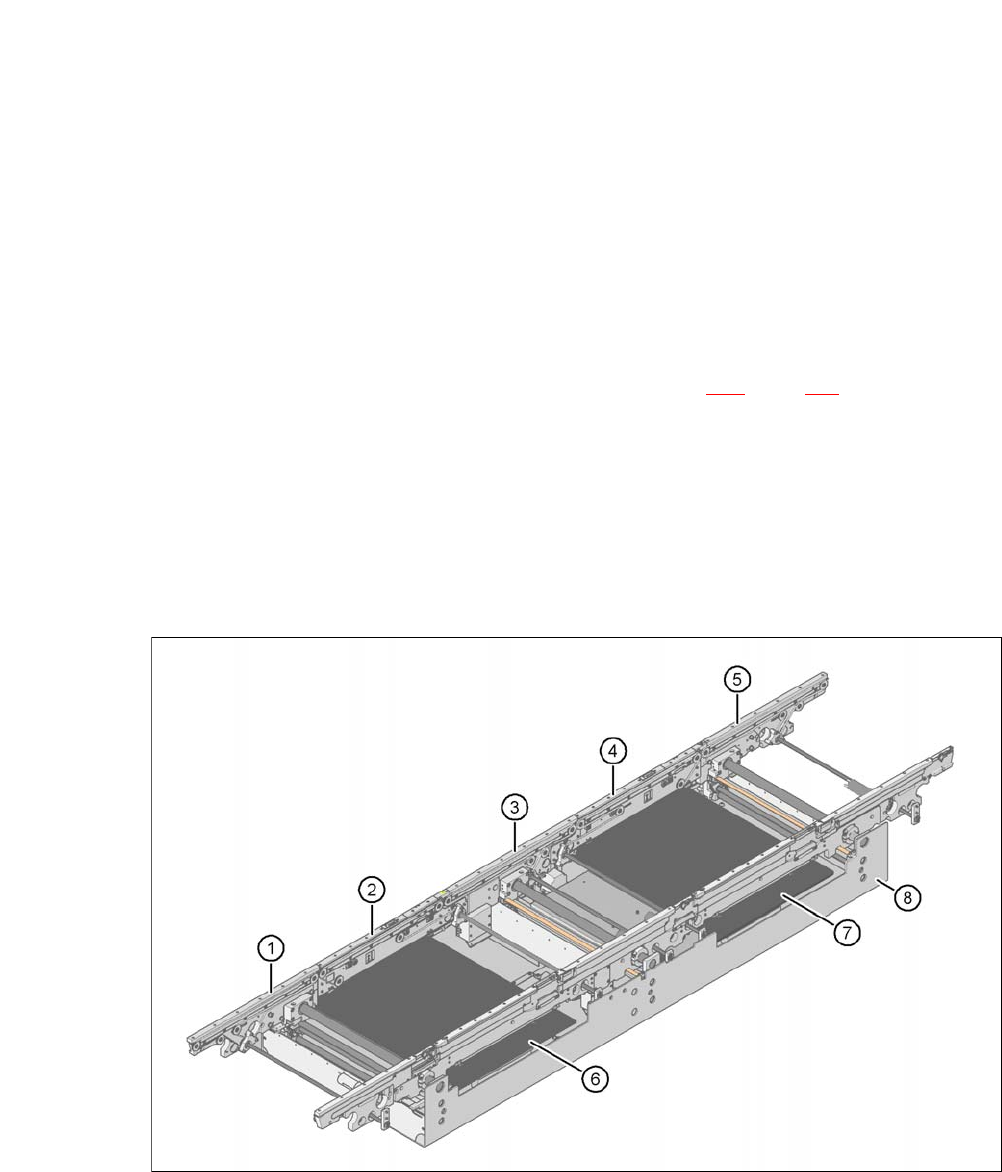
Fig. 3.13 - 1 Structure of the PCB single conveyor
(1) Input conveyor (2) Processing conveyor 1
(3) Intermediate conveyor (4) Processing conveyor 2
(5) Output conveyor (6) Lifting table 1
(7) Lifting table 2 (8) Assembly tub

User Manual SIPLACE CA-Series 3 Technical Data
From software version SC.708.0 Edition 12/2014 EN -DRAFT 3.13 Single PCB Conveyor
187
3.13.2 Technical Data
3
3
Stationary conveyor side Right or left
PCB dimensions
Standard (length x width)
"Long Board with stepping" option
50 mm x 50 mm to 450 mm x 535 mm
*a
50 mm x 80 mm to 850
*b
mm x 535 mm
*)a When using board widths > 450 mm, make sure that the peripheral modules can also process these
board widths.
*)b 850 mm on request
PCB thickness
Standard 0.3 mm to 4.5 mm (± 0.2 mm)
(Standard, thicker on request)
Vacuum accessories on request
Thin boards on carrier
PCB warpage See page 195
PCB weight
*c
*)c Higher weight on request.
Up to 3 kg
Clearance on PCB underside
Standard
Option
25 mm ± 0.2 mm
max. 40 mm ± 0.2 mm
Component-free PCB handling edge 3 mm
PCB changeover time < 2.5 s
PCB positioning accuracy ± 0.5 mm
PCB conveyor height 900 mm ± 15 mm (option)
930 mm ± 15 mm (standard)
950 mm ± 15 mm (SMEMA option)
Type of interface SMEMA / Siemens
Inkspot detection on the PCB possible
Automatic width adjustment possible

3 Technical Data User Manual SIPLACE CA-Series
3.13 Single PCB Conveyor From software version SC.708.0 Edition 12/2014 EN -DRAFT
188
3.13.3 Functions
For placement, the PCB is clamped from below. The distance between the top of the PCB and the
placement head thus remains unchanged for each PCB, and is not dependent on the thickness of
the PCB. The placement rate is thus independent of the PCB thickness. The PCB fiducial center-
ing can also be optimized. Since the distance between the PCB surface and the PCB camera re-
mains the same, the PCB camera is always focused on the PCB surface with the same sharpness.
The PCB fiducial contours are optimally mapped on the CCD chip of the PCB camera.
The width of the circuit board conveyor is set and monitored by an integral control circuit. It can
be selected by calling up the program. The control circuit then actuates the stepping motors until
the desired width is reached. The width adjustment is therefore independent of other machine
components.
The conveyor height can be selected on the machine to allow the machines to be integrated into
lines with a conveyor height of 900, 930 or 950 mm.
The communication between the PCB conveyors and the individual placement machines is via a
SMEMA interface or an optional Siemens interface.
The fixed transport side can be located on the left or right for both the dual conveyor and the single
conveyor. With this conveyor, the fixed side can be easily switched from right to left and vice versa
using the station software.
The circuit board conveyor is monitored and controlled with optical sensors. Once the board has
reached the placement area and has passed the light barriers, it is braked. A laser light barrier
records the position of the board. As soon as the circuit board has reached its target position, the
conveyor belt is stopped and the board is clamped from below.